
Review · MUMBAI
Best Combo Tour: Dabbawalas, Dhobi Ghat and Slum with Train
Mumbai’s remarkable lunchbox system is the perfect doorway into the city. On this four-hour tour, you watch Dabbawalas sort and move thousands of home-cooked meals, then follow the working city by train to Dhobi Ghat and Dharavi. Mumbai’s daily machinery is the real attraction here, not a list of grand monuments.
I like the small price of $32, which includes your English-speaking guide, local train tickets, and water. I also like the route’s sharp contrast: a precise delivery service, an outdoor laundry, a crowded train, and a neighborhood filled with small industries. The main consideration is pace. Two hours in Dharavi, plus walking and train travel, can feel full-on, and this is not a polished sightseeing show.
Guides Hardik and Abi are named in the tour information, and both are described as patient, clear, and attentive. Hardik took care to answer questions and help visitors feel secure, including during the Dharavi walk. Still, you should come ready to observe respectfully, ask before photographing people, and accept that the tour presents real working neighborhoods rather than a staged attraction.
Key points to know before booking
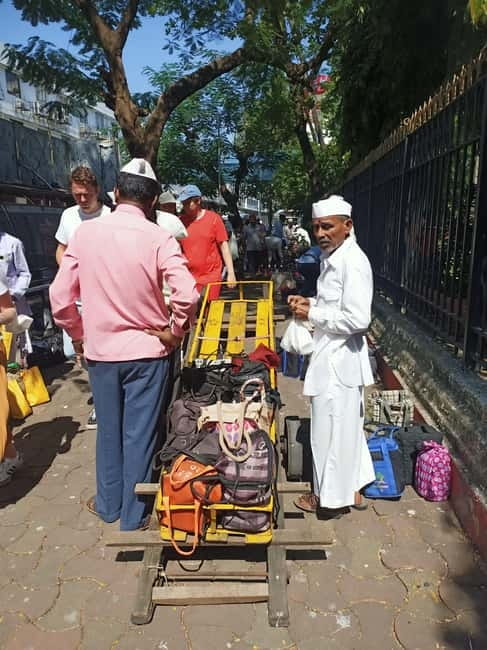
- Dabbawala logistics: See Mumbai’s famous lunchbox delivery service at work and learn how its sorting and transport system keeps moving.
- Two short train rides: The local train sections last about five and ten minutes, giving you a quick taste of Mumbai’s daily commute.
- Dhobi Ghat from ground level: Spend about 30 minutes seeing clothes washed and dried in open-air concrete troughs.
- Two hours in Dharavi: Walk through narrow lanes, workshops, markets, and local businesses with a guide.
- A $32 working-city tour: The fee covers the guide, train tickets, and water, but not food or other drinks.
- A central meeting point: Meet near the ticket window at the Dava Discount chemist shop inside Churchgate Railway Station.
Why this tour is different from a standard Mumbai sightseeing trip
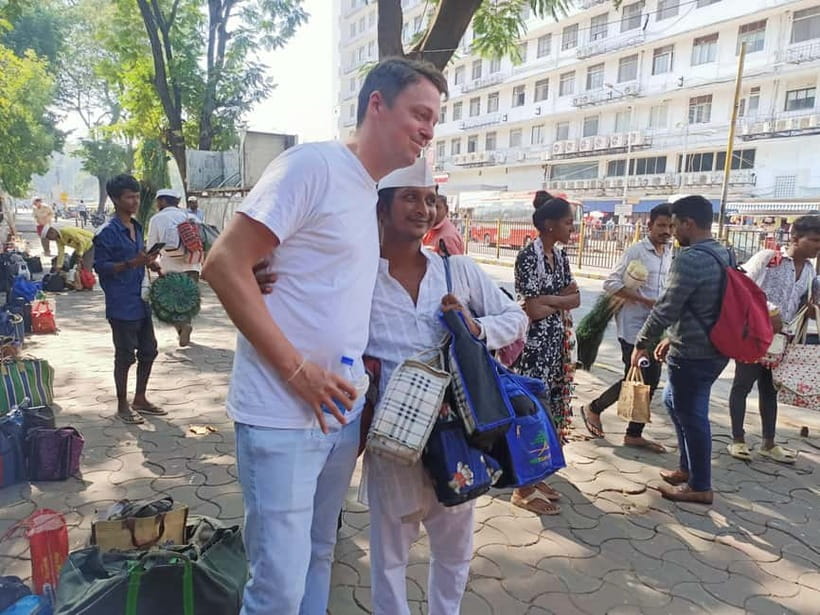
Mumbai has grand buildings, waterfront views, and famous religious sites, but this experience points your attention at the city’s working systems. You see how food moves, how clothes are cleaned, how people commute, and how businesses operate in a dense neighborhood.
That makes the tour useful if you want context rather than a string of photo stops. The Dabbawalas, Dhobi Ghat, and Dharavi are not separate curiosities. Together, they show different kinds of labor that keep Mumbai running.
I also like the compact design. You do not spend four hours sitting in a vehicle. You walk, ride two short train segments, listen to explanations, and see each place at close range. The tradeoff is that the schedule leaves little room to linger. If you want long conversations at every stop, this route may feel hurried.
The tour costs $32 per person. For that amount, the included train tickets, water, and guide make the price sensible, especially if you are comfortable using public transport and want several major local experiences in one morning or afternoon. Food and drinks are not included, so eat beforehand or plan for your own refreshment.
More Train Journeys around Mumbai:
- Dabbawala, Dhobi Ghat & Dharavi slum Tour with Local Train Ride
★ 5.0 · 102 reviews - Mumbai: Dharavi Slum and Dhobi Ghat Tour with Train Ride
★ 5.0 · 9 reviews - Primmum Mumbai Sightseeing With Local Train Ride Experience
★ 5.0 · 7 reviews
Meeting at Churchgate Railway Station
Your starting point is Churchgate Railway Station, near the ticket window and the Dava Discount chemist shop. This detail matters because large railway stations can be confusing, and a named shop gives you a practical landmark.
The opening section lasts about 30 minutes. You meet the guide, get oriented, and learn about the Dabbawalas and Mumbai’s transport network. The station is not simply a place to gather. It sets the tone for the rest of the tour, with commuters, ticket counters, platforms, and the steady movement of city life around you.
Give yourself enough time to find the meeting point. The activity information does not provide a hotel pickup service, so you need to reach Churchgate Railway Station on your own. Keep your phone available for the guide’s contact details if they are provided after booking, and carry only what you need for four hours of walking and train travel.
Watching the Dabbawalas sort Mumbai’s lunches
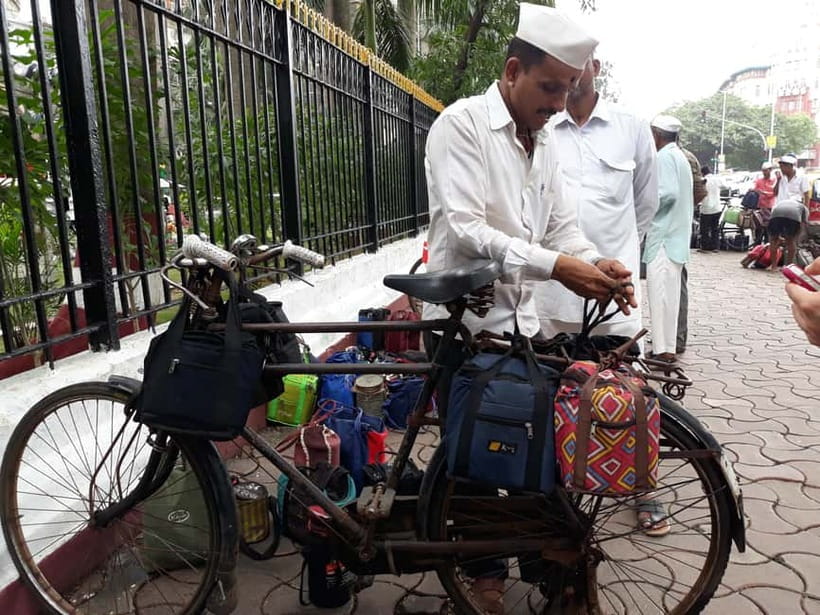
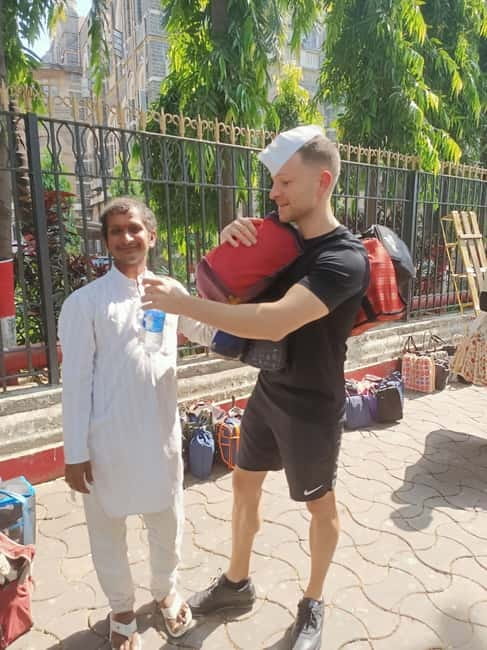
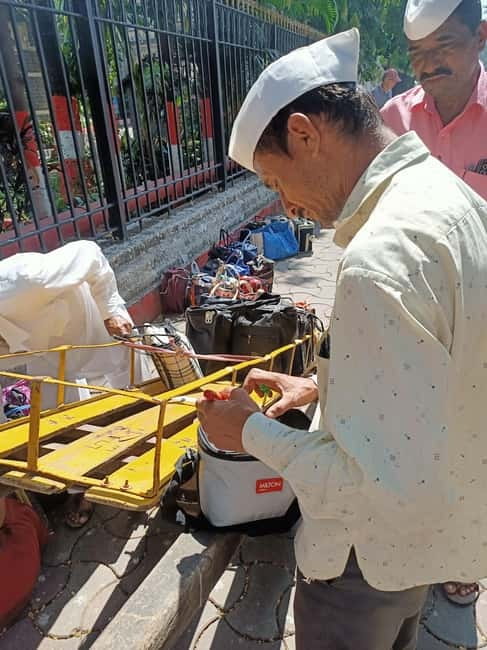
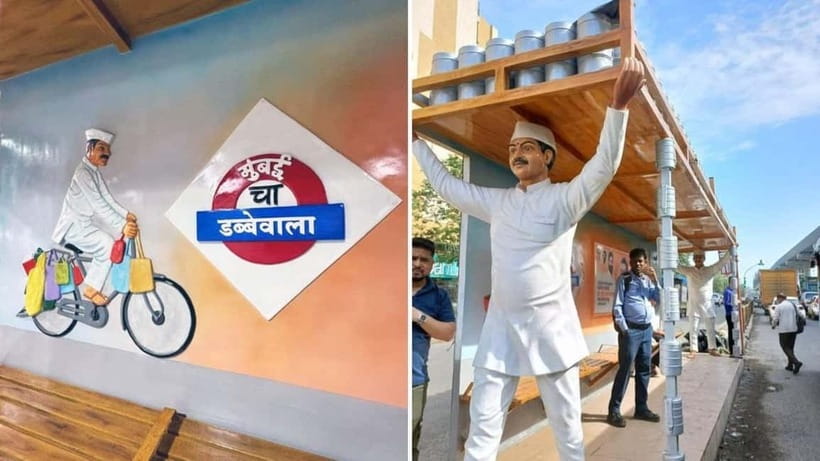
The Dabbawalas are the tour’s most distinctive subject. For more than a century, this lunchbox delivery service has carried home-cooked meals across Mumbai. The system depends on sorting, timing, handoffs, and transport, all within a city where roads and rail lines are under constant pressure.
You are not just hearing a business story in a classroom. You watch the delivery process and see how lunchboxes are sorted, moved, and sent onward. That practical view helps explain why the Dabbawalas have become one of Mumbai’s best-known working institutions.
I like this stop because it rewards close attention. Look at the boxes, the movement of people, and the way the guide explains each stage. The attraction is not visual spectacle. It is the surprising order behind a complicated daily task.
The visit also gives you a useful lens for the rest of the tour. Mumbai can appear chaotic at first glance, yet many of its systems depend on careful routines. The Dabbawalas show that idea in a clear, human way.
A brief ride on Mumbai’s local train

The first train segment lasts about five minutes. Later, another ride takes around ten minutes. These are short journeys, but they add something a walking tour cannot: a glimpse of Mumbai’s everyday public transport from inside the system.
You ride with local commuters rather than moving through the city in a private sightseeing vehicle. That gives you a better sense of distance, noise, and urban movement, even though the train time is brief.
Do not expect a long scenic rail journey. The train sections are connectors between stops, not the main event. They can also be crowded, and the activity may feel physically demanding if you are not used to busy public transport. Keep your belongings secure, follow the guide’s instructions, and stay close during transfers.
The train rides are especially useful for first-time visitors who want to understand how important suburban rail is to Mumbai. You get only a taste, but it is a genuine part of the city’s daily rhythm.
Same tracks, a different carriage:
- Mumbai City + Dabbawala aka Lunchbox + Train Ride Tour – The Unfeigned Mumbai.
★ 5.0 · 6 reviews - Mumbai: Dhobi Ghat Tour with Dharavi and Train Ride Options
★ 3.4 · 5 reviews - Dharavi Slum & Dhobi Ghat Mumbai: Private Guided Tour
★ 5.0 · 4 reviews - Dhobi Ghat Laundry and Dharavi Slum Tour with Local Train
★ 5.0 · 4 reviews
Seeing Dhobi Ghat in about 30 minutes
Dhobi Ghat is described as the world’s largest outdoor laundry. Here, dhobis wash and dry clothes by hand in open-air concrete troughs. The work takes place in full view, making this one of Mumbai’s most unusual working sites.
The visit lasts around 30 minutes and includes time for photographs, a guided explanation, and walking. That is long enough to understand the layout and the job, though it is not a lengthy study of the laundry community.
The best way to approach Dhobi Ghat is with curiosity and restraint. Watch the technique, listen to the explanation, and remember that this is a workplace. People are carrying out demanding jobs, not performing for an audience. Ask the guide about photography before pointing a camera at individuals.
I like the contrast with the Dabbawalas. The first stop is about organized delivery. Dhobi Ghat is about physical labor, repetition, water, and careful handling. Both reveal how much work happens behind ordinary city life.
Because the itinerary is tight, your time here may pass quickly. If laundry history is your main interest, you may want a longer visit elsewhere. For a four-hour route, however, this stop adds a strong visual and social contrast.
Walking through Dharavi for two hours
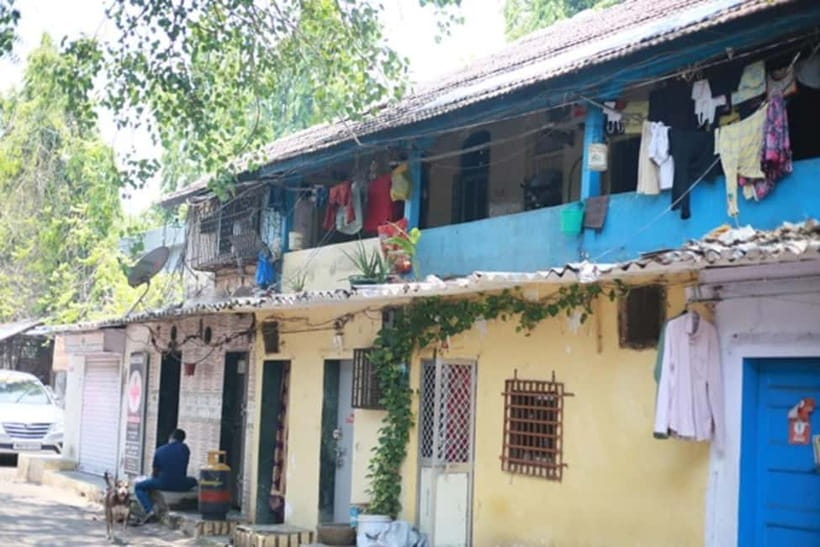
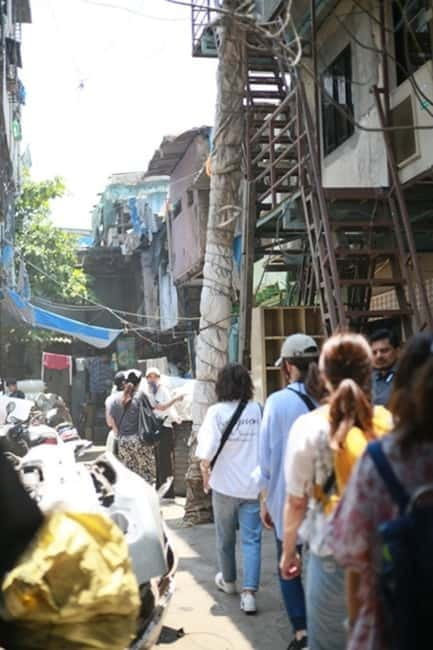
Dharavi receives the longest section of the tour, about two hours. That is the right choice if you want more than a quick look from a vehicle. You walk through narrow lanes, workshops, street markets, and the local businesses that give the area its economic force.
The tour presents Dharavi as a large, active community with many forms of work and trade. The focus is on resilience, creativity, and entrepreneurship, but you should also keep your expectations grounded. This is a dense neighborhood where people live and work. It is not a theme park or a staged village.
A good guide matters most here. Hardik is described as patient, attentive, and willing to answer questions. He also helped visitors feel safe during the walk. Abi is described as excellent, informative, and patient. If either guide leads your departure, you can expect the tour to rely heavily on clear explanations and careful group handling.
You may pass workshops and businesses, but the exact places can vary. The available information does not promise specific factories, products, or demonstrations. What you can count on is a guided walk through lanes and work areas, with sightseeing and explanations along the way.
Dharavi can challenge your assumptions about poverty. The tour is most useful when you look beyond the label slum and pay attention to the people, skills, and businesses operating there. At the same time, do not treat hardship as entertainment. Listen to the guide, respect residents’ privacy, and avoid intrusive photographs.
Two hours gives you time to notice details that a shorter stop would miss. You can see how narrow passages connect workspaces, markets, and homes, and you can ask questions as the walk develops. The downside is physical and emotional intensity. The lanes may feel crowded, and the subject matter may be confronting. This is a better fit for curious, open-minded visitors than for anyone seeking a relaxed sightseeing stroll.
The tour finishes at Sai Multispeciality Hospital and Research Centre. Since the endpoint is not Churchgate, plan your next move before you begin. The provided information does not include onward transport, so ask the guide where you are finishing and make your own arrangements after the walk.
How the guide shapes the experience
This route depends on interpretation. Without a good explanation, the Dabbawalas could become a quick photo stop, Dhobi Ghat could look like a row of wash basins, and Dharavi could be reduced to a misleading label.
The guide connects each place to ordinary city life. Hardik’s patient answers and careful attention are particularly useful in Dharavi, where visitors may have sensitive questions. Abi is also described as informative and patient, which suits a route that moves quickly between very different settings.
The tour is offered in English, with a live English-speaking guide. If you need another language, the supplied information does not list one. Ask questions as you go rather than waiting until the end, since the short timing at Churchgate and Dhobi Ghat limits the chance for a long discussion.
What to bring and how to prepare
You receive a water bottle and local train tickets. You do not receive food or drinks, so start with something to eat or carry your own refreshment if permitted. The tour runs for four hours and includes walking, station transfers, train travel, and two hours in Dharavi.
Wear practical clothing and shoes suited to walking. The activity details do not state a dress code, weather policy, or accessibility arrangements, so contact the provider if you have mobility needs or require specific support.
A small bag is easier than heavy luggage. Keep valuables secure on the train and in crowded areas. Most important, bring patience. The appeal is seeing real workplaces and public transport, and real city systems do not always move at a tourist’s preferred speed.
Who will get the most from this $32 tour?
I would choose this experience if you want an introduction to Mumbai’s working life and prefer active sightseeing to formal museums. It suits first-time visitors who want several major local subjects covered in one outing.
It is also a good match for people interested in transport, small businesses, urban communities, and the practical side of city life. The price is fair for the guide, train tickets, water, and four hours of focused touring.
I would think twice if you dislike crowded public transport, walking through narrow lanes, or visiting residential working areas. The Dharavi section requires sensitivity, and the route does not offer a quiet, polished version of Mumbai.
The 3.5 rating from three recorded reviews suggests a mixed overall response, but the individual comments supplied are strongly positive about the guides. I would place more weight on the practical fit: choose it for access and context, not comfort or luxury.
Should you book it?
Book this tour if you want to see how Mumbai works from the inside. The Dabbawalas, local trains, Dhobi Ghat, and Dharavi create a useful four-hour lesson in labor, transport, and community life.
Skip it if you want grand architecture, long stops, or a slow pace. For $32, the value is strongest when you take part fully: meet at Churchgate, ride the trains, listen closely, and treat Dharavi as a living neighborhood rather than a spectacle. If that sounds like your kind of Mumbai, this compact route is a smart choice.
FAQ
How long does the tour last?
The tour lasts four hours.
Where does the tour begin?
It begins at Churchgate Railway Station near the ticket window, by the Dava Discount chemist shop.
Where does the tour finish?
It finishes at Sai Multispeciality Hospital and Research Centre.
What places does the tour visit?
It visits the Dabbawalas, Dhobi Ghat, Dharavi, and includes local train rides between sections of the route.
How long is the Dharavi visit?
The Dharavi section lasts about two hours and includes guided walking, sightseeing, workshops, lanes, markets, and local businesses.
Are local train tickets included?
Yes. Local train tickets are included in the tour price.
Is water included?
Yes. One water bottle is included.
Is food included?
No. Food and drinks are not included.
What language is the tour offered in?
The tour is offered in English with a live English-speaking guide.
New on the timetable around Mumbai
- Mumbai Unseen: Local Train Ride And Sightseeing Tour★ 5.0 · 3 reviews
- Dharavi Slum & Dhobi Ghat Mumbai: Private Guided Tour★ 5.0 · 4 reviews
- Mumbai Slum Tour with Dhobi Ghat Laundry & Train Ride Tour★ 5.0 · 2 reviews
- All in one-Combo of City, Dhobighat, Slum & Dabbawala with ferry and train ride.★ 4.5 · 2 reviews
- Meet Dabbawala Visit Dhobi Ghat & Dharavi slum with Train★ 5.0 · 2 reviews
- Mumbai: Dhobi Ghat Tour with Dharavi and Train Ride Options★ 3.4 · 5 reviews
- Dhobi Ghat Laundry and Dharavi Slum Tour with Local Train★ 5.0 · 4 reviews
- Dabbawaala Dhobi Ghat Dahravi slum With Local Train Ride★ 5.0 · 2 reviews
Other India Train Journeys worth a seat


“Taj Mahal” Tour from Delhi by India’s Fastest Train (Gatiman Express)
Read our review →

Taj Mahal Day Trip From Delhi By Superfast Train With 5* Meal
Read our review →
Private Day Tour of Taj Mahal by India’s Fastest Train or Car – All Inclusive
Read our review →
Taj Mahal Tour with High-Speed Train Experience – All Inclusive
Read our review →
Dabbawala, Dhobi Ghat & Dharavi slum Tour with Local Train Ride
Read our review →
Agra-Delhi One Day Trip By India’s Superfast Train
Read our review →Lists this ride appears on