

Review · MUMBAI
Dabbawala, Dhobi Ghat & Dharavi slum Tour with Local Train Ride
Mumbai’s Dharavi is not simply a place to look at from a vehicle window. It is a working neighborhood, with homes, schools, hospitals, workshops, bakeries, recycling units, pottery, leather production, and small businesses packed into a tight urban area. This four-hour tour lets you see that daily life on foot, with a resident guide, then adds Dhobi Ghat, the city’s famous open-air laundry, and a ride on Mumbai’s local train.
I like two things right away: the resident guides give the Dharavi visit a human setting, and the train ride connects these stops to the city’s ordinary rhythm. Guides named Rakesh, Abhishek, Sagar, Hardik, and Dinesh have led departures, and the strongest experiences come from their stories and local connections. The main drawback is that Dharavi involves narrow lanes, heat, crowds, and sensitive scenes of poverty, so you need to approach it with respect rather than as a photo hunt.
Key points to know
- Dharavi is a working neighborhood: You may see leather workshops, pottery, soap making, bakeries, dyeing, plastic recycling, homes, schools, and hospitals.
- A resident guide changes the tone: Guides such as Rakesh and Sagar can explain local life from personal experience, rather than treating the area as a spectacle.
- Dhobi Ghat is a working laundry: You see the open-air washing operation at Mahalaxmi, where clothes from Mumbai businesses are handled.
- The local train is part of the lesson: Transport between parts of the tour is by Mumbai local train, not by private coach.
- Small groups matter: The maximum group size is 15, which gives you a better chance to hear explanations and ask questions.
- Bring water and wear comfortable shoes: The tour includes walking through narrow lanes and lasts about four hours.
A grounded look at Mumbai through three working worlds
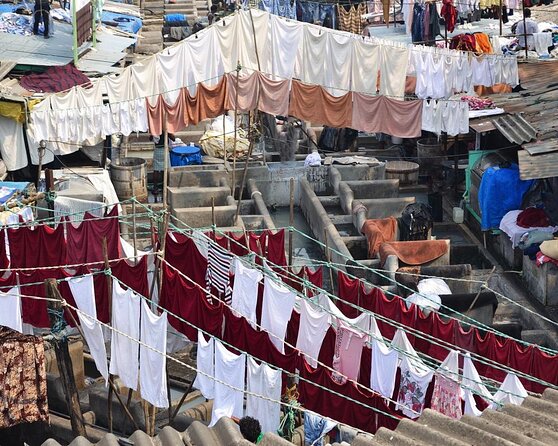
This experience links three parts of Mumbai life that are easy to miss on a standard sightseeing route. The dabbawalas show the city’s famous lunch-delivery system. Dhobi Ghat shows the scale of its laundry trade. Dharavi reveals how homes and small industries share limited urban space.
The sequence also makes practical sense. You begin near Churchgate, use the local train, visit Dhobi Ghat, and continue toward Dharavi. You are not just collecting three unrelated stops. You are watching how people, clothing, food, labor, and transport move through the city.
The tour costs $35.79 per person. For four hours, a guide, and local-train transport, I consider that a fair price, particularly in a city where a good local explanation can save you from seeing only the surface. Food and drinks are not included, so budget for your own water and refreshments.
More Train Journeys around Mumbai:
- Mumbai: Dharavi Slum and Dhobi Ghat Tour with Train Ride
★ 5.0 · 9 reviews - Primmum Mumbai Sightseeing With Local Train Ride Experience
★ 5.0 · 7 reviews - Mumbai City + Dabbawala aka Lunchbox + Train Ride Tour – The Unfeigned Mumbai.
★ 5.0 · 6 reviews
Starting near Churchgate and meeting the dabbawalas
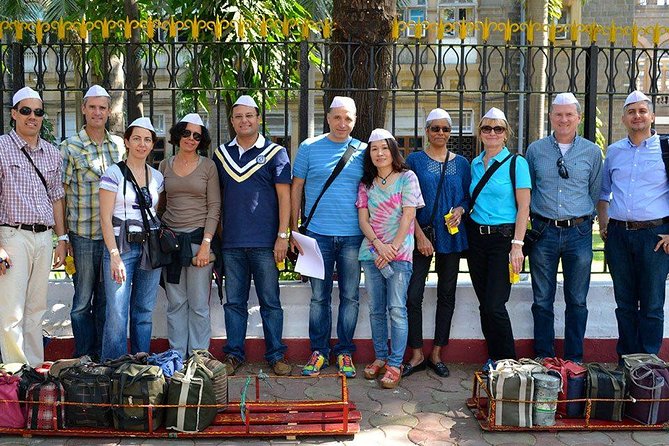
The meeting point is on Maharshi Karve Road near Churchgate. From there, the tour introduces you to Mumbai’s dabbawalas, the lunch carriers who move packed meals around the city each day.
The dabbawala system is interesting because it depends on people, routine, and careful sorting rather than flashy technology. Lunches travel through a city built on heavy traffic and crowded rail lines, yet the system has become one of Mumbai’s best-known examples of organized daily work.
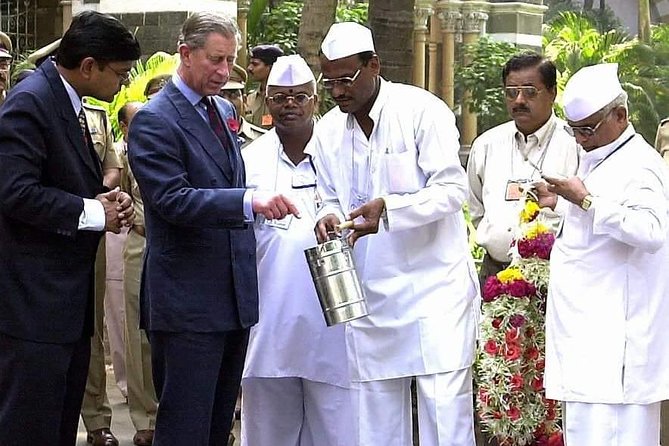
You may visit the Dabbawala Tribute Statue and learn what the word dabbawala means, how the service functions, and why these workers are so familiar to people across Mumbai. The stop is not just a quick photograph. A good guide can explain the social role of the service and show how lunch delivery fits into the city’s working day.
This section is strongest when you listen closely and ask questions. It is less about a dramatic attraction and more about understanding a familiar local institution. If you expect a long formal presentation or a museum display, adjust your expectations. The value is in the guide’s explanation and the chance to see the people and symbols connected with the service.
Riding Mumbai’s local train between the stops
Local train transport is included, and it gives the tour a useful change of pace. You experience the same basic transport system that links different parts of Mumbai, rather than watching the city pass behind a private vehicle’s windows.
That matters because the train helps you understand the geography of the tour. Churchgate, Mahalaxmi, and Dharavi are not isolated sights. They are part of a connected city where workers cross long distances each day.
The train can also be the liveliest part of the morning or afternoon. Expect ordinary city travel, not a reserved sightseeing carriage. Keep your belongings secure, listen carefully for instructions, and stay with the group. The tour is designed for a maximum of 15 people, but stations and platforms can still feel busy.
A local train ride may not suit someone who wants a quiet, slow-moving excursion. For many people, though, it is one of the best parts of the experience because it turns transportation into part of the story.
Mahalaxmi Dhobi Ghat and the open-air laundry
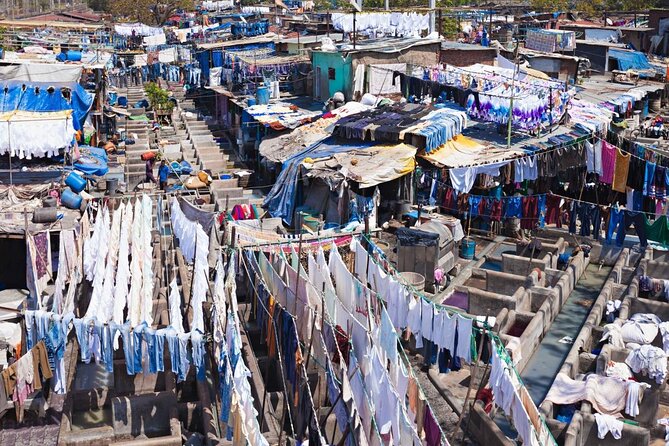
Mahalaxmi Dhobi Ghat is the tour’s most visually striking stop. It is an open-air laundry where dhobis, or laundry workers, wash clothes connected with Mumbai’s hotels and other businesses.
From a viewing point, you can see the scale of the operation and the repeated physical work behind clean clothes in a huge city. The sight is direct and practical. There is no polished exhibit to explain the process for you, so your guide’s context matters.
I like this stop because it shows an industry that most people use without thinking about the workers who make it possible. It also gives you a different view of Mumbai’s economy. The city is not only offices, colonial buildings, and film studios. It also depends on large networks of manual work.
You should be considerate here. This is a workplace, not a stage. Follow the guide’s instructions about where to stand and when photography is suitable. The description notes that the laundry is open air, so the visit may be hot and exposed. That is another reason to bring water.
The stop is scheduled for about an hour. That is enough time to understand the operation without turning the visit into a long, repetitive viewing session. If laundry systems and working life interest you, this section may be one of the tour’s best values.
Same tracks, a different carriage:
- Mumbai: Dhobi Ghat Tour with Dharavi and Train Ride Options
★ 3.4 · 5 reviews - Dharavi Slum & Dhobi Ghat Mumbai: Private Guided Tour
★ 5.0 · 4 reviews - Dhobi Ghat Laundry and Dharavi Slum Tour with Local Train
★ 5.0 · 4 reviews - Mumbai Unseen: Local Train Ride And Sightseeing Tour
★ 5.0 · 3 reviews
Walking into Dharavi with a resident guide
Dharavi takes about two hours, making it the largest part of the experience. The walking route leads through small alleys and areas where homes and businesses sit close together.
The guide may point out leather industries, pottery, soap making, bakeries, color dyeing, plastic recycling, and other small-scale work. The route can also include schools, hospitals, houses, and places associated with Muslim communities. This mix is important. Dharavi is not only a poor neighborhood, and it is not only an industrial zone. It is a place where people live and earn money in the same compact area.
You may also hear about Dharavi’s connection with Slumdog Millionaire, which was filmed there. That film reference can help explain why the area is famous internationally, but it should not become the main focus. The real value of the walk is seeing how residents and businesses use the space today.
A resident guide can make a major difference. Rakesh has been praised for his friendly manner, local knowledge, and personal connections. Sagar has also led tours, and his connection to Dharavi gives him a personal point of reference. Abhishek, Hardik, and Dinesh have likewise been described as engaging, clear, and attentive guides.
Guide assignments can change, so you should not book on the assumption that one particular person will lead your departure. Still, the repeated emphasis on local guides is significant. You are more likely to get explanations about daily life, community relationships, and the meaning of what you see instead of a list of statistics.
The difficult balance of a Dharavi visit
A tour of a low-income neighborhood always raises an ethical question: are you learning about a community, or simply looking at hardship? This experience works best when you treat Dharavi as a lived-in neighborhood with work, families, and social networks, not as an attraction.
Do not photograph people without permission. Avoid blocking doorways or workshop entrances. Listen when the guide explains what is appropriate. A calm, respectful attitude will help you get more from the visit and will make the walk less intrusive for residents.
The narrow lanes may feel crowded, and conditions can be basic. You might see cramped housing, industrial work, waste materials, and limited space. That is part of the reality the tour is trying to explain, but it can also feel uncomfortable. If you want a polished sightseeing route, this is not the right choice.
At the same time, you may see great effort and enterprise. The workshops, recycling work, food production, pottery, and home businesses show how people create livelihoods in difficult conditions. That is why a good guide matters so much. Without context, you could leave with a shallow picture. With careful explanation, you can better understand the neighborhood’s complexity.
What the guide adds to the four-hour format

Four hours is short for a city as large as Mumbai, but the route is tightly focused. You are not spending time on long transfers in a tour bus. The train and walking sections keep the schedule moving.
The guide’s job is more than navigation. You need someone who can explain the dabbawala system, identify what is happening at Dhobi Ghat, and introduce Dharavi without reducing it to a stereotype. The best guide style here is friendly, clear, and willing to answer questions.
Several guide names are associated with the experience. Rakesh is noted for making people feel comfortable and safe. Abhishek is described as funny and engaging. Hardik has been praised for being pleasant and informative. Dinesh has helped visitors manage the route and even stayed with a group while they arranged onward transport. Sagar has a personal connection to Dharavi and, on one reported occasion, welcomed visitors to his family home for a homemade meal.
That family meal should be treated as an exceptional personal gesture, not as a guaranteed part of the tour. Food and drinks are specifically not included. Book the tour for the published route, not for an unexpected invitation.
Who will get the most from this tour
I would choose this experience if you want to understand how Mumbai works at street level. It suits people interested in labor, local transport, small businesses, community life, and the human systems behind a giant city.
It is also a good fit for experienced visitors who have already seen the Gateway of India, Marine Drive, and other major sights. The tour offers a different side of Mumbai, one built around work and daily routines.
You should be comfortable walking for much of the four hours and using public transport. Most people can participate, and the group is limited to 15, but the tour is not designed as a private, quiet outing. You may encounter heat, crowds, narrow passages, and uneven walking conditions.
Families with older children may find the visit educational, though parents should decide how their children will respond to the poverty and industrial scenes. People who are sensitive to photography ethics should appreciate the guide-led format, provided they follow local guidance carefully.
Practical tips for a smoother morning or afternoon
Wear comfortable shoes. The Dharavi section includes small alleys and sustained walking, and the train stations add more time on your feet.
Bring extra water. This advice appears repeatedly for good reason, since you may be outside and walking in warm conditions. Food and drinks are not included.
Keep your day flexible after the tour. The listed end point is near Sai Multispeciality Hospital and Research Centre on 90 Feet Road in Dharavi, not back at Churchgate. That makes the experience useful if you plan to continue exploring Dharavi or nearby parts of Mumbai, but less convenient if you have a fixed appointment at the starting point.
The tour is confirmed at booking, uses a mobile ticket, and is near public transportation. Free cancellation is available if you cancel at least 24 hours before the start time. Changes or cancellations inside that window are not accepted for a refund.
Is $35.79 good value?
At $35.79, the tour offers a strong amount of content for a half-day experience. You get a guide, local-train transport, three connected subjects, and a small-group limit. The price is especially fair if your alternative is trying to arrange transport and find context for Dhobi Ghat and Dharavi on your own.
The value depends on what you want. If you only want photographs of Dhobi Ghat or a quick look at Dharavi from a vehicle, you may find the four-hour format too long. If you want explanation and human context, the guide is the reason to pay for the tour.
The biggest variable is the guide. Rakesh, Abhishek, Sagar, Hardik, and Dinesh have all been associated with strong departures, but the guide you receive depends on scheduling. The company is Mumbai Dream Tours, and the maximum group size is 15.
Should you book this Mumbai tour?
Book it if you want a respectful, practical look at working Mumbai and you are ready to walk, ride the local train, and encounter parts of the city that are not polished for sightseeing. The strongest elements are the resident guide, the Dharavi industries, the open-air laundry at Mahalaxmi, and the train ride that ties the route together.
Skip it if you dislike public transport, hot walking conditions, or visits to low-income communities. Also skip it if you expect a guaranteed home meal or a private experience, since neither is included.
For most curious visitors, I would book it early. The tour is often reserved about 16 days ahead, and its mix of local transport, working neighborhoods, and small-group guiding offers a useful counterpoint to Mumbai’s famous monuments.
FAQ
How long does the tour last?
The tour lasts approximately four hours.
Where does the tour start?
It starts on Maharshi Karve Road near Churchgate in Mumbai, Maharashtra.
Where does the tour end?
It ends near Sai Multispeciality Hospital and Research Centre on 90 Feet Road in Dharavi.
Is local train transport included?
Yes. Transport by Mumbai local train is included in the tour.
How large is the group?
The maximum group size is 15 people.
Is food included?
No. Food and drinks are not included, so you should bring water and plan for your own refreshments.
Can most people take part?
The tour information states that most people can participate. It includes local train travel and walking through Dharavi’s narrow lanes.
What is the cancellation policy?
You can cancel at least 24 hours before the experience start time for a full refund. Cancellations or changes made less than 24 hours before the start time are not accepted for a refund.
New on the timetable around Mumbai
- Mumbai Unseen: Local Train Ride And Sightseeing Tour★ 5.0 · 3 reviews
- Dharavi Slum & Dhobi Ghat Mumbai: Private Guided Tour★ 5.0 · 4 reviews
- Mumbai Slum Tour with Dhobi Ghat Laundry & Train Ride Tour★ 5.0 · 2 reviews
- All in one-Combo of City, Dhobighat, Slum & Dabbawala with ferry and train ride.★ 4.5 · 2 reviews
- Meet Dabbawala Visit Dhobi Ghat & Dharavi slum with Train★ 5.0 · 2 reviews
- Mumbai: Dhobi Ghat Tour with Dharavi and Train Ride Options★ 3.4 · 5 reviews
- Dhobi Ghat Laundry and Dharavi Slum Tour with Local Train★ 5.0 · 4 reviews
- Dabbawaala Dhobi Ghat Dahravi slum With Local Train Ride★ 5.0 · 2 reviews
Other India Train Journeys worth a seat

“Taj Mahal” Tour from Delhi by India’s Fastest Train (Gatiman Express)
Read our review →

Taj Mahal Day Trip From Delhi By Superfast Train With 5* Meal
Read our review →
Private Day Tour of Taj Mahal by India’s Fastest Train or Car – All Inclusive
Read our review →
Taj Mahal Tour with High-Speed Train Experience – All Inclusive
Read our review →
Agra-Delhi One Day Trip By India’s Superfast Train
Read our review →
Private Taj Mahal & Agra Day Trip by Car or Rail
Read our review →Lists this ride appears on