
Review · MUMBAI
Meet Dabbawala Visit Dhobi Ghat & Dharavi slum with Train
Mumbai’s local train ride is the thread that ties this outing together. In a few short stops, you move from Churchgate’s commuter world to Dhobi Ghat’s open-air laundry and then into Dharavi, where small businesses and workshops support a large community. The advertised visit also includes a meeting with dabbawalas, Mumbai’s famous lunchbox delivery workers.
I like two things here: you see working Mumbai rather than only its postcard sights, and the train makes the city itself part of the tour. The price, $26 per person, is also fair for four hours with an English-speaking guide, train tickets, water, and a group capped at 15 people.
The main caution is that the published route gives more detail about Churchgate, Dhobi Ghat, and Dharavi than it does about the exact dabbawala meeting point. Ask how that meeting fits into the day before booking. You should also be comfortable walking, riding crowded trains, and visiting a residential area with care and restraint.
Key points to know before you book
- A working-city route: See dabbawala operations, Dhobi Ghat’s laundry work, Dharavi’s workshops, and Mumbai’s commuter trains.
- Three short train connections: The listed rail rides take about 10 minutes each, helping you cover ground without a long road transfer.
- Two hours in Dharavi: The Dharavi portion is the longest stop and may include local industries, artisan work, and craft workshops.
- A small group: The tour is limited to 15 participants, a useful size for walking and asking questions.
- Simple inclusions: An English-speaking guide, train tickets, and a water bottle are included. Food, drinks, and hotel transfers are not.
- Respect matters: The Dharavi visit is intended to protect residents’ privacy and dignity, so photography and behavior should follow the guide’s instructions.
Why this route shows you working Mumbai

Many Mumbai sightseeing outings concentrate on grand buildings, waterfront views, and movie connections. This one takes a different path. Its focus is on the systems that keep the city running: meals delivered across town, laundry processed by hand, trains carrying workers, and small businesses operating in close quarters.
That focus gives the tour real value. You are not just looking at a landmark. You are hearing how a service works, seeing labor in progress, and learning how people earn a living in very different parts of the city.
The route also keeps moving. You spend about 30 minutes at Churchgate Railway Station, about 30 minutes at Dhobi Ghat, and two hours in Dharavi. The two train rides listed in the route take 10 minutes each. Those timings are short, so the guide’s explanations and the setting itself matter more than long formal visits.
The advertised program includes meeting dabbawalas, but the detailed route begins at a chemist stall and then lists Churchgate Railway Station. Since the exact collection point and timing are not specified, confirm this part with Tours By Walk. It is an important question if meeting the dabbawalas is your main reason for booking.
More Train Journeys around Mumbai:
- Dabbawala, Dhobi Ghat & Dharavi slum Tour with Local Train Ride
★ 5.0 · 102 reviews - Mumbai: Dharavi Slum and Dhobi Ghat Tour with Train Ride
★ 5.0 · 9 reviews - Primmum Mumbai Sightseeing With Local Train Ride Experience
★ 5.0 · 7 reviews
Starting at Churchgate Railway Station
The meeting point is listed as a chemist stall, followed by a guided walk at Churchgate Railway Station. This is practical rather than glamorous, but it puts you close to one of Mumbai’s key commuter hubs and gives the guide a natural place to explain the city’s rail network.
You should arrive ready to walk and keep your belongings close. The tour specifically asks you to follow safety guidance on the train, and that advice is worth taking seriously. Stations can be crowded, and the pace may be quicker than a relaxed neighborhood stroll.
The Churchgate portion lasts about 30 minutes. Use it to ask questions about the day’s route, the dabbawala meeting, and where the group is headed next. Because the outing has several moving parts, a clear briefing at the start will help you get your bearings fast.
This is also where the small-group format helps. With no more than 15 people, you have a better chance of hearing the guide near the station and staying together during the rail transfers. The group is still large enough that you should not expect a private tour.
Meeting Mumbai’s dabbawalas

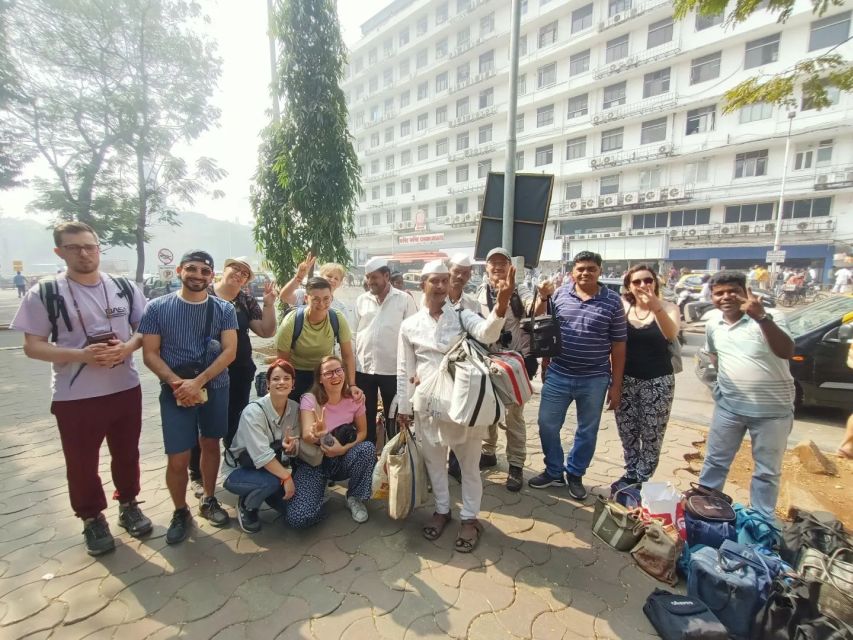
The dabbawala portion is the most distinctive idea in the program. These workers are known for collecting and delivering homemade lunchboxes across Mumbai with a carefully organized system. The appeal is not simply seeing a delivery worker. It is learning how a daily service connects homes, offices, railway lines, and neighborhoods.
A good explanation should help you understand the work ethic behind the system and its place in city life. The meeting is presented as an opportunity for direct interaction and firsthand insight, rather than a quick photo stop.
Still, keep expectations sensible. The available details do not name a particular dabbawala, collection point, or guaranteed length for this meeting. Do not assume you will receive a private interview or watch the entire delivery process from beginning to end. Confirm what is planned, especially because the listed route emphasizes Churchgate first.
If this part is handled well, it adds a human focus to the rest of the outing. Dhobi Ghat and Dharavi show other forms of work, while the dabbawala visit explains one of Mumbai’s best-known services through the people connected to it.
Seeing Dhobi Ghat in 30 minutes
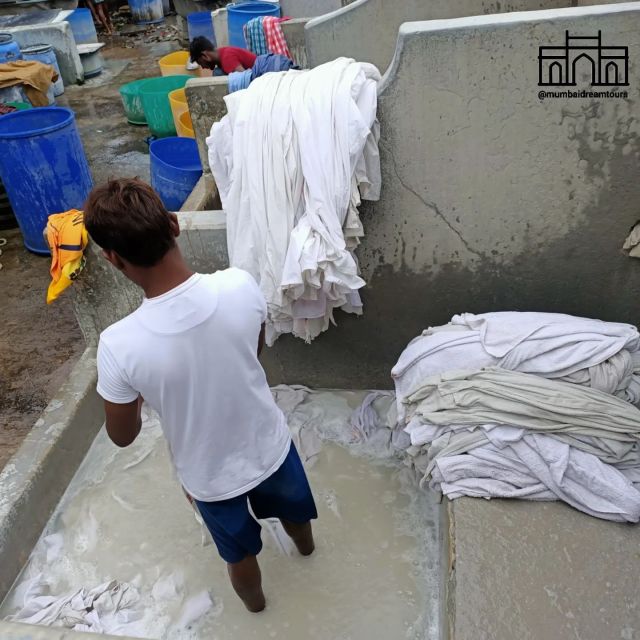
After the first train ride, the group visits Dhobi Ghat for about 30 minutes. Dhobi Ghat is famous for its rows of washing areas, where dhobis clean and iron laundry from across the city. The attraction is not a polished museum. It is a place of work, and that difference shapes how you should approach it.
The short visit is enough for an introduction and a guided look, but not for a long study of every process. You may see the layout, watch the movement of laundry, and hear how the operation fits into Mumbai’s service economy. The guide can provide context that you would miss by simply viewing the site from outside.
This stop also raises a useful point about responsible sightseeing. Laundry workers are not performers. Give people space, ask before taking close photographs, and let the guide explain what is appropriate. The tour’s stated approach is to visit communities with respect, and your conduct is part of making that promise real.
I like the contrast between Dhobi Ghat and the dabbawala visit. One service moves food through the city. The other handles clothing. Both show the scale of Mumbai through ordinary tasks that have to happen every day.
Same tracks, a different carriage:
- Mumbai City + Dabbawala aka Lunchbox + Train Ride Tour – The Unfeigned Mumbai.
★ 5.0 · 6 reviews - Mumbai: Dhobi Ghat Tour with Dharavi and Train Ride Options
★ 3.4 · 5 reviews - Dharavi Slum & Dhobi Ghat Mumbai: Private Guided Tour
★ 5.0 · 4 reviews - Dhobi Ghat Laundry and Dharavi Slum Tour with Local Train
★ 5.0 · 4 reviews
Riding the local train for 10-minute connections
The train rides are short, listed at about 10 minutes each, but they are not filler. They let you experience the transport system used by millions of Mumbaikars and see how quickly the city changes between stops.
You should expect a shared public commute, not a reserved tour vehicle. Stay close to the guide, keep your ticket and belongings secure, and follow directions when boarding and leaving. The tour includes train tickets, so you do not need to arrange those rides yourself.
The trains also make the day more physical. You will be walking through stations, boarding, standing or finding a place within the carriage, and moving again soon after. If you prefer slow sightseeing with plenty of seated breaks, this may feel rushed.
For me, the rail links are one of the strongest parts of the design. A road transfer would hide the city behind traffic and windows. The train puts you in the same transport setting as local commuters and gives the route a more direct connection to everyday Mumbai.
Spending two hours in Dharavi

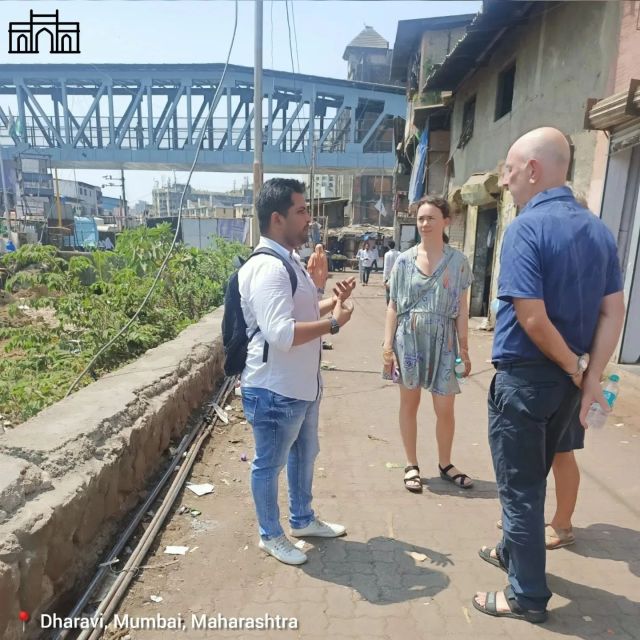
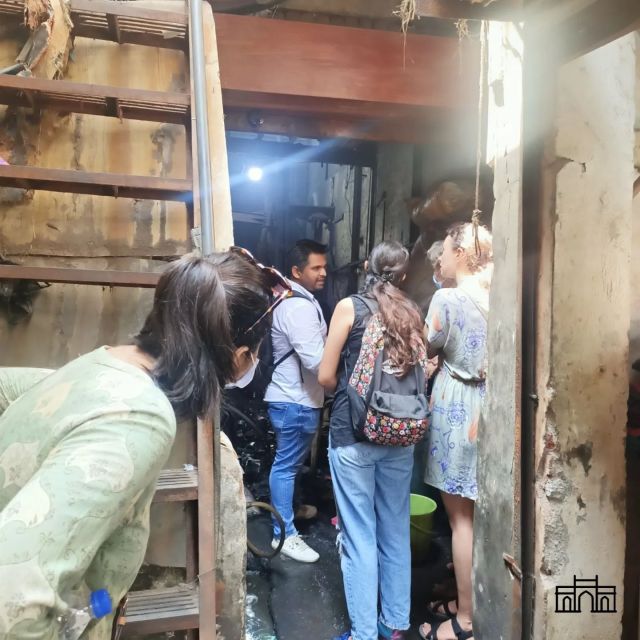
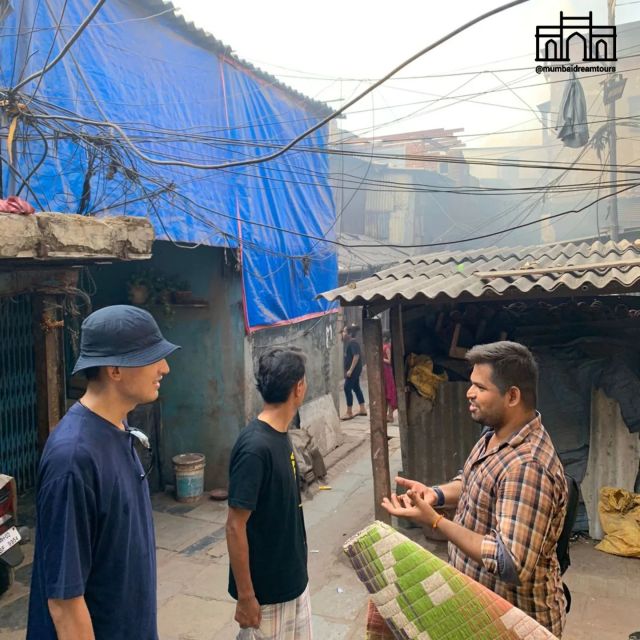
Dharavi is the longest stop, with about two hours of guided walking. The tour presents it as a place to learn about community life, small-scale industries, entrepreneurship, and local resourcefulness. It may also include encounters with artisans and craft workshops.
This is the part of the day that requires the most care in both attitude and language. Dharavi is a residential community, not a spectacle. You are entering a place where people live and work, so the goal should be understanding how the area functions, not collecting dramatic images.
The two-hour schedule gives the guide time to explain more than a quick roadside view. You may learn about the kinds of businesses operating there and how workshops contribute to the local economy. The program also describes craft activities as part of the visit, though the exact workshop and hands-on task are not specified.
Do not assume every business will be open or that every resident will want to speak with the group. A responsible visit accepts those limits. Follow the guide’s advice about photography, stay with the group, and avoid blocking entrances or staring into homes.
The Dharavi segment is likely to be the most informative part for visitors who want to understand Mumbai beyond major sights. It is also the part most likely to feel uncomfortable if you treat poverty as entertainment. Go with curiosity, not pity, and remember that the community is defined by work and daily life, not by a label.
What the $26 price includes

At $26 per person, this is a reasonably priced half-day outing. The fee covers an English-speaking guide, train tickets, and a water bottle. For a four-hour route with several stops and two rail connections, that removes a few small costs and saves you the trouble of planning the transport yourself.
The value depends on what you want from a tour. If you only want a quick view of Dhobi Ghat or a train ride, you could probably arrange a simpler day on your own. If you want context, route planning, and a guide to help you approach Dharavi respectfully, the price makes more sense.
Hotel pickup and drop-off are not included. Food and drinks are also extra, so plan to eat before or after the tour rather than expecting a meal during the four hours. Water is included, but a small additional supply may be useful in warm weather.
The tour offers free cancellation up to 24 hours before the start time and allows you to reserve now and pay later. Availability and starting times should be checked when booking, since the exact departure schedule is not given here.
Who will enjoy this Mumbai outing

I would recommend this tour to you if you want a close look at Mumbai’s work culture and are happy to use public transport. It suits visitors who enjoy guided walks, real neighborhoods, and conversations about how a city operates.
It can also work well for first-time visitors who want a structured introduction without committing to a full-day tour. The four-hour length leaves room for other plans, while the small group keeps the day more manageable than a large coach outing.
You may want a different activity if you prefer grand architecture, air-conditioned transport, or a slower pace. The tour includes walking, stations, trains, and a residential community. It is not designed as a polished luxury excursion.
Families should consider the group’s comfort with crowds and walking. The provided information does not specify an accessibility plan, so ask the operator about mobility needs before booking. The same applies if you need regular seating or extra time during transfers.
Practical ways to make the most of the four hours
Wear comfortable clothes and shoes suitable for walking. Keep your bag secure during the train rides and listen closely when the guide gives boarding instructions.
Bring a respectful attitude to Dharavi and Dhobi Ghat. Ask before taking photographs, avoid photographing people at close range without permission, and remember that workers are carrying on with their jobs.
Use the opening minutes to confirm the day’s order. Ask when and where the dabbawala meeting will happen, since that detail is not fully spelled out in the route description.
Do not plan a tight appointment immediately afterward. The official duration is four hours, but public transport and walking can make an urban schedule less exact than a private vehicle tour.
Should you book this tour?
Book it if you want to see Mumbai through its working systems rather than only its famous sights. The combination of dabbawalas, Dhobi Ghat, local trains, and a two-hour Dharavi visit offers a useful range of experiences for $26.
Before paying, confirm the dabbawala meeting details and make sure you are comfortable with the physical pace and the sensitive nature of the Dharavi visit. If you are, this is a practical, fairly priced way to spend four hours learning how Mumbai works from the inside.
FAQ
How long does the tour last?
The tour lasts four hours.
What is included in the price?
An English-speaking guide, train tickets, and a water bottle are included.
Is hotel pickup and drop-off included?
No. Hotel pickup and drop-off are not included.
Does the tour include food or drinks?
No. Food and drinks are not included. A water bottle is provided.
How large is the group?
The tour is a small-group activity limited to 15 participants.
What language is the tour conducted in?
The live tour guide speaks English.
New on the timetable around Mumbai
- Mumbai Unseen: Local Train Ride And Sightseeing Tour★ 5.0 · 3 reviews
- Dharavi Slum & Dhobi Ghat Mumbai: Private Guided Tour★ 5.0 · 4 reviews
- Mumbai Slum Tour with Dhobi Ghat Laundry & Train Ride Tour★ 5.0 · 2 reviews
- All in one-Combo of City, Dhobighat, Slum & Dabbawala with ferry and train ride.★ 4.5 · 2 reviews
- Mumbai: Dhobi Ghat Tour with Dharavi and Train Ride Options★ 3.4 · 5 reviews
- Dhobi Ghat Laundry and Dharavi Slum Tour with Local Train★ 5.0 · 4 reviews
- Dabbawaala Dhobi Ghat Dahravi slum With Local Train Ride★ 5.0 · 2 reviews
- Best Combo Tour: Dabbawalas, Dhobi Ghat and Slum with Train★ 3.5 · 3 reviews
Other India Train Journeys worth a seat


“Taj Mahal” Tour from Delhi by India’s Fastest Train (Gatiman Express)
Read our review →

Taj Mahal Day Trip From Delhi By Superfast Train With 5* Meal
Read our review →
Private Day Tour of Taj Mahal by India’s Fastest Train or Car – All Inclusive
Read our review →
Taj Mahal Tour with High-Speed Train Experience – All Inclusive
Read our review →
Dabbawala, Dhobi Ghat & Dharavi slum Tour with Local Train Ride
Read our review →
Agra-Delhi One Day Trip By India’s Superfast Train
Read our review →Lists this ride appears on