
Review · MUMBAI
Mumbai: Dharavi Slum and Dhobi Ghat Tour with Train Ride
Mumbai’s Dhobi Ghat and Dharavi tour gives you a sharp look at how the city works. You see laundry workers handling garments in an open-air wash yard, ride the local train with Mumbai commuters, then walk through Dharavi with a guide who can explain its homes, workshops, and small businesses.
I like the mix of working-city sights and local transport. I also like the small groups, limited to 10 people, and the chance to be guided by someone with a direct connection to Dharavi, such as Bhaarti or Abhishek. The main drawback is that Dharavi is a living neighborhood, not a polished attraction, so you need to bring respect, modest clothing, and a willingness to walk through crowded lanes.
Key points to know before you book
- Dhobi Ghat from the viewing deck: See rows of washing pens and clothes spread across one of Mumbai’s best-known working sites.
- A real Mumbai train ride: Train tickets are included, and the ride gives you a short taste of the city’s famous commuter system.
- Local guides with personal ties: Guides including Bhaarti and Abhishek have lived in Dharavi, giving the walk a personal point of view.
- Two hours in Dharavi: Expect narrow lanes, working spaces, homes, and stories about local industry and family life.
- Small-group format: With no more than 10 participants, it is easier to hear the guide and ask questions.
- Three hours for $26: The price is strong for a guided walk, train tickets, water, and two major Mumbai sights.
Why this tour shows the city beyond the postcard

Mumbai is easy to reduce to grand hotels, colonial buildings, film glamour, and sea views. This tour points you toward the city’s working neighborhoods, where laundry, recycling, manufacturing, and household life all happen close together.
That makes the experience more than a quick look at a famous slum. You get a chance to think about how people earn money, organize homes, and build businesses in a place that many outsiders see only through headlines. The guide’s job matters here. A local guide can explain what you are seeing without turning the neighborhood into a spectacle.
The strongest part of the experience is the combination of context and movement. You are not parked in one viewpoint. You move from Dhobi Ghat to a local train and into Dharavi, seeing three connected parts of city life in a short morning or afternoon.
The format is brisk. The full activity lasts three hours, and around two hours are set aside for the Dharavi walk. That leaves about half an hour at Dhobi Ghat, plus the train journey and transfers. You will get a useful introduction, not an exhaustive study of either neighborhood.
More Train Journeys around Mumbai:
- Dabbawala, Dhobi Ghat & Dharavi slum Tour with Local Train Ride
★ 5.0 · 102 reviews - Primmum Mumbai Sightseeing With Local Train Ride Experience
★ 5.0 · 7 reviews - Mumbai City + Dabbawala aka Lunchbox + Train Ride Tour – The Unfeigned Mumbai.
★ 5.0 · 6 reviews
Meeting at Third Wave Coffee
The tour begins at Third Wave Coffee, where you meet the English-speaking guide. This central meeting point gives the group a clear place to gather before setting off, though you should check the exact starting time when booking because the available times can vary.
The group size is capped at 10. That is a good limit for Dharavi, where narrow paths and busy lanes can make a large group awkward. A smaller party also means you can hear explanations and ask questions without shouting across the street.
The supplied information names guides such as Bhaarti, Abhishek, Hardik, and Alkama. Bhaarti and Abhishek have a personal connection to Dharavi, and that can add a useful layer to the walk. Instead of hearing only broad facts, you may get explanations shaped by local experience and familiarity with people in the area.
Bring water, although bottled mineral water is included. Wear comfortable shoes and modest clothes. Short skirts and skirts are not allowed, so trousers or longer, loose clothing are the sensible choice.
Dhobi Ghat and the city’s laundry system
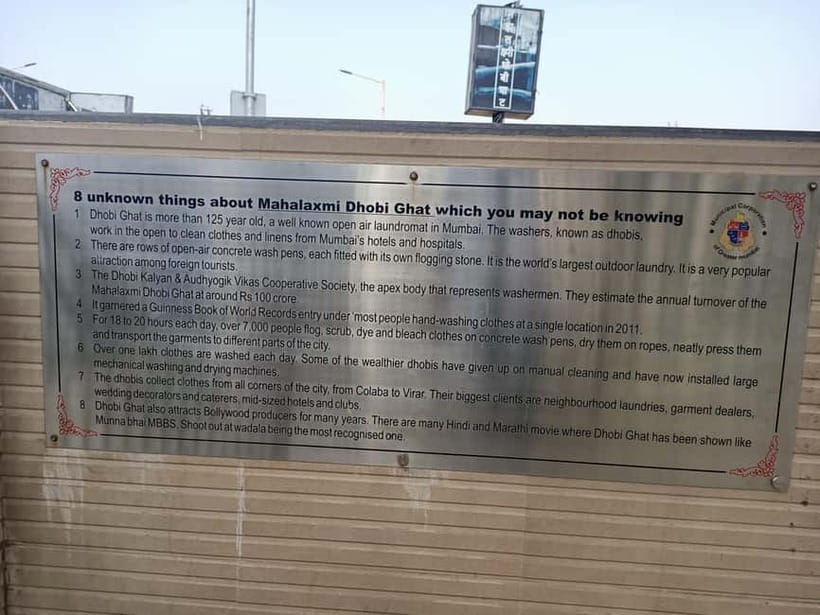
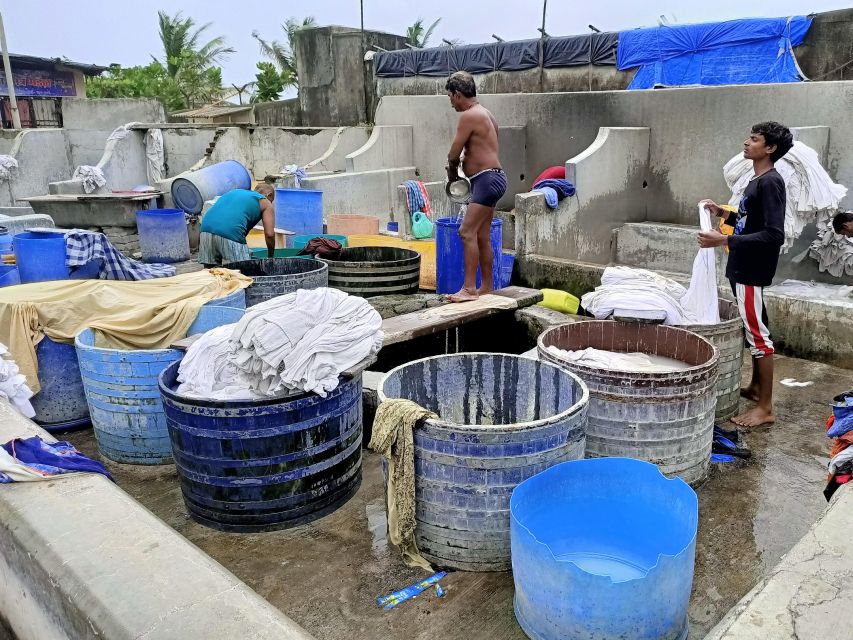
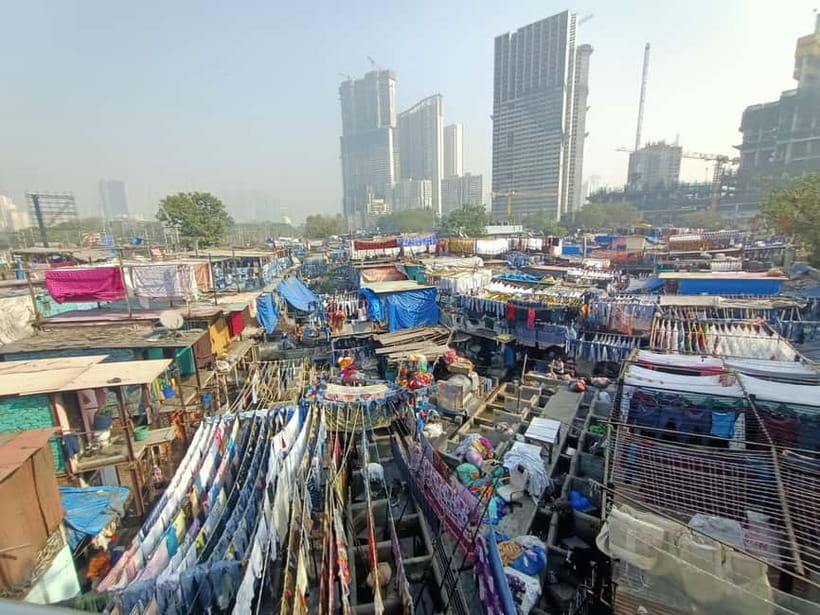
Dhobi Ghat is one of Mumbai’s most striking working sights. From the viewing deck, you look down over the open-air laundry, where rows of wash areas create a pattern of stone, water, clothing, and movement.
The stop lasts about 30 minutes according to the stated schedule. That is enough time for the guide to explain the site and give you a clear view, but not enough for a slow, detailed exploration of every part of the laundry. The viewing platform is particularly useful for photographs because it lets you see the whole operation from above.
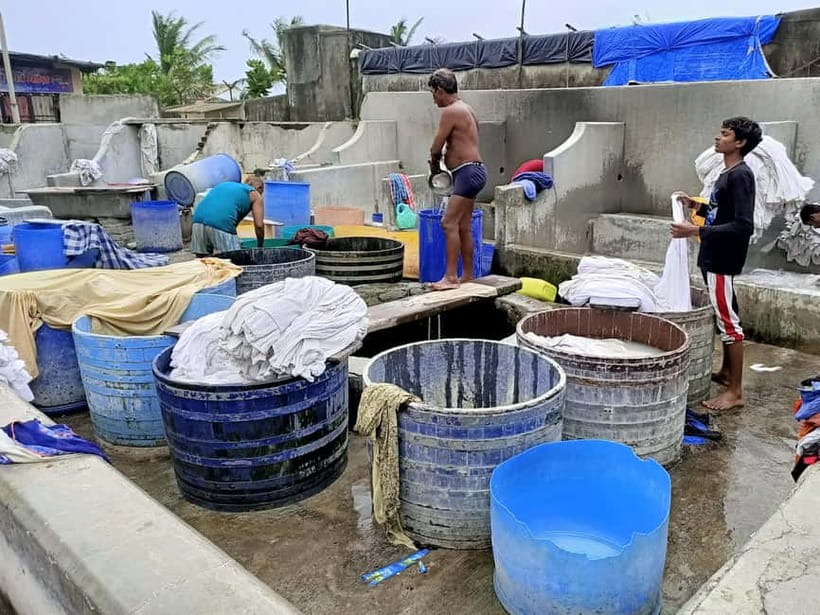
The guide explains the history of the laundry and the work done there. You might see workers washing and handling clothes as part of a daily system that serves the city. The value of this stop is not simply the unusual view. It shows how a large metropolis depends on skilled manual work that remains largely out of sight in ordinary hotel and residential life.
One important point: the description says the tour includes a guided visit to Dhobi Ghat and the reviews describe access to the laundry area itself, while the finish point is the Dhobi Ghat Viewing Deck. Exact access can vary, so treat the deck as the certain part of the visit and any closer entry as dependent on the tour’s arrangements that day.
The site is a working place, not a stage set. Keep your camera use considerate and follow the guide’s instructions. The best photographs are likely to come from the viewing deck, where you can frame the rows of wash pens without getting in the way.
Riding a Mumbai local train

The train ride is the tour’s most energetic link between the two neighborhoods. Train tickets are included, so you do not need to arrange this part yourself.
Mumbai’s local trains are a vital part of everyday life, and even a short ride gives you a sense of the city’s pace. The open doorways are part of the experience, with air moving through the carriage as the train runs. That can feel thrilling, but you should listen carefully to the guide and take care near the doors.
This is not a sightseeing train. You are using public transport alongside people going about their day. That is exactly why the ride adds value. You see a practical side of Mumbai rather than a transport attraction designed for tourists.
The train segment is described as part of the three-hour tour. One piece of the schedule lists the train as 10 hours, which clearly conflicts with the advertised three-hour duration. You should plan on a short train ride within the three-hour experience, not a full-day rail journey.
The ride may be less comfortable than a private vehicle. Crowds, standing, noise, and quick movement are all possible on a local train. If that sounds stressful, this tour may not suit you. If you want a brief taste of ordinary Mumbai transport, it is one of the most memorable elements.
Same tracks, a different carriage:
- Mumbai: Dhobi Ghat Tour with Dharavi and Train Ride Options
★ 3.4 · 5 reviews - Dharavi Slum & Dhobi Ghat Mumbai: Private Guided Tour
★ 5.0 · 4 reviews - Dhobi Ghat Laundry and Dharavi Slum Tour with Local Train
★ 5.0 · 4 reviews - Mumbai Unseen: Local Train Ride And Sightseeing Tour
★ 5.0 · 3 reviews
Walking through Dharavi for two hours
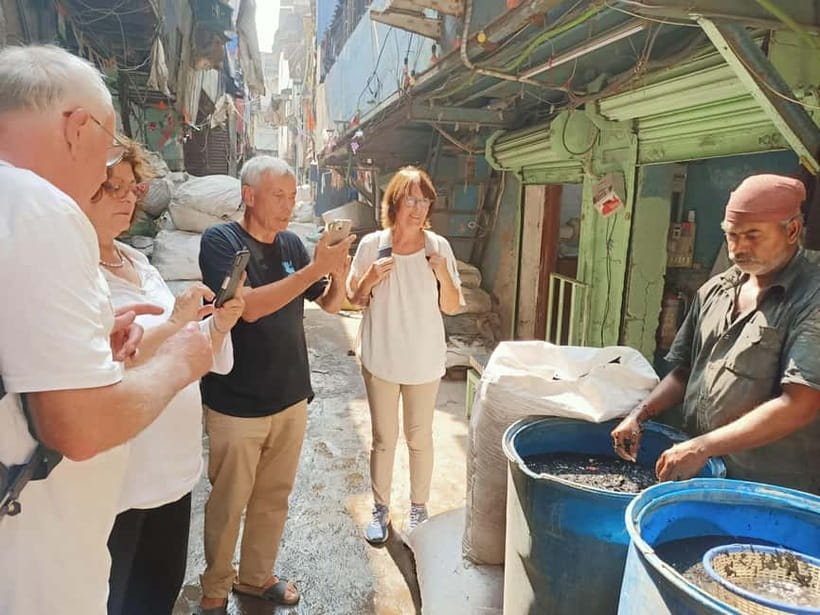
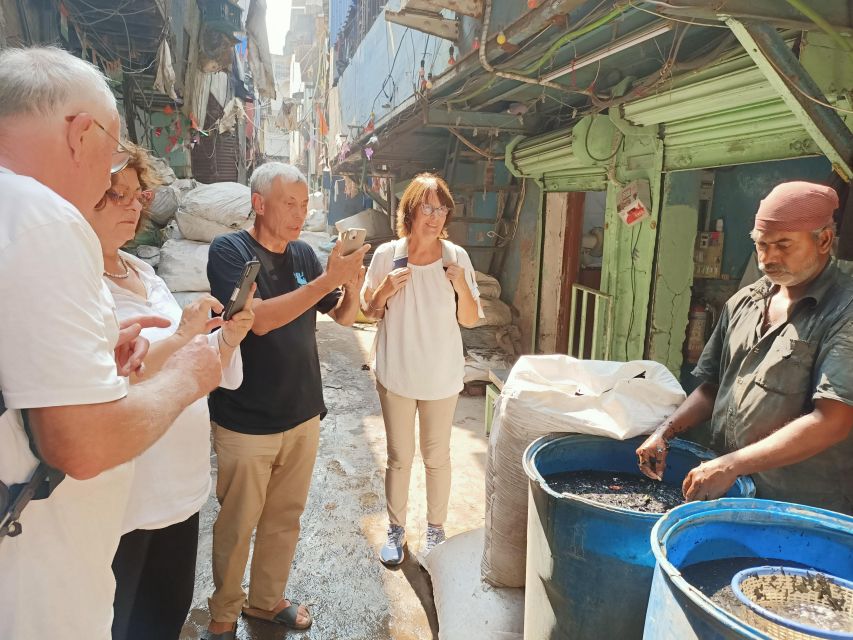
The Dharavi portion takes around two hours, making it the heart of the tour. Your guide leads you through the neighborhood on foot and explains its businesses, working life, and homes.
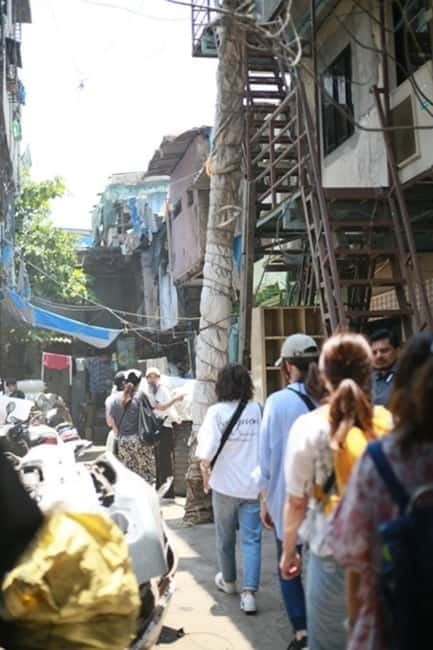
Dharavi is often described in simple terms, but the walk gives you a more detailed picture. You may see small industries and workspaces alongside residential lanes. The experience focuses on enterprise and community, not only poverty. That distinction matters. A respectful tour should help you see the people who live and work there as more than a difficult statistic.
The guide discusses resilience, family income, and the long hours many people spend working. One account describes residents working eight to 12 hours a day to support their families. That detail helps put the neighborhood’s small businesses into human terms. You are not just looking at workshops. You are seeing how work, housing, and family life fit together in a dense part of Mumbai.
The lanes can feel confusing, which is why a local guide is especially useful. Bhaarti is described as having grown up in the area, and Abhishek is described as living there. Guides with that kind of connection may be able to introduce the neighborhood in a way that a guide who only memorized facts cannot.
Still, you should keep your expectations in check. This is a walking tour through a real residential and working area. It is not a museum, and conditions may be cramped or uncomfortable. You may find the subject matter confronting. The right approach is to listen, avoid treating people’s homes as photo props, and let the guide explain when photography is appropriate.
The two-hour duration is a strength because it allows more than a quick pass through the main lane. It is also the part most likely to feel tiring, especially in warm weather. The included water helps, but comfortable shoes and light, modest clothing remain important.
What the guide adds to the experience

A tour like this depends heavily on the guide. The Dhobi Ghat view is easy to understand at a glance, and a train ride needs little explanation. Dharavi is different. Without context, you may see only tight lanes and crowded buildings. With a good guide, you can understand the work taking place, the role of family businesses, and the daily routines behind the walls.
The named guides bring different strengths. Bhaarti is presented as someone from Dharavi who knows many people in the area. Abhishek is also described as living there and answering questions from a local point of view. Hardik is noted for his strong knowledge and pleasant manner, while Alkama is described as informed and personable.
Those details point to an important booking tip: your guide can shape the whole morning. The provider may assign different guides, so you should not book solely to meet one named person. Instead, book for the format, small group, and local connection, then treat the individual guide as an added benefit.
English is the stated language. If you want to ask about local industry, housing, work, or daily routines, this is the time to do it. The walk is more useful when you take part in the conversation rather than simply following behind the group.
Is $26 good value?
At $26 per person, the tour offers good value for a three-hour guided experience in Mumbai. The fee includes an English-speaking guide, train tickets, and bottled mineral water. You also get a structured visit to Dhobi Ghat and a two-hour walk in Dharavi, which would be difficult to organize with the same local context on your own.
The value is strongest if you want a guided introduction rather than a private, slow-paced visit. A group of up to 10 keeps the price reasonable while avoiding the feel of a large coach excursion.
The price does not buy luxury. There is no mention of private transport, meals, or extended time at either site. You are paying for access, explanation, and a well-planned route using public transport. For someone interested in Mumbai’s working neighborhoods, that is a fair exchange.
Free cancellation up to 24 hours before the start and the option to reserve now and pay later also make the booking less rigid. Check availability for the exact time you want, especially if the train ride and outdoor walking are important parts of your plan.
Who should book this walk?
I would recommend it to you if you want to understand Mumbai through ordinary work and public transport. It suits curious first-time visitors, photographers who value wide views from Dhobi Ghat’s platform, and anyone interested in local business and community life.
It is also a good choice if you want a compact experience. Three hours is long enough to cover the main points without taking an entire day from your Mumbai plans.
I would think twice if you dislike crowded trains, walking through narrow lanes, or confronting difficult living conditions. This is not a comfort-first outing. It asks you to stay alert, dress appropriately, and treat Dharavi as a home and workplace rather than an attraction.
Photography also needs care. The viewing deck at Dhobi Ghat is designed for seeing the wider scene, but Dharavi requires more restraint. Ask before photographing people, homes, or workplaces, and follow the guide’s lead.
Should you book the Dharavi and Dhobi Ghat tour?
Book it if you want a short, direct look at working Mumbai and you are comfortable using a local train and walking for two hours. The strongest reasons are the small group, included rail ticket, Dhobi Ghat viewing deck, and guides with personal links to Dharavi.
Skip it if you want a relaxed sightseeing trip with private transport and polished stops. The train can be lively, the lanes can be tight, and the subject matter deserves a thoughtful attitude.
For $26, this is a well-priced way to see parts of Mumbai that many independent visits miss. Go with modest clothing, comfortable shoes, an open mind, and respect for the people whose daily lives make the experience possible.
FAQ
How long does the tour last?
The advertised duration is three hours.
Where does the tour begin?
The starting point is Third Wave Coffee.
Where does the tour finish?
The tour finishes at the Dhobi Ghat Viewing Deck.
Is Dharavi included?
Yes. The tour includes a guided walking visit to Dharavi lasting about two hours.
Is Dhobi Ghat included?
Yes. The tour includes a guided visit to Dhobi Ghat, with the finish point at its viewing deck.
Is the Mumbai local train ticket included?
Yes. Train tickets are included in the activity price.
What language does the guide speak?
The tour is conducted in English.
How large is the group?
It is a small group limited to 10 participants.
Is bottled water included?
Yes. Bottled mineral water is included.
Can I wear a skirt?
No. Skirts and short skirts are listed as not allowed, so choose modest trousers or other suitable clothing.
New on the timetable around Mumbai
- Mumbai Unseen: Local Train Ride And Sightseeing Tour★ 5.0 · 3 reviews
- Dharavi Slum & Dhobi Ghat Mumbai: Private Guided Tour★ 5.0 · 4 reviews
- Mumbai Slum Tour with Dhobi Ghat Laundry & Train Ride Tour★ 5.0 · 2 reviews
- All in one-Combo of City, Dhobighat, Slum & Dabbawala with ferry and train ride.★ 4.5 · 2 reviews
- Meet Dabbawala Visit Dhobi Ghat & Dharavi slum with Train★ 5.0 · 2 reviews
- Mumbai: Dhobi Ghat Tour with Dharavi and Train Ride Options★ 3.4 · 5 reviews
- Dhobi Ghat Laundry and Dharavi Slum Tour with Local Train★ 5.0 · 4 reviews
- Dabbawaala Dhobi Ghat Dahravi slum With Local Train Ride★ 5.0 · 2 reviews
Other India Train Journeys worth a seat


“Taj Mahal” Tour from Delhi by India’s Fastest Train (Gatiman Express)
Read our review →

Taj Mahal Day Trip From Delhi By Superfast Train With 5* Meal
Read our review →
Private Day Tour of Taj Mahal by India’s Fastest Train or Car – All Inclusive
Read our review →
Taj Mahal Tour with High-Speed Train Experience – All Inclusive
Read our review →
Dabbawala, Dhobi Ghat & Dharavi slum Tour with Local Train Ride
Read our review →
Agra-Delhi One Day Trip By India’s Superfast Train
Read our review →Lists this ride appears on