
Review · MUMBAI
Dharavi Slum & Dhobi Ghat Mumbai: Private Guided Tour
Dharavi is far more than narrow lanes and crowded housing. This private three-hour tour focuses on the work that keeps Mumbai moving: leather goods, pottery, plastic recycling, and textile production. You also visit Mahalaxmi Dhobi Ghat, where thousands of garments are washed, dried, and pressed by hand.
I like the local-led approach and the chance to see real workshops instead of only hearing broad facts. I also like the private format, which lets you ask questions and move at a pace that suits your group. The main drawback is that Dharavi is explored on foot, and some visitors may find the tight lanes, industrial activity, and poverty confronting.
Key points to know before booking
- Dharavi’s working economy: See leather workshops, Kumbharwada pottery, recycling units, and textile businesses in operation.
- Mahalaxmi Dhobi Ghat: Look down from a designated viewpoint at Mumbai’s famous open-air laundry, which serves homes, hotels, and hospitals.
- Private guiding: Only your group takes part, so you can ask more questions than on a large group walk.
- Useful transport included: The price includes train tickets, bottled water, and private air-conditioned transfers.
- A walking-focused visit: The Dharavi portion lasts about two hours, so comfortable shoes and sensible clothing matter.
- Guide quality matters: Priti, Shruti, Max, and Ruba are named guides connected with strong feedback about clear explanations, friendliness, and attention to questions.
Why Dharavi’s workshops matter more than the label
The word slum can make Dharavi sound like a place defined only by hardship. That is an incomplete picture. Dharavi is also a major center of small businesses, family trades, and recycling work, all packed into a small part of Mumbai.
This tour puts that economic side first. As you walk, your guide explains how leather, pottery, plastic, textiles, and other goods move through the area. You are not simply looking at homes. You are seeing workshops, storage areas, production spaces, and people earning a living.
That shift in focus is the main reason to book this experience. You leave with a more useful understanding of Dharavi as a working community. Poverty remains part of the picture, but it is not the entire picture.
The experience is local-led, which matters here. A guide who can explain how residents work, trade, and organize daily life can help you avoid the usual outsider assumptions. Priti, Shruti, Max, and Ruba are all named as guides associated with the experience, though your guide depends on the date and availability.
The private format helps. You can ask how a particular workshop operates, why recycling is important, or how the pottery district functions. On a large group walk, questions often get lost. Here, the guide can respond to your interests and adjust the pace.
Other lines worth a window seat around Mumbai:
- Dabbawala, Dhobi Ghat & Dharavi slum Tour with Local Train Ride
★ 5.0 · 102 reviews - Mumbai: Dharavi Slum and Dhobi Ghat Tour with Train Ride
★ 5.0 · 9 reviews - Primmum Mumbai Sightseeing With Local Train Ride Experience
★ 5.0 · 7 reviews
The two-hour walk through Dharavi
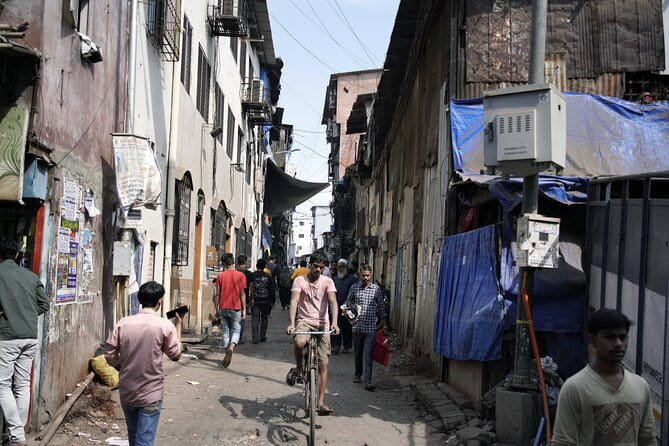
The Dharavi portion takes about two hours and is the heart of the visit. Expect a walking route through narrow lanes, with working areas and community spaces close together.
Your guide explains the history and local economy as you go. The focus is not on rushing from one photo stop to another. It is on showing how different businesses function side by side.
Leather production
Leatherwork is one of the industries highlighted on the route. You may see how this trade fits into Dharavi’s wider network of small-scale production and sales.
The value here comes from seeing work in context. Instead of hearing that Dharavi has an important leather industry, you can connect the idea to actual workshops and working lanes. Ask your guide how the goods are made, where materials come from, and how the businesses fit into Mumbai’s economy.
The supplied details do not promise a hands-on activity or shopping stop, so think of this as an observation and explanation visit rather than a craft class.
Kumbharwada pottery
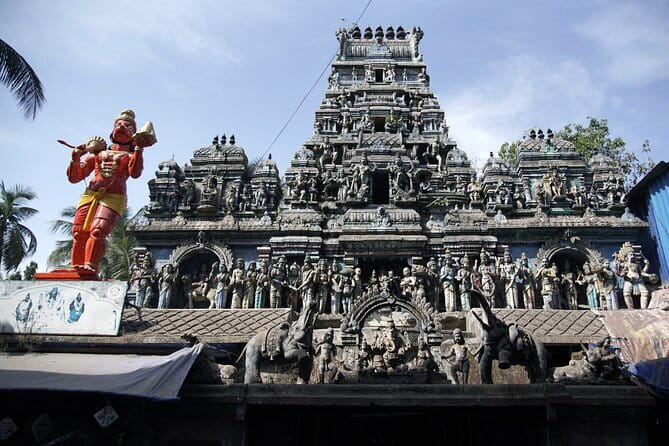
Kumbharwada is Dharavi’s pottery area. The tour includes the chance to see pottery workshops and learn how this long-running trade operates within the neighborhood.
This is one of the more distinctive parts of the route. Many city tours show historic buildings or major monuments. Here, the subject is a living craft district where work and daily life occupy the same compact setting.
Space can be tight, and the walk may feel less polished than a conventional sightseeing route. That is part of what you are seeing, but it also means you should stay close to your guide and avoid blocking doorways or work areas.
Same tracks, a different carriage:
- Mumbai City + Dabbawala aka Lunchbox + Train Ride Tour – The Unfeigned Mumbai.
★ 5.0 · 6 reviews - Mumbai: Dhobi Ghat Tour with Dharavi and Train Ride Options
★ 3.4 · 5 reviews - Dhobi Ghat Laundry and Dharavi Slum Tour with Local Train
★ 5.0 · 4 reviews - Mumbai Unseen: Local Train Ride And Sightseeing Tour
★ 5.0 · 3 reviews
Plastic recycling
Dharavi’s plastic recycling units give the tour a modern economic angle. You can see how discarded material becomes part of a business system instead of treating recycling as an abstract environmental topic.
The tour presents this work as organized and sophisticated. Your guide can explain the process and the role it plays in local employment. This is useful context for understanding why Dharavi matters beyond its borders.
Noise, heat, industrial smells, and limited room are possible on a route through active work areas. The experience is not designed as a quiet museum visit. You are walking through places where people are carrying out their jobs.
Textiles and small businesses
Textile production is also part of the Dharavi story. Along with leather, pottery, and recycling, it shows how many different trades operate within the same community.
The important point is scale. Dharavi is not one single industry. It is a dense network of small businesses, with residents producing, processing, repairing, and selling goods. Your guide’s explanation gives you a clearer sense of how these separate trades support one another.
The tour description says you can interact with locals, but the nature and length of those interactions can vary. Be polite, let your guide lead, and remember that people are working rather than performing for an audience.
Seeing Dhobi Ghat from above
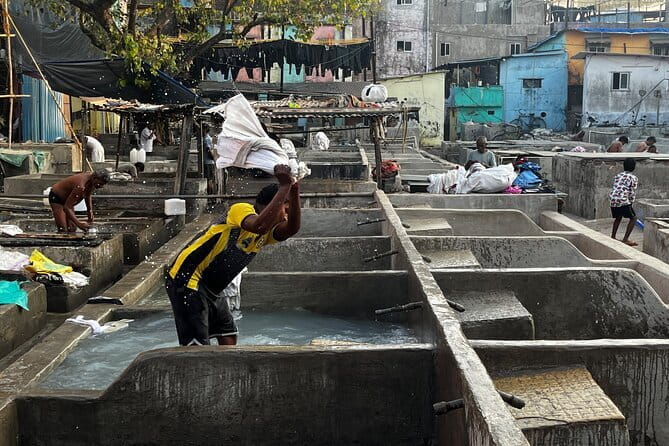
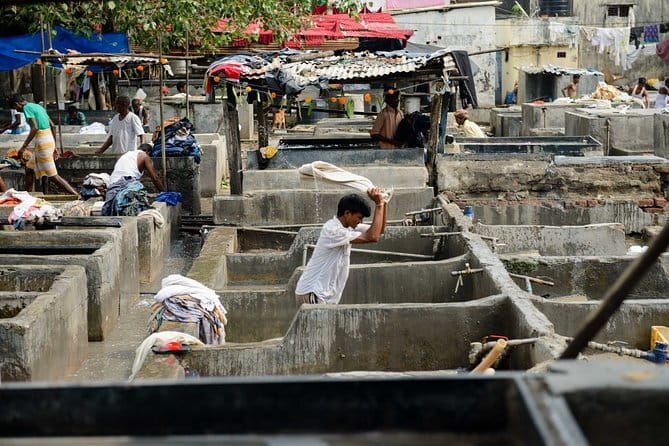
Mahalaxmi Dhobi Ghat provides a very different view of Mumbai. It is the city’s famous open-air laundry, where traditional washermen, known as dhobis, wash, dry, and press clothing for households, hotels, hospitals, and other customers.
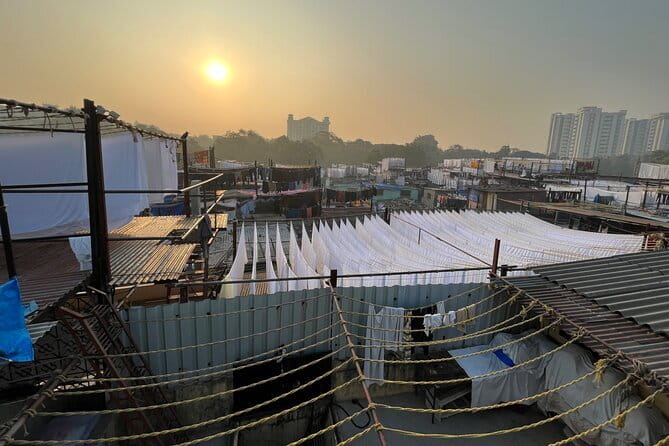
You do not enter the laundry area. Instead, you look down from a designated vantage point. That limitation is worth knowing before you book, but the viewpoint still lets you see the scale and organization of the operation.
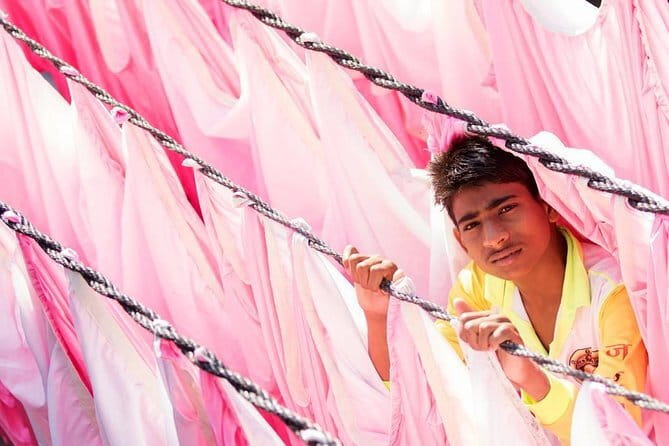
Clothes move through different stages of washing, drying, and pressing. Your guide explains the routines and techniques, along with the work’s place in Mumbai life. The scene can look chaotic at first, but from above you begin to see a system.
The stop lasts about 15 minutes, so it is a compact part of the day. That makes sense because Dhobi Ghat is mainly a viewpoint and explanation stop, while Dharavi receives most of the walking time.
The tour also promotes a good photography position. Still, use common sense. Ask before photographing identifiable people, and follow your guide’s advice. The laundry is a workplace, not a staged attraction.
The itinerary information places Dhobi Ghat at one point in the route, while the stated finishing point is also Dhobi Ghat in Lower Parel. Since the exact order may depend on the day’s arrangements, confirm the sequence when you meet your guide. The important practical fact is that the tour covers both places and ends at Dhobi Ghat.
What the private format adds
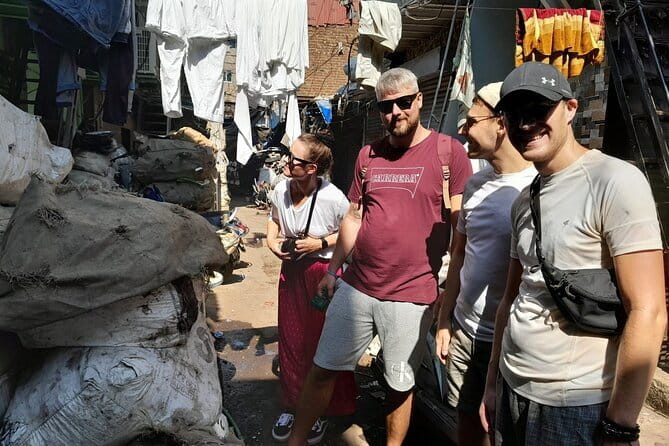
Private does not mean luxurious in the usual sightseeing sense. It means the tour is limited to your own group, with a professional English-speaking guide rather than a large mixed party.
That can make a big difference in Dharavi. You may want to ask about recycling, local businesses, housing, or the pottery trade. A private guide has more room to answer those questions and explain something that catches your eye.
The named guides bring different personalities to the experience. Priti is described as helping a hesitant participant better understand Dharavi’s role in Mumbai. Shruti is praised for being prompt, friendly, and clear while answering questions. Max is associated with careful attention to requests, and Ruba with a strong explanation of daily life.
Those details suggest that the guide is the key part of the tour. The route itself is interesting, but the quality of the explanation determines whether you see only crowded lanes or understand the community behind them.
The tour is also intended to be respectful. That does not remove the ethical questions around visiting a low-income neighborhood, but a community-focused explanation is a better basis than treating Dharavi as a spectacle. You should listen, avoid intrusive photos, and follow local instructions.
Price, timing, and what is included
The price is listed at $17.57 per person, with group discounts available. For a private three-hour experience in Mumbai, that is a low price, particularly because bottled water, train tickets, and a professional English-speaking guide are included.
The value comes mainly from the guide and access to places that are difficult to understand on your own. You could walk near Dharavi independently, but it would be much harder to identify the industries, understand the local economy, or know how to move through the lanes respectfully.
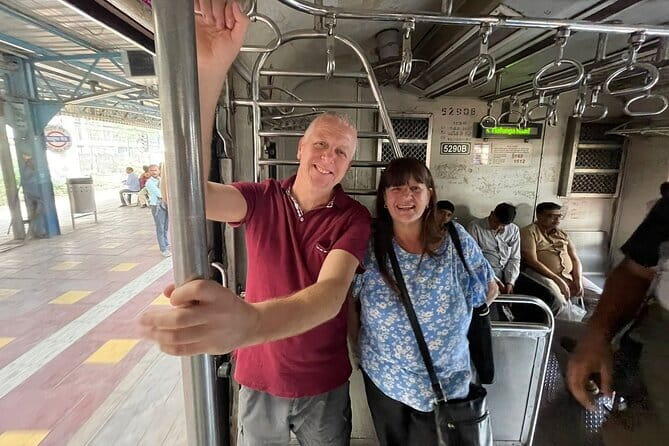
Private air-conditioned transfers are also included. The precise transfer arrangements are not explained in detail, so confirm how much of the journey is by private vehicle and how the train tickets fit into the route. The included train tickets indicate that public transport forms part of the experience.
The meeting point is Third Wave CoffeeTip Road, Unit 58, Ground, Ram Mahal, Senapati Bapat Marg, Marinagar Colony, near Mahim station. The stated ending point is Dhobi Ghat, Shanti Nagar, Lower Parel, where you can take an Uber or train back to your hotel.
The three-hour timing is convenient for a morning or afternoon plan, but allow extra time around it. Mumbai traffic and public transport can affect your wider schedule, even when the tour itself is well organized.
Who will enjoy this tour most
I would recommend this tour to you if you want to understand how ordinary work shapes Mumbai. It suits people who prefer local businesses and daily life to a list of famous monuments.
It is especially useful for first-time visitors who want context. Dharavi can be difficult to interpret from the outside, and Dhobi Ghat makes more sense when someone explains who uses it and how it operates.
The tour also suits families and private groups because you can control the questions and pace more easily. The description says most people can participate, but the Dharavi section is a two-hour walk through narrow lanes. Anyone with mobility concerns should ask for more details before booking.
You should think twice if you want a polished, relaxed sightseeing trip with plenty of time for posed photos. This is a working neighborhood and an active industrial area. The route can be eye-opening, but it may also feel crowded, noisy, or uncomfortable at points.
It is also not the right choice if you expect to enter Dhobi Ghat or take part in washing clothes. The laundry is viewed from outside, and the main interaction is explanation from the guide.
Small details that improve the visit
Wear shoes suited to two hours of walking. The lanes are the main setting, and you will be more comfortable if you are prepared for uneven or crowded ground.
Carry only what you need. The tour includes bottled water, but a small bag is easier to manage than bulky luggage in narrow passages.
Keep your questions open and respectful. Asking how a business works is more useful than asking people to pose or treating the area as a photo backdrop.
If a particular guide is important to you, ask about availability when booking. Priti, Shruti, Max, and Ruba are all connected with positive comments about communication and insight, but no specific guide is guaranteed in the information provided.
The cancellation policy is flexible if your plans change early. You receive a full refund when you cancel at least 24 hours before the start time. Cancellations or changes made within 24 hours are not refunded or accepted.
Should you book the Dharavi and Dhobi Ghat tour?
Book it if you want a short, affordable introduction to the working side of Mumbai, with a private guide who can explain rather than simply point. The strongest feature is the focus on enterprise: leather, pottery, recycling, textiles, and the systems behind daily work.
The Dhobi Ghat viewpoint adds a second useful stop, though it is brief and does not include entry. The main experience is the two-hour walk through Dharavi, so approach it with patience, respect, and comfortable shoes.
Skip it if you want a conventional sightseeing route or feel uneasy visiting a low-income community. For everyone else, the $17.57 price offers good value, especially with train tickets, water, private guiding, and air-conditioned transfers included. Ask for a guide who can answer your questions clearly, then let the people and businesses of Dharavi provide the lesson.
FAQ
How long does the Dharavi and Dhobi Ghat tour last?
The experience lasts approximately three hours. About two hours are allocated to the Dharavi walking tour, while the Dhobi Ghat stop takes about 15 minutes.
Is the tour private?
Yes. Only your group participates in the private activity.
What is included in the tour price?
The tour includes bottled water, train tickets, private air-conditioned transfers, and a professional English-speaking guide.
Can I enter Dhobi Ghat?
No. You view Dhobi Ghat from a designated vantage point and learn about its washing, drying, and pressing operations from the guide.
Where does the tour start and finish?
It starts at Third Wave CoffeeTip Road, Unit 58, near Mahim station in Mumbai. The stated ending point is Dhobi Ghat in Lower Parel, where you can take an Uber or train back to your hotel.
Can I cancel for a full refund?
Yes, if you cancel at least 24 hours before the experience starts. Cancellations made less than 24 hours before the start time are not refunded, and changes within that period are not accepted.
New on the timetable around Mumbai
- Mumbai Unseen: Local Train Ride And Sightseeing Tour★ 5.0 · 3 reviews
- Mumbai Slum Tour with Dhobi Ghat Laundry & Train Ride Tour★ 5.0 · 2 reviews
- All in one-Combo of City, Dhobighat, Slum & Dabbawala with ferry and train ride.★ 4.5 · 2 reviews
- Meet Dabbawala Visit Dhobi Ghat & Dharavi slum with Train★ 5.0 · 2 reviews
- Mumbai: Dhobi Ghat Tour with Dharavi and Train Ride Options★ 3.4 · 5 reviews
- Dhobi Ghat Laundry and Dharavi Slum Tour with Local Train★ 5.0 · 4 reviews
- Dabbawaala Dhobi Ghat Dahravi slum With Local Train Ride★ 5.0 · 2 reviews
- Best Combo Tour: Dabbawalas, Dhobi Ghat and Slum with Train★ 3.5 · 3 reviews
Other India Train Journeys worth a seat


“Taj Mahal” Tour from Delhi by India’s Fastest Train (Gatiman Express)
Read our review →

Taj Mahal Day Trip From Delhi By Superfast Train With 5* Meal
Read our review →
Private Day Tour of Taj Mahal by India’s Fastest Train or Car – All Inclusive
Read our review →
Taj Mahal Tour with High-Speed Train Experience – All Inclusive
Read our review →
Dabbawala, Dhobi Ghat & Dharavi slum Tour with Local Train Ride
Read our review →
Agra-Delhi One Day Trip By India’s Superfast Train
Read our review →Lists this ride appears on