
Review · KYOTO
Kyoto Railway Museum Advance Tickets
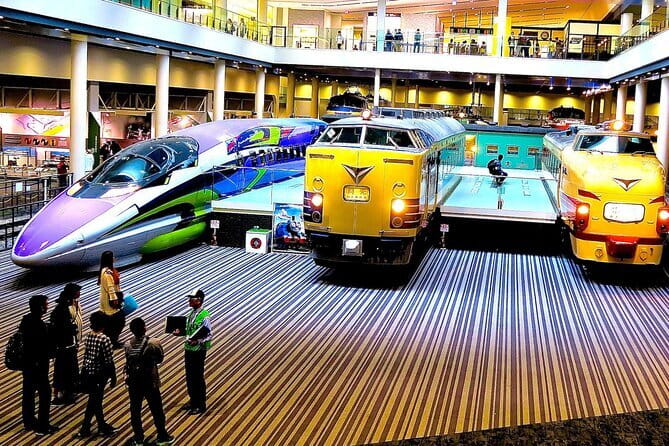
Kyoto Railway Museum is more than a room full of old trains. You can walk among 53 preserved railway cars, from working-era steam locomotives to sleek Shinkansen bullet trains, then watch a detailed railway diorama and try conductor-training equipment. The museum makes Japan’s railway story something you can see, touch, and experience.
I especially like the large mix of trains, which gives you a clear sense of how rail travel changed in Japan, and the diorama and short train ride, two features that help break up the displays. The main caution is time: two hours is enough for a solid visit, but train fans and families may want longer, especially if they add the separate SL steam train ride.
Key points at a glance
- Fifty-three historic railway cars: See preserved equipment ranging from steam locomotives to Shinkansen trains.
- A strong hands-on focus: Conductor-training simulators and other interactive exhibits fit the museum’s Look, Touch, and Experience theme.
- The diorama deserves time: It adds motion and scale to the history on display and is one of the museum’s most memorable features.
- A short train ride is available: This helps make the visit more than a walk through static exhibits.
- Easy station access: The museum is about a two-minute walk from Umekoji-Kyoton Nishi Station on the JR Sagano Line.
- The SL steam train costs extra: You can buy that ticket at the museum rather than with the main admission.
Why Kyoto’s railway museum is worth your time
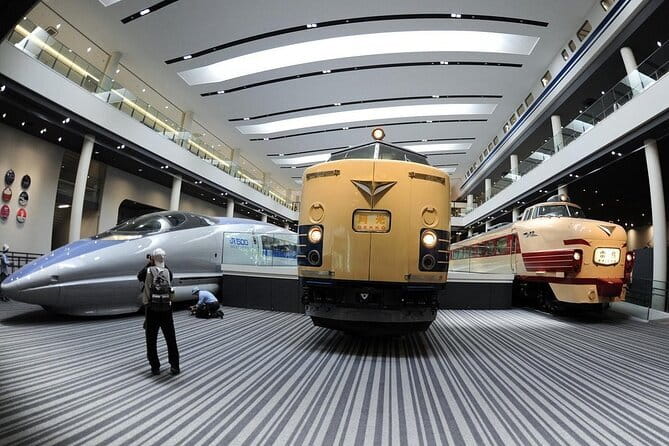
Japan’s railway system is part of daily life, but it is also a major part of the country’s modern story. The Kyoto Railway Museum shows that change through actual cars and working railway equipment rather than a long series of text panels.
The collection covers the shift from steam power to electric trains and then to the Shinkansen era. That range matters. You are not looking at one narrow period or one type of train. You can compare the size, shape, and purpose of very different vehicles in one visit.
The museum’s central idea is Look, Touch, and Experience. That gives the visit a practical rhythm. You look closely at preserved cars, interact with training equipment, and watch railway systems operate in miniature. For children, the hands-on parts can keep the visit moving. For adults, they add useful context to the technology.
I would not treat this as a quick photo stop. The main collection alone may be enough for a casual two-hour visit, but the diorama, simulators, short train ride, and optional SL experience give you reasons to stay longer. One visitor expected a shorter stop and ended up spending much more time inside. That is useful advice if you are building a tight Kyoto schedule.
More Railway Museums around Japan:
- Kyoto Railway Museum Admission Ticket
★ 4.3 · 23 reviews - Skip the Line: Historic RailPark and Train Museum Ticket with Guided Tour
★ 4.5 · 59 reviews - Prague: Railway Kingdom Giant Model Railway Museum
★ 4.4 · 54 reviews
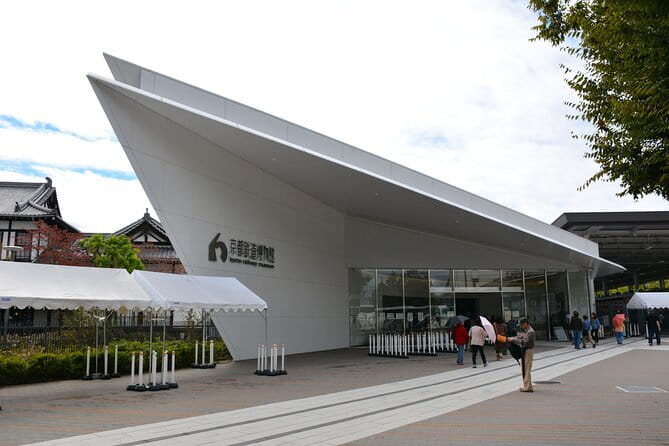
Entering the museum near Umekoji-Kyoton Nishi Station
The museum is in Kyoto’s Shimogyo-ku district. The stated access point is Umekoji-Kyoton Nishi Station on the JR Sagano Line, about a two-minute walk from the museum.
That short walk is one reason advance admission works well here. You can arrange your ticket before the day of your visit and avoid dealing with admission on arrival. The ticket covers the museum entrance, but not personal expenses or the separate SL steam train ticket.
The museum is open from 10:00 a.m. to 5:00 p.m. The available operating period listed for this experience runs from April 8, 2023, through June 17, 2026, with opening hours shown for Monday through Sunday. Still, I would check the confirmed date and current hours when booking, since museum schedules can change.
An average booking lead time of 34 days suggests that many people plan this stop well ahead. You do not necessarily need to book that early for every date, but advance purchase is sensible if the museum fits an important day in your Kyoto plan.
Fifty-three cars, from steam power to Shinkansen speed
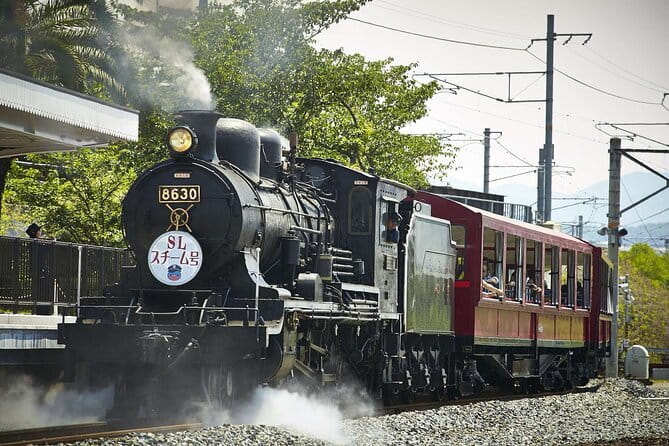
The collection’s biggest strength is its range. You can see preserved cars connected with Japan’s railway development, including steam locomotives and Shinkansen bullet trains.
A steam locomotive gives you a very different impression from a Shinkansen car. One represents mechanical power, smoke, and the older age of rail travel. The other reflects speed, efficiency, and Japan’s modern rail identity. Placing these types of equipment in the same museum lets you make that comparison yourself.
The collection includes 53 cars that played a role in the modernization of Japan. A full list of the cars is available in Japanese, which may interest serious railway fans who want to identify each piece more closely.
You should allow time to look at the cars from more than one angle. Large railway equipment can be impressive at a glance, but details often explain its purpose better than the overall shape. The museum’s theme encourages you to inspect rather than simply pass through.
If you are not a train expert, you will still have an easy way into the subject. Start with the largest and most familiar items, such as the Shinkansen cars, then compare them with the older locomotives. You do not need technical knowledge to notice how dramatically railway design changed.
The diorama and simulators add motion
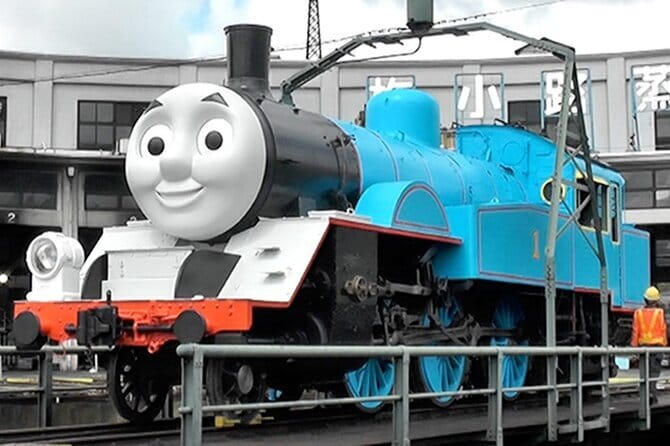
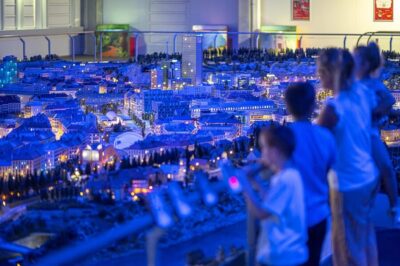
The museum’s diorama is one of the strongest reasons to allow extra time. A model railway can show routes, stations, and train movements at a scale that is easier to understand than a full-size vehicle.
I like the diorama because it changes the pace of the visit. After examining full-size cars, you can watch a miniature railway system operate as a whole. It helps connect individual trains with the wider network they serve.
The conductor-training simulators offer another change of pace. They give you a closer sense of the work behind a train journey. The supplied information does not specify the exact format, language options, or waiting arrangements, so you should think of these as available interactive exhibits rather than a guaranteed private activity.
These features are especially useful if you are visiting with children. The museum is not limited to reading and looking. You can move between large objects, small-scale railway scenes, and practical equipment. That variety can make two hours pass quickly.
More Museum Stops around Japan:
- Guided Half-day Tour(PM) to Toyota Commemorative Museum & SCMAGLEV Railway Park
★ 5.0 · 3 reviews - Brussels: Train World Museum Entrance Ticket
★ 4.7 · 524 reviews - London: Postal Museum Entry Ticket and Underground Rail Ride
★ 4.6 · 363 reviews - Brussels Train World Museum Entrance Ticket
★ 4.5 · 220 reviews
The short train ride and the optional SL experience
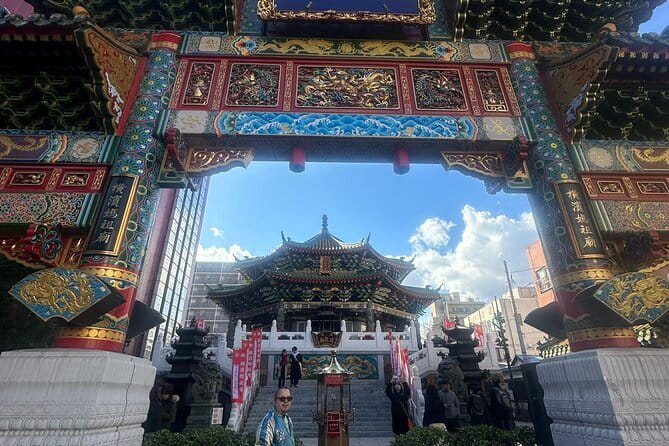
A short train ride is available at the museum and is included among the features that can make the visit feel more active. It is a useful addition because it lets you experience a railway vehicle in motion instead of viewing every car as a stationary object.
The exact ride details are not provided, so you should not plan around a particular departure time or assume it operates under every condition. Treat it as a worthwhile part of the museum visit when available.
The SL steam train is separate. If you want to enjoy that experience, you can purchase a ticket at the museum. The extra cost is not included in the $18.50 admission price.
This distinction matters when you compare the total value. The main ticket already gives you access to the large collection, diorama, simulators, and museum exhibits. The SL ride is an optional add-on for people who want a more direct steam railway experience.
Weather may also matter. The experience requires good weather, and if poor weather causes cancellation, you are offered another date or a full refund. That condition is worth remembering if you are making a firm day-by-day Kyoto plan.
Is the $18.50 ticket good value?

At $18.50 per person, the ticket is reasonably priced for a substantial museum visit, especially if you care about railways or want a family-friendly indoor activity with interactive elements.
The value depends on how you use the time. If you rush through the cars in an hour, the ticket may feel less worthwhile. If you allow two hours for the collection, diorama, simulators, and short train ride, you receive a fuller experience.
The price also covers admission in advance, which saves you one task on the day. It does not include food, drinks, personal expenses, or the SL steam train. Build those costs separately if you want the optional ride or plan to eat at the museum.
For a train enthusiast, the price is easy to justify because the collection is unusually broad. For a general sightseer, the value comes from the variety of the visit. You are not simply looking at one famous locomotive. You are seeing the development of Japanese railways across several generations.
How to plan your two hours inside
A sensible first visit could look like this:
- Begin with the full-size preserved cars so you understand the museum’s main collection.
- Spend time comparing the steam locomotives with the Shinkansen cars.
- Visit the diorama rather than treating it as a quick side display.
- Try the conductor-training simulators if they are available during your visit.
- Take the short train ride if the schedule fits.
- Decide on the separate SL ticket at the museum.
Two hours is a useful minimum plan, not a strict limit. The museum does not provide a guided tour in the supplied details, so your pace is largely your own. That suits independent visitors who prefer to linger over favorite exhibits.
If your group includes serious train fans, allow extra time. The same is true for families, since interactive areas can slow your progress in a good way. If your itinerary is packed with temples and outdoor sightseeing, the museum can work as a focused indoor stop, but you should not expect to inspect every exhibit carefully in a rushed visit.
Food, strollers, and smoking rules

You cannot eat or drink inside the exhibit rooms. The museum provides a restaurant and rest areas, and you may also bring your own food and drinks into the courtyard.
That rule is easy to manage if you plan a meal break before or after the main exhibits. Keep drinks and snacks for the designated areas rather than carrying them through the displays.
Strollers may be brought into the facility. Steerable toys such as tricycles and bicycles are not allowed. This distinction is useful for families with young children, particularly if you are deciding what to bring for a longer visit.
Smoking is prohibited inside all buildings. There are two designated outdoor smoking areas, but no cigarette vending machines. If that affects your planning, handle purchases before you arrive.
Who will enjoy this museum most?
This is an obvious choice for railway enthusiasts, but you do not need to know train models or engineering terms to enjoy it.
I would recommend it most for:
- Families who want an indoor activity with hands-on exhibits.
- Adults interested in Japan’s shift from steam railways to modern high-speed trains.
- Visitors who enjoy machines, design, and transport history.
- Anyone looking for a structured two-hour stop near a JR station.
- People who want a break from outdoor sightseeing without giving up a distinctly Japanese subject.
The museum may be less suitable if you have no interest in trains and have only a very short window in Kyoto. The full-size cars and interactive features provide variety, but the entire visit still centers on railways. You should choose it because that subject appeals to you, not simply because it is near public transportation.
Booking, cancellation, and practical timing
The ticket can be booked online in advance, with confirmation received at the time of booking. Free cancellation is available if you cancel at least 24 hours before the experience start time.
Cancellations made less than 24 hours before the start time are not refunded, and changes within that period are not accepted. Cutoff times use the local time in Japan, so check the clock carefully if you are changing plans from another time zone.
If bad weather causes the experience to be canceled, you are offered a different date or a full refund. The booking information does not give a group-size limit or a specific admission time, so confirm those details for your chosen date.
Should you book the Kyoto Railway Museum?
Book it if you want to understand Japan through its trains rather than only see temples and gardens. The combination of 53 preserved cars, a detailed diorama, conductor-training simulators, and a short train ride gives the museum more variety than a standard transport exhibit.
The $18.50 price is fair when you use the full two hours, and advance admission makes the visit simple to fit into your day. Keep the separate SL ticket in mind, and leave extra time if you are visiting with children or have a strong interest in railway equipment.
Skip it only if your Kyoto schedule is already overloaded or trains hold no appeal for you. For everyone else, this is a practical, well-focused museum stop with enough hands-on detail to keep the experience from feeling static.
FAQ
Where is the Kyoto Railway Museum?
The museum is in Shimogyo-ku, Kyoto. It is about a two-minute walk from Umekoji-Kyoton Nishi Station on the JR Sagano Line.
How much does admission cost?
The advance admission ticket costs $18.50 per person.
How long should I plan for the museum?
The approximate duration is two hours. You may want additional time if you plan to spend longer with the diorama, simulators, or optional train experiences.
What does the admission ticket include?
The ticket includes admission to the Kyoto Railway Museum and its exhibits.
Is the SL steam train included?
No. The SL steam train requires a separate ticket, which you can purchase at the museum.
What are the museum’s opening hours?
The listed opening hours are 10:00 a.m. to 5:00 p.m., Monday through Sunday.
Can I bring food and drinks inside?
Food and drinks are prohibited in the exhibit rooms. You may use the restaurant, rest areas, or courtyard, where you can bring your own food and beverages.
What is the cancellation policy?
You can cancel for a full refund up to 24 hours before the experience start time. Cancellations and changes made less than 24 hours before the start time are not accepted for a refund.
New on the timetable around Japan
- Train in Samurai Swordsmanship and Defeat the Demon in Tokyo★ 5.0 · 5 reviews
- Mt Fuji & Hakone Private Tour from Tokyo: Return by Bullet Train★ 5.0 · 22 reviews
- Tokyo-Izu: Volcano, Ocean& Capybara Cuddle with Izu Scenic Train★ 3.5 · 3 reviews
- Private tour with Yasushi and Yoko – by car, train, on foot★ 5.0 · 2 reviews
- Bullet Train Experience & Mishima Shrine Private Tour from Tokyo★ 5.0 · 9 reviews
- 3-Day Private Tokyo and Nagano: Snow Monkeys, Tsukiji Market and Bullet Train★ 5.0 · 2 reviews
- Bullet Train and Mt. Fuji Famous Food Tour★ 5.0 · 4 reviews
- Guided Half-day Tour(PM) to Toyota Commemorative Museum & SCMAGLEV Railway Park★ 5.0 · 3 reviews
Other Railway Museums worth a seat
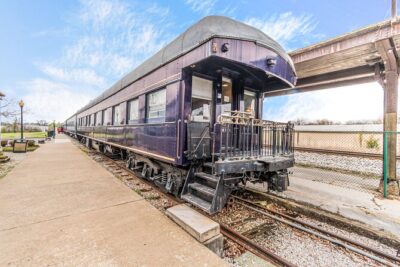
Skip the Line: Historic RailPark and Train Museum Ticket with Guided Tour
Read our review →
Skip the Line: Kingdom of Railways Entrance Ticket in Prague
Read our review →

Bowling Green: Historic RailPark & Train Museum Entry & Tour
Read our review →
Kusadasi Day Trips Magnesia, Train Museum Turkish Bath
Read our review →Lists this ride appears on