
Review · JAPAN
Guided Half-day Tour(PM) to Toyota Commemorative Museum & SCMAGLEV Railway Park
Nagoya’s industrial story comes into focus on this compact afternoon tour. You begin where Toyota grew from a spinning and weaving company, then move to a museum filled with Japanese railway engineering, including Shinkansen trains and MAGLEV technology. I like the two very different museums and the fact that transport and admission are handled for you. I also like the small maximum group of eight, which gives the guide room to explain the displays rather than simply point at them.
The main drawback is time. The two museum visits total about two and a half hours, leaving the rest of the five-hour outing for transport and organization. You should also expect a fair amount of walking, and the $143.07 price is easier to justify if you value a guide’s explanations and the convenience of seeing both sites in one afternoon.
Key points at a glance
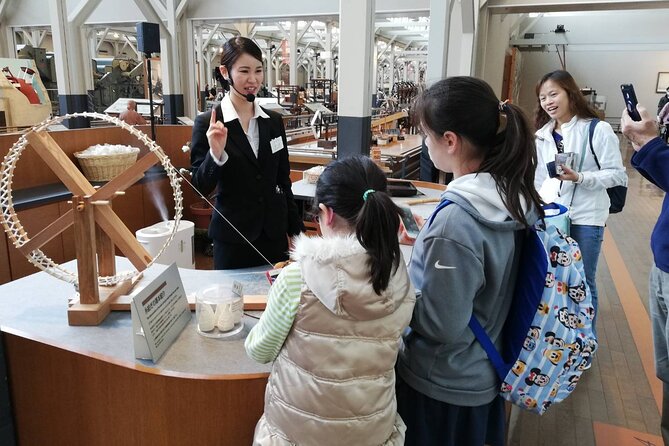
- Toyota’s beginnings: See how Sakichi Toyoda’s textile machinery formed the starting point for the company now known worldwide for cars.
- Japan’s rail story: Follow the change from steam locomotives to Shinkansen and magnetic levitation trains.
- Guide Hiro’s careful approach: Hiro is specifically praised for being well prepared and for taking extra time to explain important details.
- Small-group format: The tour accepts no more than eight people, a useful size for questions and group movement.
- Easy afternoon meeting point: Meet at the Nagoya Station Tourist Information Center at 1:00 pm and return there at the end.
- Walking matters: Wear comfortable shoes, since the museums and transfers involve a fair amount of time on your feet.
Why this Nagoya pairing works
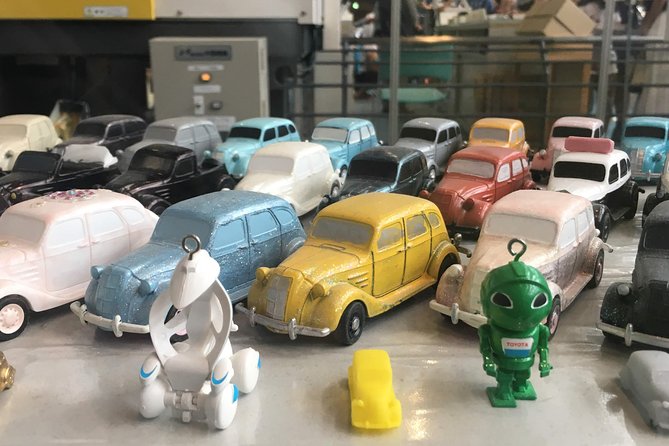
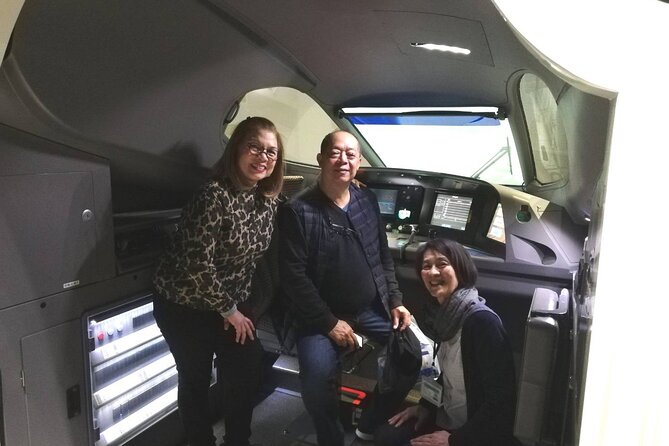
This tour links two sides of the same Japanese story: manufacturing discipline and transport technology. The Toyota museum shows how a local company developed through textiles and machinery. The railway museum then shifts your attention to the systems that move people quickly and precisely across Japan.
That connection gives the afternoon more shape than visiting either museum alone. At Toyota, you look at the process of making things. At SCMAGLEV Railway Park, you look at the finished machines and the engineering needed to make a modern rail network work.
I especially like the contrast in mood. The Toyota visit begins with an industrial origin story rooted in spinning and weaving. The railway stop points toward the future, with high-speed trains and MAGLEV technology. You get a view of Japan that is practical rather than decorative, and it helps explain why Nagoya has such strong ties to manufacturing.
The tour begins at Nagoya Station, a sensible meeting point for an afternoon activity. The start time is 1:00 pm, so you have the morning free for another Nagoya sight, a meal, or a slower start. Transport to the two locations is included, which matters in a city where a short museum visit can otherwise turn into a string of train connections and station changes.
The group limit of eight is another real advantage. A guide can keep the group together without making every explanation broad and hurried. It also gives you a better chance to ask about a machine, a train, or a piece of Toyota’s development when something catches your attention.
More Museum Stops around Japan:
- Kyoto Railway Museum Admission Ticket
★ 4.3 · 23 reviews - Kyoto Railway Museum Advance Tickets
★ 5.0 · 2 reviews - Brussels: Train World Museum Entrance Ticket
★ 4.7 · 524 reviews
The Toyota museum and the company before cars
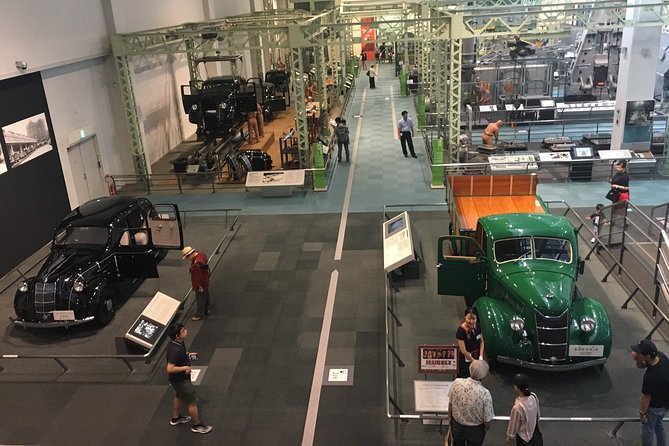
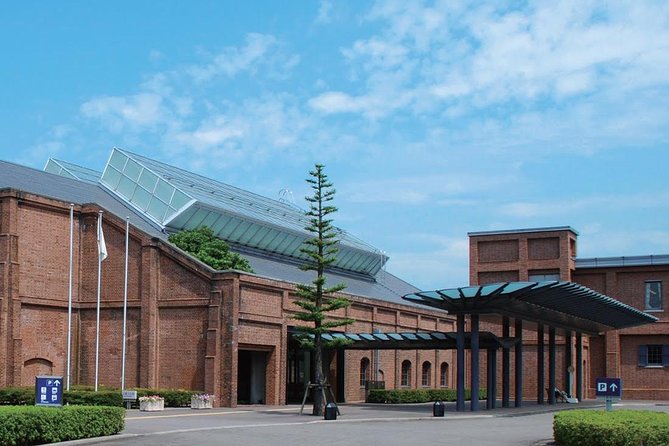
The first stop lasts about one hour, with admission included. The focus is the Toyota Commemorative Museum of Industry and Technology, located at the company’s original starting point.
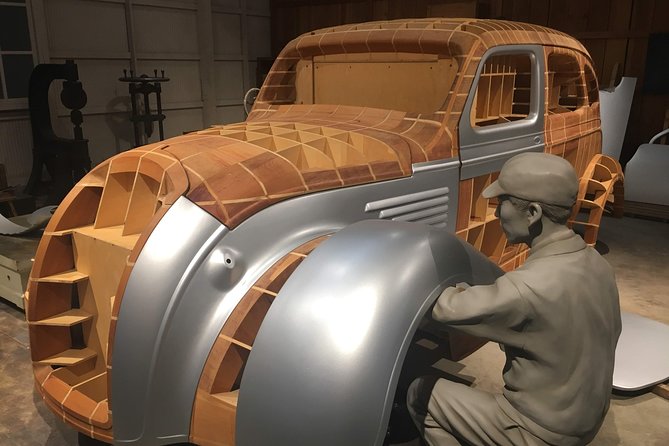
That starting point is important. Toyota began with Sakichi Toyoda’s spinning and weaving company, not with automobiles. The museum presents that early industrial work as the foundation for the company’s later growth. You see the connection between invention, manufacturing, and the drive to improve production.
The idea of kaizen, or striving for improvement, is central to the story. You do not need a technical background to appreciate the basic lesson: Toyota’s success grew from patient problem-solving and repeated refinement. The museum gives that idea a physical setting, showing the machinery and industrial spirit linked to the company’s early years.
A guided hour is useful here because industrial displays can be easy to skim. A machine may look like an old piece of factory equipment, but the guide can explain why it mattered and how it fit into the company’s larger development. The guide is also able to point out details you might miss while moving from one exhibit to the next.
One hour is enough for a focused introduction, but it is not a slow, all-day museum visit. If you are deeply interested in Toyota, factory systems, or textile machinery, you may wish you had more time. For most people, though, the short stop keeps the afternoon moving and leaves room for the railway museum.
The Toyota museum may be especially useful if your picture of the company begins and ends with cars. This visit corrects that narrow view. It shows how an industrial company grew from textile technology and how a culture of careful improvement helped shape a major manufacturing nation.
SCMAGLEV Railway Park and Japan at speed
The second museum receives about 90 minutes, again with admission included. SCMAGLEV Railway Park takes you through the development of Japanese railways, from steam locomotives to the Shinkansen and magnetic levitation technology.
This is the larger and more visually immediate stop for many people. You can see successive generations of trains and follow the push toward greater speed and accuracy. The displays connect old railway technology with Japan’s modern bullet train system, so the subject is not only about trains on display. It is also about the engineering choices behind a national transport network.
The Shinkansen is the clear centerpiece of the modern story. Japan’s bullet trains are known for speed and precision, and the museum gives you a place to consider the technical work behind that reputation. The presentation also looks ahead to MAGLEV service, described as planned to run between Tokyo and Nagoya in 2027.
That future-facing section adds a useful twist. You are not simply looking backward at railway history. You are also seeing the technology Japan expects to use next. MAGLEV, short for magnetic levitation, gives the museum a sense of movement from older steam power toward a different kind of high-speed rail.
Guide Hiro is specifically praised for being well prepared at the railway museum. That matters because rail displays can quickly become a blur of train names, dates, and technical terms. A prepared guide can help you understand the sequence, identify the major breakthroughs, and keep the visit tied to the larger story.
Ninety minutes is a practical amount of time, but it will not allow a leisurely look at everything. You should expect the guide to keep the group moving. If trains are your main interest, pay attention at the start and use the time carefully. If you are traveling with children or with someone who simply likes machines, the full-size trains and clear progression from old to new should keep the visit engaging.
What the five-hour schedule really gives you
The tour is advertised as lasting about five hours, with the two museum visits taking one hour and 90 minutes. The remaining time covers transport, meeting, transitions, and the guided flow between sites. That means this is not five hours inside museum galleries.
I see the schedule as a convenient sampler. You get two major Nagoya attractions without spending a full day planning routes, buying separate tickets, or deciding how long to stay at each place. The trade-off is that you surrender some independence. You will move according to the group schedule, and the time at each museum is set.
The afternoon departure works well for a busy Nagoya itinerary. Meet at the Nagoya Station Tourist Information Center at 1:00 pm, then return to the same meeting point when the activity ends. Returning to the starting location is handy if you are staying near the station or using Nagoya as a base for the rest of your day.
Transport between the locations is included, but the supplied details do not specify the exact vehicle or route. I would treat that as a convenience rather than assume a particular type of transfer. You should arrive ready to move with the group and allow the full five-hour window.
The tour is near public transportation and most people can participate. Still, the walking warning is worth taking seriously. Both museums require time on your feet, and a comfortable pair of shoes will make the afternoon more enjoyable.
More Half-Day Rail Outings around Japan:
- Melbourne: Half-Day Puffing Billy Steam Train Experience
★ 4.8 · 263 reviews - Mallorca: Exclusive Soller Train and Tram Half-Day Tour
★ 4.4 · 116 reviews - Half-Day Tierra del Fuego National Park with Train
★ 5.0 · 64 reviews
Is $143.07 a fair price?
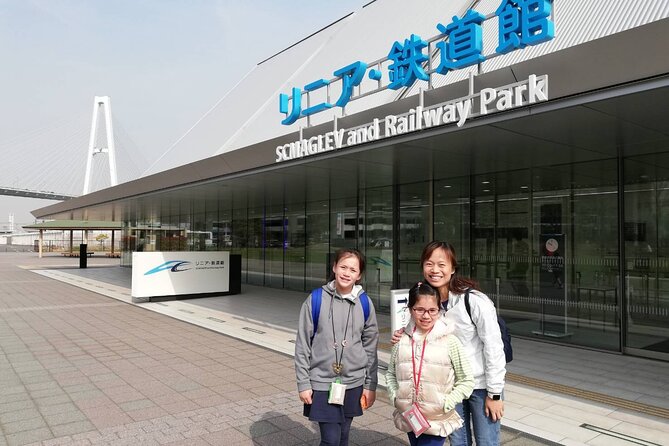
At $143.07 per person, this is not the cheapest way to see two museums in Nagoya. The value depends on what you want from the outing.
If you are comfortable navigating Japanese public transport, buying admission separately, and reading your way through the displays, you may find the price high. Independent visitors can choose their own pace and spend more time at the museum that interests them most.
The calculation changes if you want structure. The price includes admission to both attractions, transport between locations, and guided visits. You also get a small group rather than a large coach-style outing. That can save you time and reduce the stress of working out the route on your own.
The guide is the main reason to consider paying more. The strongest praise is directed at the guide’s preparation, clear explanations, and willingness to make extra effort with important details. For a museum centered on machinery and railway engineering, that human explanation can turn a collection of objects into a story you can follow.
A group discount is available, though the supplied details do not state the size of the discount. If you are booking for several people, check the final price before deciding. The tour is also booked around 50 days in advance on average, so popular dates may be worth arranging early.
Who should book this afternoon tour?
I would recommend it to first-time Nagoya visitors who want a focused look at the city’s industrial identity. It also suits anyone with a serious interest in manufacturing, train technology, or Japanese engineering.
Families may find the railway museum particularly appealing, since full-size trains and high-speed rail make the subject easy to grasp. The Toyota museum adds a more technical and industrial side, so the best fit is a group happy with both machines and explanations.
This outing is also useful if you have only one afternoon available. Instead of choosing between Toyota and the railway museum, you see both in a single organized visit. The small group limit gives the experience a more personal feel than a large sightseeing bus.
I would hesitate to recommend it if you dislike fixed schedules, prefer long museum visits, or want to spend most of your time inside one collection. The two stops are compact, and the day includes walking and transfers. Independent visitors who already feel comfortable getting around Nagoya may also prefer to buy separate admission and set their own pace.
The tour is usually booked well ahead, with an average booking point of about 50 days before the visit. That does not guarantee every date will sell out, but it is a useful signal to plan early if your schedule is fixed.
Booking details worth knowing
You meet at the Nagoya Station Tourist Information Center, at 1-chōme-1-4 Meieki, Nakamura Ward, at 1:00 pm. The tour ends back at the same meeting point.
A mobile ticket is available, and confirmation normally arrives at booking. If you book within seven days of the tour, confirmation may arrive within 48 hours and remains subject to availability.
Some national holidays can affect the plan. If an attraction closes, another attraction may be substituted. That possibility is uncommon information to overlook, so check the date carefully if your visit falls near a Japanese national holiday.
Cancellation is flexible only up to a point. Cancel at least six full days before the local start time for a full refund. A cancellation made two to six full days ahead receives a 50 percent refund, while cancellations less than two full days before the start receive no refund. Changes are not accepted inside those shorter time windows.
Should you book it?
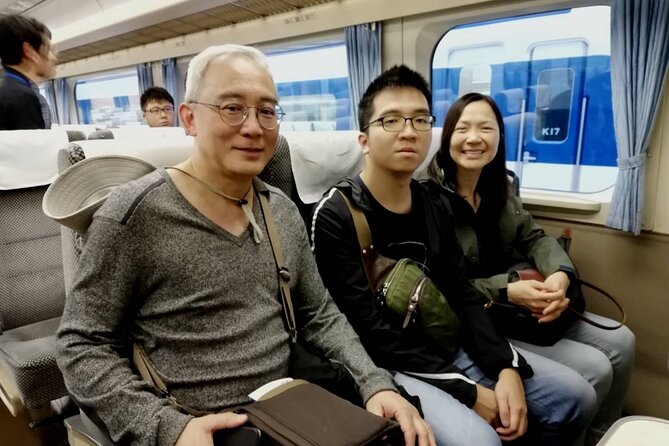
Book this tour if you want Nagoya’s manufacturing and railway stories explained in one organized afternoon. The strongest reasons are the small group, included transport and admission, and the guide-led interpretation, with Hiro singled out for careful preparation.
Skip it if you want to linger at one museum or if the $143.07 cost feels high for a five-hour schedule. For the right visitor, though, this is an efficient way to see two distinctive sides of Nagoya: the patient work of making things and the high-speed technology that moves Japan forward.
FAQ
Where does the tour begin?
It begins at the Nagoya Station Tourist Information Center, located at 1-chōme-1-4 Meieki, Nakamura Ward, Nagoya, Aichi 450-0002, Japan.
What time does the tour start?
The tour starts at 1:00 pm.
Where does the tour end?
The activity ends back at the Nagoya Station meeting point.
Are museum admission fees included?
Yes. Admission to both the Toyota Commemorative Museum of Industry and Technology and SCMAGLEV Railway Park is included.
How large is the group?
The activity has a maximum of eight participants.
How much walking is involved?
You should be prepared for a fair amount of walking. Most people can participate, and the tour is near public transportation.
New on the timetable around Japan
- Train in Samurai Swordsmanship and Defeat the Demon in Tokyo★ 5.0 · 5 reviews
- Mt Fuji & Hakone Private Tour from Tokyo: Return by Bullet Train★ 5.0 · 22 reviews
- Tokyo-Izu: Volcano, Ocean& Capybara Cuddle with Izu Scenic Train★ 3.5 · 3 reviews
- Private tour with Yasushi and Yoko – by car, train, on foot★ 5.0 · 2 reviews
- Bullet Train Experience & Mishima Shrine Private Tour from Tokyo★ 5.0 · 9 reviews
- 3-Day Private Tokyo and Nagano: Snow Monkeys, Tsukiji Market and Bullet Train★ 5.0 · 2 reviews
- Bullet Train and Mt. Fuji Famous Food Tour★ 5.0 · 4 reviews
- Kyoto Sagano Romantic Train in Arashiyama Bus Tour★ 3.0 · 6 reviews
Other Japan Train Journeys worth a seat
Mt Fuji & Hakone Cruise, Drum Show Bullet Train 1 Day from Tokyo
Read our review →
Tokyo Mt Fuji 5th St & Hakone Cruise Bus Tour w/Bullet Train
Read our review →
Sagano Romantic Train & Arashiyama, Kiyomizudera, Fushimi Inari Taisha Day Tour
Read our review →
Hakone: Train Pass with Unlimited Rides & Activity Discounts
Read our review →
Kamakura & Enoshima Day Tour with Pickup & Train Ride
Read our review →Arashiyama Day Tour with Train, Boat, and Onsen
Read our review →Lists this ride appears on