
Review · KYOTO
Train Katana with Real Dojo Students in Kyoto
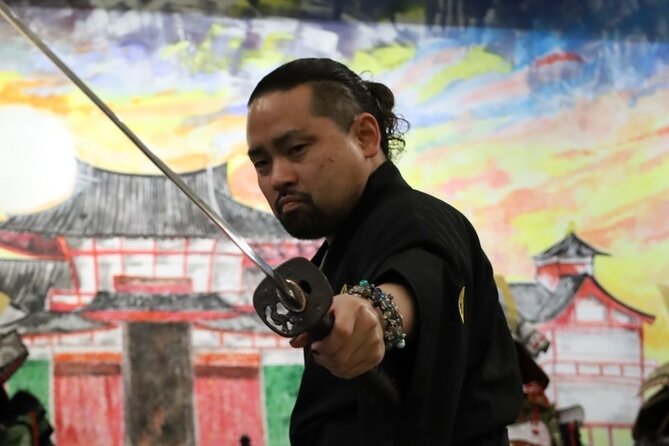
The most unusual part of this Kyoto activity is its setting: you train inside Yushinkan Kyoto, alongside students who attend the dojo for serious katana practice. This is not a staged sword show with a quick photo stop. You put on dōgi, obi, and hakama, then work through iai and kenjutsu under the direction of a headmaster with more than 20 years of experience.
I like the tiny group, capped at three people, and the chance to watch real training rather than a tourist routine. I also like the two-katana performance and the cutting of rolled tatami mats, which give you a clear look at the control involved in Japanese sword work. The main drawback is that the session costs $195.09 and does not include test cutting for participants, so you are paying for instruction, observation, and demonstration rather than a chance to cut targets yourself.
Key points before you book
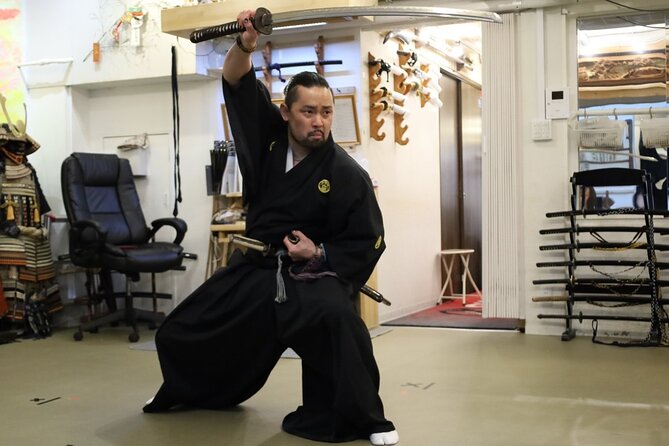
- Train beside local dojo students: The session takes place during regular-style katana training, not a show created only for visitors.
- Wear full training clothing: You use dōgi, obi, and hakama, which makes the lesson feel like practice rather than dress-up.
- Learn both iai and kenjutsu: The class covers drawing the katana and basic fighting techniques.
- Watch real cutting practice: Students and the master cut rolled tatami mats with a real katana.
- See a two-katana performance: The headmaster’s demonstration is a special part of the session.
- Expect a very small group: A maximum of three participants allows for close attention, but availability may be limited.
Inside Yushinkan Kyoto at 452-4 Matsugaechō
The address is 452-4 Matsugaechō in Nakagyo Ward, central Kyoto. The dojo is near public transportation, and the activity begins and ends at this same meeting point. That simple arrangement matters in Kyoto, where a three-hour activity can become stressful if it sends you across town between several locations.
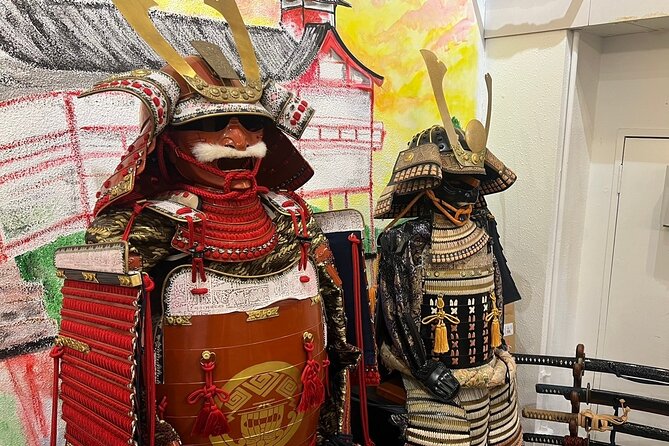
You should arrive ready to treat the space as a working dojo. The important distinction is that this is not presented as a fantasy version of samurai life. Yushinkan Kyoto is home to students who train with dedication, and your visit takes place alongside that practice.
The group limit is unusually small. With no more than three participants, you are not placed in a large class where everyone copies a demonstration from the back of the room. The small format should give you a better view of the instructor and the local students, though it also means that confirmation depends on availability.
The activity is available to people age 12 and older. You should also have a moderate level of physical fitness. The session is not described as a passive museum visit, so plan for standing, movement, and repeated practice with training equipment.
More Train Journeys around Japan:
- Mt Fuji & Hakone Cruise, Drum Show Bullet Train 1 Day from Tokyo
★ 4.0 · 7,413 reviews - Tokyo Mt Fuji 5th St & Hakone Cruise Bus Tour w/Bullet Train
★ 4.4 · 5,024 reviews - Mt. Fuji and Hakone Day Trip From Tokyo with Bullet Train Option
★ 4.0 · 368 reviews
Putting on dōgi, obi, and hakama
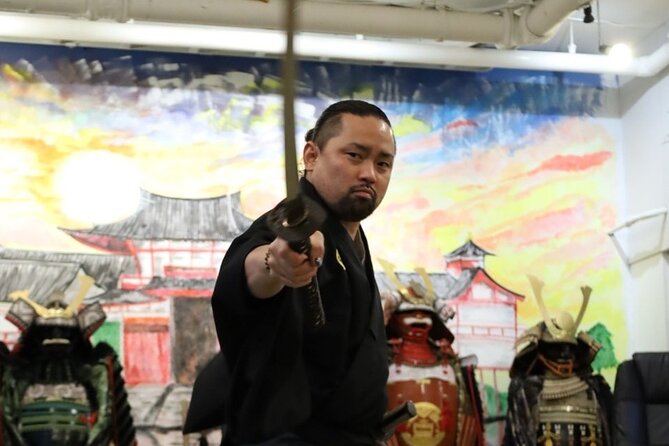
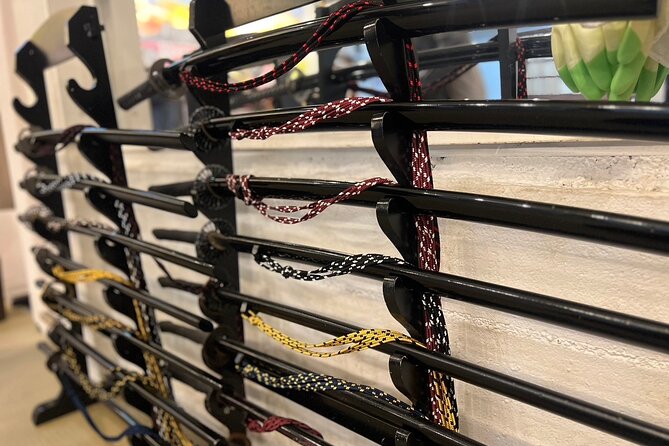
The session begins with samurai training clothing: dōgi, obi, and hakama. These garments are part of the practical structure of Japanese martial arts training, not merely a costume for photographs.
For you, the clothing changes the mood of the activity. A sword lesson in ordinary sightseeing clothes could feel like a casual demonstration. Wearing the proper gear gives the session a more formal rhythm and helps you understand that posture, balance, and controlled movement matter as much as the katana itself.
This part may take more attention than a quick costume change. The obi and hakama are tied for movement and presentation, and you will need to follow instructions carefully. If you prefer activities that require no preparation, this may feel slower than a standard sightseeing stop. I think the tradeoff is worthwhile because the clothing connects you to the practice in a direct, physical way.
The session is best approached with respect. You are entering a dojo where local students train, not a set designed for casual entertainment. Pay attention to the instructor’s directions and allow the setting to guide your behavior.
Learning iai, the art of drawing the katana
Iai focuses on drawing the katana and controlling the movement that follows. The point is not speed alone. A proper draw calls for posture, timing, hand position, and awareness of the blade’s path.
For a first-time participant, iai gives you a useful introduction to why swordsmanship is more demanding than it looks in films. The movement can appear simple when performed by a master, but small errors in stance or control become obvious when you try to repeat it.
The headmaster has more than 20 years of experience, which is important here. You are not only hearing a general explanation of a sword. You are receiving instruction in a discipline passed through formal training and repeated practice.
If you have martial arts experience, you may get more from this section because you already understand body alignment, controlled movement, and the value of repetition. One published account specifically described the session as a strong fit for someone with experience in several martial arts but limited katana experience. You do not need to arrive as a sword specialist, but a serious attitude will help.
Do not expect to master iai in one visit. The value is in learning the basic principles and seeing how much precision sits behind each action.
Practicing kenjutsu with a real dojo group
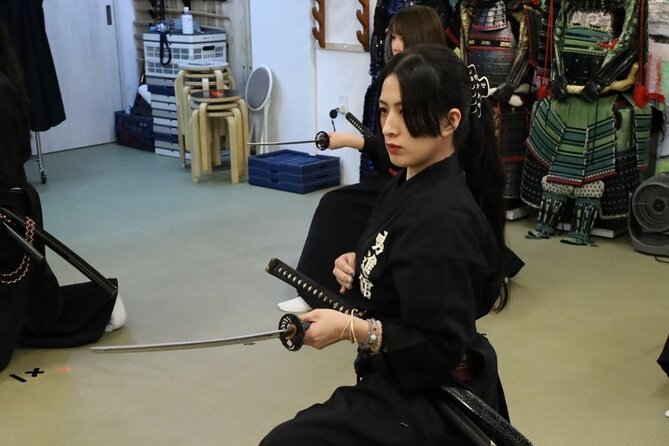
Kenjutsu introduces katana fighting techniques. This is different from learning a single ceremonial movement because you begin to consider how the sword is used in relation to another person and to the space around you.
The supplied details do not promise a long list of named techniques, and that is useful to understand before booking. The session lasts about three hours, so the instruction is an introduction rather than a complete martial arts course. You will practice under guidance and watch the local students continue their own training.
This is where the setting matters most. Seeing dedicated students work gives you a better sense of the discipline required outside a one-off class. Their practice provides context for your own lesson. You are not being asked to believe that swordsmanship is easy because an instructor can perform it once for a camera.
Video recording is not allowed. That rule may disappoint anyone hoping to take home footage of the lesson, but it also keeps the focus on the training and protects the dojo’s working atmosphere. Bring your attention instead of planning to film every movement.
The class should suit you if you enjoy learning by watching, copying, and correcting. It may be less satisfying if you want a free-form action activity or a theatrical battle.
Same tracks, a different carriage:
- From Osaka: Sagano Train Ride and Kyoto Guided Day Tour
★ 4.3 · 180 reviews - Fukuoka: Takachiho Gorge & Scenic Railway One Day Tour
★ 4.8 · 178 reviews - Sagano Romantic Train & Arashiyama, Kiyomizudera, Fushimi Inari Taisha Day Tour
★ 4.5 · 171 reviews - Hakone: Train Pass with Unlimited Rides & Activity Discounts
★ 4.4 · 102 reviews
Watching tatami cutting with a real katana
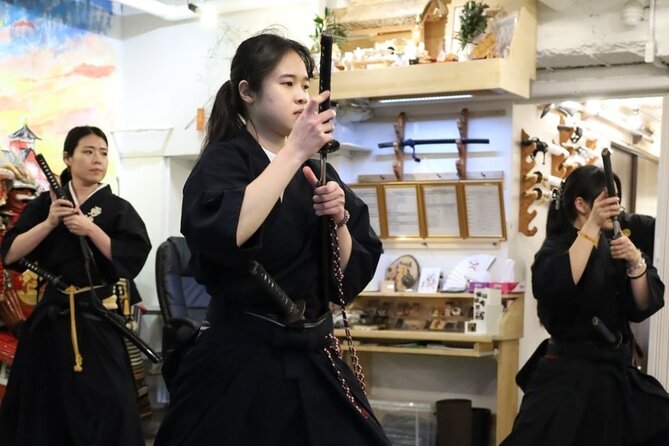
One of the strongest parts of the session is watching students and the master cut rolled tatami mats with a real katana. This gives you a practical demonstration of blade angle, control, and follow-through.
The target is not an inflated stunt prop. Rolled tatami requires accurate technique, and the cutting demonstration helps explain why a sword must be handled with care. You can watch the students apply what they have trained, then compare their work with the headmaster’s more advanced performance.
There is an important limit: participants do not get to test-cut tatami themselves. If your main reason for booking is the chance to swing a real sword at a target, this experience will not meet that expectation.
I see the restriction as sensible. Katana cutting is not a casual souvenir activity, and leaving it to trained students and the master keeps the focus on safety and proper technique. You still see the most dramatic part of the practice without pretending that a short lesson can prepare you to handle a live blade.
This is also a good point to keep your camera away. Since recording is not permitted, you will need to experience the cutting demonstration in the room rather than through a phone screen.
The headmaster’s two-katana performance
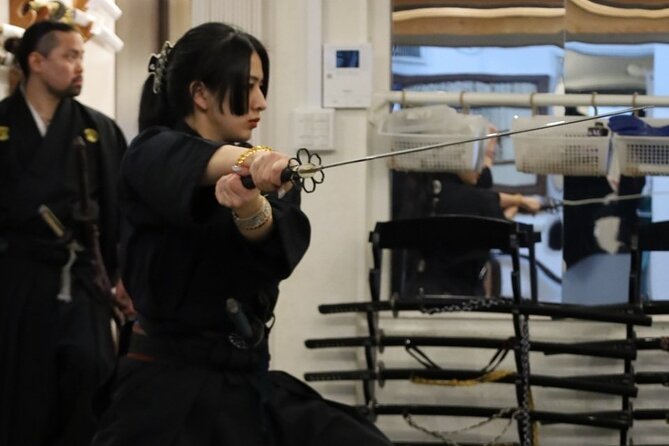
The headmaster’s performance with two katana is the most distinctive feature of the session. Two-sword work requires coordination, spacing, and control, and seeing it performed after learning basic movements gives you a better frame of reference.
The performance is not simply a change of pace from the lesson. It shows what years of practice can produce. You have already handled the clothing, learned introductory movements, and watched students train. The master’s demonstration then puts those pieces into a more advanced form.
The information provided does not identify the headmaster by name, so you should not expect a celebrity performer or a historical reenactor with a scripted backstory. The appeal is the skill of the dojo leader and the chance to see a technique that is not normally part of a standard Kyoto sightseeing program.
The provider is Yushinkan Co., Ltd., also identified as SETO Yushin. A response to a participant was signed John from Yushinkan International, Kyoto. If you need to clarify meeting details after booking, that name may be useful when communicating with the provider, though the supplied information does not state that John is the instructor.
What three hours and $195.09 really buy you
At $195.09 per person, this is an expensive three-hour activity compared with a basic cultural demonstration. The price makes more sense if you value a small group, direct instruction, proper training clothing, access to a functioning dojo, and a master’s performance.
You are paying for the character of the setting as much as for the individual techniques. A large commercial class could offer a cheaper introduction to sword handling, but it would not necessarily place you beside local students or let you watch their cutting practice.
The maximum of three participants is a major part of the value. You have less chance of being lost in a crowd, and the instructor can keep the lesson focused. The drawback is that the small capacity may make booking less flexible, with confirmation sent within 48 hours and subject to availability.
I would compare this price with what you want from Kyoto. If you want a quick samurai photo opportunity, this is more than you need. If you have martial arts experience, care about authentic training, or want a close look at dojo practice, the cost is easier to justify.
The activity is booked about 29 days ahead on average. That does not guarantee you must reserve a month early, but it is a useful planning signal. For a Kyoto itinerary with fixed dates, booking ahead is sensible.
Who will enjoy this Kyoto sword lesson
This experience is a good match for you if you enjoy:
- Martial arts and disciplined physical practice
- Small groups instead of large demonstrations
- Watching skilled people repeat precise movements
- Cultural activities with rules and formal structure
- Learning basic technique without expecting instant mastery
- Seeing a working dojo rather than a staged tourist show
It is especially suited to people with previous martial arts experience. That background may help you understand why posture, timing, and control matter, while the katana techniques offer something new.
You can still book without martial arts training, provided you are ready to listen and maintain moderate physical effort. The class is not described as requiring advanced ability. It is simply more serious than a casual sword-themed attraction.
Children under 12 cannot participate. Participants age 12 and older are permitted, and all participants must pay. Observing without paying is not allowed, so you cannot send one person into the class while the rest of your party watches from the side.
Practical details for a smooth visit
The meeting point is 452-4 Matsugaechō, Nakagyo Ward, Kyoto, postal code 604-8034. The activity returns to the same location, which keeps the logistics simple.
Allow enough time to find the dojo and arrive ready. The supplied information confirms that public transportation is nearby, but it does not specify a particular station, route, or walking time. Check your route before leaving and use the exact street address.
Wear or bring clothing that allows comfortable movement under the training gear. The provider supplies the dōgi, obi, and hakama as part of the training setup, but the available details do not state what footwear or personal items you should bring. Keep your belongings simple and follow the dojo’s instructions.
The activity has a mobile ticket. Confirmation is sent within 48 hours of booking, subject to availability. Free cancellation is available if you cancel at least 24 hours before the local start time. A cancellation made less than 24 hours before the start, or a change made inside that window, is not accepted for a refund.
Do not plan to record video. That rule is clear and should be treated as part of the dojo’s etiquette.
The main tradeoffs to consider
The best part of this activity is also what may make it unsuitable for some people. It is serious, controlled, and rooted in ongoing practice. You will not get test-cutting, a staged fight, or permission to film.
The session also asks you to be an active participant rather than a passive spectator. You will put on training clothing, work through movement, and keep up with the structure of the lesson. Moderate physical fitness is advised, and the three-hour duration is long enough that you should not treat it like a ten-minute photo stop.
The small group helps the lesson feel personal, but it can make availability tight. The $195.09 price is high for a short activity, yet it includes more than a performance ticket. You are paying for access to a real dojo setting, instruction, student practice, and a headmaster’s demonstration.
Should you book this Yushinkan Kyoto experience?
Book it if you want a serious introduction to katana training and value the chance to practice alongside local dojo students. The combination of iai, kenjutsu, tatami cutting, and a two-katana performance is unusual, and the three-person limit should make the session feel focused.
Skip it if you mainly want to cut targets yourself, record a sword demonstration, or enjoy a light costume activity. The no-video rule and no-test-cutting policy are firm parts of the experience.
For martial artists, curious adults, and families with children age 12 or older who can manage moderate physical activity, this is one of the more focused ways to explore Japanese sword practice in Kyoto. The price is not a bargain, but the small group and working-dojo setting give it a clear reason to cost more than a standard tourist show.
FAQ
Where does the katana training take place?
The activity takes place at Yushinkan Kyoto, located at 452-4 Matsugaechō, Nakagyo Ward, Kyoto, 604-8034, Japan.
How long does the experience last?
The session lasts approximately three hours.
How many people can join?
The activity has a maximum of three participants.
What age must participants be?
Participants must be at least 12 years old.
Do participants wear samurai training clothing?
Yes. Participants get dressed in dōgi, obi, and hakama for the training.
What sword techniques will I learn?
The session includes iai, which covers katana drawing techniques, and kenjutsu, which covers katana fighting techniques.
Can I cut rolled tatami mats?
No. Participants do not receive test-cutting practice with a real katana. You can watch the students and master cut rolled tatami mats.
Can I record video during the activity?
No. Video recording is not allowed.
What is the cancellation policy?
You can receive a full refund if you cancel at least 24 hours before the experience start time. Cancellations or changes made less than 24 hours before the local start time are not accepted.
New on the timetable around Japan
- Train in Samurai Swordsmanship and Defeat the Demon in Tokyo★ 5.0 · 5 reviews
- Mt Fuji & Hakone Private Tour from Tokyo: Return by Bullet Train★ 5.0 · 22 reviews
- Tokyo-Izu: Volcano, Ocean& Capybara Cuddle with Izu Scenic Train★ 3.5 · 3 reviews
- Private tour with Yasushi and Yoko – by car, train, on foot★ 5.0 · 2 reviews
- Bullet Train Experience & Mishima Shrine Private Tour from Tokyo★ 5.0 · 9 reviews
- 3-Day Private Tokyo and Nagano: Snow Monkeys, Tsukiji Market and Bullet Train★ 5.0 · 2 reviews
- Bullet Train and Mt. Fuji Famous Food Tour★ 5.0 · 4 reviews
- Guided Half-day Tour(PM) to Toyota Commemorative Museum & SCMAGLEV Railway Park★ 5.0 · 3 reviews
Other Japan Train Journeys worth a seat

Mt Fuji & Hakone Cruise, Drum Show Bullet Train 1 Day from Tokyo
Read our review →
Tokyo Mt Fuji 5th St & Hakone Cruise Bus Tour w/Bullet Train
Read our review →
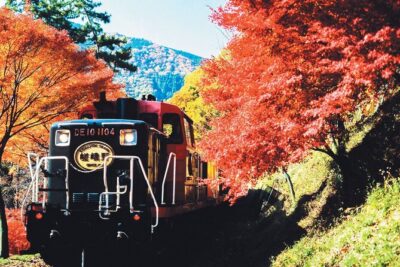
Sagano Romantic Train & Arashiyama, Kiyomizudera, Fushimi Inari Taisha Day Tour
Read our review →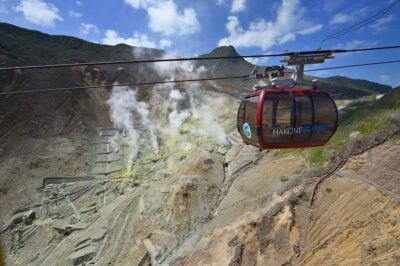
Hakone: Train Pass with Unlimited Rides & Activity Discounts
Read our review →
Kamakura & Enoshima Day Tour with Pickup & Train Ride
Read our review →Arashiyama Day Tour with Train, Boat, and Onsen
Read our review →Lists this ride appears on