
Review · JAPAN
Osaka: Private Samurai Experience – Train with Sword Master
At a temple outside Osaka, sword master Tatsuya Watanabe teaches traditional techniques in a private area normally closed to the public. You will practice with a wooden sword, watch a special performance, and learn how swordsmanship links physical control with mental discipline.
I like the rare temple access and the close instruction. I also like the cultural setting: this is not just a staged sword show, but a lesson tied to the temple, Watanabe’s training, and Japan’s classical martial traditions.
The main consideration is timing. The advertised duration is listed as both 3 hours and 270 minutes, while the hands-on training itself is about 1.5 hours. Confirm the exact schedule when booking, and remember that the sword master teaches in Japanese, with a guide interpreting when needed.
Key points to know before booking
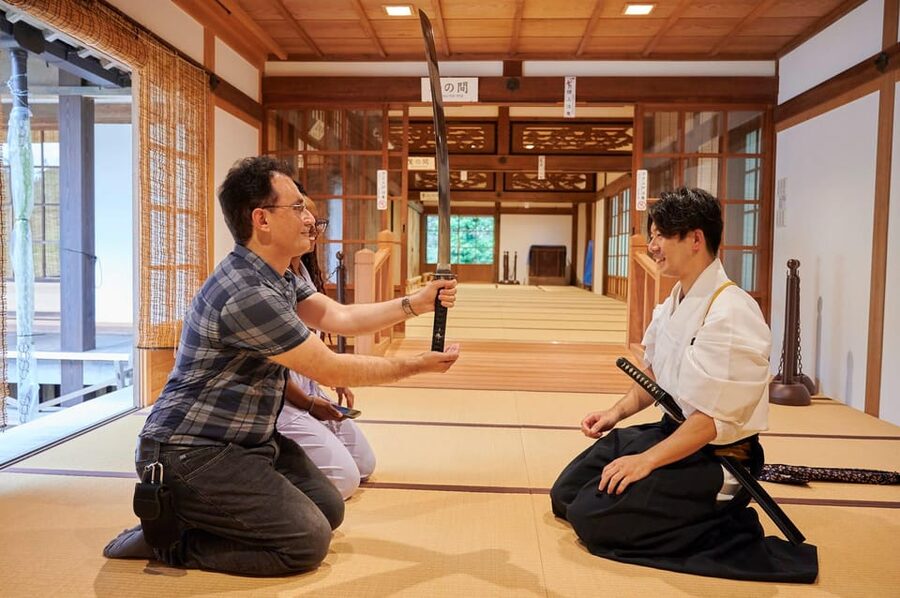
- Private temple setting: Train in restricted areas of Ryuan-ji or Saiko-ji Temple, spaces not generally open to the public.
- Direct instruction: Tatsuya Watanabe, headmaster of Suishin-ryu, leads the sword training and demonstration.
- More than sword practice: The program includes temple history, samurai culture, and the spiritual side of disciplined movement.
- Wooden sword training: You learn basic strikes, cuts, grips, and posture in a controlled setting.
- Multilingual support: Guides can provide interpretation in English, Japanese, or French.
- Strong value for culture seekers: At $158 per person, the price pays for a small private group, specialist instruction, restricted access, and a distinctive setting.
Meeting at Minoh Station and entering a quieter side of Osaka
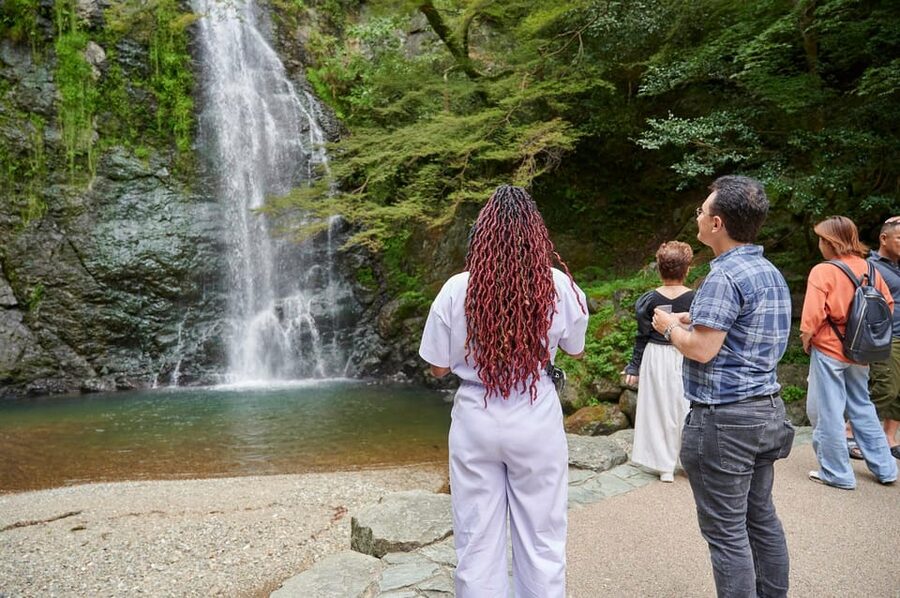
Your day begins in front of Minoh Station, where the guide holds a yellow sign with the DeepExperience logo. This clear meeting point matters because the activity does not begin at the temple itself. You first need to find the guide, then travel together toward the temple grounds.
The walk from the station forms part of the cultural introduction. Guides such as Benoit have explained local history and points of interest along the way, helping you understand the area before the training starts. Other sessions have used Aimu or Claire, so the exact guide may vary.
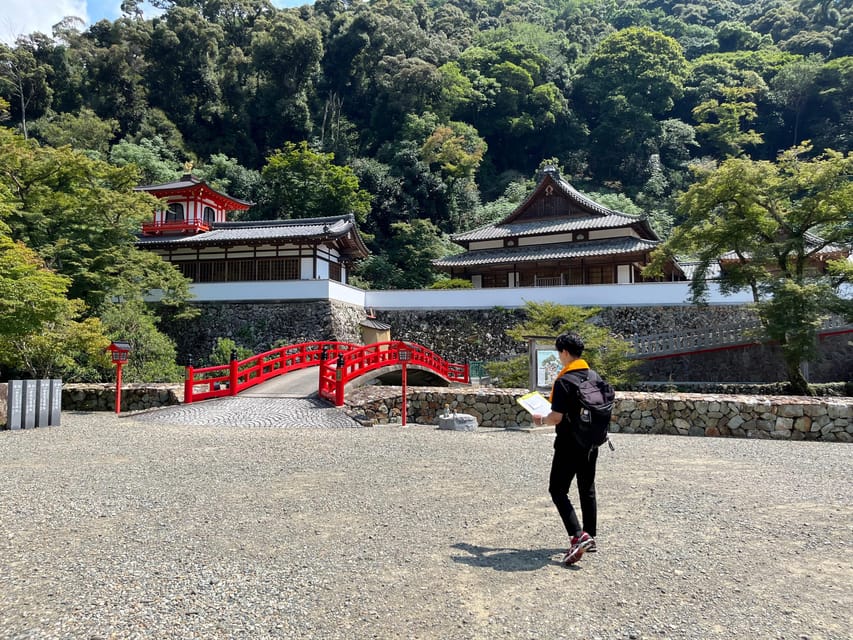
Minoh gives you a break from central Osaka’s dense streets and shopping arcades. The temple setting is quiet and wooded, with an atmosphere better suited to concentration than sightseeing at speed. You are not simply entering a rented studio for a martial arts class. The location gives the practice a sense of place.
The private access is one of the strongest reasons to book. Training takes place in a restricted section of the temple, normally closed to the public. That does not mean every part of the temple is private, but it does give this program a level of access you would not receive on an ordinary visit.
More Train Journeys around Japan:
- Mt Fuji & Hakone Cruise, Drum Show Bullet Train 1 Day from Tokyo
★ 4.0 · 7,413 reviews - Tokyo Mt Fuji 5th St & Hakone Cruise Bus Tour w/Bullet Train
★ 4.4 · 5,024 reviews - Mt. Fuji and Hakone Day Trip From Tokyo with Bullet Train Option
★ 4.0 · 368 reviews
A temple visit that adds meaning to the training
The temple visit is not just a short photo stop before the sword lesson. Your guide introduces the site and explains its place in the area’s religious and cultural story. The secluded grounds create a calm backdrop for a practice built around patience, posture, and controlled movement.
The setting also helps explain why traditional swordsmanship is more than fighting technique. Watanabe’s school connects sword work with discipline, awareness, and the training of body and mind. At the temple, those ideas feel less abstract than they might in a modern martial arts gym.
You may also have the chance to see swords and other weapons connected to the tradition. One program included a personal sword and a sword dating from 1370. Treat access to specific objects as dependent on the day’s arrangements, but the opportunity adds real historical weight to the class.
This is a good fit if you want context. If you are looking only for fast action, repeated cutting demonstrations, or a theatrical samurai show, the temple tour and explanations may feel slow. The activity asks you to listen, observe, and copy carefully.
Meeting Tatsuya Watanabe, the sword master
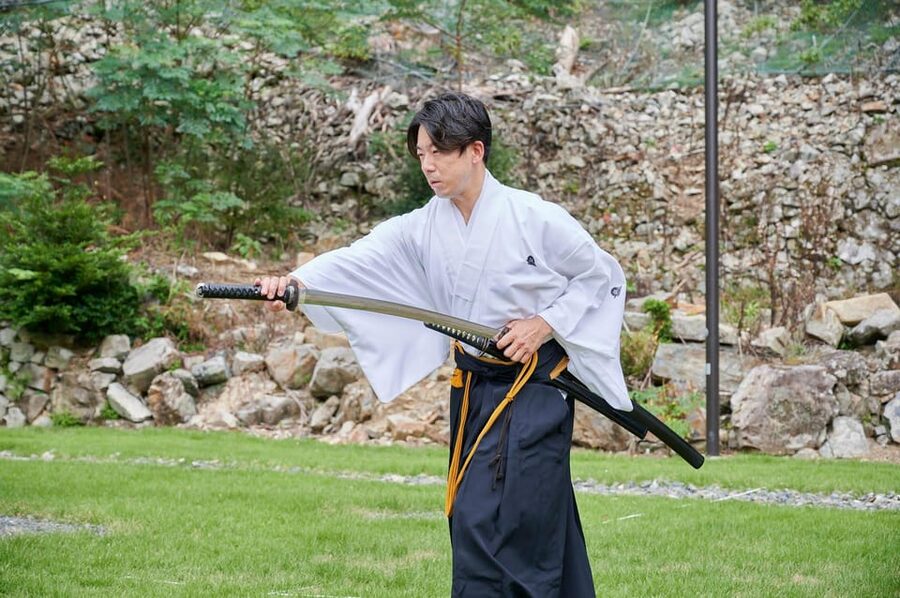
Tatsuya Watanabe began studying kendo as a teenager. During university, he entered Yagyū Shinkage-ryu, one of Japan’s well-known classical schools of kenjutsu, to pursue older forms of swordsmanship rather than stopping with modern sport practice.
He later trained in Suishin-ryu and was appointed soke, or headmaster, while still in his twenties. That role carries responsibility for preserving the school’s techniques, philosophy, spirit, and aesthetic values. His work now includes daily practice, performances, teaching, and cultural programs connected with Japanese swords and traditional weapons.
What does that background mean for you? It means the lesson is led by someone who treats swordsmanship as a complete discipline, not a collection of flashy moves. His demonstration is designed to show precision, timing, balance, and calm control before you try the basics yourself.
The class is still made for visitors, not only for martial artists. You do not need a long training history to take part. The instruction begins with fundamental movements, and the private format allows the teacher to offer individual corrections.
What you actually practice during the 1.5-hour lesson
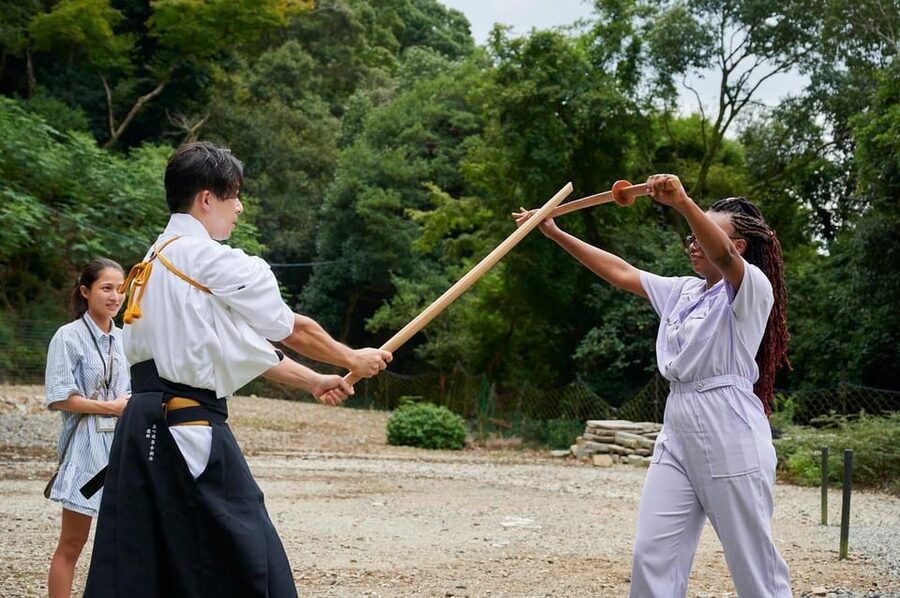
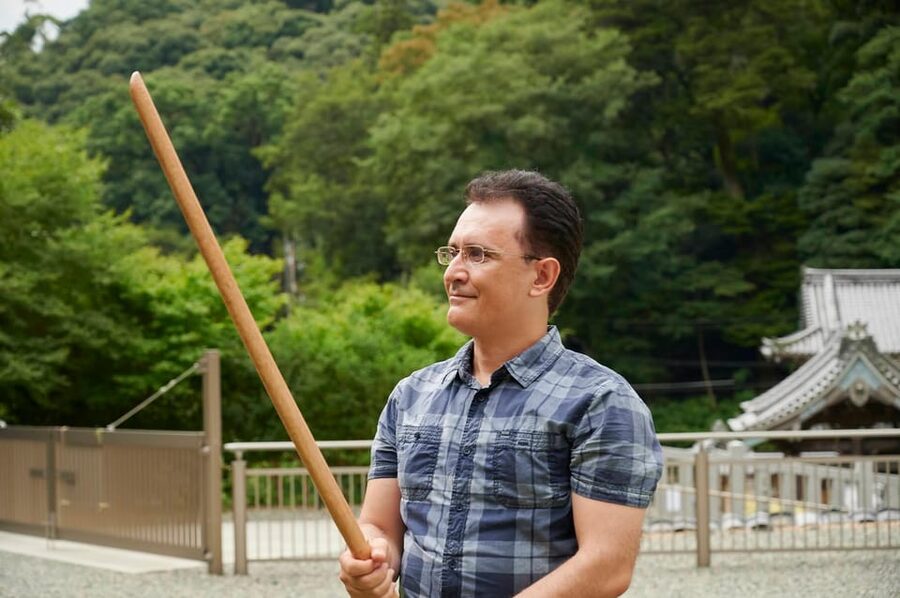
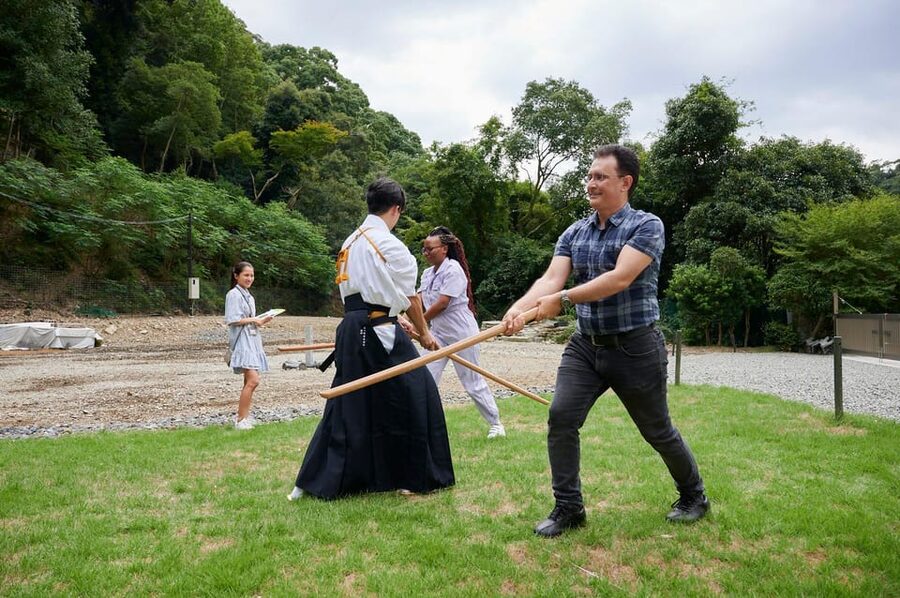
The hands-on portion lasts about 1.5 hours according to the detailed schedule provided. You begin with basic handling and movement using a wooden sword, often called a bokken. The focus includes holding the sword, posture, striking, and cutting motions.
The lesson is not simply about swinging as hard as you can. Watanabe places attention on fluidity, control, and the meditative quality of the movements. You may receive small adjustments to your stance, grip, or strike that make the activity feel more technical than it first appears.
A guide translates the instruction when required. This is important because Watanabe teaches in Japanese, while the tour supports English, French, and Japanese. Benoit has served as an interpreter on several sessions, and the interpretation helps turn a demonstration into a real lesson rather than a performance you watch from the sidelines.
The private group format is another advantage. You are not placed in a large class where everyone repeats the same movement at a distance. The exact group size is not stated, but the activity is sold as a private group, so the lesson can respond more directly to your pace.
Some participants have gone on to buy a wooden sword and continue practicing. You should not assume that purchasing one is part of the program, but the class can give you a clear sense of whether traditional sword training interests you beyond this single visit.
Same tracks, a different carriage:
- From Osaka: Sagano Train Ride and Kyoto Guided Day Tour
★ 4.3 · 180 reviews - Fukuoka: Takachiho Gorge & Scenic Railway One Day Tour
★ 4.8 · 178 reviews - Sagano Romantic Train & Arashiyama, Kiyomizudera, Fushimi Inari Taisha Day Tour
★ 4.5 · 171 reviews - Hakone: Train Pass with Unlimited Rides & Activity Discounts
★ 4.4 · 102 reviews
The special performance comes before the practice

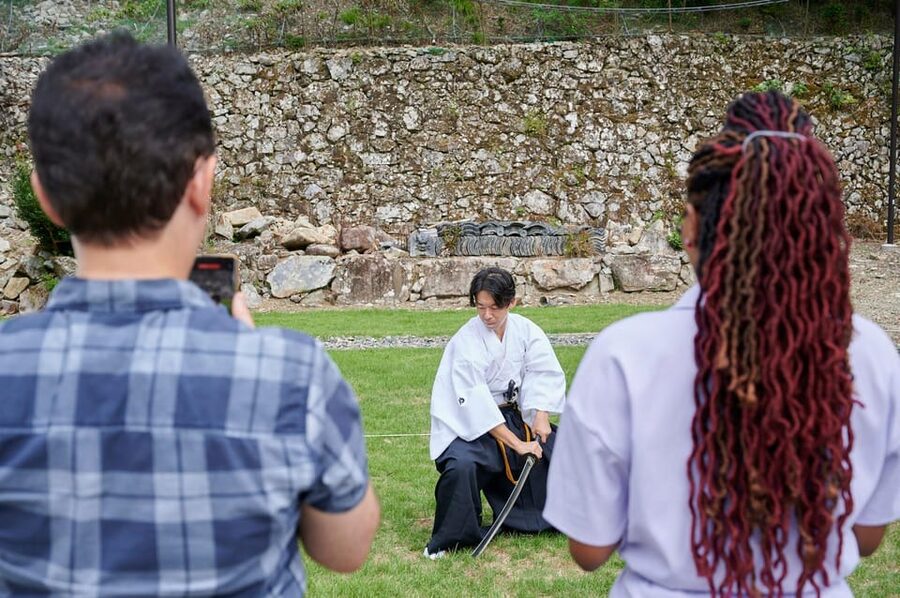
The sword performance is one of the program’s defining moments. Watanabe demonstrates the control and precision behind the movements you will later attempt. Seeing the technique first gives you a useful visual guide, especially when the physical explanation passes through translation.
This demonstration also sets the tone. The emphasis is on discipline and presence rather than movie-style swordplay. You will see a trained practitioner make difficult movements look simple, then discover for yourself how much balance and concentration they require.
The performance is described as exclusive to this program. That makes it different from watching a public cultural show, where the audience usually remains separate from the instruction. Here, the demonstration leads directly into your own practice.
The session may also include a chance to handle real swords under supervision. A previous program included actual swords and a paper-cutting exercise. Because the supplied information does not guarantee this part for every departure, consider it a possible highlight, not a promise. The wooden sword training is the dependable core of the activity.
Why the private setting is worth the $158 price
At $158 per person, this is not a low-cost sightseeing stop. You are paying considerably more than you would for a standard temple visit or a group cultural demonstration. The value comes from the combination of specialist instruction, private access, interpretation, and a small-group format.
I think the price makes the most sense for someone who would otherwise spend money on several separate activities: a temple visit, a martial arts class, and a cultural performance. This program joins those elements in one carefully arranged outing and adds access to an area normally closed to the public.
The setting also keeps the experience from feeling generic. A sword lesson in a tourist district could teach similar basic motions, but it would not carry the same connection to a working temple and Japanese spiritual practice.
Still, be realistic about what you receive. Three hours is not enough to master kenjutsu, and this class does not turn a first-time visitor into a samurai. You receive an introduction, personal instruction, history, and a memorable setting. That is a fair deal for a visitor who values depth over quantity, but not for someone seeking extended martial arts training.
Who will enjoy this most
This is especially well suited to:
- First-time visitors who want something beyond Osaka’s main sights
- Adults and older children interested in samurai culture
- Martial arts students curious about classical Japanese sword schools
- Couples, families, and private groups who prefer personal instruction
- History-minded visitors who value temple access and artifacts
- People who enjoy learning a physical skill with cultural context
It may be less suitable if you want a casual show with little participation. The class requires attention and willingness to follow instructions. You also need to be comfortable with interpretation, since the sword master’s teaching is in Japanese.
The program can work for beginners because the training starts with basic techniques. A past participant brought a son, and families have described the hands-on format as one of the strongest parts. The activity is not presented as a children’s program, however, so parents should consider their child’s ability to listen and follow safety instructions.
Timing, language, and practical details
The meeting point is in front of Minoh Station. Look for the guide holding the yellow DeepExperience sign. Your guide may speak English, French, or Japanese, and interpretation is provided as needed.
The activity is listed as 3 hours, but the booking information also displays 270 minutes. Since those figures do not match, check the confirmed start and end times before arranging another tour or train. The detailed schedule identifies a 1.5-hour guided visit and class, but the full outing includes the meeting, walk, temple time, demonstration, and training.
Wear something that lets you move comfortably. The provided information does not give a formal clothing rule, so avoid assuming that special martial arts clothing is supplied. Bring patience, listen closely, and follow the teacher’s instructions around any sword handling.
You can cancel up to 24 hours in advance for a full refund, and the reserve-now, pay-later option lets you hold a place without paying immediately. Availability and starting times vary, so check those details for your chosen date.
The main strengths and the fair drawbacks
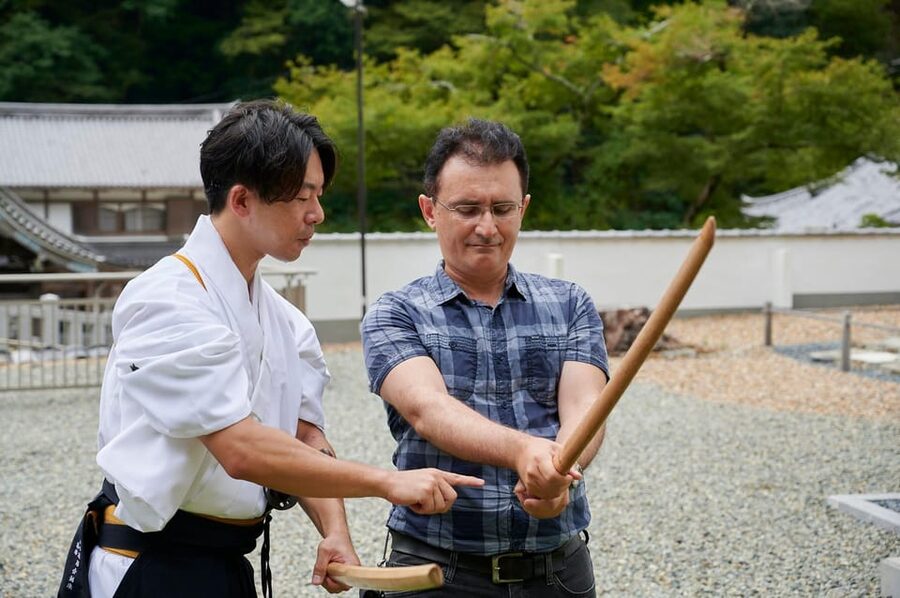
The best part is the combination of access and instruction. You enter a restricted temple area, meet a genuine school headmaster, and then use what you have seen during a guided practice.
The second strength is the teaching style. Watanabe’s focus on fluid movement and mental calm gives the class more substance than a simple lesson in how to swing a sword. The interpreters also matter. Good translation helps you understand why your stance or timing needs to change, not just what movement to copy.
The drawback is that the advertised timing needs clarification. The activity is described in several ways, and the actual training is only part of the outing. You should also understand that the chance to handle real swords or cut paper may depend on the day, while wooden sword practice is the reliable feature.
Language is another small consideration, though not a major barrier when an interpreter is present. The smoothness of the session depends partly on the guide’s translation. English, French, and Japanese support is offered, but you should select the language you need when booking.
Should you book this Osaka samurai experience?
Book it if you want a personal, culturally grounded activity and the $158 price fits your budget. The private temple setting, Watanabe’s background, the special performance, and the guided wooden sword lesson give you far more than a costume photo or staged fight.
I would especially choose it for a second or third day in Osaka, when you are ready to leave the central sights and spend part of the day in Minoh. It also makes a strong family or private-group choice for people who want to learn together.
Skip it if you want a cheap, quick attraction, or if you expect a full day of advanced sword training. Confirm the duration, arrive at Minoh Station on time, and approach the class as an introduction to a living tradition. For that kind of visitor, this is one of Osaka’s more distinctive cultural outings.
FAQ
Where does the samurai experience begin?
Meet your guide in front of Minoh Station. The guide will hold a yellow sign with the DeepExperience logo.
How long does the activity last?
It is described as a 3-hour activity, but the booking information also lists 270 minutes. Confirm the exact timing and start time when you reserve.
How long is the actual sword training?
The detailed schedule identifies a 1.5-hour guided visit and class. The full outing also includes meeting the guide, reaching the temple, the performance, and temple-related explanations.
Where does the sword training take place?
Training takes place in a secluded area of Ryuan-ji or Saiko-ji Temple that is normally closed to the public.
Who teaches the swordsmanship?
Tatsuya Watanabe leads the training. He studied kendo, Yagyū Shinkage-ryu, and Suishin-ryu, where he became soke, or headmaster.
Is the activity available in English?
Yes. Live guides are available in English, Japanese, and French. The sword master teaches in Japanese, so an interpreter helps explain the instruction when needed.
Is this a private group activity?
Yes. The activity is offered for a private group.
Will I use a real sword?
The core training uses a wooden sword. Handling real swords and cutting paper has been part of some sessions, but it is not specified as a guaranteed part of every booking.
Can I cancel for a refund?
You can cancel up to 24 hours in advance for a full refund. The reserve-now, pay-later option is also available.
New on the timetable around Japan
- Train in Samurai Swordsmanship and Defeat the Demon in Tokyo★ 5.0 · 5 reviews
- Mt Fuji & Hakone Private Tour from Tokyo: Return by Bullet Train★ 5.0 · 22 reviews
- Tokyo-Izu: Volcano, Ocean& Capybara Cuddle with Izu Scenic Train★ 3.5 · 3 reviews
- Private tour with Yasushi and Yoko – by car, train, on foot★ 5.0 · 2 reviews
- Bullet Train Experience & Mishima Shrine Private Tour from Tokyo★ 5.0 · 9 reviews
- 3-Day Private Tokyo and Nagano: Snow Monkeys, Tsukiji Market and Bullet Train★ 5.0 · 2 reviews
- Bullet Train and Mt. Fuji Famous Food Tour★ 5.0 · 4 reviews
- Guided Half-day Tour(PM) to Toyota Commemorative Museum & SCMAGLEV Railway Park★ 5.0 · 3 reviews
Other Japan Train Journeys worth a seat

Mt Fuji & Hakone Cruise, Drum Show Bullet Train 1 Day from Tokyo
Read our review →
Tokyo Mt Fuji 5th St & Hakone Cruise Bus Tour w/Bullet Train
Read our review →
Sagano Romantic Train & Arashiyama, Kiyomizudera, Fushimi Inari Taisha Day Tour
Read our review →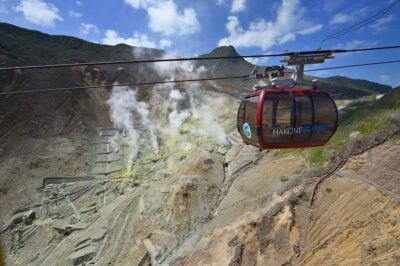
Hakone: Train Pass with Unlimited Rides & Activity Discounts
Read our review →
Kamakura & Enoshima Day Tour with Pickup & Train Ride
Read our review →Arashiyama Day Tour with Train, Boat, and Onsen
Read our review →Lists this ride appears on