
Review · JAPAN
Dazaifu and Yanagawa Canal Cruise Private Guide Day Tour by Train
Yanagawa’s low Donko boat glides under bridges while the boatman sings, then Dazaifu brings you to one of Kyushu’s most important shrines. This tour links two very different places without making you sort out the train schedules yourself. I like the canal cruise’s slow pace, and I like the chance to eat Yanagawa’s famous eel or another local dish at your own cost. The guide-led format also lets you ask questions as the day unfolds.
The main catch is the pace. You are out for about eight hours, using trains, walking around a moat, and moving between sights, so you need strong physical fitness. Lunch is not included, and the $166.57 per-person price makes the tour most appealing to people who value a private guide and simple transport more than a budget day out.
Key points to know before booking
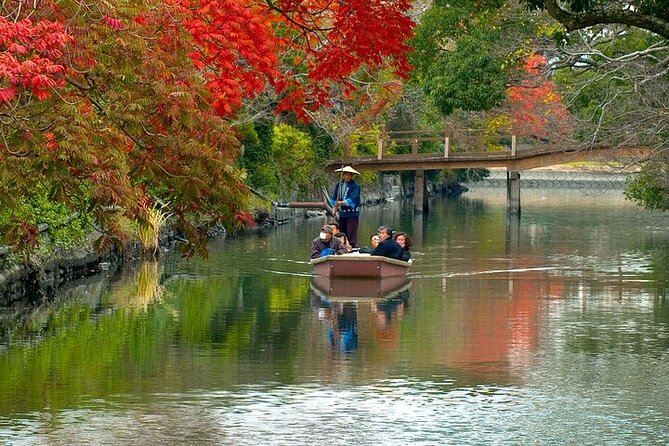
- Yanagawa’s one-hour boat ride is the day’s calmest moment, with narrow canals, castle-town scenery, and traditional songs from the boatman.
- Dazaifu Tenmangu is dedicated to Sugawara Michizane, the scholar linked with learning and the Tenjin deity.
- Train travel is built in, including round-trip tickets, so you do not need to manage the main transport on your own.
- Lunch is flexible but separate, giving you control over what and where you eat in Yanagawa.
- The guide is private to your group, with past guides including Naoko, Mayumi, Shinobu, Yoko, Kate, and others.
- The 2026 Sagemon season adds handmade hanging decorations to Yanagawa from February 11 for 52 days.
Why this pairing works so well
Fukuoka is an easy base for short trips, but two of its best day-trip choices offer very different rewards. Dazaifu is a major spiritual and cultural stop, while Yanagawa is best understood from the water. Put together, they give you a fuller day than visiting either place alone.
The order begins with Yanagawa, where the canal cruise sets a relaxed tone. Later, Dazaifu gives the day more focus with shrine buildings, legends, and the story of Sugawara Michizane. You are not spending eight hours looking at similar sights.
I especially like the contrast between movement and stillness. On the train, you watch the city give way to the Fukuoka region. On the boat, the scenery slips by at walking speed. At Dazaifu, you have time to pause, notice details, and ask your guide about customs and local beliefs.
The private setup matters here. Rather than joining a large group, you stay with your own party and an English-speaking guide. Guides named in the experience include Naoko, Mayumi, Shinobu, Yoko, Kate, and others, though your assigned guide will depend on availability. Past guide feedback points to clear explanations, careful preparation, and confident handling of the train journey.
More Train Journeys around Japan:
- Mt Fuji & Hakone Cruise, Drum Show Bullet Train 1 Day from Tokyo
★ 4.0 · 7,413 reviews - Tokyo Mt Fuji 5th St & Hakone Cruise Bus Tour w/Bullet Train
★ 4.4 · 5,024 reviews - Mt. Fuji and Hakone Day Trip From Tokyo with Bullet Train Option
★ 4.0 · 368 reviews
Meeting at Tenjin and setting out by train
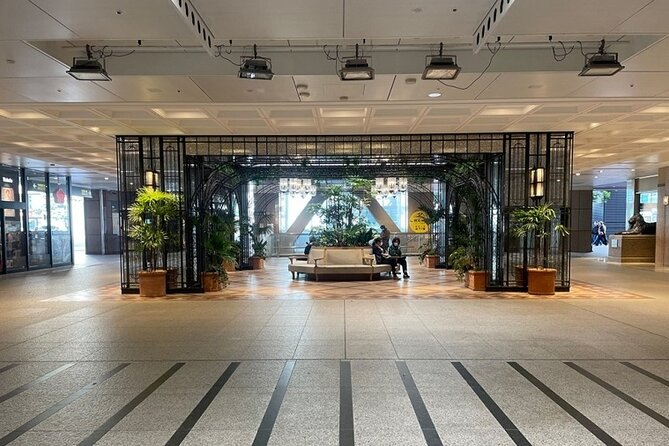
The day starts at 9:30 am at the Fukuoka Mitsukoshi Lion Plaza in Tenjin. This is a central meeting point near public transportation, but you should allow enough time to find the exact plaza and arrive ready to leave on schedule.
The train ride is not just a transfer. It is part of the experience. Several people who enjoyed this tour singled out the smooth handling of train schedules and connections. That is useful in Japan, where rail travel is usually easy once you know the system, but less relaxing when you are checking platforms, tickets, and timing while trying to keep a private day trip on track.
Round-trip train tickets are included. Private transportation is not, so the tour is designed around public rail rather than a private car or van. That keeps the journey tied to local life and avoids road traffic, but it also means you should be comfortable walking through stations and boarding trains.
The guide may offer cultural background during the ride, as Mayumi was noted for doing, or use printed material and visual aids, as Kate did. Those touches can make the travel time more useful instead of leaving you to fill it with phone maps.
Yanagawa’s canals, bridges, and singing boatmen
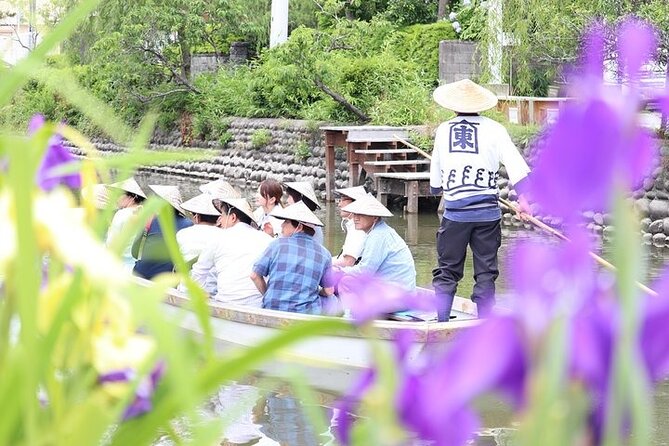
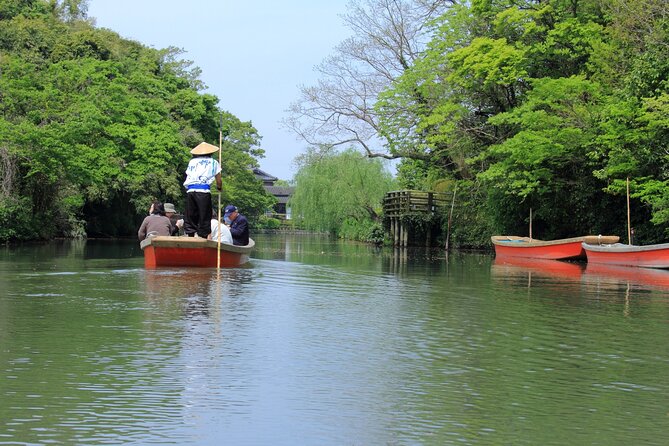
Yanagawa is often called the Venice of Japan because water shapes the town. Its canals once served the castle town, and today they offer a quiet way to see the area from a low boat. The cruise lasts about 60 minutes and uses a traditional Donko boat.
Do not expect a fast sightseeing ride. The pleasure is in the gentle pace. You pass beneath bridges, watch the banks slide by, and see Yanagawa from an angle you cannot get while walking. A boatman may sing traditional songs during the trip, an unexpected touch that gives the ride a distinctly local feel.
The boat ride received the strongest repeated praise in the available feedback, especially for its peaceful quality and the boatman’s singing. That combination is the heart of the Yanagawa visit. The setting is simple, not flashy, and that is exactly why it works.
The boat is not private in the sense of having a vessel reserved only for your party, but the tour itself is private, with your guide accompanying your group. The exact boat arrangement is not specified, so do not book this expecting a luxury cruise or a highly produced show. Think of it as a traditional water excursion with scenery and local character.
After the cruise, you have about an hour to stroll around the moat area. This gives you a chance to stretch your legs and look more closely at the town after seeing it from the water. The contrast is worthwhile: from the boat, you notice the shape of the waterways; on foot, you can stop and examine the streets and views at your own pace.
You should wear comfortable shoes. The experience requires a train journey, a boat ride, and walking around Yanagawa before continuing to Dazaifu. The tour information calls for a strong level of physical fitness, so it is not the right choice if you want a car-based day with very little walking.
Lunch in Yanagawa and the value of choosing your own meal
Lunch takes place in Yanagawa, but it is not included in the tour price. This is both a limitation and a useful bit of freedom. You pay individually and can choose according to appetite, budget, and dietary needs, though the available dining options are not specified.
Yanagawa is associated with eel, and one past participant enjoyed steamed eel while another person in the same party chose katsudon. That gives you a sense of the kind of meal you might look for, but you should not treat a particular restaurant or dish as guaranteed.
The guide can help with recommendations when requested. This is one area where a private tour may be more useful than a fixed group outing. You can ask what local dish makes sense, how much time to allow, or what suits your preferences.
Still, remember to budget for lunch separately. At $166.57 per person, the added meal cost affects the total price. If you are comparing this with a cheaper self-guided train trip, the tour’s extra value lies in the guide, tickets, navigation, and private pacing rather than in included food.
Same tracks, a different carriage:
- From Osaka: Sagano Train Ride and Kyoto Guided Day Tour
★ 4.3 · 180 reviews - Fukuoka: Takachiho Gorge & Scenic Railway One Day Tour
★ 4.8 · 178 reviews - Sagano Romantic Train & Arashiyama, Kiyomizudera, Fushimi Inari Taisha Day Tour
★ 4.5 · 171 reviews - Hakone: Train Pass with Unlimited Rides & Activity Discounts
★ 4.4 · 102 reviews
What makes Dazaifu Tenmangu special
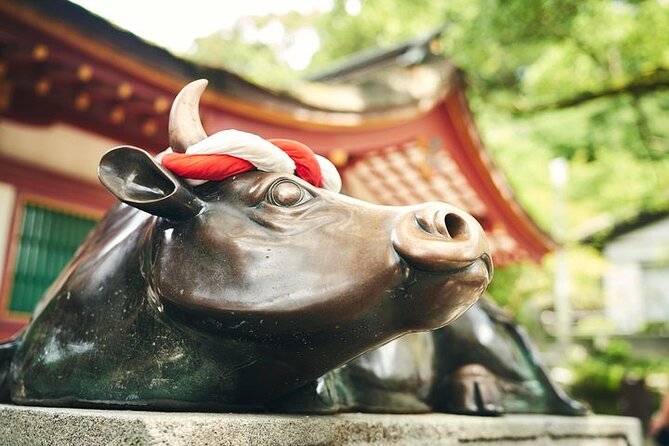
Dazaifu Tenmangu is dedicated to Sugawara Michizane, a scholar and politician from the Heian period. His reputation for learning led to his connection with Tenjin, the Shinto deity of education. That is why students and families often visit Tenmangu shrines with hopes for success in study.
Dazaifu’s shrine is one of the most important Tenmangu sites in Japan, alongside Kyoto’s Kitano Tenmangu. The setting is also known for its long history and thousands of plum trees. The tour description refers to the sanctuary as about 1,300 years old, giving the visit a strong sense of place within Kyushu’s past.
Your guide spends about an hour here. That is enough time for an introduction to the shrine, its legends, and its role in Japanese religious life, but it is not an exhaustive museum-style visit. If you want to study every building, shop, garden, and side path in detail, you may find the stop short.
The guide makes a real difference at Dazaifu. Without context, you might see a grand Shinto shrine and move on after taking a few pictures. With an explanation of Michizane, Tenjin, student prayers, and shrine customs, the details begin to make more sense.
Look closely at the guardian figures and shrine details. One unusual sight noted during the visit was a golden calf and a unicorn appearing together as shrine guardians. Whether you interpret these figures through local legend, symbolism, or simple visual curiosity, they add a memorable detail to the stop.
You also receive umegae-mochi, a local rice cake filled with sweet bean paste. It is a small inclusion, but a welcome one after the morning’s travel. The snack gives you a taste of Dazaifu without adding another food stop to the schedule.
The 2026 Sagemon season in Yanagawa
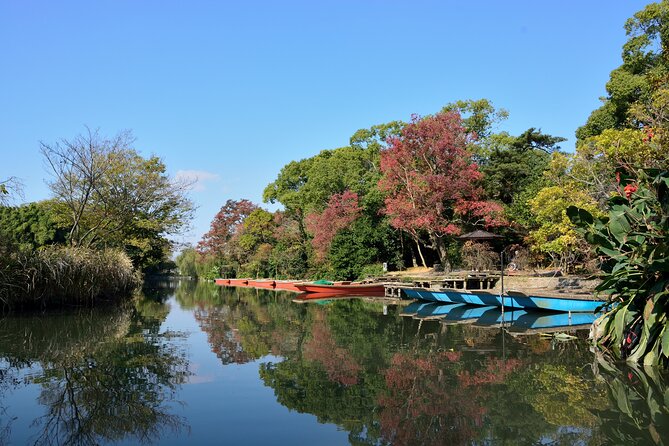
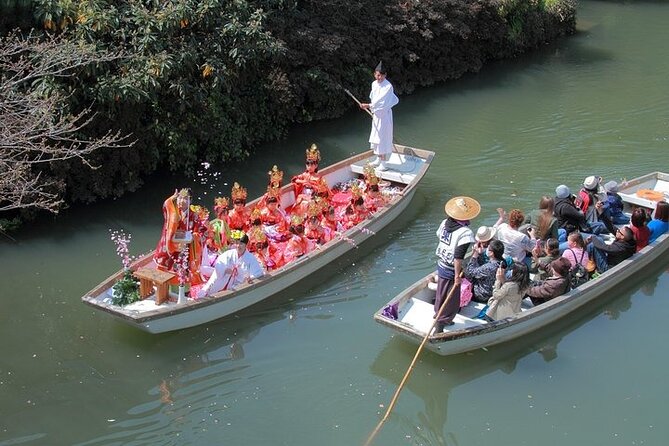
If you visit during the designated 2026 period, Yanagawa has an extra seasonal feature. The Yanagawa Hina Matsuri Sagemon Meguri begins on February 11, 2026, and continues for 52 days.
During this festival period, handmade sagemon decorations appear around the city. These hanging fabric ornaments represent health, happiness, and hopes for girls’ growth. Colorful Yanagawa balls and other crafted pieces add a festive look to the water town.
This seasonal display could make the walking portion especially appealing. The cruise shows you Yanagawa from the canal, while the Sagemon decorations give you more reason to look around on foot. The event is tied to a specific period, so it should not be assumed outside those dates.
The available information does not promise a special festival program as part of the tour. You are best treating the decorations as an added feature of the town during the 52-day season, not as a separate included activity.
How the eight-hour schedule feels
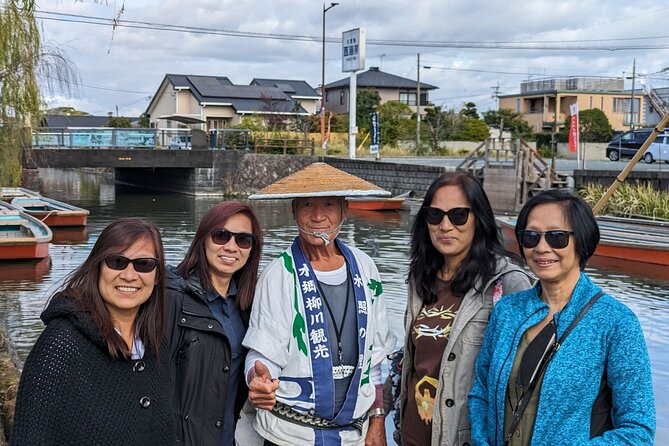
The tour begins at 9:30 am and returns to the same meeting point in Fukuoka. The full experience lasts about eight hours. The stated stop times include roughly four hours in Yanagawa for the canal cruise, a moat stroll, and lunch, followed by about one hour at Dazaifu Tenmangu. The remaining time is used for train travel and transfers.
That structure is sensible, but it is a full day. You do not have unlimited time at either destination, and the day’s success depends on staying with the schedule. The private format helps because your guide can keep the group organized and answer questions without managing a large crowd.
You should not book this if your ideal day means sleeping late, lingering over lunch, or wandering without a timetable. You should consider it if you want to see both places in one day and prefer having the route handled for you.
The return to the original meeting point is practical. You do not need to arrange a separate ride back to your hotel area, though the tour does not include private transportation from the meeting point to your accommodation.
Is $166.57 per person good value?
The price is not cheap for a day that uses public trains and does not include lunch. A self-guided visitor could likely spend less on rail tickets and sightseeing. The fair question is not whether this is the lowest-cost way to visit Yanagawa and Dazaifu. It is whether the extra cost buys services you will use.
You receive an English-speaking private guide, round-trip train tickets, the Yanagawa canal cruise, and umegae-mochi. You also get help with train connections, timing, shrine interpretation, and local food choices. For a small group that would rather focus on the day than research every step, those benefits can justify the price.
The value is stronger for first-time visitors to Fukuoka, families, and groups with different interests. A guide can explain the shrine to one person, help another choose lunch, and keep everyone moving between transport connections.
The value is weaker if you are already comfortable with Japanese rail travel, prefer independent exploration, or are traveling alone on a tight budget. Group discounts may reduce the per-person cost, but the amount of any discount is not provided, so check the current price for your party before deciding.
Who will enjoy this day most?
I would recommend this tour to you if you want cultural sights without spending the day in a large group. The private format offers personal attention, and the guides are described as friendly, careful, and well prepared. That can be especially useful when you want explanations rather than a quick walk past each sight.
It also suits families or small groups who want different kinds of experiences. The boat ride is quiet, the shrine offers history and religion, and lunch leaves room for personal choice. People who enjoy photography should appreciate the canals, bridges, plum trees, shrine details, and seasonal Sagemon displays.
You should think twice if mobility is a concern. The tour requires public transportation and walking, and the activity notes call for strong physical fitness. The available information does not describe accessibility arrangements, so you should ask the provider before booking if you have specific mobility needs.
Booking details and cancellation
Confirmation is sent within 48 hours of booking, subject to availability. The experience is offered as a private activity, and only your group participates.
Free cancellation is available when you cancel at least 24 hours before the local start time. Cancellations or changes made less than 24 hours before the start are not accepted for a refund.
Should you book the Dazaifu and Yanagawa day tour?
Book it if you want an efficient, guide-led day that combines two very different Kyushu experiences. The canal cruise, traditional singing, Dazaifu’s learning traditions, and included train tickets make a well-balanced outing. The strongest reason to choose it is not simply seeing the sights. It is having someone like Naoko, Mayumi, Shinobu, Yoko, or Kate handle the route while giving the places meaning.
Skip it if your priority is the lowest price, a private car, or a slow day with no fixed schedule. You will also need to add lunch and be ready for a fair amount of movement.
For most visitors with one open day from Fukuoka, I see this as a strong choice for cultural variety and simple planning. Visit during the 2026 Sagemon season if you can, but even outside that window, Yanagawa’s water-level views and Dazaifu’s shrine traditions give the day plenty of substance.
FAQ
How long does the Dazaifu and Yanagawa tour last?
The tour lasts approximately eight hours. It starts at 9:30 am and ends back at the meeting point in Fukuoka.
Where does the tour start?
The meeting point is Fukuoka Mitsukoshi Lion Plaza, at 2-chōme-1-1 Tenjin, Chuo Ward, Fukuoka, 810-0001, Japan.
Is lunch included?
No. Lunch is taken in Yanagawa, but you pay for your own meal.
Are train tickets included?
Yes. Round-trip train tickets are included in the tour price.
Is the canal cruise included?
Yes. The Yanagawa Canal Cruise is included and lasts about 60 minutes.
Is this a private tour?
Yes. Only your group participates in the activity, with an English-speaking guide.
What is the cancellation policy?
You can cancel for a full refund up to 24 hours before the experience start time. Cancellations or changes made less than 24 hours before the start are not accepted for a refund.
New on the timetable around Japan
- Train in Samurai Swordsmanship and Defeat the Demon in Tokyo★ 5.0 · 5 reviews
- Mt Fuji & Hakone Private Tour from Tokyo: Return by Bullet Train★ 5.0 · 22 reviews
- Tokyo-Izu: Volcano, Ocean& Capybara Cuddle with Izu Scenic Train★ 3.5 · 3 reviews
- Private tour with Yasushi and Yoko – by car, train, on foot★ 5.0 · 2 reviews
- Bullet Train Experience & Mishima Shrine Private Tour from Tokyo★ 5.0 · 9 reviews
- 3-Day Private Tokyo and Nagano: Snow Monkeys, Tsukiji Market and Bullet Train★ 5.0 · 2 reviews
- Bullet Train and Mt. Fuji Famous Food Tour★ 5.0 · 4 reviews
- Guided Half-day Tour(PM) to Toyota Commemorative Museum & SCMAGLEV Railway Park★ 5.0 · 3 reviews
Other Japan Train Journeys worth a seat
Mt Fuji & Hakone Cruise, Drum Show Bullet Train 1 Day from Tokyo
Read our review →
Tokyo Mt Fuji 5th St & Hakone Cruise Bus Tour w/Bullet Train
Read our review →
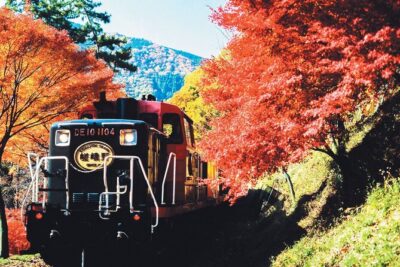
Sagano Romantic Train & Arashiyama, Kiyomizudera, Fushimi Inari Taisha Day Tour
Read our review →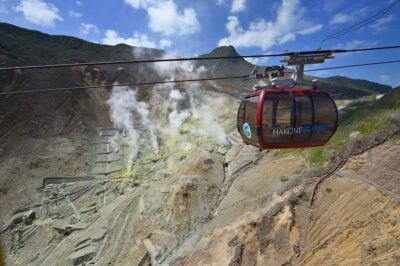
Hakone: Train Pass with Unlimited Rides & Activity Discounts
Read our review →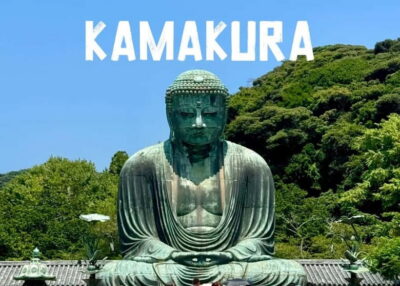
Kamakura & Enoshima Day Tour with Pickup & Train Ride
Read our review →Arashiyama Day Tour with Train, Boat, and Onsen
Read our review →Lists this ride appears on