
Review · GERMANY
Take the U Train: An Audio Story of Berlin’s Oldest Elevated Railway Line
Berlin’s first U-Bahn route is best understood from street level, not from a train window. This GPS audio tour follows the old line from Warschauer Straße to Gleisdreieck, pairing Berlin transport history with a walk over Oberbaumbrücke and along the steel viaduct beside several major streets.
I like the freedom of a self-guided tour, since you can begin when it suits your day and move at your own pace. I also like that the VoiceMap app works offline, so you do not need a constant data connection while the story, map, and location points guide you.
The main catch is important: you spend surprisingly little time actually riding the U-Bahn. This is chiefly a walking tour with an audio guide, so book it for the route, the bridges, and the railway story, not for a long train journey.
Key points to know before you go
- Start at Warschauer Straße: Find the meeting point at Warschauer Str. 35, near the U1 and U3 station.
- Follow the original route: The tour traces the line across Oberbaumbrücke and beneath or beside the old steel railway structure.
- Expect about two hours: The route ends at U-Bahnhof Gleisdreieck in Kreuzberg.
- Use the VoiceMap app: Audio begins automatically at the right place through your phone’s GPS.
- Buy your BVG ticket first: You need a valid day ticket or a single ticket valid for two hours along one route.
- Bring your own equipment: A smartphone and headphones are required, and food, drinks, transport, and attraction admission are extra.
What this Berlin railway walk is really about
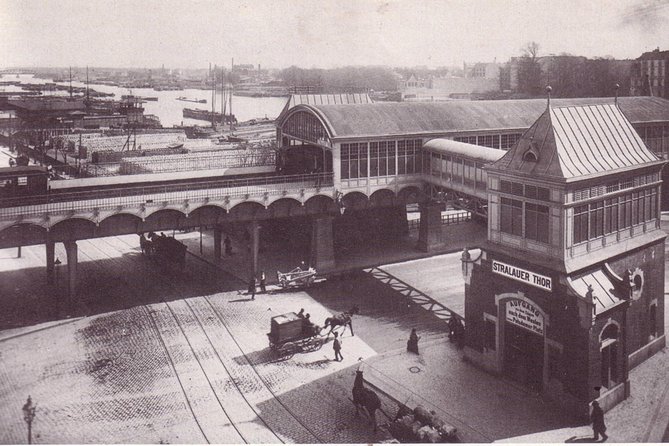
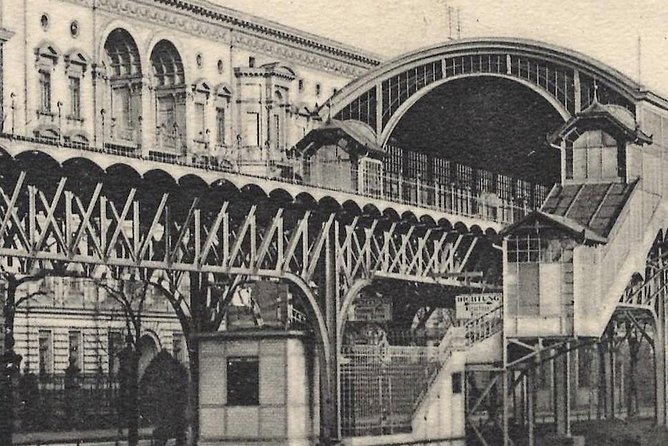
This experience tells the story of the Hochbahn Stammstrecke, Berlin’s first line built above street level. Siemens & Halske constructed it at the end of the 19th century, creating a route that still shapes the look and movement of this part of the city.
The appeal is not simply the machinery. You are following the path of an early urban transport idea through Friedrichshain and Kreuzberg, two districts linked by the River Spree, Oberbaumbrücke, and the long metal railway structure.
The audio guide adds context while you walk. Instead of reading a plaque and moving on, you hear the story at the location where it matters. The app uses your phone’s GPS to start each section automatically, so you can keep your eyes on the street and the railway rather than constantly checking a map.
That convenience comes with a small limitation. GPS audio is only as useful as your phone setup. Download the app content before setting out, bring headphones, and make sure your phone has enough battery for roughly two hours.
More Self-Guided Rail Days around Germany:
- From Cairns: Self-Guided Kuranda Trip with Train and Skyrail
★ 4.6 · 3,392 reviews - Oslo To Bergen Self-Guided Full Day Trip with Flåm Railway And Fjord Cruise
★ 4.0 · 69 reviews - Zurich: Audio Guided City Tour and Train to “Top of Zurich”
★ 4.2 · 65 reviews
Starting at Warschauer Straße in Friedrichshain
The tour begins at Warschauer Str. 35, close to Warschauer Straße station. This station serves the U1 and U3, making it a practical starting point if you are already using Berlin’s public transport system.
Take a moment to get your bearings before pressing play. You need to locate the station, open the VoiceMap application, and confirm that the offline map and audio are ready. Since the tour is self-guided, there is no guide waiting with a sign and no fixed group departure to catch.
The start also gives you a clear sense of the tour’s character. You are not being led from one museum room to another. You are using the city itself as the exhibit, with railway structures, roads, bridges, and the river providing the setting.
If you prefer a traditional tour with a person answering questions, this format may feel spare. If you enjoy setting your own pace and listening privately, it is a useful arrangement. It is also a private activity, so only your group takes part.
Crossing Oberbaumbrücke and the River Spree
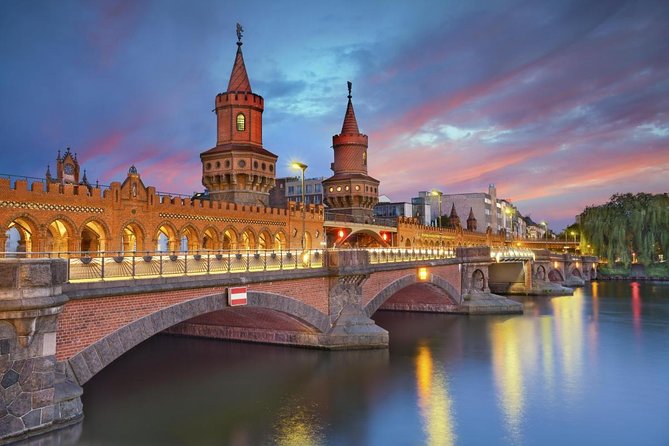
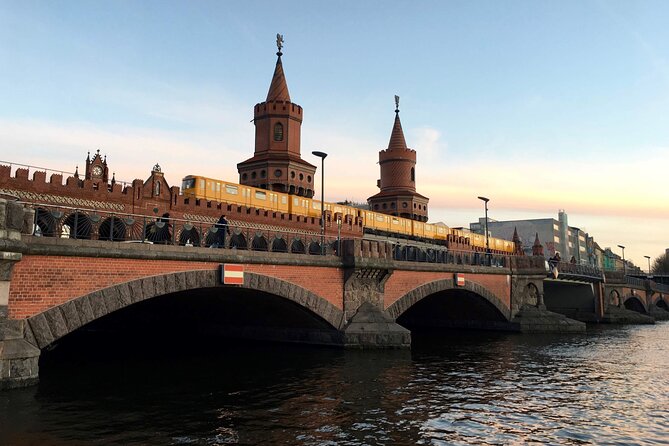
From Warschauer Straße, the route continues toward Oberbaumbrücke. Completed in 1896, this bridge connects Friedrichshain with Berlin-Kreuzberg and crosses the Spree.
This is one of the most memorable parts of the route because the railway story meets a major piece of Berlin infrastructure. The bridge is not just a link between two neighborhoods. It helps explain why this route was built where it was and how rail, river, road, and city growth came together.
Your audio begins at the correct points as the GPS recognizes where you are. You can pause if you want more time on the bridge, though the tour is designed to keep moving along the route.
The bridge crossing also shows why this should not be treated as a simple train ride. From inside a carriage, you would pass through this setting quickly. On foot, you have time to notice the relationship between the bridge, the river, and the railway structure.
Keep your ticket with you at this stage. The tour requires public transport, and the ticket is part of your responsibility, not part of the $14.99 tour price.
Following the steel viaduct along Skalitzer Straße
After Oberbaumbrücke, the route follows the steel viaduct along Skalitzer Straße. This is where the railway becomes the main visual subject.
The long structure is practical, industrial, and unmistakably Berlin. Its steel supports and raised track show how the early line was fitted into an already growing city. You are not only hearing when the railway was built. You are seeing how it occupies public space.
The audio guide is most useful here because the structure can seem familiar if you simply walk past it. The narration gives you reasons to look up and notice the route as a connected piece of engineering rather than a series of unrelated station areas.
This section may also test your expectations. A person hoping for frequent station stops or a museum-style presentation could find the walk repetitive. The experience depends on your interest in the railway line itself and on your willingness to listen while moving through ordinary city streets.
I would treat the route as a focused urban walk. The audio is the main guide, while the viaduct, streets, and passing city provide the physical evidence.
More Audio-Guided Rides around Germany:
- Rotorua Railcruising: Self-Drive Rail Car with Audio Guide
★ 4.6 · 19 reviews
From Gitschiner Straße to Hallesches Ufer
The route continues along Gitschiner Straße and then Hallesches Ufer. These sections extend the story beyond the bridge and show the full reach of the original eastern branch.
The value here is continuity. You are not visiting one attractive viewpoint and then ending the activity. You are tracing a historic transport corridor as it bends and continues through the city.
Hallesches Ufer also helps shift the mood of the walk. The route follows the edge of the city and keeps the railway in conversation with the Spree-side streets. The narration provides the historical thread, while the changing surroundings help you understand the line as working infrastructure rather than a preserved display.
The tour does not include food or drinks, so plan around that. The supplied details do not name refreshment stops or included breaks. For a two-hour outing, you may want to eat before starting, particularly if you prefer not to interrupt the audio.
The final stretch along Tempelhofer Ufer
From Hallesches Ufer, you continue along Tempelhofer Ufer toward Gleisdreieck. This section completes the route of the original line’s eastern branch.
The ending is not built around a major attraction admission or a formal presentation. Instead, it brings you to a station that makes sense as the endpoint of the railway story. The route has followed the structure from Warschauer Straße through Friedrichshain and Kreuzberg, across the Spree, and along the streets beside the viaduct.
Gleisdreieck is also where the practical part of the tour ends. You finish at Gleisdreieck, Berlin 10963, with public transport nearby. Since the route does not include a return journey, you can decide what to do next using Berlin’s transit network.
The two-hour estimate is useful, but treat it as a guide rather than a race. The audio is location-based, and you may want to pause for the bridge or the railway views. If you walk slowly, stop often, or deal with a phone connection issue, allow extra time.
How the VoiceMap format works
The VoiceMap application supplies the audio, map, and geographic data. The narration plays automatically at the intended places through your smartphone’s GPS.
That is the heart of the experience. You do not need to keep opening a written route description to know when the next story section begins. The app does the timing for you, while the offline function reduces the need for mobile data during the walk.
You still need to prepare. The tour does not supply a smartphone or headphones. Download and open the application before leaving, then check that the content is available offline. Carrying one earbud rather than blocking both ears may help you stay aware of traffic and other people, though the supplied information does not require a particular type of headphone.
There is no named live guide. That means you will not receive personal recommendations or spontaneous answers to questions. In exchange, you receive lifetime access to the audio tour, so you can use the material again if you want to revisit the route.
The BVG ticket detail that matters
Your transportation ticket is separate from the tour fee. You need either a valid BVG Day-Ticket or a single ticket, known as an Einzelfahrschein, that is valid for two hours along a single route.
Validate the ticket before boarding the train, and keep it with you for the entire tour. Do not throw it away after the first ride. This is easy to overlook because the audio tour itself is digital, but the transport rules still apply.
The ticket requirement affects the real cost. The tour is listed at $14.99 per person, but your final spend also includes the BVG fare. The ticket may be useful beyond this activity if you choose a day ticket, while a single two-hour ticket may be enough for the intended journey. Choose according to your wider Berlin plans.
Transportation is not included, and neither are museum tickets, other attraction fees, food, or drinks. The route is primarily an outdoor experience, so you are paying for the audio story and app access rather than for entry to a site.
Is $14.99 good value?
I see the price as reasonable if you want a focused history walk and prefer not to join a group. The tour gives you lifetime access to the audio, map, and location data, and the app can be used offline. Those features matter if you like to travel independently or may want to repeat part of the route.
The value is weaker if you mainly want a ride on Berlin’s U-Bahn. One direct comment about the experience makes the distinction clear: the actual train ride is short, and most of the activity is on foot.
You are also paying for a narrow subject. This is not a broad introduction to Berlin, Friedrichshain, or Kreuzberg. Its strength is the story of the old railway line, its bridge crossing, and the steel viaduct route.
For someone interested in urban transport, engineering, or Berlin’s older infrastructure, $14.99 can be a fair price. For a visitor looking for a general sightseeing tour with many major landmarks, the same money may feel less useful.
Who should take this tour?
I would recommend it to independent visitors who like walking, public transport, and city history. It suits people who want to pause when they choose, avoid a fixed group schedule, and listen through their own phone.
It may also work well for repeat visitors to Berlin. The route gives you a specific reason to explore parts of Friedrichshain and Kreuzberg rather than simply passing through them on the way to a larger attraction.
Families and small private groups can participate, and most people can take part. Service animals are allowed. Still, the format requires you to manage the app, navigate the route, and keep track of your transport ticket, so it is not a fully hosted experience.
You may want to skip it if you dislike audio tours, have limited time for walking, or expect to spend most of the two hours inside a train. The most useful mindset is to see this as a railway history walk with a short U-Bahn component.
Should you book Take the U Train?
Book it if the phrase Berlin railway history on foot sounds more appealing than a standard city sightseeing circuit. The route has a clear story, a memorable crossing at Oberbaumbrücke, and a strong visual subject in the steel viaduct.
Skip it if your priority is a long train ride or a live guide. The tour is self-guided, lasts about two hours, and requires your own smartphone, headphones, and BVG ticket.
For the right visitor, the format is simple and effective: start at Warschauer Straße, follow the old line through Friedrichshain and Kreuzberg, listen as the GPS triggers each section, and finish at Gleisdreieck with a better sense of how Berlin’s early U-Bahn network shaped the city.
FAQ
Where does the audio tour begin?
It begins at Warschauer Str. 35, 10245 Berlin, near Warschauer Straße station.
Where does the tour finish?
The route ends at Gleisdreieck, Berlin 10963.
How long does the experience take?
The estimated duration is about two hours.
Which Berlin station is used at the start?
Warschauer Straße is served by the U1 and U3.
Do I need a public transport ticket?
Yes. You need a valid BVG Day-Ticket or a single ticket valid for two hours along a single route.
When should I validate my BVG ticket?
Validate it before boarding the train and keep it with you for the entire tour.
What does the tour price include?
The $14.99 price includes lifetime access to the Take the U Train audio tour, the VoiceMap application, and offline access to the audio, maps, and geographic data.
Do I need to bring anything?
Bring your own smartphone and headphones. Transportation, food, drinks, BVG tickets, and admission to museums or other attractions are not included.
New on the timetable around Germany
- City tour through Nuremberg with the little train – Christmas tour★ 4.0 · 23 reviews
- Salzburg History & Food Private Tour with Munich train add-on★ 4.5 · 24 reviews
- From Berlin to Sachsenhausen Camp: Private Tour by Car or Train★ 5.0 · 3 reviews
- Stuttgart: Curling rail rental★ 3.3 · 9 reviews
- City tour through Regensburg with the little train★ 4.0 · 67 reviews
- Potsdam Bike Tour with Rail Transport from Berlin★ 4.5 · 81 reviews
- Herrenchiemsee Palace and Fraueninsel Rail Trip from Munich★ 4.5 · 97 reviews
- Private Sachsenhausen Concentration Camp tour with train★ 5.0 · 205 reviews
Other Germany Train Journeys worth a seat
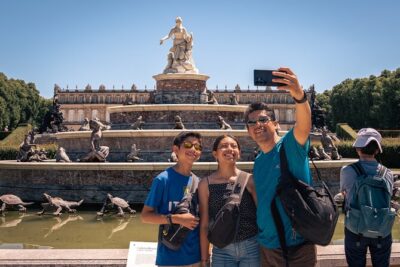
Herrenchiemsee Palace and Fraueninsel Rail Trip from Munich
Read our review →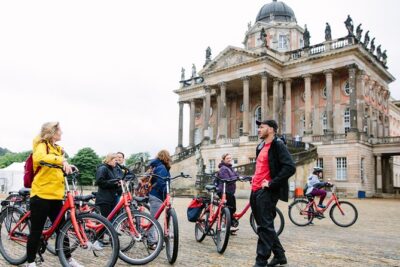
Potsdam Bike Tour with Rail Transport from Berlin
Read our review →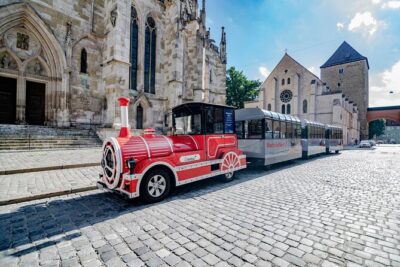
City tour through Regensburg with the little train
Read our review →
Salzburg History & Food Private Tour with Munich train add-on
Read our review →
City tour through Nuremberg with the little train – Christmas tour
Read our review →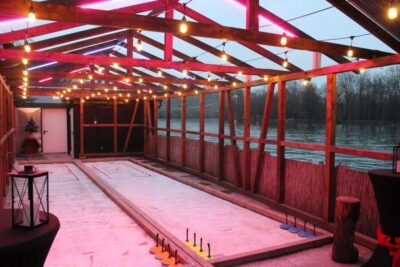
Lists this ride appears on