
Review · GERMANY
From Berlin to Sachsenhausen Camp: Private Tour by Car or Train
Sachsenhausen is not a casual sightseeing stop. It is a former Nazi concentration camp where more than 10,000 people died from starvation, disease, and systematic murder. This private tour helps you face that difficult place with historical context, a personal guide, and time to reflect.
I like the private format, which lets your group move at a thoughtful pace and ask direct questions. I also like the route through Berlin’s Nazi and Jewish history before reaching Sachsenhausen, especially the Topography of Terror and the Holocaust Memorial.
The main drawback is time. Six hours sounds generous, but Sachsenhausen alone gets about three hours, and the other stops are brief. At $327.72 per person, the tour makes the most sense for people who value a private guide and simple planning more than a low-cost group excursion.
Key points to know before booking
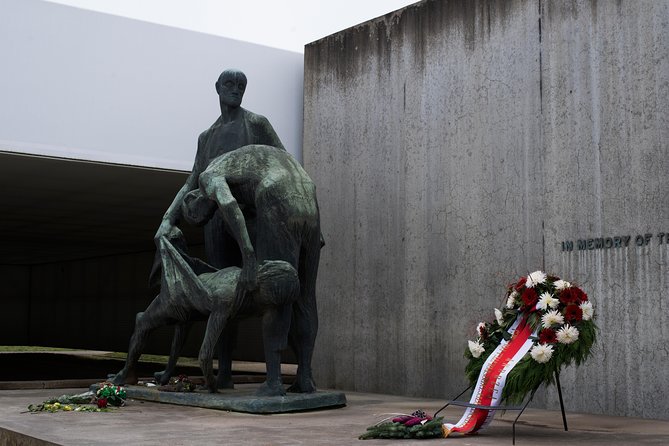
- Sachsenhausen receives the serious time: About three hours are set aside for the camp memorial, including Station Z, the prison, barracks, roll-call area, and hospital buildings.
- Sara has earned special praise: Her careful, humane approach has helped make the visit meaningful without turning it into a rushed history lecture.
- Berlin provides the context: The Topography of Terror and Holocaust Memorial come before Sachsenhausen, helping you understand the system behind the camp.
- The tour remains private: Only your group participates, which gives you more room for questions and a quieter pace.
- You can travel by car or train: Pickup is offered, but public transport costs are not included.
- The former Jewish Quarter adds a human scale: Stolpersteine, the New Synagogue, and the Auschwitz Trees connect broad events with Berlin streets and individual lives.
Why Sachsenhausen demands more than a quick visit
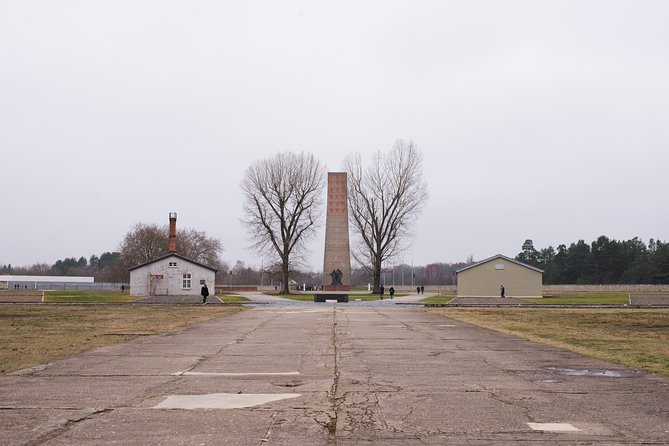
Sachsenhausen was the largest concentration camp in the area around Berlin. Its memorial grounds are not presented as a simple museum attraction. You enter a place built for imprisonment, control, forced labor, punishment, and murder.
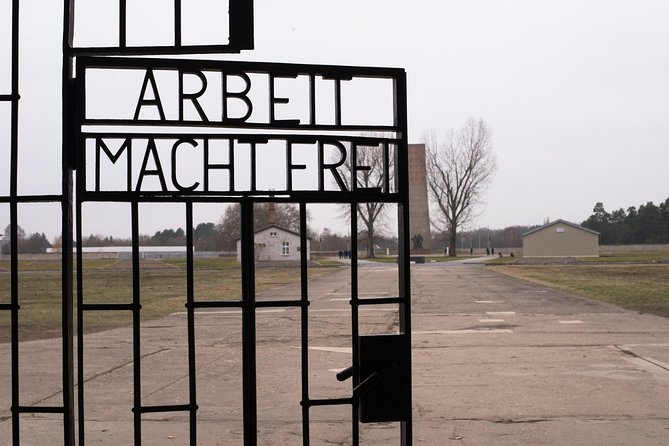
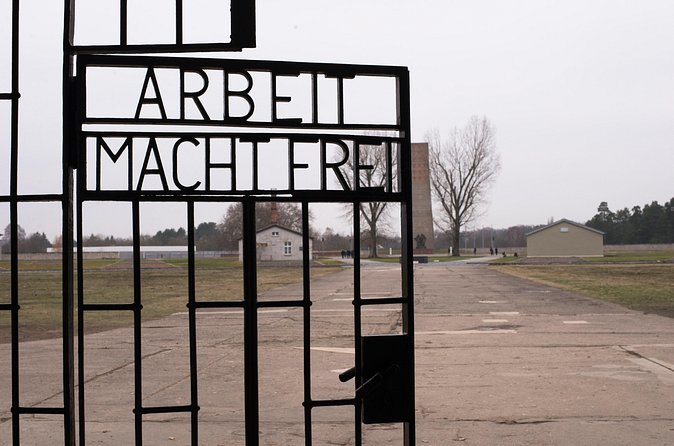
The entrance gate carries the words Arbeit Macht Frei, or work will set you free. That false promise is one of the first things you encounter, and it sets the tone for the visit. The tour is most useful when your guide explains how the camp worked, who was imprisoned there, and how routine administration supported mass suffering.
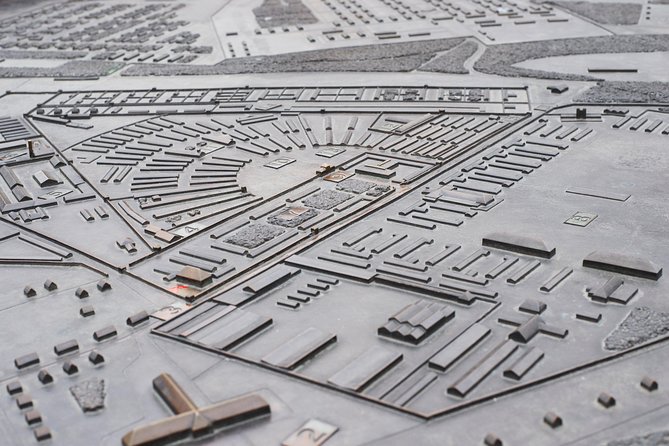
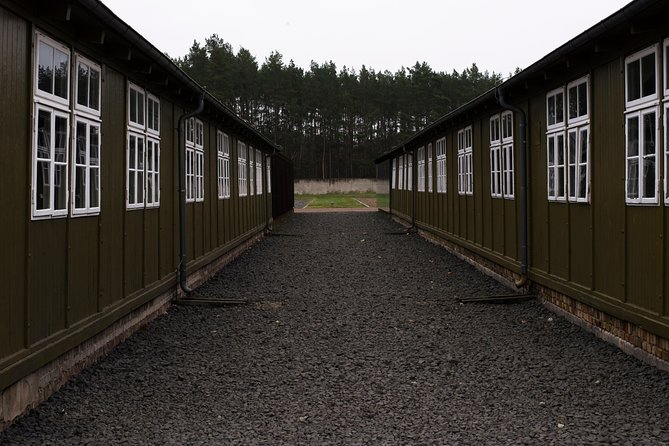
You will see the Appelplatz, where prisoners were assembled for roll call. You will also visit the Jewish Barracks, the kitchen and laundry block, the camp prison, pathology and hospital buildings, and Station Z, the execution grounds and killing center.
The three-hour visit matters. A shorter stop might let you see the gate and a few buildings, but it would not give you enough time to understand the layout or pause at the memorial sites. Even so, expect the experience to feel emotionally heavy. This is a place for quiet attention, not casual conversation or hurried photographs.
The memorial site requires a small donation. Food and drink are not included, so plan around the six-hour schedule. The supplied details do not specify a meal break, and the focus remains firmly on the historical visit.
More Train Journeys around Germany:
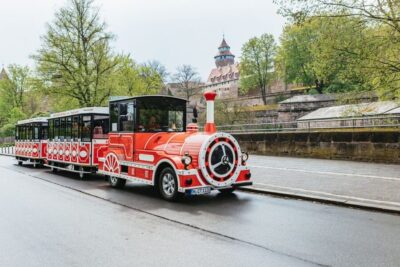
- Nuremberg: City Tour with the Bimmelbahn Train
★ 4.4 · 2,475 reviews - Würzburg: City Tour with the Bimmelbahn Train
★ 4.4 · 1,322 reviews - Regensburg: City Tour with the Bimmelbahn Train
★ 4.3 · 1,010 reviews
Starting in Berlin: terror explained before the camp
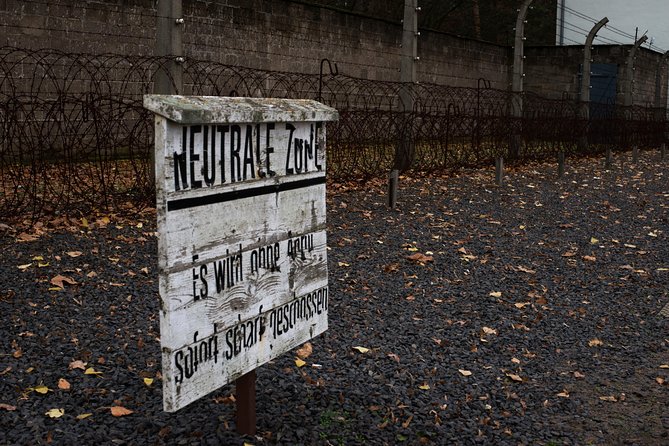
The tour uses Berlin to explain the machinery that made places such as Sachsenhausen possible. That approach is one of its strongest features. Instead of arriving at the camp with only a general idea of Nazi persecution, you first visit two central Berlin sites.
At the Topography of Terror, you stand near the former headquarters of the SS and Gestapo. The stop lasts about 20 minutes, so do not expect a full museum visit. Your guide uses the site to explain the Nazi terror system and the concentration-camp network.
This is a short stop, but the subject is important. Sachsenhausen was not an isolated prison run by a few brutal guards. It formed part of a wider structure of police power, detention, forced labor, and murder. The Topography of Terror gives you that framework before you reach the camp.
The Holocaust Memorial follows, with around 15 minutes among 2,711 concrete stelae spread across a 20,000-square-meter field. The memorial is dedicated to Jewish victims of Nazism. Your guide provides background on the Holocaust and discusses the courage of people who lived under persecution.
Fifteen minutes is enough to walk among the concrete forms and hear an introduction, but not enough for a full personal visit to the memorial’s underground information center. If you want to see that part, ask your guide before booking about the time available. The tour’s purpose here is preparation, not a long independent museum visit.
The former Jewish Quarter and its personal reminders
The stop at the Stiftung Neue Synagoge Berlin, also called Centrum Judaicum, shifts the focus from government offices and memorial spaces to ordinary city streets. You explore parts of Berlin’s former Jewish Quarter, a community badly damaged under Nazi rule.
The New Synagogue provides a visible link to Jewish life in Berlin. Stolpersteine offer a much smaller, more personal reminder. These small memorial stones are placed in pavements to remember individual people who were persecuted and murdered. The Auschwitz Trees add another point of memory.
This part of the route lasts about 30 minutes. That is enough for a guided introduction and a look at several meaningful sites, but it is not a full tour of every Jewish institution in the area. I like its place in the schedule because it gives you a sense of the people and community affected, not only the institutions that carried out the crimes.
The order also helps. You first consider the machinery of terror, then memorialize Jewish victims, then walk through a former Jewish neighborhood before reaching Sachsenhausen. The progression gives the camp visit a human and political context.
Three hours inside the Sachsenhausen memorial
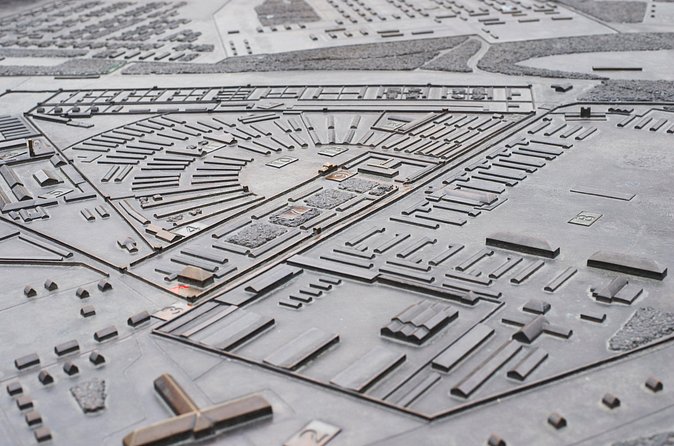
Most of the tour’s weight falls on the Sachsenhausen visit. With roughly three hours there, you have time to listen, look closely, and ask questions rather than simply follow a path from one building to another.
The Jewish Barracks help show how prisoners were separated and confined. The kitchen and laundry block point to the basic systems needed to control a large camp population. These buildings can look functional from the outside, which is exactly why an experienced guide matters. You need help connecting ordinary-looking structures with the cruel conditions imposed inside them.
At the Appelplatz, the focus shifts to the public control of prisoners. Roll calls could be exhausting and punitive. The space also shows how the camp’s design turned counting and discipline into a daily ritual of power.
The camp prison reveals another layer of punishment. It was used for detention and abuse within the wider camp system. The pathology and hospital buildings point to the medical side of imprisonment, disease, death, and the handling of bodies.
Station Z is the hardest stop for many people. It served as the execution grounds and killing center. The tour does not treat it as a dramatic spectacle. Its importance lies in understanding that murder was planned and carried out as part of the camp’s operating system.
A private guide can be especially useful here. The tone needs to remain clear and respectful, and the two published comments about Sara describe exactly that balance. One praised her sensitivity, empathy, clear explanations, and commitment to memory and education. Another described the visit with a French phrase meaning that a very professional guide led the group through the camp and created a deeply emotional experience.
Those comments do not guarantee that every tour will feel identical, but they point to the quality that matters most here: care. Sara is the guide specifically praised in the available feedback. Natalia, who responded on behalf of Vexperio, also appears connected with the tour team. Guide assignments can change, so confirm who will lead your date if having Sara is important to you.
Same tracks, a different carriage:
- Dachau Concentration Camp Memorial Tour with Train from Munich
★ 4.5 · 955 reviews - Guided Dachau Concentration Camp Memorial Site Tour with Train from Munich
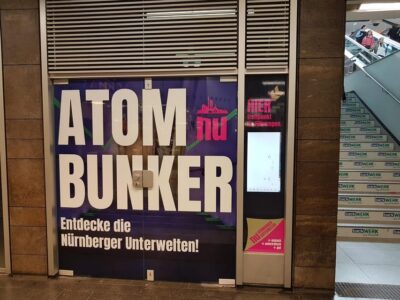
★ 5.0 · 920 reviews - Nuremberg: Nuclear Bunker in Main Railway Station
★ 4.7 · 262 reviews - Private Sachsenhausen Concentration Camp tour with train
★ 5.0 · 205 reviews
Private car or train: what the format changes
The tour can be arranged by private car or train, and pickup is offered. That gives you useful flexibility, especially for a serious day when you may not want to spend extra time working out the route yourself.
The exact transport choice matters for your budget and schedule. Public transportation costs are not included, so ask how the train option will be handled and what tickets you need to buy. The tour price covers the professional local guide, not every transport expense.
A private car may be the simpler choice if your group wants door-to-door pickup and fewer changes. A train-based visit may suit you if you prefer public transport, but you should allow for ticket costs and follow the meeting instructions carefully. The supplied details do not give exact pickup zones, train routes, or vehicle specifications, so confirm those points before departure.
The private format is more than a label. Only your group participates, so you can ask about a particular site, pause when the subject becomes difficult, or request a little more explanation at one stop. It also avoids the fixed rhythm of a large group.
That personal service helps explain the price. At $327.72 per person, this is expensive compared with a basic public transport visit or a large group tour. For a group of several people, group discounts may improve the value. For a solo participant or couple on a tight budget, the cost may feel high.
I would judge the price by what you want from the day. If you mainly need transport to Sachsenhausen, cheaper choices may exist. If you want a private English-speaking guide to connect Berlin’s Nazi history, Jewish history, and the camp memorial, the fee buys a more focused experience.
Who will get the most from this tour
This tour suits you if you want historical guidance rather than a self-guided visit. It also works well for families or small groups who prefer to ask questions privately, though the subject matter may be difficult for younger children.
You should be ready for a long and emotionally serious day. The itinerary includes several sites connected to persecution, murder, and loss. It is not designed as a light city tour with a brief historical stop.
The experience is offered in English, and most people can participate. The tour is near public transportation, but the listing does not provide detailed accessibility information. If you need step-free access, seating, or other assistance, ask Vexperio before booking.
The schedule is fairly tight. The camp gets the largest block of time, while the three Berlin stops are introductions. If you want long, independent visits at the Topography of Terror, Holocaust Memorial, or Centrum Judaicum, this may not give you enough time.
Practical value, timing, and cancellation
The full experience lasts about six hours. Since it combines central Berlin with Sachsenhausen, allow mental energy as well as physical time. You may want to keep the rest of your day light.
Admission is listed as free, though a small donation is required at the memorial site. Food and drink are not included. Bring whatever you need for the six-hour outing, but the available information does not specify whether a formal break is scheduled.
The tour is commonly booked well ahead, with an average booking time of 102 days before departure. That suggests you should reserve early if your Berlin dates are fixed, especially if you want a private guide and a preferred transport option.
Free cancellation is available if you cancel at least 24 hours before the local start time. Cancellations made less than 24 hours ahead are not refunded, and late changes are not accepted. If you book within nine days of travel, confirmation may take up to 48 hours and remains subject to availability.
Should you book the Sachsenhausen private tour?
Book it if you want a carefully guided memorial visit and value privacy, context, and a direct connection between Berlin and Sachsenhausen. Sara’s praised style, with clear facts delivered alongside empathy, is the kind of guiding this subject needs.
Think twice if your main goal is the lowest possible price, or if you want long independent museum visits at every stop. The tour is costly, the schedule is full, and some Berlin stops are short.
For most people who want to understand Sachsenhausen rather than simply see it, the private format earns its place. You get the camp’s major sites, a guide to help you process them, and a wider view of how Nazi terror affected Berlin’s institutions, Jewish community, and prisoners.
FAQ
How long does the tour last?
The experience lasts approximately six hours.
Is the tour private?
Yes. Only your group participates in this private activity.
Is the tour offered in English?
Yes. The tour is offered in English.
Can I travel to Sachsenhausen by train?
Yes. The experience offers travel by private car or train. Public transportation costs are not included.
Is pickup available?
Yes. Pickup is offered, though the provided details do not specify the exact pickup area or meeting instructions.
What is included in the price?
A professional local guide is included. Food, drinks, public transportation costs, and entrance fees are not included.
How much time is spent at Sachsenhausen?
About three hours are allocated to the Memorial and Museum Sachsenhausen.
Can I cancel for a full refund?
Yes, if you cancel at least 24 hours before the experience start time. Cancellations made less than 24 hours before the start are not refunded.
New on the timetable around Germany
- City tour through Nuremberg with the little train – Christmas tour★ 4.0 · 23 reviews
- Salzburg History & Food Private Tour with Munich train add-on★ 4.5 · 24 reviews
- Take the U Train: An Audio Story of Berlin’s Oldest Elevated Railway Line★ 4.0 · 2 reviews
- Stuttgart: Curling rail rental★ 3.3 · 9 reviews
- City tour through Regensburg with the little train★ 4.0 · 67 reviews
- Potsdam Bike Tour with Rail Transport from Berlin★ 4.5 · 81 reviews
- Herrenchiemsee Palace and Fraueninsel Rail Trip from Munich★ 4.5 · 97 reviews
- Private Sachsenhausen Concentration Camp tour with train★ 5.0 · 205 reviews
Other Germany Train Journeys worth a seat
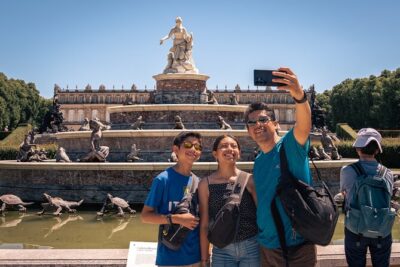
Herrenchiemsee Palace and Fraueninsel Rail Trip from Munich
Read our review →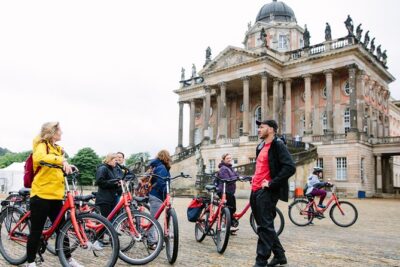
Potsdam Bike Tour with Rail Transport from Berlin
Read our review →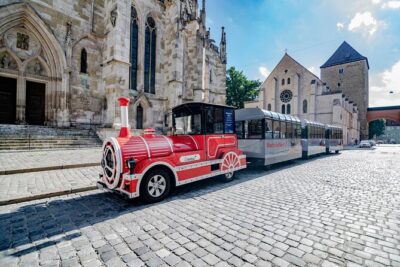
City tour through Regensburg with the little train
Read our review →
Salzburg History & Food Private Tour with Munich train add-on
Read our review →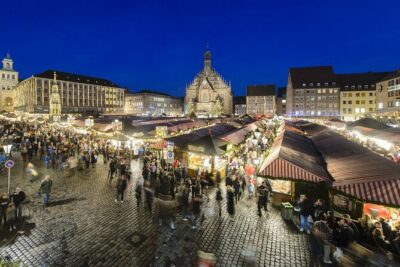
City tour through Nuremberg with the little train – Christmas tour
Read our review →
Lists this ride appears on