
Review · BANGKOK
Bangkok: Bridge on the River Kwai and Thailand-Burma Railway Tour
The most moving part of this day is not the famous movie connection. It is the quiet walk through Kanchanaburi War Cemetery, where the young ages and plain epitaphs bring the Burma Railway story down to a human scale. Then the long-tailed boat and train ride give you two very different ways to see the river and the railway route.
I like the strong mix of transport and history: you travel by road, boat, and train rather than simply arriving at a bridge for a quick photograph. I also like the guides, especially Rach, Oom, and Zoom, who are often praised for clear explanations, practical help, and a good sense of timing. The drawback is the length. This is an 11-hour day, and Bangkok traffic can make the return later still.
Key points to know before booking
- The day combines three forms of transport: an air-conditioned vehicle, a long-tailed boat, and a train ride along the Death Railway.
- The cemetery is the emotional center: allow time to read the inscriptions and reflect on the prisoners of war buried there.
- A THB300 train fee is paid separately: it is described as securing a seat and includes tea or coffee, drinking water, a cold towel, and a certificate.
- The tour is limited to 15 people: a smaller group can make it easier to ask questions and hear the guide.
- Lunch is included: it is a buffet meal in Kanchanaburi, with river views noted as one of the pleasant touches.
- Central Bangkok pickup is offered: pickup may begin 30 to 60 minutes before the 7:00 a.m. departure.
Why the River Kwai day matters
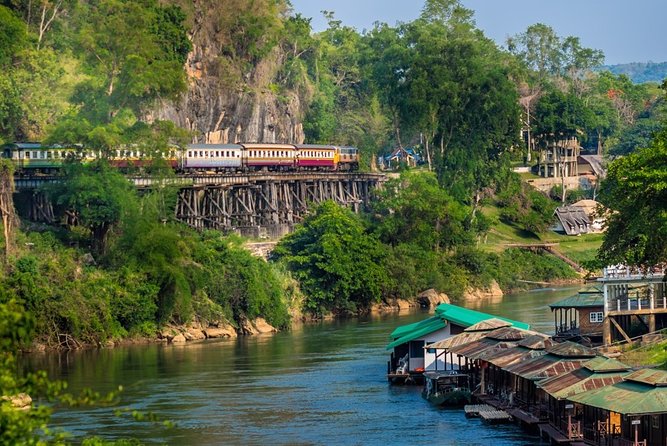
The Bridge on the River Kwai is part of the Thailand-Burma Railway, built by the Japanese military between 1942 and 1943 during World War II. Prisoners of war from Britain, Australia, the Netherlands, the United States, and other countries were forced to work on the railway, along with enslaved Asian laborers.
The bridge became famous through the 1957 film and Pierre Boulle’s book. The movie helped put the site on the international map, but it should not be treated as a precise account of everything that happened here. The real story was harsher, broader, and involved many more people than the film suggests.
That distinction is one reason a good guide matters. You are not simply looking at railway tracks and a steel bridge. You are trying to understand how the railway was built, who was forced to build it, and why the route became known as the Death Railway.
The tour does a useful job of putting the bridge beside a cemetery and museum. That combination prevents the day from becoming only a scenic outing. You get the famous structure, then the evidence of the human cost.
More Death Railway Trips around Bangkok:
- From Bangkok: Death Railway & Hellfire Pass Tour with Lunch
★ 4.6 · 931 reviews - Bridge on the River Kwai and Thailand-Burma Railway Tour
★ 4.5 · 658 reviews - Bridge on the River Kwai and Thailand-Burma Railway Guided Tour
★ 4.5 · 353 reviews
Leaving Bangkok for Kanchanaburi
Pickup begins at centrally located Bangkok hotels, with a listed departure time of 7:00 a.m. Depending on your hotel, the vehicle may arrive 30 to 60 minutes earlier. You must provide your hotel information when booking, and the pickup may be arranged from a nearby point if your hotel is not directly served.
The ride to Kanchanaburi is one reason the day feels long. Several people found the guide’s commentary helped the journey pass quickly, especially when the guide explained the background before reaching the sites. Guides named in feedback include Rach, Oom, and Zoom, and their strengths include historical explanations, taking photographs, answering questions, and keeping the group on schedule.
The group size is capped at 15. That is small enough to make the guide accessible, though the quality of interaction depends on the individual guide and the size of the group on your date. If you want a day built around detailed questions, tell the guide early. One complaint described a guide who did not interact enough, while other experiences praised the personal attention and clear explanations.
Traffic is the wild card. The journey back into Bangkok can be slow, especially late in the day. The tour is advertised at about 11 hours, but you should not plan a tight evening appointment after returning.
Arriving at the Bridge on the River Kwai
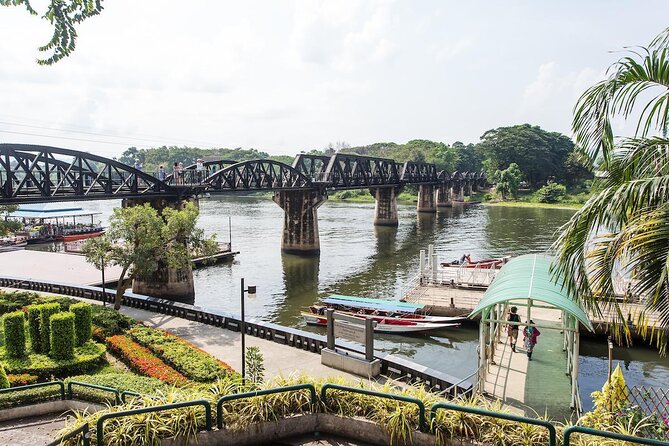
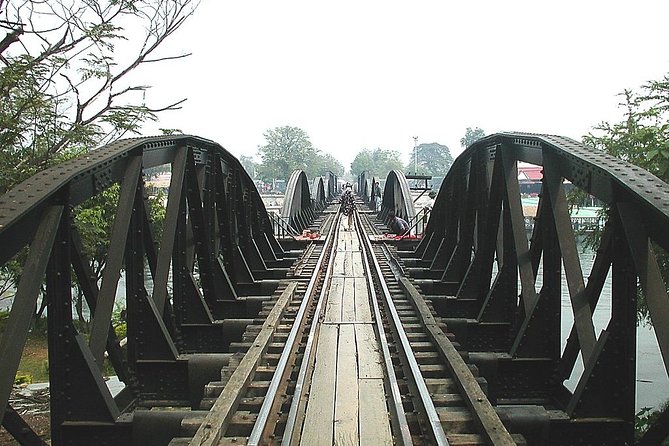
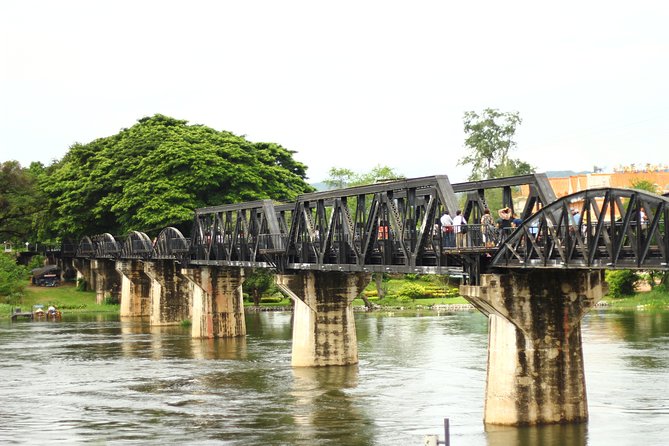
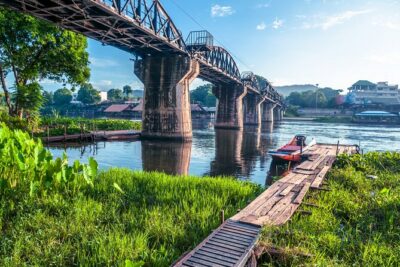
The bridge visit is the headline stop. You can walk across the structure and look along the railway line, with the river below and the surrounding scenery beyond it. The bridge itself is not a museum exhibit behind glass. It is an active historic structure and a place where you need to pay attention to your footing.
The walking surface can be uneven, and one account specifically noted that the bridge is high and long. This is manageable for many people, but it is not a smooth, flat pavement experience. Take your time, particularly when stopping for photographs or when other people are moving along the bridge.
The attraction is partly visual. You see the steel framework, the river, and the route of the railway. The greater value comes from knowing that this is one surviving section of a project built under brutal wartime conditions.
Do not expect the bridge stop alone to explain the entire story. Its meaning becomes clearer after the cemetery and museum, and the guide’s explanation is an important part of the visit.
Seeing the river from a long-tailed boat
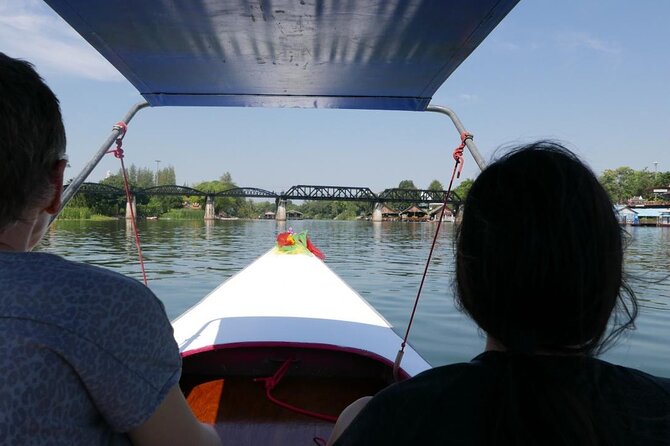
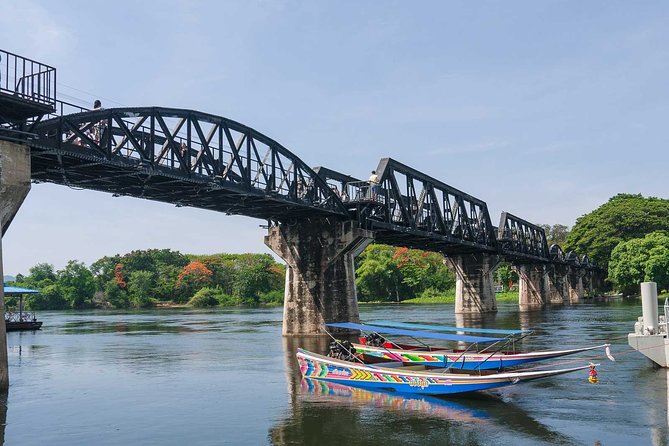
The boat ride gives the day a welcome change of pace. Instead of approaching the bridge by road, you travel on the river in a traditional Thai long-tailed boat. The ride is described as a speedboat trip, and the fast movement across the water is one of the more enjoyable parts of the schedule.
You get a different view of the bridge from the river, along with the surrounding jungle and river scenery. This is not only a practical transfer. It helps you see how the river shaped the railway route and gives you a break from sitting in the vehicle.
Getting into and out of a long-tailed boat can be difficult if you have mobility problems. Tell the guide at the start of the tour. A road transfer to the bridge can be arranged instead, according to the tour information. That option is worth discussing before you reach the pier, not after you are already trying to board.
The boat is also weather dependent in the ordinary practical sense. The supplied details do not promise a specific alternative for every condition, so ask the guide if the river portion changes on your date.
More Train Journeys around Bangkok:
- Day Trip to Bangkok Floating Market & Maeklong Railway
★ 5.0 · 1,528 reviews - Bangkok: Railway and Floating Market Tour with Dragon Temple
★ 4.6 · 1,225 reviews - Private Excursion to Maeklong Railway and Floating Markets
★ 5.0 · 850 reviews - From Bangkok: Railway & Damnoen Saduak Floating Market Tour
★ 4.6 · 775 reviews
Remembering the dead at Kanchanaburi War Cemetery
The Kanchanaburi War Cemetery is the most solemn stop. It is the main cemetery for prisoners of war who died during the construction of the Burma Railway, and it sits on Saeng Chuto Road in Kanchanaburi town.
The grounds are carefully maintained, and the rows of graves are easy to walk through. What affects you most is the age of many of the men and the short personal inscriptions. One visitor found the epitaphs so moving that the visit brought tears. That reaction is understandable. The cemetery makes the scale of the railway’s suffering personal rather than abstract.
You have about 30 minutes here. That is enough for a respectful walk and some reading, but not enough to examine every grave in detail. If you have a family connection to someone who worked or died on the railway, tell the guide. A visit can become especially powerful when you find a possible relative or a familiar name.
This is not a place for loud conversation or rushed group photographs. The guide can provide context, but the best part of the stop may be the quiet time you spend reading.
Inside the JEATH War Museum
The JEATH War Museum is small and focuses mainly on the ordeal of the prisoners of war who built the railway. Its exhibits include original photographs, letters, and drawings, along with displays showing the harsh living conditions in the prison camps.
You have about 20 minutes here, so treat it as a compact introduction rather than a large museum visit. The material is direct and often upsetting. It helps explain the difference between the scenic railway ride and the terrible conditions behind its construction.
The museum is not described as a modern, polished institution. One visitor felt it needed an upgrade, while others found the photographs and guide’s explanation especially affecting. That contrast is useful to understand before you go. You visit for the historical evidence and the emotional weight, not for sophisticated galleries or a large collection.
The name JEATH refers to Japan, England, America, Australia, Thailand, and Holland, reflecting countries connected to the railway story. The tour information places particular focus on the prisoners of war, while the broader history also includes the Asian laborers forced into the project. Ask your guide about both groups if the subject matters to you.
Lunch beside the river
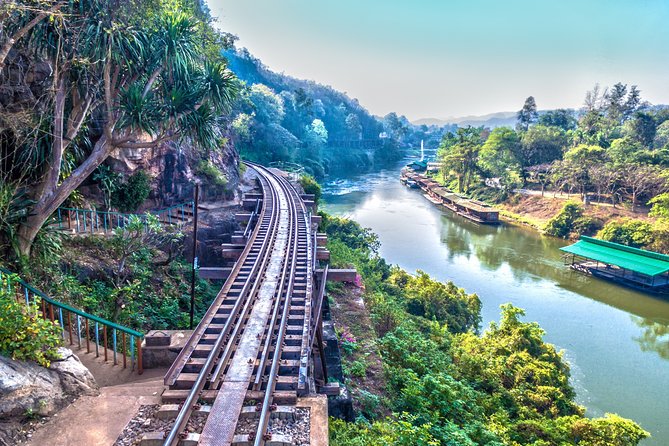
Lunch is a buffet meal in Kanchanaburi. Several comments point to the setting as a pleasant part of the day, with a view over the River Kwai. After the cemetery and museum, a sit-down meal gives you time to rest before the train ride.
The food itself may not be the main reason to book the tour. One dining comment described the buffet as good but cold, so keep your expectations practical. You are choosing a convenient group lunch included in a long day, not a destination restaurant.
Drinks are not included. Bring money for beverages, and remember that the train-seat fee is separate as well. The lunch stop also helps break up the schedule, which matters on an outing involving several hours of driving.
Riding the Death Railway train
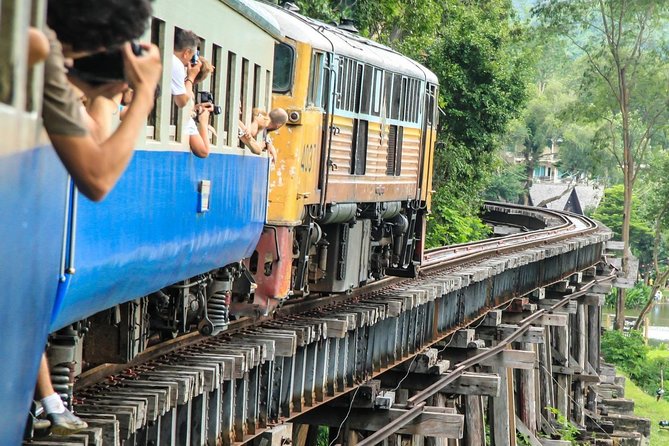
The train journey is the other major highlight. You ride along the Death Railway and cross the bridge, seeing the route from the same railway corridor that gives the site its name. The scenery along the river is a pleasant contrast to the difficult history discussed earlier.
The train ride can be exciting, but it is not a luxury rail journey. It may feel long to some people, especially after an early start and several stops. Others find the movement, views, and historical setting make it one of the day’s best moments.
Pay close attention to the payment details. The train ride is included in the tour, but approximately THB300 per person is paid separately at the station. The fee is described as guaranteeing a seat and providing tea or coffee, drinking water, a cold towel, and a certificate. Several complaints came from people who felt this cost was unexpected, even though it is stated in the tour conditions.
The clearest way to think about it is this: the rail portion is included, but the reserved-seat package is an additional on-the-spot payment. Bring Thai baht and ask the guide to explain exactly what you are receiving before paying. If sitting for the journey matters to you, the extra charge may be worthwhile. If you are comparing prices, include it in your real budget.
What the guides add to the day
The strongest praise is directed at the guides. Rach is described as informative, able to answer questions, and good at making a long drive pass quickly. Oom is praised for explaining the plan, adding humor at the right moments, taking photographs, and helping the group stay comfortable. Zoom is also singled out for making the cemetery and railway visit meaningful.
That does not mean every guide delivers the same experience. One account found a guide difficult to understand through a face mask and felt that information was lost. Another felt the guide did not engage enough with the group. If you cannot hear or follow the explanation, say so during the day. The guide can slow down, repeat information, or give you extra time.
A group of four or fewer can feel almost private, especially when the guide encourages questions. With a full group of 15, you may need to move closer and speak up. The maximum group size is still modest for a full-day excursion.
Is the $99.40 price fair?
At $99.40 per person, the price covers hotel pickup and drop-off from central Bangkok, air-conditioned transport, entrance fees, the long-tailed boat, the guide, lunch, and the train ride itself. That is a reasonable package for a full day outside Bangkok, especially if you value having transport arranged between several separate sites.
The extra THB300 train charge changes the calculation. It is not a hidden cost in the written details, but it can feel that way if you only notice the headline price. Add it to your budget, along with drinks.
You are also paying for convenience. Reaching Kanchanaburi, the bridge, cemetery, museum, pier, and railway station independently would require more planning and several transport connections. The tour keeps those pieces together and provides historical interpretation, which is particularly useful at a site where the movie version can blur the facts.
Practical details for a smoother day
Wear shoes with a secure sole. The bridge has uneven surfaces, and you may walk between several stops. Bring water, sun protection, and Thai baht for drinks and the train-seat fee.
Most people can take part, but boarding the long-tailed boat requires care. Tell the guide about mobility concerns at the start, and ask about the road option to the bridge.
Children under 100 centimeters receive the child rate. Children over 100 centimeters are charged the adult rate. The shared tour requires at least two people to operate, so a solo booking is subject to availability and could be canceled if the minimum is not met. An alternative date or refund is offered in that case.
Free cancellation is available up to 24 hours before the experience begins. Changes or cancellations within 24 hours are not accepted for a refund.
Should you book this River Kwai tour?
Book it if you want the famous bridge placed in its full wartime setting, with a cemetery, museum, river journey, and train ride in one long day. It suits people interested in World War II, family history, railways, and guided sightseeing that removes the strain of arranging transport.
I would choose this tour for the mix of boat and train travel, the small maximum group, and the chance to hear the story from a Thai guide such as Rach or Oom. I would skip it if you dislike early starts, long road journeys, group meals, or an 11-hour schedule.
Most important, budget the extra THB300 and leave your evening open for Bangkok traffic. With those points understood, this is a serious, memorable day rather than a quick photo stop at a movie-famous bridge.
FAQ
How long does the Bridge on the River Kwai tour take?
The tour lasts approximately 11 hours. Pickup begins around 7:00 a.m., with some central Bangkok hotels receiving pickup 30 to 60 minutes earlier. Heavy traffic may make the return to Bangkok later.
What is included in the tour price?
The price includes central Bangkok hotel pickup and drop-off, air-conditioned transport, entrance fees, a long-tailed boat ride, a professional Thai guide, the train ride, and buffet lunch.
Is the train-seat fee included?
No. Approximately THB300 per person is paid separately to the guide at the train station. This is described as guaranteeing a seat and including tea or coffee, drinking water, a cold towel, and a certificate.
Can I take part if I have mobility problems?
You may have difficulty getting into or out of the long-tailed boat. Tell the guide at the beginning of the tour, and the guide can arrange for the driver to take you to the bridge by road instead.
Is hotel pickup available everywhere in Bangkok?
Pickup and drop-off are available from most centrally located Bangkok hotels. You must provide your hotel details when booking, and the operator may arrange a nearby pickup point.
What happens if I book alone?
The shared tour requires at least two people to operate. A solo booking is subject to availability and may be canceled if the minimum is not reached. An alternative date or refund is offered if that happens.
New on the timetable around Bangkok
- Small Group: Kanchanaburi Death Railway, Erawan Waterfall and Elephant★ 4.0 · 3 reviews
- Train trip death railway Bridge on river Kwai from Bangkok to Kanchanaburi trip★ 4.0 · 17 reviews
- Historic Kanchanaburi:Train, Boat, Skywalk from Bangkok(No Lunch)★ 5.0 · 2 reviews
- Private tour : Railway & Floating Market and the Bridge over river Kwae★ 5.0 · 2 reviews
- Maeklong & Damnoen Saduak Markets: Railway & Floating Market Tour★ 4.0 · 17 reviews
- Historic Kanchanaburi: Train, Boat & Skywalk + Lunch From Bangkok★ 4.5 · 3 reviews
- Private Tour to Kanchanaburi Death Railway and Elephant Haven★ 5.0 · 15 reviews
- Private Tour: Death Railway, Hellfire Pass and Erawan Waterfall★ 5.0 · 55 reviews
Other Death Railway Tours worth a seat
Bridge on the River Kwai and Thailand-Burma Railway Tour
Read our review →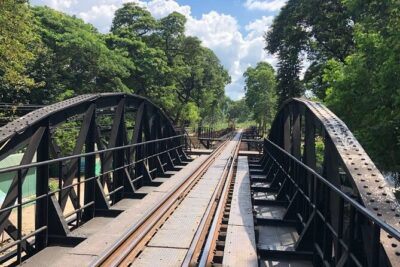
Bridge over River Kwai and Hellfire Pass Tour with Train Ride
Read our review →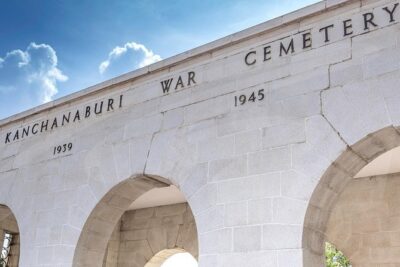
Private Tour: Thai–Burma Death Railway Bridge on the River Kwai from Bangkok
Read our review →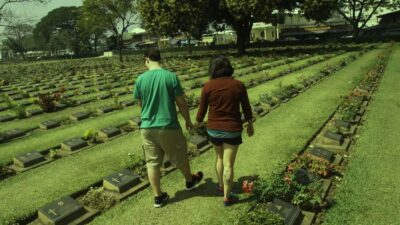
Death Railway & River Kwai Bridge Private Tour
Read our review →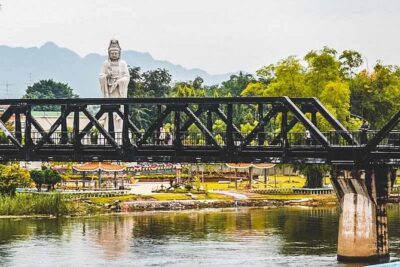
Private Tour: Death Railway, Hellfire Pass and Erawan Waterfall
Read our review →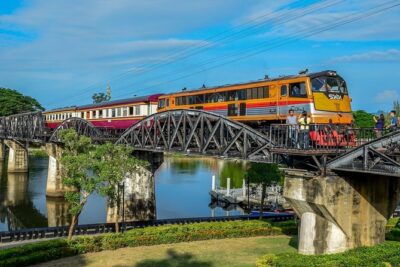
Erawan Waterfalls-Death Railway & River Kwai Tour
Read our review →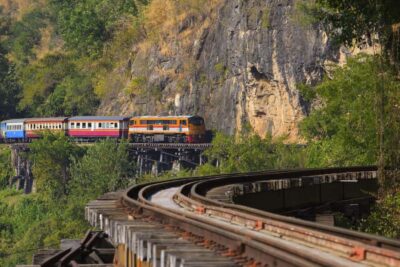
Lists this ride appears on