
Review · BANGKOK
Bangkok: Kanchanaburi, River Kwai & Death Railway Tour
The most powerful part of this day is the contrast: quiet rows of graves in Kanchanaburi, harsh wartime exhibits at the JEATH Museum, then the famous bridge and a railway clinging to a cliff. You get both remembrance and scenery in one long day from Bangkok. Fern, Jeerawat, Nina, Nat, and other guides have earned praise for clear explanations, friendly care, and helpful photography.
I especially like the small group limit of nine, which gives you a better chance to ask questions than on a large coach tour. I also like the stop at Tham Krasae, where the train line curves along the rock face, and the responsible touches of glass-bottled water and carbon offset credits. The tradeoff is simple: much of the day is spent in the van, and the return to Bangkok can feel tiring.
Key points to know before booking
- The Death Railway story comes first: The cemetery and JEATH Museum give the River Kwai sights their human meaning.
- The bridge is a short stop with a big name: You can see and photograph it, but this is not a full railway expedition.
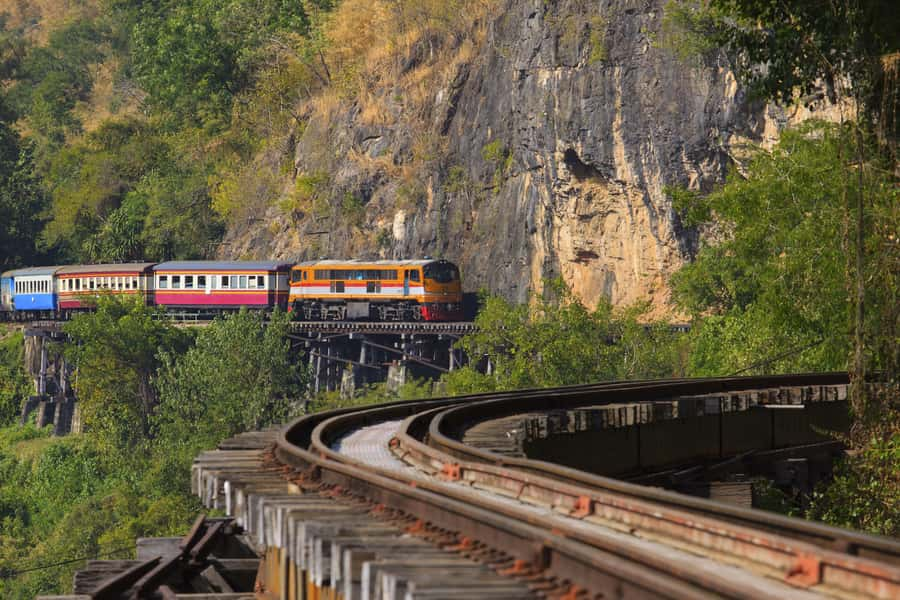
- Tham Krasae brings the best railway scenery: Watch trains pass and see the track curve around a cliff.
- Tiger Cave Temple adds a physical challenge: The 18-meter Buddha requires a steep climb, especially hard in hot weather.
- You pay $102 per person, plus lunch: The price covers transport, guide, museum entry, water, and carbon offset credits.
- Expect a long day: Pickup from Bangkok, roughly three hours back, and close to ten hours door to door.
Why Kanchanaburi makes a worthwhile day from Bangkok
Kanchanaburi is not a quick side trip. It lies well outside Bangkok, so you spend a large part of the day getting there and back. Still, the area offers a rare mix of wartime history, working railway scenery, local food, and a hilltop temple.
I find the subject matter more serious than a typical sightseeing day. The Death Railway was built during World War II under the Japanese Empire, with prisoners of war and civilians forced to work in brutal conditions. The cemetery and museum ask you to slow down before the more familiar sights appear.
The route also helps you understand why the famous bridge matters. You first encounter the people who died, then see the objects and living conditions connected with the railway, and only afterward reach the bridge and railway line itself. That order gives the day more meaning than a quick photo stop alone.
More Death Railway Trips around Bangkok:
- From Bangkok: Death Railway & Hellfire Pass Tour with Lunch
★ 4.6 · 931 reviews - Bridge on the River Kwai and Thailand-Burma Railway Tour
★ 4.5 · 658 reviews - Bridge on the River Kwai and Thailand-Burma Railway Guided Tour
★ 4.5 · 353 reviews
A quiet beginning at Kanchanaburi War Cemetery
After the early pickup, you ride in an air-conditioned van for about two and a half hours. This is useful time to rest, but it also explains why you need to treat the excursion as a full-day commitment rather than a relaxed half-day outing.
The Kanchanaburi War Cemetery is carefully maintained, with orderly rows of graves and a calm atmosphere. You get about 30 minutes here, enough to walk through the grounds and take in the names and dates. I would use this stop for quiet attention rather than rushing through photographs.
The cemetery honors prisoners of war and civilians who died while working on the Siam-Burma Railway, also called the Death Railway. Your guide can help connect the place to the rest of the day, but the setting itself does much of the work. It is a solemn start, and some people may find it emotionally heavy.
The JEATH Museum and the human cost of the railway
The JEATH Museum gives you a more physical sense of wartime conditions. Its name refers to the nationalities associated with the railway: Japanese, English, Australian, American, Thai, and Hollander.
Inside, you can see weapons, tools, uniforms, medals, and replicas of the shelters used by prisoners of war. The displays are not presented as a polished modern museum experience. That can make them feel direct, though the 30-minute visit means you will need to move at a steady pace.
I like this stop because it provides context before you reach the bridge. Without it, the River Kwai can become just another famous photograph. With it, the bridge and railway carry a much heavier meaning.
There are two JEATH museums in the Kanchanaburi area, so it is worth confirming with your guide which one you are visiting. One past experience included some uncertainty over the museum location. If detailed military history is your main reason for booking, ask questions early and make use of the guide’s time.
The Bridge Over the River Kwai
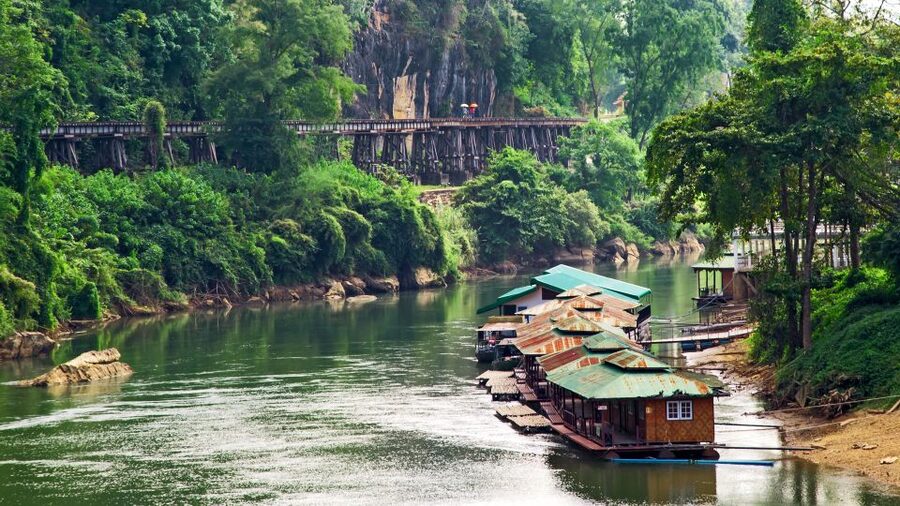
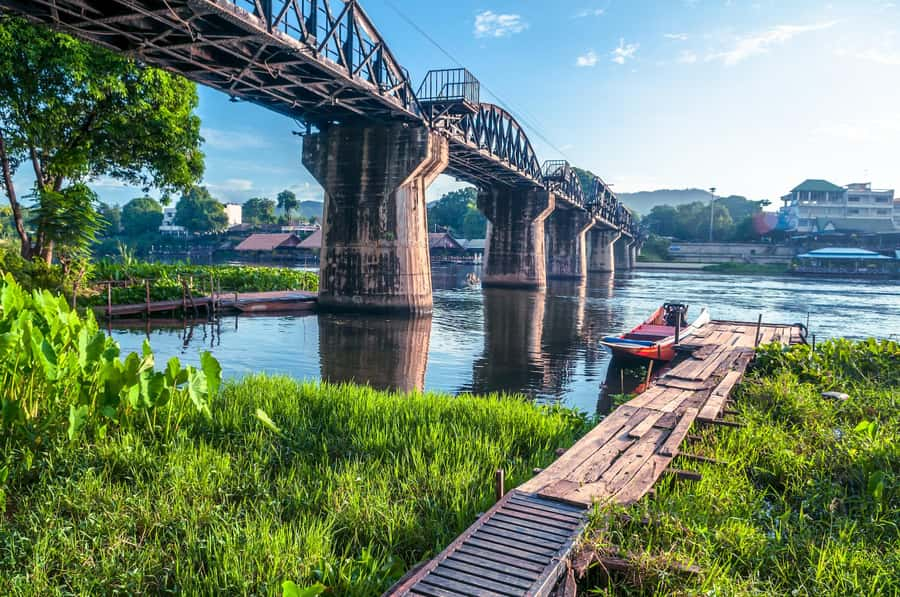
The bridge is the most recognizable stop of the day. You get around an hour and a half in the bridge area, including sightseeing and the nearby lunch stop, so there is time to see the structure rather than simply pull over for a picture.
The bridge itself is still part of an active railway route. Take care around the tracks and listen to instructions, particularly if a train is approaching. The experience is more interesting when you remember that this is not a preserved movie set. It is a real working section of railway tied to a painful wartime story.
The film connection may be what first brings many people here, but the actual visit is more grounded. You can photograph the bridge, look along the river, and then move on to the railway section at Tham Krasae.
Lunch is not included in the $102 price. A local restaurant is used, and one guide has taken the group to a particularly good spot with a buffet that offered solid value. Plan to carry cash for food and personal purchases, since the tour specifically recommends it.
More Train Journeys around Bangkok:
- Day Trip to Bangkok Floating Market & Maeklong Railway
★ 5.0 · 1,528 reviews - Bangkok: Railway and Floating Market Tour with Dragon Temple
★ 4.6 · 1,225 reviews - Private Excursion to Maeklong Railway and Floating Markets
★ 5.0 · 850 reviews - From Bangkok: Railway & Damnoen Saduak Floating Market Tour
★ 4.6 · 775 reviews
Tham Krasae, where the railway hugs the cliff
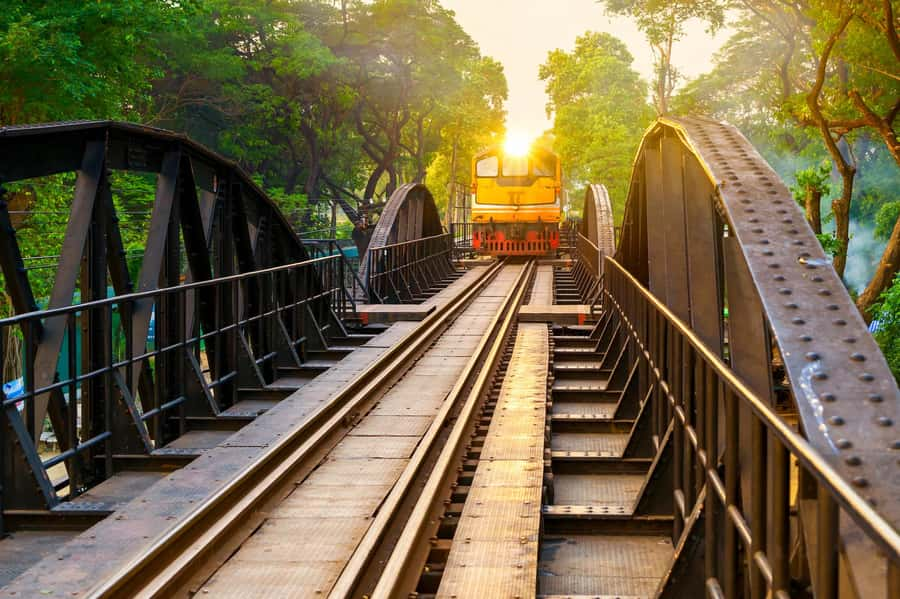
Tham Krasae Station is one of the day’s most appealing scenic stops. The railway runs around a cliff, giving you a clear view of the track, the surrounding countryside, and trains passing through.
You have about 30 minutes here. That is enough for photographs and a look at the railway, but not enough for a long walk or a slow exploration. Keep your camera ready, since the train timing is not something you control.
This stop balances the darker museum visits with a sense of place. You see how the railway fits into the region, rather than considering it only as a historical object. It is also one of the better places for photographs, especially if you enjoy railway scenes.
A short coffee break follows at a local café. Do not expect this to transform the schedule into a leisurely café tour. It is mainly a chance to cool down, use the pause to recover from the heat, and prepare for the temple visit.
Tiger Cave Temple and the climb to the Buddha
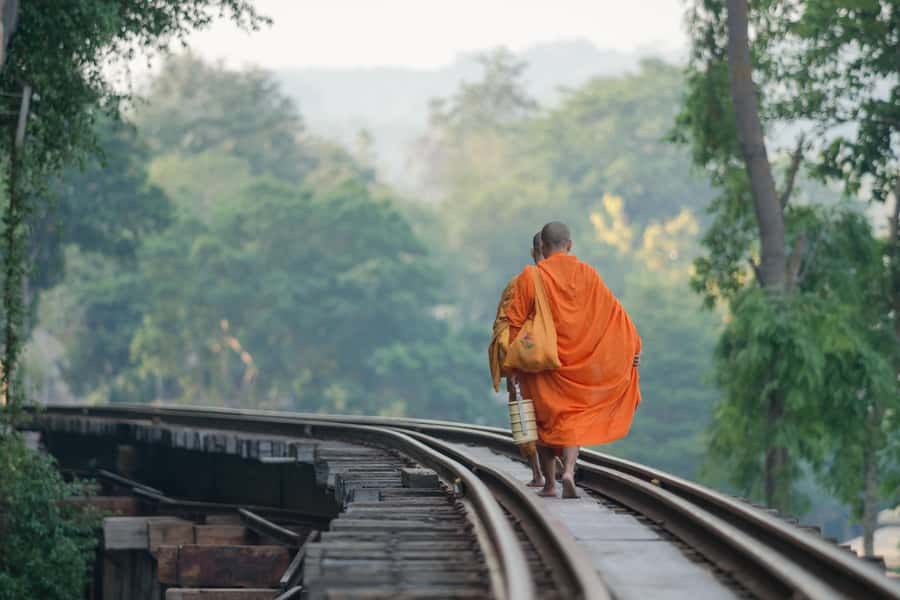
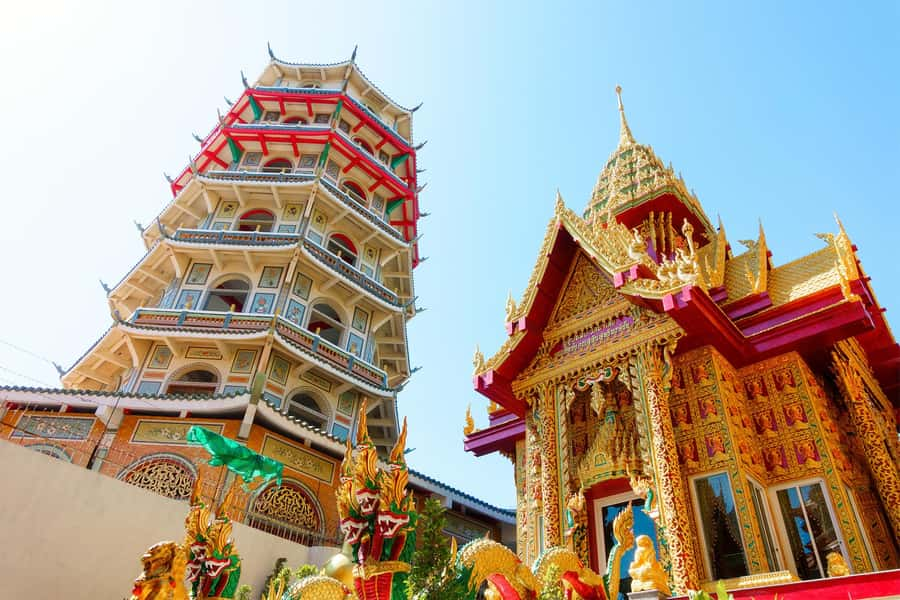
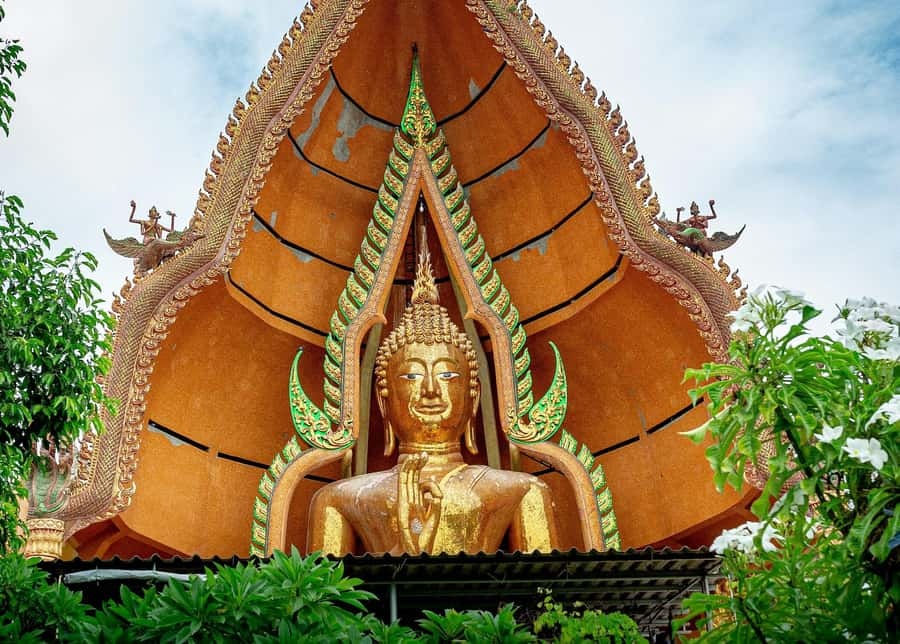
Wat Tham Suea, or Tiger Cave Temple, changes the mood again. The temple is known for tiger paw prints on the cave walls and a gleaming Buddha statue about 18 meters tall.
The statue sits at the top of a steep climb. The visit lasts about an hour, but that time includes the ascent, the temple, photographs, and the descent. In cool conditions it may feel manageable. In the heat, it can be demanding. One account described temperatures above 42C, so sunscreen, comfortable clothing, and water matter.
The reward is a close view of the Buddha and broad views toward the River Kwai and surrounding foothills. The climb is not a minor detail, so anyone with mobility concerns should consider the effort carefully. The tour is listed as wheelchair accessible, but the steep temple climb itself may not suit every visitor.
Dress respectfully. Short skirts, short shorts, and sleeveless shirts are not allowed at the temple. Wear clothing that covers your shoulders and knees, and avoid making the temple stop an afterthought.
The long ride back to Bangkok
After the temple, you return to Bangkok by van. The listed return ride takes about three hours, though some past journeys have felt closer to three and a half or four hours depending on traffic and pickup arrangements.
This is the tour’s clearest weakness. You may enjoy the air conditioning and a chance to sleep, but the ride comes after a full day of walking, heat, and serious historical sites. There is no scheduled one-hour rest stop on the return, so plan your energy accordingly.
The vehicle is air-conditioned, and transport has received strong marks for comfort. The driver may not provide much commentary, since the guide handles the explanations, but the vehicle is designed to make the long road sections easier.
If you dislike long road days, consider staying overnight in Kanchanaburi instead of forcing the area into a Bangkok day trip. If you have limited time and want to see several important sites in one outing, the van ride may be a reasonable price for access and convenience.
Guide quality and group size
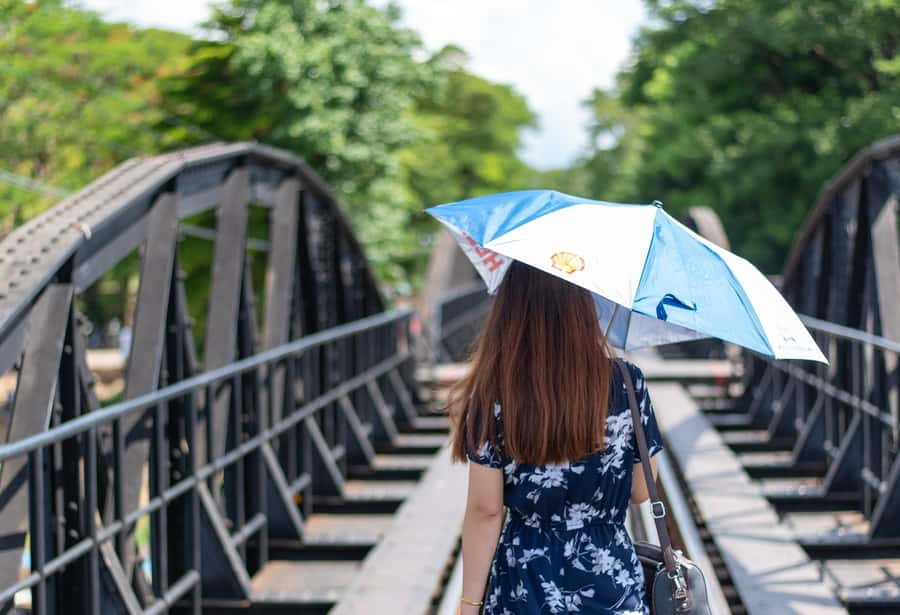
The English-speaking guide is an important part of this experience. Fern was praised for being engaged, polite, and helpful. Jeerawat was described as friendly and accommodating, while Nina was easygoing and responsive. Nat added history, helped with photographs, and suggested less touristy Thai dishes.
Those examples point to the best version of this tour: a guide who explains the sites, answers questions, manages the timing, and helps the day feel personal. Some experiences have also been less strong, with unclear pronunciation or limited preparation. If you want detailed military scholarship, do not assume every guide will give the same depth.
The small-group format, limited to nine people, improves your odds of getting answers and keeping the pace manageable. A private option is also available at a higher price. One person found the private format especially useful because it allowed more questions and a pace suited to personal interests.
Is $102 good value?
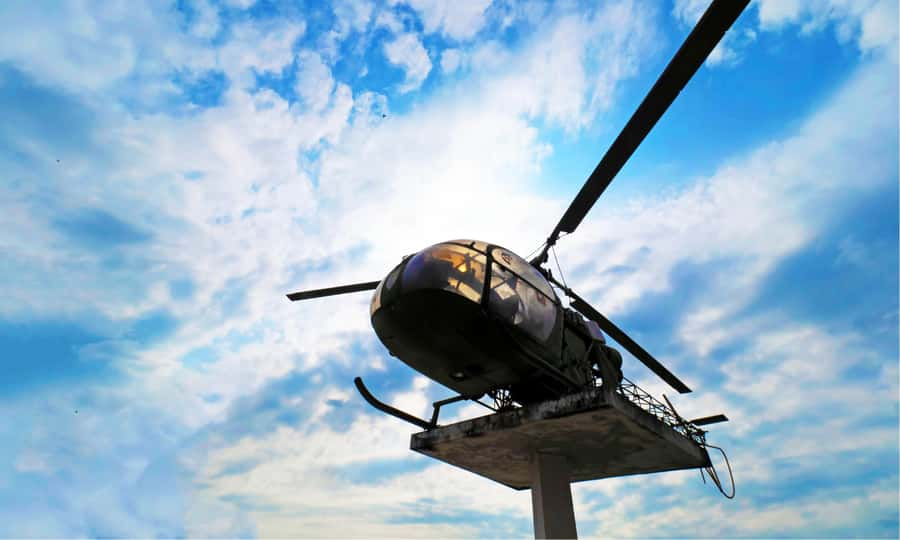
At $102 per person, the tour is not the cheapest way to reach Kanchanaburi. The price includes hotel pickup and drop-off when you select the private option, an air-conditioned vehicle, an English-speaking guide, JEATH Museum admission, a glass bottle of water, and carbon offset credits. Lunch and personal expenses are extra.
The real value is convenience. You do not need to arrange transport between five separate stops, work out the railway timing, or find your way back to Bangkok after a hot temple climb. You also receive historical background that can make the cemetery, bridge, and railway more meaningful.
The value is weaker if you want a slow visit at each place. The schedule covers a lot of ground, and the long drive leaves limited room for wandering. You are paying for breadth and organization, not a relaxed stay in one site.
The sustainability measures are modest but useful. Water is provided in glass bottles, and the operator offsets carbon emissions. These steps do not erase the impact of a long vehicle journey, but they show an effort to reduce it.
Who should book this day
I would recommend this tour if you are staying in Bangkok and want one organized day focused on World War II history and Kanchanaburi scenery. It suits first-time visitors who prefer a guide, transport, and a fixed route instead of managing several connections.
It also suits photographers. The bridge, cliffside railway, passing trains, cemetery grounds, and temple views provide plenty of subjects. Bring a proper camera if you have one, as the day offers more than the usual city snapshots.
You should think twice if you dislike long van rides, intense heat, or steep climbs. The tour is also less suitable if you want a specialist-level military lecture or long, unhurried museum visits.
Bring sunscreen, cash, comfortable clothing, and a camera. Be ready in your hotel lobby 10 minutes before pickup, since pickup is available only from hotels or registered accommodations, not roadsides or shopping malls. The team confirms your meeting point and time by email the evening before.
Should you book it?
Book this tour if you want to see the cemetery, JEATH Museum, River Kwai bridge, Tham Krasae railway, and Tiger Cave Temple in one demanding day. The guides can add real value, especially when they explain the connection between the memorial sites and the railway.
Skip it if the idea of up to seven hours on the road sounds miserable. In that case, spend a night in Kanchanaburi and explore at a slower pace. For most Bangkok visitors with only one available day, though, the $102 cost buys a practical route through an important and moving part of Thailand.
FAQ
How long does the tour last?
The activity lasts about 10 hours, including pickup in Bangkok, sightseeing, and the return drive.
What language does the guide speak?
The live guide speaks English.
Is lunch included?
No. Lunch is taken at a local restaurant, but you pay for it separately.
What does the $102 price include?
It includes the tour vehicle, English-speaking guide, JEATH Museum entrance, a glass bottle of drinking water, and carbon emissions offset credits. Hotel pickup and drop-off are included when the private option is selected.
How large is the group?
The small group is limited to nine participants. A private option is also available.
Where can pickup take place?
Pickup is available from hotels or registered accommodations. Pickup from roadsides and shopping malls is not offered.
What should I wear to Tiger Cave Temple?
Wear clothing that covers your shoulders and knees. Short skirts, short shorts, and sleeveless shirts are not allowed.
Is Tiger Cave Temple difficult to visit?
The Buddha statue is reached by a steep climb. The heat can make the ascent tiring, so comfortable clothing, sunscreen, and water are important.
Can I cancel the booking?
Yes. You can cancel up to 24 hours before the activity for a full refund, and you can reserve now and pay later.
New on the timetable around Bangkok
- Small Group: Kanchanaburi Death Railway, Erawan Waterfall and Elephant★ 4.0 · 3 reviews
- Train trip death railway Bridge on river Kwai from Bangkok to Kanchanaburi trip★ 4.0 · 17 reviews
- Historic Kanchanaburi:Train, Boat, Skywalk from Bangkok(No Lunch)★ 5.0 · 2 reviews
- Private tour : Railway & Floating Market and the Bridge over river Kwae★ 5.0 · 2 reviews
- Private Tour to Kanchanaburi Death Railway and Elephant Haven★ 5.0 · 15 reviews
- Maeklong & Damnoen Saduak Markets: Railway & Floating Market Tour★ 4.0 · 17 reviews
- Historic Kanchanaburi: Train, Boat & Skywalk + Lunch From Bangkok★ 4.5 · 3 reviews
- Private Tour: Death Railway, Hellfire Pass and Erawan Waterfall★ 5.0 · 55 reviews
Other Death Railway Tours worth a seat
Bridge on the River Kwai and Thailand-Burma Railway Tour
Read our review →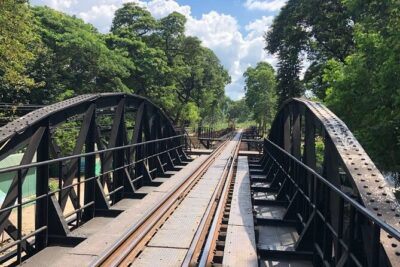
Bridge over River Kwai and Hellfire Pass Tour with Train Ride
Read our review →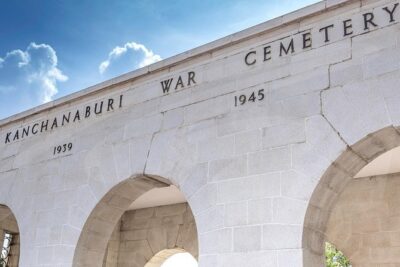
Private Tour: Thai–Burma Death Railway Bridge on the River Kwai from Bangkok
Read our review →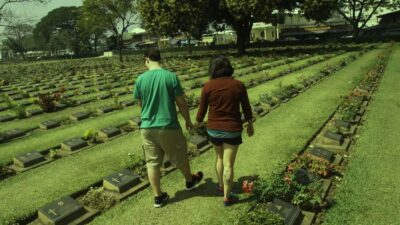
Death Railway & River Kwai Bridge Private Tour
Read our review →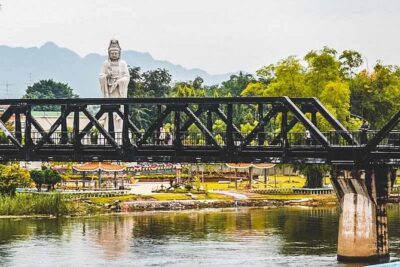
Private Tour: Death Railway, Hellfire Pass and Erawan Waterfall
Read our review →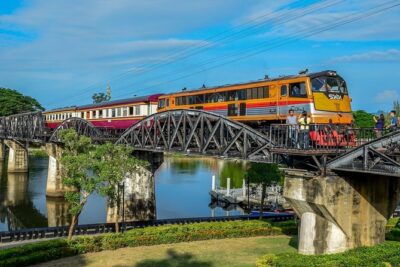
Erawan Waterfalls-Death Railway & River Kwai Tour
Read our review →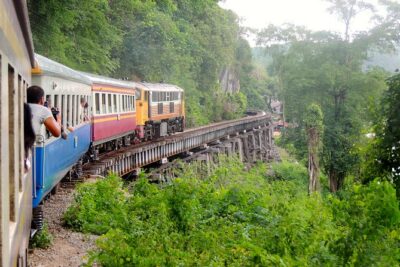
Full-Day Kanchanaburi River Kwai & Death Railway Private Tour
Read our review →Lists this ride appears on