
Review · BANGKOK
Bridge on the River Kwai and Thailand-Burma Railway Tour
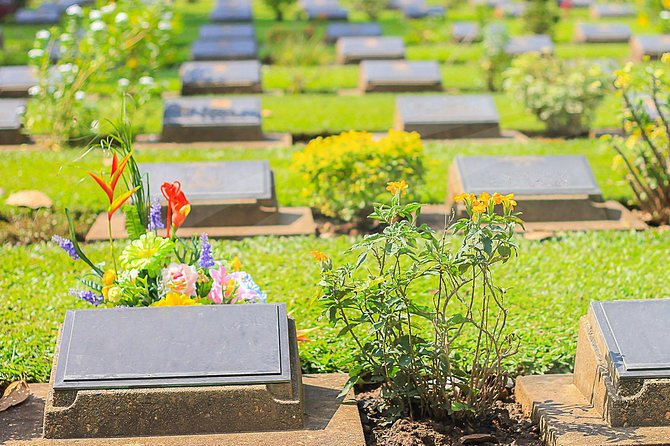
The most powerful part of this day is not the bridge itself. It is the quiet Kanchanaburi War Cemetery, where rows of graves show the human cost of the railway built during World War II. From there, the tour moves through photographs, river views, and a train ride along the Thailand-Burma Railway, giving the story both a human face and a physical setting.
I like the boat approach to the bridge, which is more memorable than simply arriving by road. I also like the mix of serious history and countryside views, especially the 90-minute train ride through rural Thailand. The main drawback is the long road journey from Bangkok, and the museum portion can feel basic if you want a detailed scholarly account.
Key points to know before booking
- A full day from Bangkok: Plan on roughly 9 to 10 hours, with a 6:30 am start and a long drive each way.
- The cemetery sets the tone: This is the most solemn stop and deserves quiet time, even though the visit lasts about 30 minutes.
- The boat ride is a real highlight: You approach the bridge from the Kwai River in a long-tail speedboat.
- The train ride is scenic but not luxurious: The included ride lasts about 90 minutes, and seat upgrades cost about 200 or 300 baht.
- Guide quality matters: Guides named Betty, Luck, Jenny, Peter, Suki, and Tiny have been praised for clear explanations, photo help, and careful timing.
- The price covers a lot: At $108.17 per person, the package includes transport, guide, lunch, boat, train, and entrance fees.
Why this long day matters
The Bridge on the River Kwai is often treated as a film location or a quick photo stop. That misses the point. The bridge and railway were part of a Japanese wartime plan to connect Bangkok with Rangoon, now Yangon, and support the occupation of Burma, now Myanmar.
Prisoners of war and forced laborers built the railway under brutal conditions. Many died. The name Death Railway is not dramatic decoration. It points to the human cost behind the tracks, bridges, cuttings, and embankments.
This tour works best when you treat it as a history day with scenery, not as a light sightseeing trip with a little war history added on. You will have fun on the boat and enjoy the train ride, but the cemetery and museum ask for a quieter mood.
More Death Railway Trips around Bangkok:
- From Bangkok: Death Railway & Hellfire Pass Tour with Lunch
★ 4.6 · 931 reviews - Bridge on the River Kwai and Thailand-Burma Railway Guided Tour
★ 4.5 · 353 reviews - Bridge over River Kwai and Hellfire Pass Tour with Train Ride
★ 5.0 · 199 reviews
Leaving Bangkok at 6:30 am
Pickup is offered from selected Bangkok hotels, and the early start is necessary. Kanchanaburi lies about 130 kilometers west of Bangkok, so the day includes a substantial amount of road travel. The vehicle is air-conditioned, which matters in Thailand, but comfort can vary. One detailed assessment praised the organization while finding the car less comfortable than expected.
You need to provide your hotel details when booking. If you do not, the booking may be canceled. Pickup and drop-off are not described as available from every hotel, so check this point before paying.
As Bangkok fades, the road opens into rural Thailand. You pass areas associated with sugarcane, rice paddies, and pineapple plantations. The drive is not a guided farm tour, and the amount of commentary can vary, but the countryside gives you useful visual context before the historical sites.
A few people have found the guide less forthcoming about places passed along the road. If you want a fuller picture of the region, ask questions early. Guides such as Tiny have been praised for explaining Thai customs, while Jenny, Luck, Betty, Peter, and Suki have been singled out for clear information and attentive care.
Kanchanaburi War Cemetery: the day’s emotional center
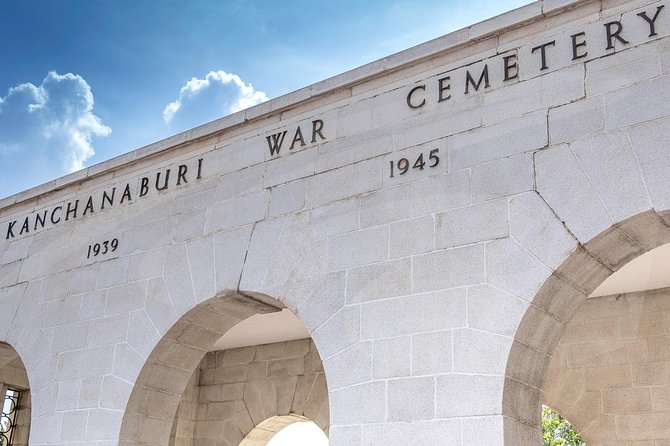
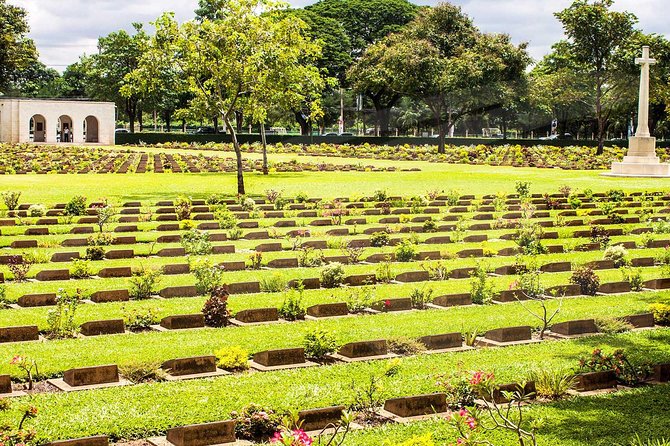
The Kanchanaburi War Cemetery is the main Allied prisoner of war cemetery for those who died during construction of the Burma Railway. The site is carefully maintained, with orderly rows of graves that make the scale of the loss easier to grasp.
You have about 30 minutes here. That is enough for a respectful walk, but not enough for a slow study of every inscription. I would use the first few minutes to understand the layout, then read several headstones rather than rushing around trying to see everything.
This is where the tour becomes more than a bridge outing. Names, ages, military units, and dates replace the vague idea of wartime suffering with individual lives. If your interest is family military history, the cemetery may be the most important stop of the day.
The visit can also feel brief. One person wished for more time to remember the Far East prisoners of war. That is a fair criticism, especially if you prefer quiet reflection over a packed schedule. Stay focused during the guide’s introduction so you can use your free minutes well.
JEATH War Museum and the limits of a short visit
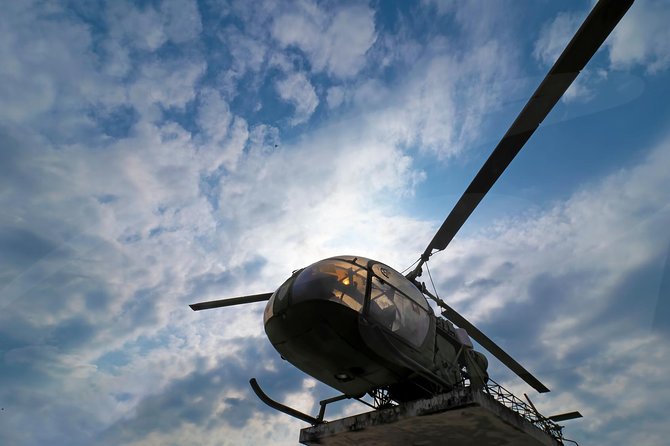
The JEATH War Museum presents photographs, paintings, and material connected with the railway’s construction. The name refers to Japan, England, America, Australia, Thailand, and Holland, the countries linked with the wartime story presented here.
The planned visit lasts about 20 minutes. That is a short window, so expect an introduction rather than a full museum study. Some displays may feel basic, particularly if you already know the story or hoped for a modern research center with extensive interpretation.
Still, the museum serves a useful purpose between the cemetery and the railway. It gives you visual material to connect with what you have just seen, then prepares you for the bridge and train ride. I would not book this tour for the museum alone, but I would not skip it either.
The guide makes a major difference here. A clear explanation can help you understand how the railway supported Japan’s military plans and why construction was so deadly. If the commentary is brief, read what you can and ask direct questions.
More Train Journeys around Bangkok:
- Day Trip to Bangkok Floating Market & Maeklong Railway
★ 5.0 · 1,528 reviews - Bangkok: Railway and Floating Market Tour with Dragon Temple
★ 4.6 · 1,225 reviews - Private Excursion to Maeklong Railway and Floating Markets
★ 5.0 · 850 reviews - From Bangkok: Railway & Damnoen Saduak Floating Market Tour
★ 4.6 · 775 reviews
Approaching the bridge by long-tail boat
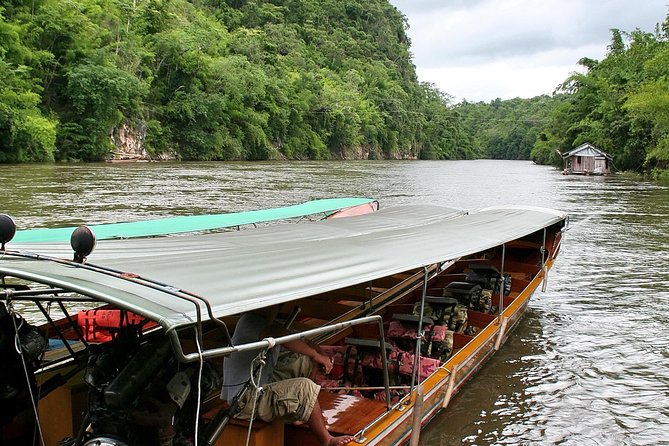
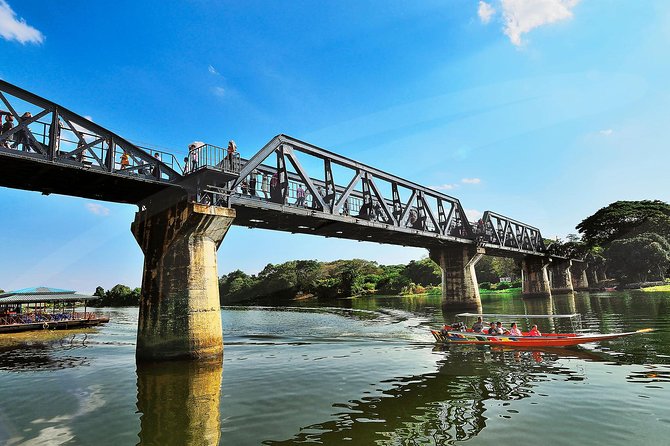
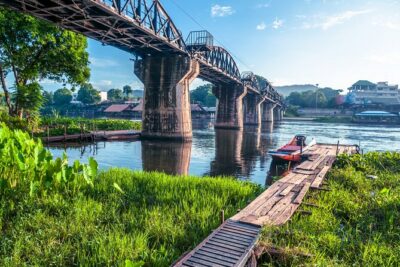
The long-tail boat ride lasts about 20 minutes and takes you along the Kwai River toward the bridge. The boat adds movement and a sense of arrival. Instead of stepping off a coach beside a famous structure, you see the bridge from the water and pass beneath it.
The ride is described as exhilarating, and that is a fair way to frame it. It is a short trip, not a long river cruise, but the open-air setting and boat engine give this part a lively change of pace after the cemetery and museum.
You have time at the bridge to explore on your own. The bridge itself is the obvious photo stop, but try to give the setting a moment beyond the camera. The river, railway line, and surrounding countryside help explain why this crossing mattered.
The bridge can also feel lighter than the cemetery. That contrast is not a flaw. It is part of the day’s rhythm. You move from mourning, to explanation, to a more active look at the structure, then board the train that connects the history to the present route.
Riding the Death Railway through rural Thailand
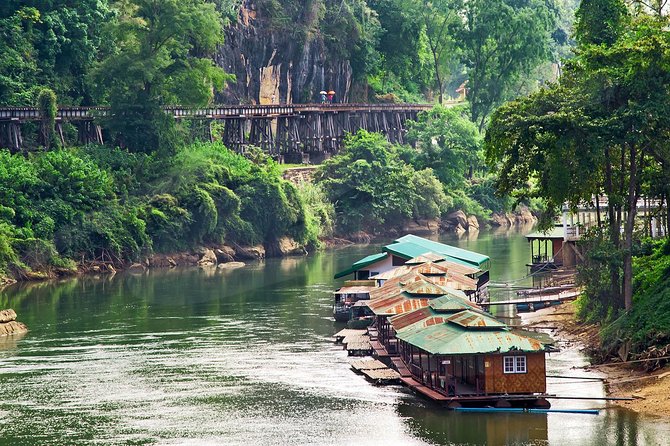
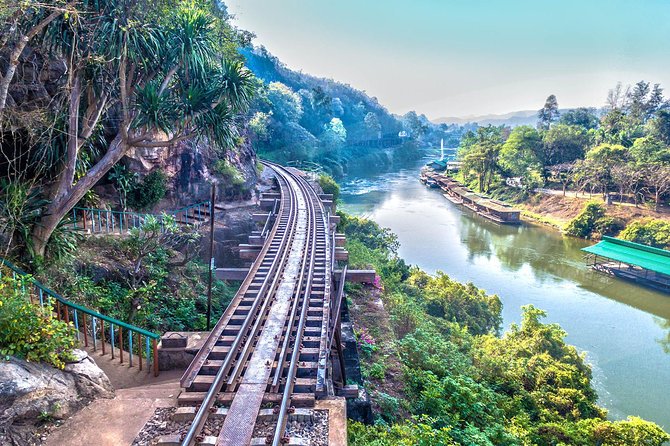
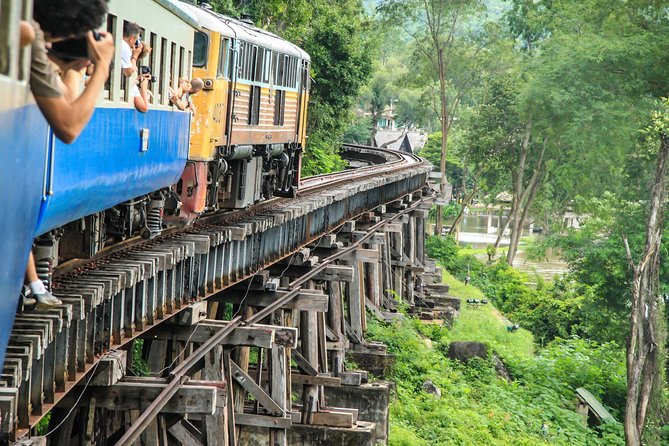
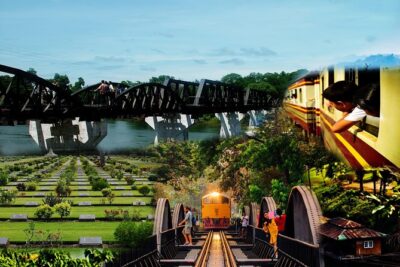
The train ride lasts about 1 hour and 30 minutes and is included in the tour price. You ride through the countryside on a surviving section of the Thailand-Burma Railway, seeing the bends and difficult terrain that made construction so hard.
For railway enthusiasts, this is the central event. For everyone else, it offers a slower view of Thailand after a busy morning. The train is not a luxury rail experience. It is a working excursion with seating that may be allocated on a first-come, first-served basis unless you pay for an upgrade.
An upgrade of about 200 baht includes a guaranteed seat, cold towel, and drinking water. An option around 300 baht adds tea or coffee and a certificate, along with the guaranteed seat, water, and cold towel. These extras are optional, but the guaranteed seat may be worthwhile on a crowded departure.
The ride can show you the physical difficulty of the route. The line curves through rock and rural terrain, and the views give a better sense of the railway than a museum display can. Some people find the train portion exciting; others may find it slow. Your enjoyment will depend partly on how much you like trains and partly on how much you value seeing the countryside at ground level.
A practical tip: carry water money even though lunch and the main admissions are covered. Beverages are not included, and the train upgrade packages are paid separately.
Lunch and the day’s pace
Lunch is included, and the meal is served at a restaurant described in especially positive terms. One account praised both the food and the setting, while another described the lunch as delicious. Dietary needs have also been handled well in at least one case, but you should still state any requirements when booking rather than waiting until the meal.
Lunch arrives after a demanding morning, so it is more than a small convenience. It gives you time to sit, cool down, and talk through what you have seen before the return journey.
The schedule is full. Cemetery, museum, river, bridge, train, and lunch create a steady chain of stops. That makes the tour efficient, but it leaves little room for lingering. If your ideal day includes long periods at each historical site, a private or slower arrangement may suit you better.
Is $108.17 good value?
At $108.17 per person, this is not the cheapest way to see Kanchanaburi. The value comes from the number of separate pieces bundled into one day: hotel pickup and drop-off from selected hotels, an air-conditioned vehicle, a local guide, admissions, a long-tail boat, a train ride, and lunch.
You are also paying to avoid arranging the long journey yourself. The distance from Bangkok makes independent planning less simple, especially if you want to combine the cemetery, museum, bridge, boat, and train on one schedule.
The weak point is time in transit. A large share of the day is spent on the road, and the group may include as many as 99 people. That maximum does not mean every departure reaches it, but you should be comfortable with a standard group tour rather than expect a private, flexible day.
The price makes the most sense if you want a single organized excursion and value convenience. It makes less sense if you only want a quick bridge photo or prefer to spend hours at the cemetery and museum.
Who will enjoy this tour most?
I would recommend it to you if you enjoy modern history, railway journeys, and guided day trips with a clear structure. It suits first-time visitors to Bangkok who want to see beyond the city and are willing to give up a full day for Kanchanaburi.
It is also a good fit for people who want a serious subject handled with some variety. The cemetery and museum provide context, the boat offers a change of pace, and the train gives you scenic time to process the story.
You may want to think twice if you dislike early starts, long coach journeys, or fixed schedules. The museum may disappoint if you want a large, highly detailed collection, and the cemetery visit may feel too short if remembrance is your main reason for coming.
A moderate level of physical fitness is advised. You will move between coach, cemetery, museum, boat, bridge, and train during a long day. Restrooms are available, but beverages are not included, so bring some money for drinks.
Should you book the Bridge on the River Kwai tour?
Book it if you want the history, the boat, and the railway in one organized day. The strongest parts are the cemetery, the guide-led explanation, the boat approach to the bridge, and the 90-minute train ride through the Thai countryside.
Go in with realistic expectations. This is a long day from Bangkok, the museum is fairly short, and group size can be large. Choose the train seat upgrade if having a guaranteed seat matters to you, and check hotel pickup carefully before booking.
For a first visit to Kanchanaburi, the tour offers a sensible combination of major sights and practical transport. It is not leisurely, and it is not a specialist museum tour, but it gives you a memorable and sobering look at one of Thailand’s most important wartime sites.
FAQ
How long does the Bridge on the River Kwai tour last?
The tour lasts approximately 9 to 10 hours, including transport from Bangkok and the return journey.
What time does the tour start?
The listed start time is 6:30 am.
Is hotel pickup included?
Hotel pickup and drop-off are included from selected Bangkok hotels. You must provide your hotel details when booking.
What is included in the price?
The price includes selected hotel pickup and drop-off, an air-conditioned vehicle, a local guide, the long-tail boat ride, the Death Railway train ride, lunch, and admission fees.
Are drinks included?
No. Beverages are not included.
How long is the train ride?
The Death Railway train ride lasts about 1 hour and 30 minutes.
Can I reserve a train seat?
An optional upgrade costing about 200 baht guarantees a seat and includes a cold towel and drinking water. An upgrade costing about 300 baht also includes tea or coffee and a certificate.
Is the tour suitable for all fitness levels?
A moderate level of physical fitness is recommended.
Can I cancel for a full refund?
Yes. You can cancel at least 24 hours before the experience starts for a full refund. Cancellations or changes made less than 24 hours before the start time are not accepted for a refund.
New on the timetable around Bangkok
- Small Group: Kanchanaburi Death Railway, Erawan Waterfall and Elephant★ 4.0 · 3 reviews
- Train trip death railway Bridge on river Kwai from Bangkok to Kanchanaburi trip★ 4.0 · 17 reviews
- Historic Kanchanaburi:Train, Boat, Skywalk from Bangkok(No Lunch)★ 5.0 · 2 reviews
- Private tour : Railway & Floating Market and the Bridge over river Kwae★ 5.0 · 2 reviews
- Private Tour to Kanchanaburi Death Railway and Elephant Haven★ 5.0 · 15 reviews
- Maeklong & Damnoen Saduak Markets: Railway & Floating Market Tour★ 4.0 · 17 reviews
- Historic Kanchanaburi: Train, Boat & Skywalk + Lunch From Bangkok★ 4.5 · 3 reviews
- Private Tour: Death Railway, Hellfire Pass and Erawan Waterfall★ 5.0 · 55 reviews
Other Death Railway Tours worth a seat
Bridge on the River Kwai and Thailand-Burma Railway Guided Tour
Read our review →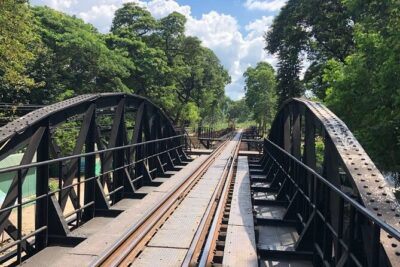
Bridge over River Kwai and Hellfire Pass Tour with Train Ride
Read our review →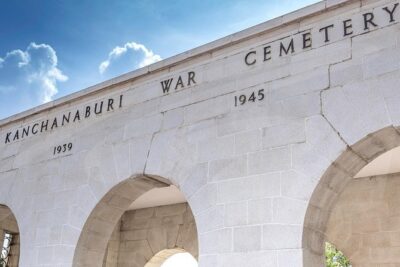
Private Tour: Thai–Burma Death Railway Bridge on the River Kwai from Bangkok
Read our review →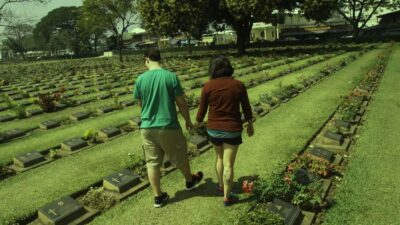
Death Railway & River Kwai Bridge Private Tour
Read our review →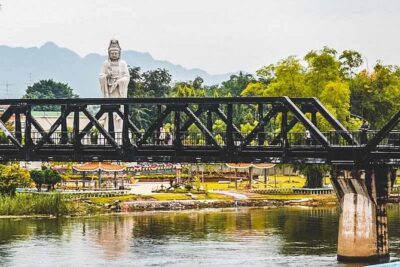
Private Tour: Death Railway, Hellfire Pass and Erawan Waterfall
Read our review →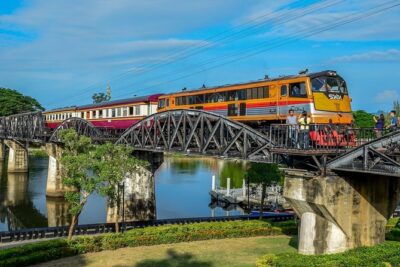
Erawan Waterfalls-Death Railway & River Kwai Tour
Read our review →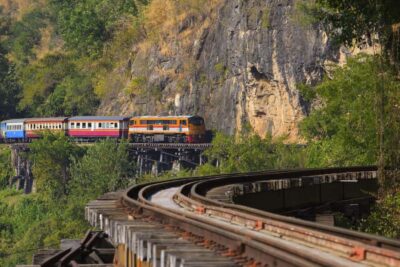
Lists this ride appears on