
Review · GERMANY
Nuremberg: Nuclear Bunker in Main Railway Station
Beneath Nuremberg’s busy main railway station sits a Cold War bunker built for a frightening purpose: to protect civilians and rail passengers during a nuclear, chemical, or biological attack. The 75-minute tour takes you through a preserved piece of postwar planning, where concrete walls, tight quarters, and a computer simulation show how people imagined surviving an atomic strike.
I like the clear connection between World War II and the Cold War, and I like the chance to lie on a pallet and picture several hundred people sharing the same cramped shelter. The tour also uses humor and plain common sense to make a grim subject easier to face. The main drawback is practical: the experience is in German, and the underground setting is not suitable for people with claustrophobia or mobility limitations.
Key Points to Know Before You Go
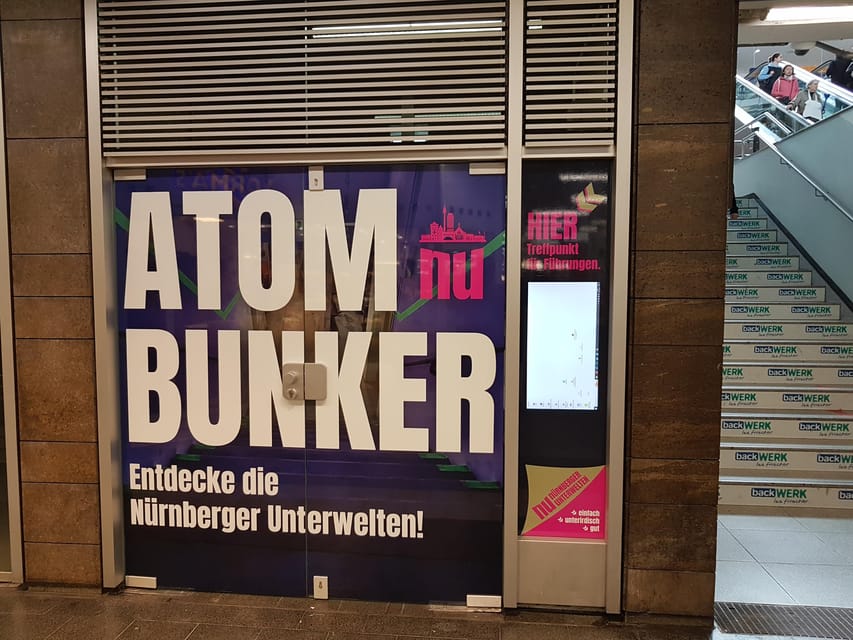
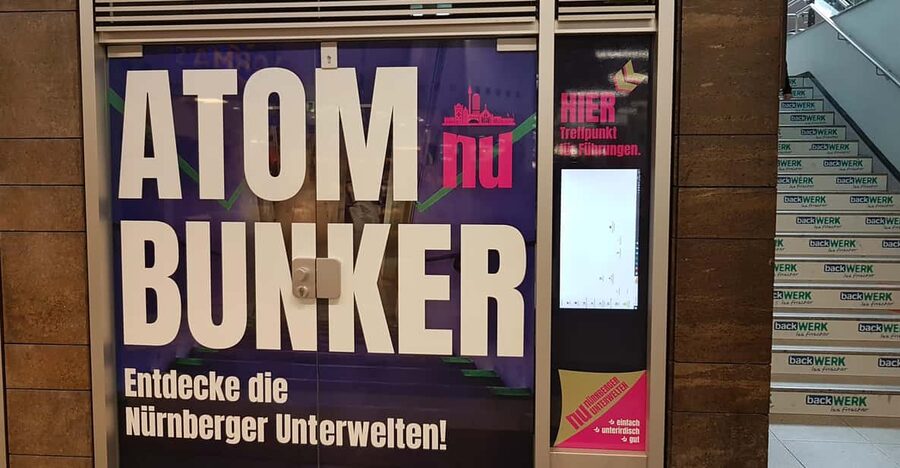
- The entrance is easy to miss: Find the bunker beside Yorma’s restaurant at the bottom of the station escalators.
- The tour lasts 75 minutes: It is long enough for context and exhibits without taking up half your day.
- The subject is serious: You will learn about nuclear destruction, civilian defense, and chemical and biological threats.
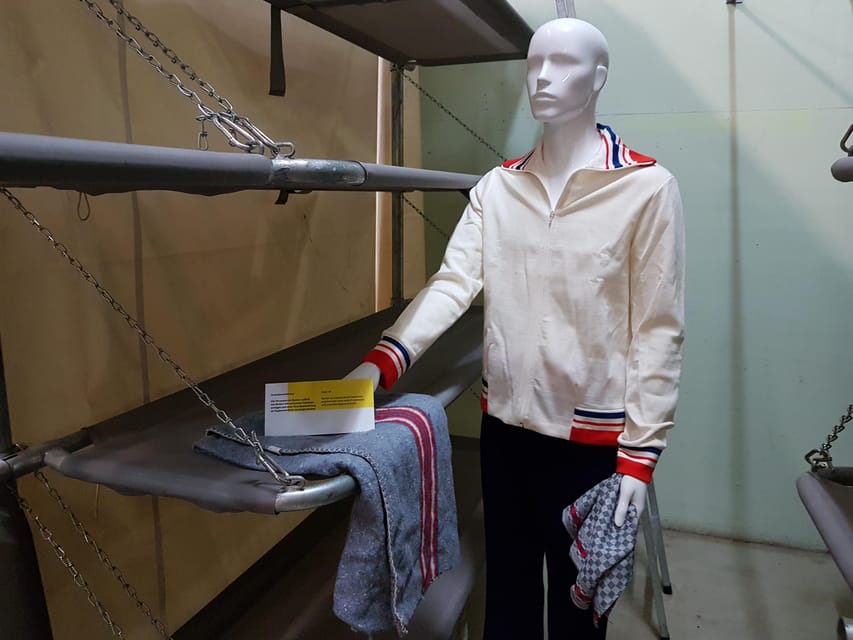
- The bunker feels cramped: You can sit or lie on a pallet while imagining life with several hundred other people.
- The guide speaks German: No other tour language is listed, so plan accordingly if you do not understand German.
- The price is $15 per person: For a guided look at a normally inaccessible Cold War facility, that is a fair price for history-minded visitors.
Why This Bunker Matters Beneath Nuremberg Station
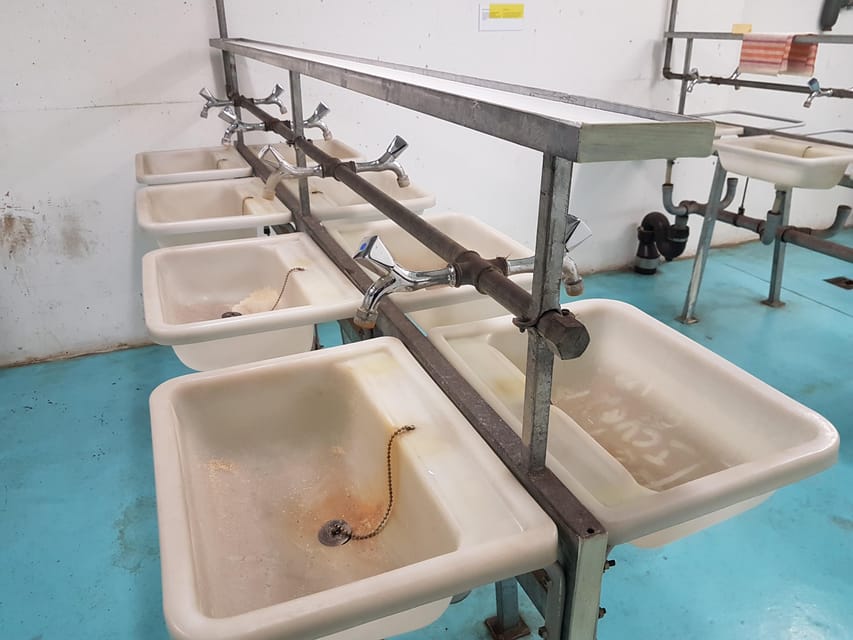
The bunker belongs to the uneasy period after World War II, when the atomic bombing of Japan changed the meaning of civilian safety. The danger was no longer limited to armies at a distant front. A city, a railway station, or a crowded public building could become a target in a matter of minutes.
Nuremberg responded with a shelter beneath its central station. Its intended users included some city residents, but the design gave particular attention to people already passing through the station. That detail makes the location more than a convenient museum site. The bunker was placed beneath a place where crowds gathered every day.
You will also learn that the shelter was planned for more than nuclear fallout. Its protection goals included chemical and biological attacks, threats that made ventilation, crowd control, and sealed underground spaces part of the civil-defense problem.
The tour gives you a useful sense of how governments tried to turn an impossible question into a practical plan: how do you protect ordinary people when the weapon itself can destroy a city? The answers were imperfect, but the bunker shows the effort in physical form.
More Train Journeys around Germany:
- Nuremberg: City Tour with the Bimmelbahn Train
★ 4.4 · 2,475 reviews - Würzburg: City Tour with the Bimmelbahn Train
★ 4.4 · 1,322 reviews - Regensburg: City Tour with the Bimmelbahn Train
★ 4.3 · 1,010 reviews
Finding the Entrance Inside the Main Railway Station
The hardest part may come before the history begins. Enter Nuremberg’s main station through the main portal and walk into the main hall. From there, four escalators lead toward the lower levels.
You need to go down to the shopping arcade, known as Königstorpassage. The long escalator takes you there directly. You can also use the shorter escalator followed by a staircase.
At the bottom, turn sharply to the right. The bunker entrance is on the right-hand wall, directly by Yorma’s restaurant. This is not an entrance you are likely to spot while hurrying through the station, so arrive early and locate it before the tour begins.
That extra few minutes matter. Late entry is not allowed once the tour has started, and the station itself can be confusing if you are carrying luggage or watching the clock. I would treat the meeting point as part of the preparation, not as a casual place to find at the last second.
The First Walk Through Cold War Civil Defense
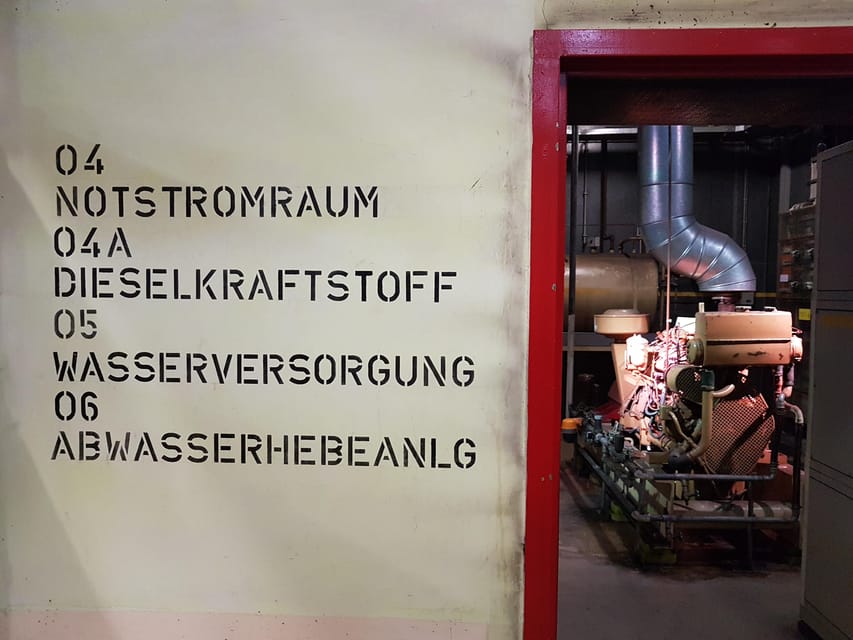
Once inside, the tour places the bunker in the wider story of civilian protection after 1945. The displays explain how the atomic arms race shaped public policy and how officials tried to prepare people for weapons that were far more destructive than conventional bombs.
This is where the tour earns its price. You are not simply walking through a concrete room and being told that it was old or important. The exhibits address the ideas behind the building: who would enter, what supplies and systems might be needed, and how people could be protected from different kinds of attacks.
The subject can feel abstract when discussed in a textbook. It becomes more direct underground, where the walls and limited space make the plans easier to picture. The bunker was designed as a working shelter, not as a comfortable retreat. You will be looking at a solution built around survival, order, and strict limits.
The German guide provides the structure for the visit. A recent German-language booking specifically praised the guide’s use of humor and common sense to balance the bunker’s heavy mood. That is a useful expectation. The tone is serious, but it is not designed to leave you in a state of unbroken gloom.
Exhibits About Nuclear Weapons and Their Effects
One of the strongest sections asks you to think about the destructive power of nuclear weapons. The tour compares the first atomic bombs with later nuclear warheads, showing how the scale of the threat grew during the Cold War.
A computer simulation helps explain that progression. You do not need to be a military-history specialist to get something from it. The point is visual and practical: the first atomic weapons were already catastrophic, while later weapons could produce an even greater level of destruction.
This section gives useful context to the bunker itself. A shelter built for one level of danger could quickly become outdated as weapons changed. Civil defense plans often sounded reassuring, but the simulation helps you question how much protection any bunker could really provide against modern nuclear war.
I appreciate that the tour does not treat the bunker as a clever answer to an impossible problem. Instead, it shows both sides. The facility was highly modern for its time, yet it existed because the threat was so vast that no underground shelter could make life normal.
Same tracks, a different carriage:
- Dachau Concentration Camp Memorial Tour with Train from Munich
★ 4.5 · 955 reviews - Guided Dachau Concentration Camp Memorial Site Tour with Train from Munich
★ 5.0 · 920 reviews - Private Sachsenhausen Concentration Camp tour with train
★ 5.0 · 205 reviews - Herrenchiemsee Palace and Fraueninsel Rail Trip from Munich
★ 4.5 · 97 reviews
Sitting on a Pallet With Hundreds of Other People
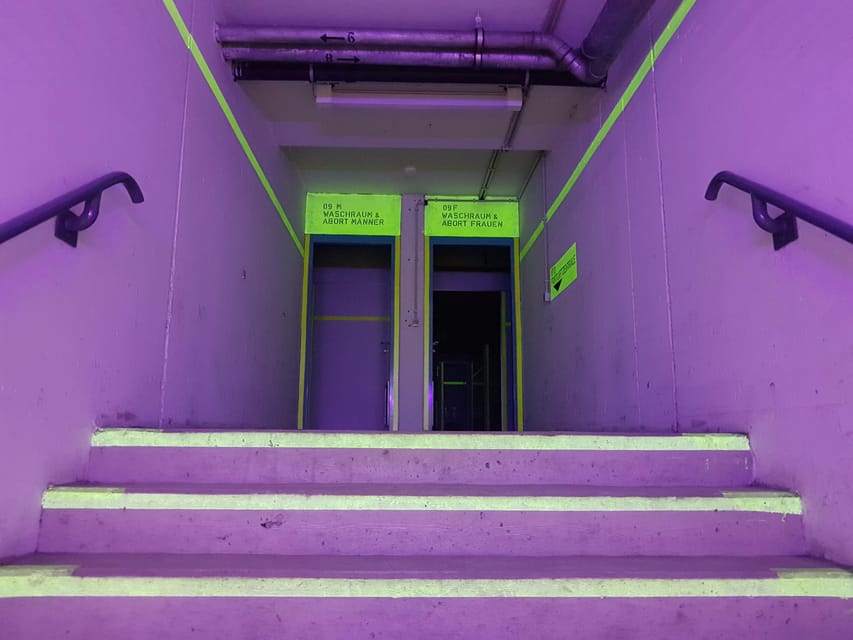
The most physical part of the tour comes when you see how people would have lived inside the shelter. You can sit on a pallet or lie down and imagine being packed into the bunker with several hundred other people.
That simple action changes the tone. Reading about capacity is one thing. Looking at a pallet and considering how many people would have shared a confined underground space is another. There is no suggestion of privacy or comfort. You are thinking about waiting, crowding, limited room, and the basic need to remain calm.
This is also where claustrophobia becomes a real concern. The tour is not suitable for people with claustrophobia, wheelchair users, or people with mobility impairments. Children under eight are not admitted. Those rules are important, because this is a genuine underground bunker environment, not a bright, open museum gallery.
The experience is also not suited to anyone expecting a light sightseeing stop. The humor described in the tour’s tone helps, but it does not remove the central subject: how people might have endured a mass attack in a sealed shelter.
What the Tour Says About Modern Protection

The bunker gives you a look at civil defense as a system. Nuclear protection was only one part of the plan. Chemical and biological attacks required their own precautions, and the building was intended to offer protection from all three threats.
The exhibits ask practical questions. How would air, people, and information be managed? How would a city prepare its population? What could individuals do, and what depended on government planning?
The final question is still pointed: are you prepared? The tour does not turn that question into a survivalist exercise. Instead, it shows how public authorities once tried to organize protection on a large scale, then lets you consider the limits of those plans.
For me, that is the most valuable part of the visit. The bunker is not only about the past. It also shows how quickly ordinary life can be shaped by military technology. The station above remains a place for trains, shopping, and daily errands. Below it, the bunker reflects an era when the same public space was also part of a plan for mass emergency.
Is $15 a Fair Price for 75 Minutes?
At $15 per person, the tour offers solid value if you like history, architecture, or Cold War subjects. The price includes the bunker entrance and a guide, so you are paying for interpretation as well as access to the facility.
You are not getting a full-day attraction or a large museum complex. The visit lasts 75 minutes and focuses tightly on one bunker and one historical question. That narrow focus is a strength if you want a concentrated stop near the station, but it may feel too specialized if you prefer broad city sightseeing.
The location also saves time and transport costs. You do not need a separate bus or taxi ride to reach the meeting point. The bunker is below the main station, making it easy to fit before a train, after arrival, or between other central Nuremberg sights. You will need to handle your own transportation and food, since neither is included.
I would call the price fair for a guided visit to a normally restricted underground facility. The strongest value comes from the combination of physical access, historical explanation, and the simulation. If you only want to glance at old military rooms, the cost may feel less attractive. If you want to understand how the Cold War affected civilians, it is money well spent.
The Practical Details That Matter
The tour runs rain or shine because the bunker is indoors, but that does not make timing flexible. Arrive before the scheduled start and find the entrance in advance. There can be no entry after the tour begins.
Leave large bags and luggage behind. Luggage and large bags are not allowed, and neither are food, drinks, smoking, selfie sticks, or touching the exhibits. Assistance dogs are permitted, but other pets are not.
The guide speaks German. If you understand German, you can follow the explanations directly. If you do not, the experience may still be visually interesting, but the main value comes from the guide’s historical and technical context, so language ability should be part of your decision.
You can cancel up to 24 hours before the start for a full refund. You can also reserve now and pay later, which helps if your Nuremberg schedule is still changing.
Who Will Enjoy This Underground History Stop?
I would recommend the tour to adults and older children who enjoy military history, Cold War history, civil defense, or unusual city attractions. It also suits people with a short stop in Nuremberg who want something close to the station and different from a standard museum.
It is a good choice if you like experiences that make you think rather than simply look. The pallet, the tight rooms, and the weapons simulation give the subject a physical presence.
I would hesitate to recommend it to anyone who dislikes confined spaces, has mobility limitations, or needs an English-language guide. Families with very young children should also choose another activity, since children under eight are not allowed.
The tone may be more approachable than the subject suggests. Humor and practical explanation can make the material easier to absorb, but this remains a serious account of mass destruction and civilian fear. You should book it because you want that kind of subject, not because you are looking for a cheerful break.
Should You Book the Nuremberg Nuclear Bunker Tour?
Book it if you want a focused, well-priced look at how Nuremberg prepared for the nuclear age. The hidden station entrance, the computer simulation, and the chance to sit on a bunker pallet give the visit more impact than a display case alone.
Skip it if you need an English tour, have difficulty with stairs and confined spaces, or prefer lighter sightseeing. For everyone else, this 75-minute stop offers a direct reminder that the Cold War was not only about generals and missiles. It was also about ordinary people wondering where they could go when the sirens sounded.
FAQ
Where is the nuclear bunker entrance?
Enter Nuremberg’s main railway station through the main portal and go to the main hall. Take the long escalator to the Königstorpassage, or use the shorter escalator and then the staircase. At the bottom, turn sharply right. The entrance is beside Yorma’s restaurant.
How long does the tour last?
The tour lasts 75 minutes.
What language is the tour in?
The live guide speaks German.
How much does the tour cost?
The price is $15 per person.
Are children allowed on the tour?
Children under eight are not allowed to participate.
Is the tour suitable for wheelchair users or people with claustrophobia?
No. The tour is not suitable for wheelchair users, people with mobility impairments, or people with claustrophobia.
New on the timetable around Germany
- City tour through Nuremberg with the little train – Christmas tour★ 4.0 · 23 reviews
- Salzburg History & Food Private Tour with Munich train add-on★ 4.5 · 24 reviews
- Take the U Train: An Audio Story of Berlin’s Oldest Elevated Railway Line★ 4.0 · 2 reviews
- From Berlin to Sachsenhausen Camp: Private Tour by Car or Train★ 5.0 · 3 reviews
- Stuttgart: Curling rail rental★ 3.3 · 9 reviews
- City tour through Regensburg with the little train★ 4.0 · 67 reviews
- Potsdam Bike Tour with Rail Transport from Berlin★ 4.5 · 81 reviews
- Herrenchiemsee Palace and Fraueninsel Rail Trip from Munich★ 4.5 · 97 reviews
Other Germany Train Journeys worth a seat
Herrenchiemsee Palace and Fraueninsel Rail Trip from Munich
Read our review →
Potsdam Bike Tour with Rail Transport from Berlin
Read our review →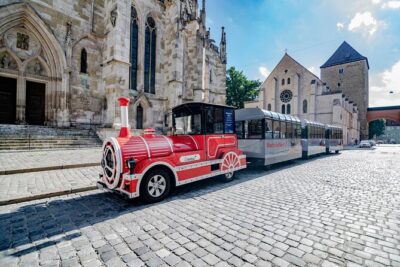
City tour through Regensburg with the little train
Read our review →
Salzburg History & Food Private Tour with Munich train add-on
Read our review →
City tour through Nuremberg with the little train – Christmas tour
Read our review →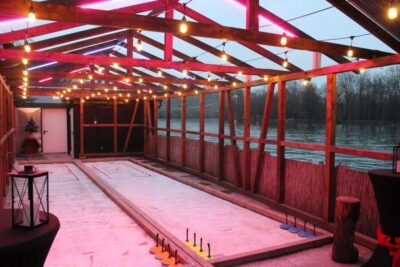
Lists this ride appears on