
Review · CHINA
13 Day Classic Tibet Tour on Flight and Soft Sleeper Train
The best part of this 13-day Tibet journey is its range. You move from the soft sleeper cars of the Qinghai-Tibet Railway to Potala Palace, then from forested Nyingchi to the stark high country around Everest. It gives you a broad look at Tibet rather than keeping you in Lhasa.
I like the small group limit of 10, with extra empty seats promised for comfort, and I like that the route includes both Namtso Lake and Everest Base Camp. The main caution is the pace: long drives, rough roads, and several high passes make this a demanding trip, even with time set aside to rest in Lhasa.
Key points to know before booking
- Soft sleeper train to Lhasa: You fly from Chengdu to Xining, then continue on the Qinghai-Tibet Railway by overnight train.
- A full Tibet circuit: The route covers Lhasa, Nyingchi, Shigatse, Everest Base Camp, Yamdrok Lake, and Namtso Lake.
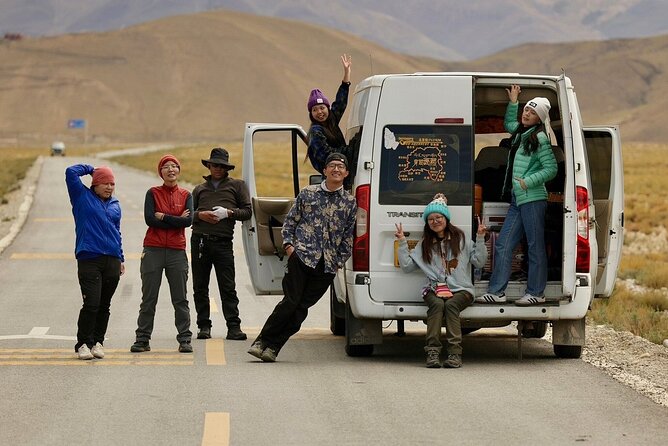
- Small group travel: The maximum group size is 10, with more than 30 percent of seats left empty for extra space.
- Four-star city hotels: Hotels are generally placed within 1 to 3 kilometers of Potala Palace and Jokhang Temple when staying in Lhasa.
- High-altitude support: The package includes the Tibet Travel Permit, oxygen during the Everest section, insurance, and an exclusive team doctor.
- Some tough road days: The road from Tingri toward Rongbuk and Everest is described as rough and partly under construction.
Why this route works for a first Tibet visit
This tour is designed for someone who wants the famous sights but does not want to arrange every permit, hotel, transfer, and train connection alone. Tibet travel requires advance paperwork, and the included Tibet Travel Permit removes one large task from your plate.
The route also gives you several different versions of Tibet. Lhasa brings major religious sites and city life. Nyingchi offers forests, rivers, and alpine lakes. The road toward Everest is much barer, rougher, and more remote. That contrast gives the trip its shape.
You are not simply staying in Lhasa and making one short excursion. You spend time in eastern Tibet, then cross toward Shigatse and the Nepal border region. The price of that range is road time. Several days involve six-hour sightseeing blocks or long transfers, and the Everest portion includes rough roads.
The operator describes this as a VIP small-group trip. The maximum is 10 people, and more than 30 percent of seats are meant to remain open. That matters on long drives, especially when you are carrying winter clothing, day packs, and oxygen supplies.
More Sleeper Trains in China:
- Egypt on Budget – 8 Days ( Cairo , Aswan , Nile Cruise – Luxor ) Sleeper Train
★ 4.5 · 121 reviews - From Hanoi: 2-Day 2-Night Sapa Tour by Overnight Train
★ 4.4 · 96 reviews - Sapa: 3-Day, 3-Night Trek and Hotel with Overnight Train
★ 4.2 · 64 reviews
Days 1 to 3: Chengdu, Xining, and the railway to Lhasa
Day one is deliberately simple. You arrive at Chengdu Tianfu International Airport and check into Tianfu International Hotel. The listed time is about six hours, but there is no sightseeing program to speak of. Think of this as a staging day, not a city tour.
On day two, you fly from Chengdu to Xining on a reference Sichuan Airlines service. The flight is listed at about one hour and 30 minutes. From Xining, you board the Qinghai-Tibet Railway for the overnight journey toward Lhasa.
The exact train can vary. Reference services include Z8991, Y971, and Z22. The important point is that the train uses a soft sleeper arrangement rather than ordinary hard seating. You get a bed in a compartment, which is a much better fit for this long ride.
The train is one of the most memorable parts of the trip because it lets you watch the scenery change at a slow, useful pace. The route is not just a transfer. It is your first extended look at the high plateau before reaching Lhasa.
Day three is for arrival and recovery. Your guide meets you in the arrival hall and takes you to the arranged hotel. The advice to stay in and rest is sensible. Lhasa sits at high altitude, and the schedule wisely avoids putting a major monument immediately after the train ride.
You should treat this as a real acclimatization day. Do not plan extra sightseeing just because you arrive early. The next day includes Potala Palace and Jokhang Temple, so conserving energy is more useful than squeezing in another stop.
Day 4: Potala Palace, Jokhang Temple, and Barkhor Street
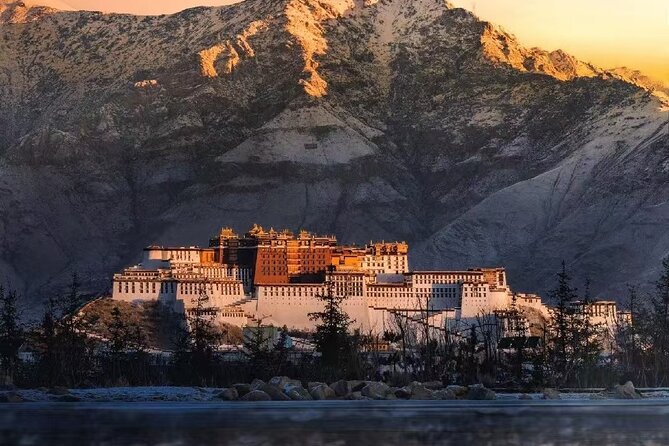
Potala Palace is the signature sight of the tour. This huge palace complex served as the residence of the Dalai Lamas and as a center of Tibetan political and religious authority. The visit is scheduled for about three hours, which gives you time to see the main interiors and absorb the scale of the building.
The palace visit also involves walking and stairs. The tour data does not give a specific step count or accessibility plan, so anyone with limited mobility should ask the operator for current details before booking. A moderate level of physical fitness is required for the tour as a whole.
In the afternoon, you visit Jokhang Temple, Tibet’s most sacred Buddhist temple. Its architecture combines Tibetan, Tang Chinese, Nepalese, and Indian influences. The building is smaller in feel than Potala Palace, but its religious importance makes the visit just as significant.
Barkhor Street follows. You can walk clockwise around Jokhang Temple, look at handicrafts, or simply spend time in the surrounding lanes. This is one of the better moments for slowing down. The tour does not force every minute into a formal stop, so you have room to observe daily religious activity and browse.
Your Lhasa hotel is described as a standard four-star property in the city center, usually within 1 to 3 kilometers of Potala Palace and Jokhang Temple. That location saves time on sightseeing days and gives you a practical base rather than placing you far outside town.
Days 5 to 7: Basomtso Lake, Nyingchi, and Lulang Forest
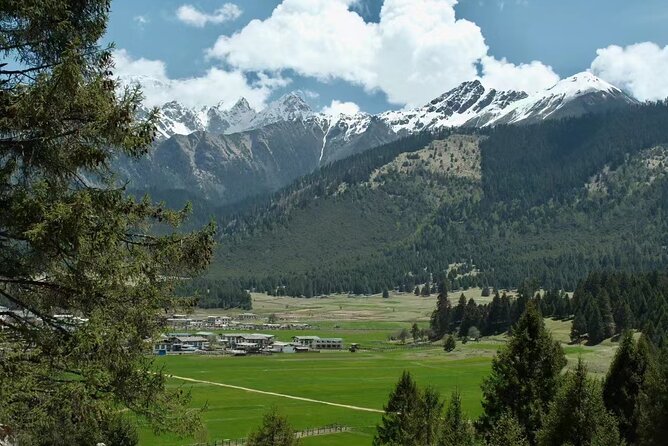
The route turns east on day five, following the Nyang River toward Basomtso Lake in Gongbujiangda County. You cross Mila Mountain Pass at about 5,013 meters before descending toward the lake area. The combination of a high pass, river valley, and alpine water makes this a strong change from the stone-and-street setting of Lhasa.
Basomtso, also called Basongcuo, is planned as a three-hour stop. The drive to Nyingchi continues through the Nyang River Valley and forested country. Nyingchi is known in Tibetan as the Throne of the Sun, and it provides a greener setting than the dry high plateau farther west.
Day six begins with a drive from Nyingchi toward Lulang, about 100 kilometers and roughly two hours according to the schedule. The road crosses Segrila Mountain at about 4,515 meters. The stop at Nnamjagbarwa Mountain adds another scenic high point, although the itinerary does not promise clear weather or a guaranteed mountain view.
Lulang Forest is the main attraction later that day. The name is translated as the place where gods reside, and the area is described through forests, pasture, and mountain views. The visit gives you a chance to see a more wooded side of Tibet, one that many first-time visitors do not expect.
Day seven continues through Kadinggou Scenic Spot, also known as Kadanggou Waterfall. The area features deep gorges, high mountains, and a primitive forest setting. The listed six-hour block suggests that this is not a quick roadside photo stop. You should expect a full day of driving and sightseeing.
This eastern section is especially useful if you want more than the standard Lhasa and Everest route. It does make the trip longer and busier, though. If your main goal is religious sites or a relaxed stay in Lhasa, the Nyingchi detour may feel like too much road time.
More Train Journeys around China:
- Suzhou Private Day Trip from Shanghai with Bullet Train Option
★ 5.0 · 366 reviews - Private Day Tour: Suzhou Incredible Highlights from Shanghai by Car or Train
★ 5.0 · 47 reviews - Beijing to Datong See YunGang Cave, Hanging Temple (Bullet Train)
★ 5.0 · 39 reviews - Beijing to Xi’an Terracotta Tour by Roundtrip Bullet Train
★ 4.8 · 13 reviews
Day 8: Yamdrok Lake, Karola Glacier, and Shigatse
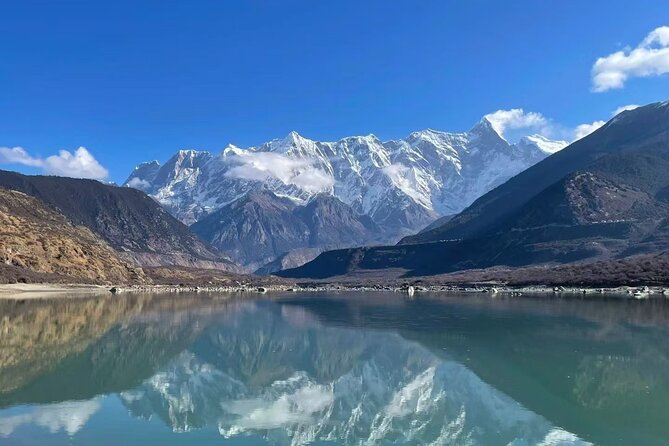
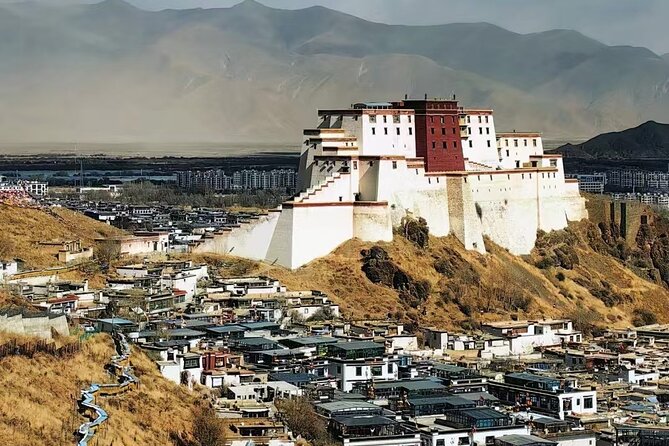
The journey now heads west. Yamdrok Yumtso is one of the major scenic stops, reached through the green farmland of the Nyangchu Valley. The lake is known for its high-altitude setting and changing color, although the exact appearance depends on weather and light.
The route also passes Karola Glacier at a roadside point around 4,960 meters. This is a short but dramatic stop, with ice and snow close to the road. At this altitude, cold, wind, and thin air can make even a brief walk feel strenuous.
You continue to Shigatse, Tibet’s second-largest city and an important religious center associated with the Panchen Lama. The day is listed at about six hours, so this is another day where the road is part of the experience.
Shigatse is also a useful overnight location before the Everest section. You are not trying to drive from Lhasa to Everest in one exhausting push. The route breaks the journey into manageable sections, though the high passes still demand patience.
Days 9 and 10: Tingri and Everest Base Camp
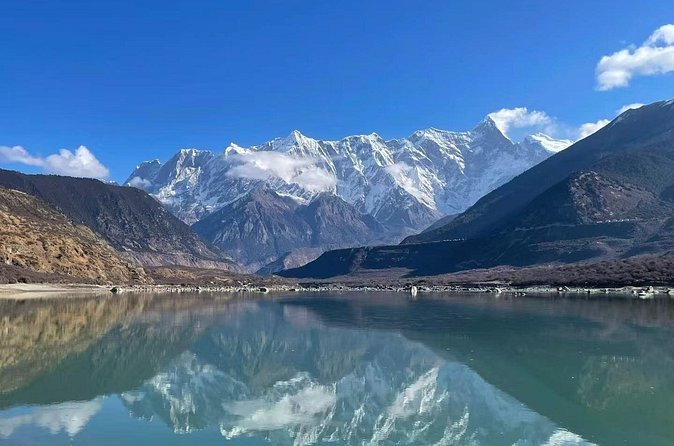
Day nine takes you west toward Tingri along the Friendship Highway. The road from Tingri to Rongbuk is described as roughly 90 kilometers, with bumpy sections and construction. This is one of the most important practical warnings in the entire itinerary.
You should not expect a smooth coach ride. Road conditions can affect timing, comfort, and the amount of time available at each stop. The reward is the approach to Qomolangma National Nature Preserve, the protected area around Mount Everest.
The route toward Everest Base Camp passes grassland, rivers, and high mountains. On clear days, you may see several peaks higher than 8,000 meters. Weather is never guaranteed, so you should book this part for the setting and journey, not only for a perfect summit photograph.
Day ten begins with an early view of sunrise from Rongbuk. Early starts are necessary for this kind of light, but you will also be dealing with cold and altitude. Warm layers are essential, and the winter package includes a hot water bottle and sleeping bag for the Everest section.
From Rongbuk, you use a local bus for the final approach to Everest Base Camp. The listed bus ride takes about 30 minutes. Oxygen is provided while traveling to Everest Base Camp, and the tour also includes an exclusive team doctor.
Those provisions are useful, but they do not turn the route into an easy outing. The tour requires moderate physical fitness, and the combination of altitude, rough roads, and early starts can be tiring. Build your expectations around a demanding but memorable road day.
Later, you return toward Tingri and then Shigatse along the Friendship Highway. The schedule gives another three-hour block for the return portion, but actual timing can depend on road conditions.
Day 11: Tashilhunpo Monastery and the return to Lhasa
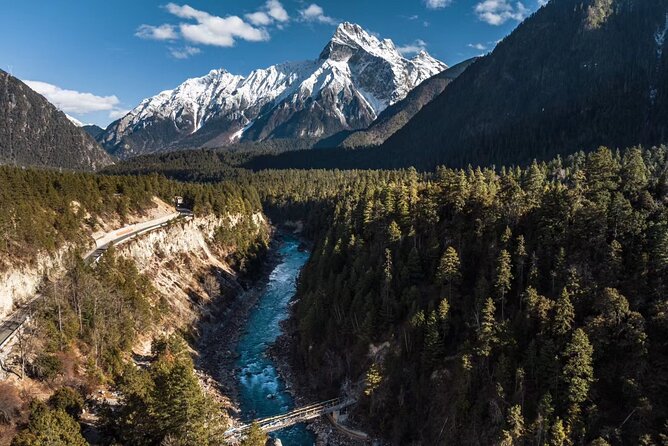
Before the drive back to Lhasa, you visit Tashilhunpo Monastery in Shigatse. It is described as the largest monastery in western Tibet and is linked with the Panchen Lama tradition.
The day includes about four hours of driving back toward Lhasa, plus the monastery visit. This is a useful final cultural stop after the natural scenery around Everest. It also breaks up what would otherwise be a long return journey.
By this point, you will have seen Lhasa’s major religious buildings, Nyingchi’s forests, and the high country around Everest. Tashilhunpo helps reconnect the mountain route with Tibet’s religious life.
Day 12: Namtso Lake and the northern grasslands
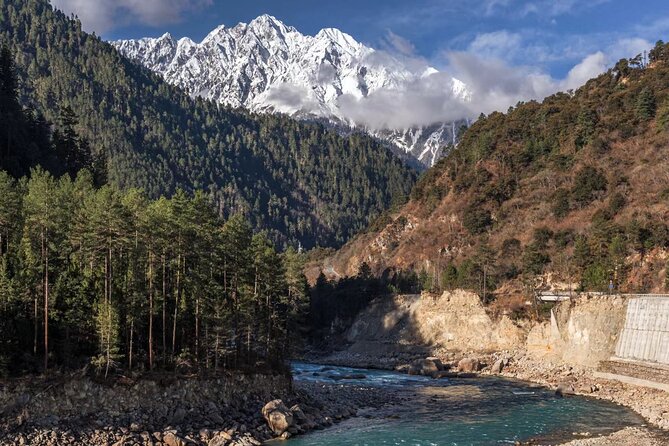
Namtso Lake is the final major scenic excursion. You leave early and cross the northern grasslands, following the Qinghai-Tibet Highway. Prayer flags, open country, and high mountain passes shape the drive.
The route crosses a pass listed at 5,190 meters. That figure explains why this day should not be treated as a light outing. The schedule gives about six hours, and the distance plus altitude may make the day feel longer than the clock suggests.
Namtso works well near the end of the trip because it offers a different setting from Yamdrok Lake and Basomtso. You have already seen lake country in the east and southwest. Here, the northern plateau feels broader and more exposed.
This is another day when weather matters. At high elevation, conditions can change quickly, and the view you get depends on visibility. The attraction is still worthwhile, but keep your timetable flexible in your own mind.
Day 13: Flying from Lhasa back to Chengdu
The final day includes transport to Lhasa Gongga Airport, about 60 kilometers from the city and roughly one hour away. The reference flight is Sichuan Airlines 3U6683, listed from 18:30 to 20:55.
The late departure leaves some time in Lhasa, but the itinerary does not specify a final sightseeing program. Do not assume you can plan a major independent excursion before the airport transfer. Use the time for a calm final meal, packing, or a short walk if your guide confirms the schedule.
The tour ends in Chengdu. International flights are not included, though the operator can help with bookings.
What the $2,030 price covers
At $2,030 per person, the package is not a budget backpacking trip. It includes a lot of the expensive and complicated parts: domestic flights, the Qinghai-Tibet Railway soft sleeper, four-star hotels, tour transport, attraction tickets, the Tibet Travel Permit, accident insurance, breakfast on 11 days, and oxygen during the Everest section.
The package also includes a Tibetan-style welcome dinner, a Potala Palace photo shoot, bottled water, and winter equipment for the Everest route. These extras do not define the trip, but they reduce small costs and planning chores.
Lunches and most dinners are not included. Guides can recommend places to eat, but you should budget for those meals. A single-room supplement of about $25 per day applies if you do not want to share.
The price can offer good value if you want Everest Base Camp, Nyingchi, the railway, and Namtso in one organized route. It is less attractive if you only want Lhasa and a few nearby sights, since you would be paying for a much larger circuit and many long transfers.
The operator advertises early booking savings and extra discounts for group bookings. Since the final price may depend on those offers, check the current total before paying.
Who should book this Tibet tour?
I would recommend it to you if you want a first, structured visit to Tibet with the major highlights already arranged. It suits people who value a small group, need permit help, and want both the Qinghai-Tibet Railway and a flight included.
It can also work for older adults who are reasonably fit and comfortable with long days. One version of this route was completed by a group with people in their 60s and 70s, but that should not hide the physical demands. The itinerary includes high passes, stairs, rough roads, and long drives.
I would be more cautious if you dislike changing hotels, early starts, or uncertain road conditions. This is not a slow retreat. It is an ambitious circuit that tries to fit eastern Tibet, central Tibet, Everest, and the northern plateau into 13 days.
The cancellation terms are fairly strict close to departure. You receive a full refund if you cancel at least six full days before the start time, 50 percent if you cancel two to six days before, and no refund within two days. The tour also requires a minimum number of participants, with a different date or full refund offered if that minimum is not met.
Final decision: a strong choice for a broad Tibet circuit
Book this tour if you want the most varied route possible in 13 days and you value having permits, transport, hotels, and high-altitude support handled for you. The combination of the soft sleeper train, Potala Palace, Nyingchi, Everest Base Camp, and Namtso Lake gives you an unusually full first look at Tibet.
Skip it if you want a restful holiday or prefer to spend most of your time in one city. The road sections are long, the Everest approach is rough, and high-altitude travel requires patience.
For the right kind of visitor, the $2,030 price is reasonable for the number of major transfers and sights included. Go in prepared for a demanding schedule, protect your rest time in Lhasa, and treat clear mountain views as a bonus rather than a promise.
FAQ
How long is the Tibet tour?
The tour lasts approximately 13 days, beginning with arrival in Chengdu and ending with a flight from Lhasa back to Chengdu.
Where does the tour begin?
The meeting point is Chengdu Tianfu International Airport in Chengdu, China.
How do I reach Lhasa?
You fly from Chengdu to Xining, then continue to Lhasa on the Qinghai-Tibet Railway in a soft sleeper compartment.
What is the maximum group size?
The tour has a maximum of 10 participants. The operator also states that more than 30 percent of seats remain empty for additional space.
Is the Tibet Travel Permit included?
Yes. The Tibet Travel Permit is included in the tour price.
Are hotels included?
Yes. Four-star hotels are included throughout the tour. In Lhasa, the hotels are described as being in the city center and within 1 to 3 kilometers of Potala Palace and Jokhang Temple.
Is oxygen provided?
Yes. Oxygen is provided while traveling to Everest Base Camp. In winter, a hot water bottle and sleeping bag are also provided for the Everest section.
Are meals included?
Breakfast is included for 11 days, and a dinner is included as part of the package. Lunches and other dinners are not included, though guides can recommend places to eat.
What is the cancellation policy?
You receive a full refund when canceling at least six full days before the start time. Cancellations made two to six full days before the start receive a 50 percent refund, while cancellations within two days are not refunded.
New on the timetable around China
- 2 Days Tour of Xian & Beijing via Train: Terracotta Warriors & Great Wall★ 5.0 · 6 reviews
- Bullet Train Private Tour: Beijing Tiananmen Square, Forbidden City & Great Wall★ 5.0 · 3 reviews
- 4-Hour Private Shanghai Modern Impression Tour with Tower and Maglev Train Ride★ 4.5 · 2 reviews
- Private Tour:Zhujiajiao Water Town, Shanghai Tower & Maglev Train★ 5.0 · 2 reviews
- Luoyang & Shaolin Temple Day Trip from Xian by High-speed Train★ 5.0 · 6 reviews
- Day Tour to Shenzhen from Hong Kong by High Speed Bullet Train★ 5.0 · 6 reviews
- Day Tour to Hong Kong from Guangzhou by Round-way Bullet Train★ 5.0 · 6 reviews
- Jade Dragon Snow Mountain Glacier Cableway with Scenic Train Tour★ 5.0 · 9 reviews
Other Sleeper and Overnight Trains worth a seat
Egypt on Budget – 8 Days ( Cairo , Aswan , Nile Cruise – Luxor ) Sleeper Train
Read our review →
3-Day, 3-Night Trek and Hotel with Overnight Train
Read our review →
6- Days Aswan , Abu Simbel , Cruise , Luxor & Round Sleeper Train
Read our review →
Cairo : Luxor East and West Banks Tour & Overnight SLEEPER Train Rounded trip
Read our review →
Sa Pa Trekking 2 Days 3 Nights Homestay by Night Train
Read our review →
Lists this ride appears on