
Review · CHINA
Day Tour to Shenzhen from Hong Kong by High Speed Bullet Train
Shenzhen gives you a sharp contrast in one day: sleek subway architecture and electronics markets on one side, old city walls, Hakka traditions, and working art studios on the other. This tour makes that contrast easy to reach from Hong Kong by high-speed bullet train, with a private car and driver waiting in Shenzhen.
I like the mix of places, especially the chance to see Gangxia North Station and the Shenzhen Museum of Contemporary Art and Urban Planning before moving into older neighborhoods. I also like that traditional Chinese lunch and return train tickets are included, so the $177.12 price covers more than simple transport. The drawback is pace: seven stops in about nine hours leave limited time at the markets, and busy holiday crowds can make the day feel tightly packed.
Key points to know before booking
- Hong Kong to Shenzhen by direct high-speed train: Start at West Kowloon Station at 8:30 am and return there at the end of the day.
- Seven very different stops: Expect modern design, contemporary art, electronics, shopping, old streets, oil paintings, and Hakka culture.
- Private car in Shenzhen: A driver handles the city transfers between the train station and the sightseeing stops.
- Traditional Chinese lunch included: You do not need to arrange your own midday meal.
- Guide Nelson leads the day: He contacts you before the tour and stays with the group through the return to Hong Kong.
- Good value for a packed day: The price includes the train, local transport, lunch, and guided sightseeing, though market time is short.
Why this Shenzhen day trip works from Hong Kong
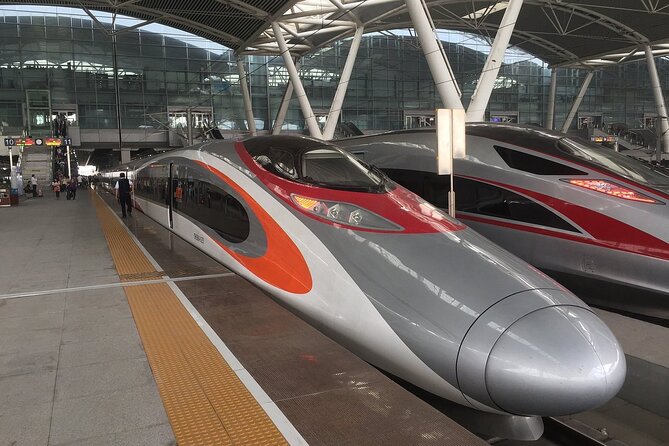
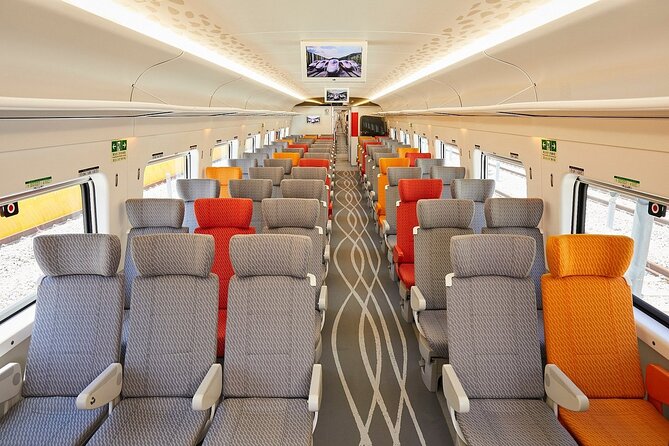
The main appeal is efficiency. Shenzhen is close to Hong Kong, but crossing the border and arranging transport, meals, and several far-flung sights on your own can make a one-day visit awkward. This tour gathers the moving parts into one plan: meet at West Kowloon Station, take the train into Mainland China, use a private car in Shenzhen, and return by rail.
The 26-kilometer Hong Kong section of the high-speed railway links West Kowloon Station with the Mainland rail network. You avoid an ordinary road transfer and get a taste of modern Chinese rail travel at the start of the day. The journey is part of the experience, not just a way to fill time.
You should expect a full schedule. The advertised duration is about nine hours, with a start at 8:30 am and a return to the original meeting point. The individual stops are generally one hour long, while Gangxia North Station receives about 30 minutes. That leaves little room for lingering, long meals, or shopping with a detailed list.
More High-Speed Trains in China:
- Suzhou Private Day Trip from Shanghai with Bullet Train Option
★ 5.0 · 366 reviews - Beijing to Datong See YunGang Cave, Hanging Temple (Bullet Train)
★ 5.0 · 39 reviews - Beijing to Xi’an Terracotta Tour by Roundtrip Bullet Train
★ 4.8 · 13 reviews
Meeting guide Nelson at West Kowloon Station

The meeting point is West Kowloon Station in Jordan, Hong Kong. Start time is 8:30 am, so plan to arrive with enough time to find the meeting area and be ready for the group. A mobile ticket is available, and confirmation is sent when you book.
Guide Nelson is a useful part of the arrangement. He contacts you several days before the outing, then accompanies the group throughout the day and helps get everyone back to Hong Kong. His organization and patience received especially strong praise, which matters on a cross-border day when timing is important.
The group can reach up to 99 people, although the actual size may be smaller. That maximum is worth noting if you prefer a quiet, highly personal tour. On the other hand, the private car and guide support in Shenzhen give the outing more structure than simply buying a train ticket and wandering around alone.
Gangxia North Station, Shenzhen’s photogenic subway stop
The first sightseeing stop is Gangxia North Station, described as Shenzhen’s most famous and most beautiful subway station. You have about 30 minutes here, mainly to look around and take photographs.
This stop offers a quick introduction to Shenzhen’s modern identity. The city is known for technology, large-scale development, and bold public design, and a subway station may seem like an odd attraction until you see how much attention has gone into its interior spaces.
Do not expect a long museum visit or a neighborhood walk here. Half an hour is enough for photographs and a look at the architecture, but not much more. It works best as a brisk visual stop before the museum.
Contemporary art and urban planning in Futian
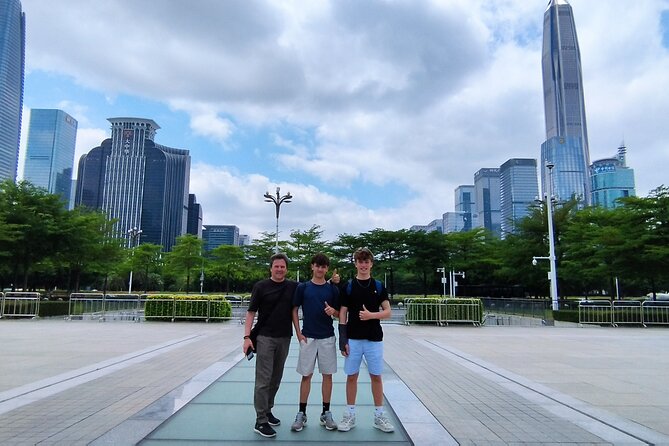
The Shenzhen Museum of Contemporary Art and Urban Planning gives you about an hour. Its exterior has a modern architectural design, while the interior lobby is also part of the visual appeal.
The pairing of contemporary art with urban planning is a good fit for Shenzhen. You are not only looking at artworks. You are also seeing how the city presents its growth, buildings, and future-oriented identity. For anyone curious about how a relatively young major city explains itself, this is one of the more worthwhile stops.
The free admission helps the tour’s value. The one-hour visit should give you a useful introduction, but it will not allow time to study every display at length. If museums are your main reason for visiting Shenzhen, you may want a slower, museum-focused trip instead.
More Train Journeys around China:
- Private Day Tour: Suzhou Incredible Highlights from Shanghai by Car or Train
★ 5.0 · 47 reviews - Jade Dragon Snow Mountain Glacier Cableway with Scenic Train Tour
★ 5.0 · 9 reviews - Beijing: to Xi’an Terracotta Day Tour by Roundtrip Bullet Train
★ 5.0 · 9 reviews - Discover Guilin’s Gems:Guangzhou-Bullet Train Highlight Tour
★ 4.3 · 7 reviews
Nantou Ancient City and Shenzhen’s older roots
Nantou Ancient City, also called Xin’an Ancient City, is a historic district with more than 1,700 years of history. The tour gives you roughly an hour to walk through the area.
This is where the day shifts from futuristic Shenzhen to an older side of the region. Narrow streets, historic buildings, and traditional details provide a useful counterpoint to the glass, steel, and subway architecture seen earlier. The stop helps explain that Shenzhen is not only a new technology center built in recent decades.
One hour is enough to get a feel for the area and take photographs. It is not enough for a slow, detailed study of every building. You should treat Nantou as a concentrated introduction rather than a full historical tour.
Huaqiangbei, the electronics market district
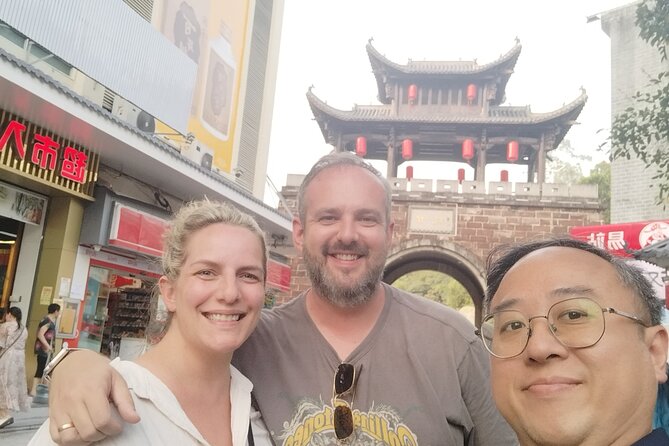
Huaqiangbei is one of the strongest stops for anyone interested in technology. It is known as a major electronics market and an important part of Shenzhen’s high-tech industry. The area is often associated with China’s Silicon Valley, and its shops reflect the city’s role in electronics and manufacturing.
You have about an hour here. That is enough to see the market atmosphere and browse, but it is short if you want to compare products, negotiate purchases, or search several buildings for a particular item.
This is one place where your priorities matter. If you enjoy electronics, gadgets, and the practical side of Shenzhen’s economy, you may wish the schedule allowed more time. One person who enjoyed the tour specifically wanted longer market visits, noting that prices can be much lower than in Hong Kong. If shopping is your main goal, confirm that this guided schedule matches your needs before booking.
Dongmen Pedestrian Street for food and shopping
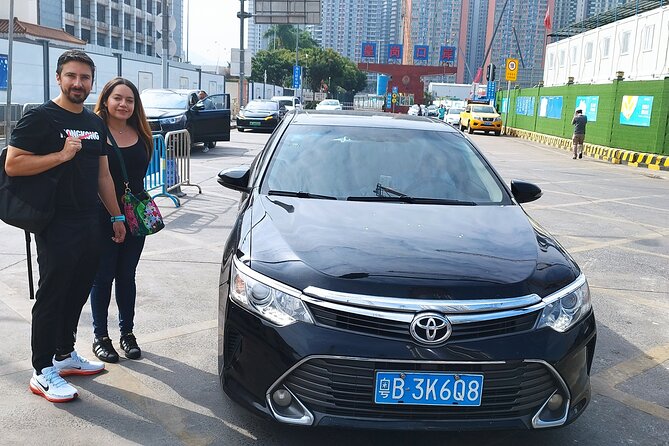
Dongmen Old Street is described as the root of modern Shenzhen and a famous old commercial pedestrian street. Thousands of shops and food businesses fill the area, giving you a busy commercial stop after Huaqiangbei.
The district shows another side of everyday Shenzhen. Huaqiangbei focuses on electronics and technology, while Dongmen is more about shopping, snacks, and the long-running habit of meeting and buying things in a central commercial street. You can use the hour to look around, sample the atmosphere, or pick up small purchases.
The limitation is similar to Huaqiangbei: one hour goes quickly. The area is dense, and you may need to choose between shopping, eating, and simply walking around. The tour already includes lunch, so this stop is better viewed as a short introduction than a dedicated food tour.
Dafen Oil Painting Village and working art culture
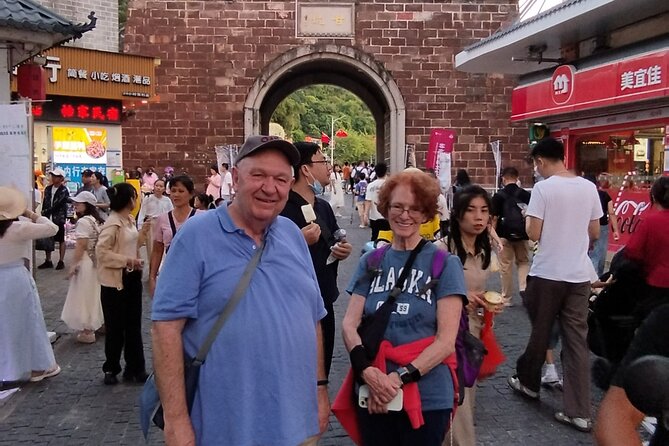
Dafen Oil Painting Village began as an ordinary village. In 1989, a Hong Kong art dealer named Huang Jiang brought the oil painting industry there, and more painters and artists later followed.
The story gives the stop a practical edge. This is not simply a gallery district designed for sightseeing. It developed around the production and sale of oil paintings, showing how a local place can change through a particular trade.
You get about an hour here. That should allow time to walk through the village and look at the art, but the schedule does not promise a workshop, a private studio visit, or time to commission a painting. If you like art markets and working creative districts, this will likely be more interesting than a standard gift shop. If you want a formal art museum, the earlier contemporary art museum is a better match.
Gankeng Hakka Old Town and traditional culture
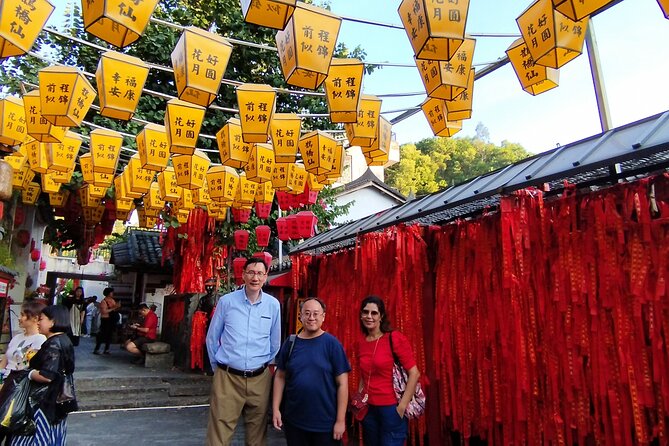
Gankeng Ancient Town brings the day to a traditional cultural area with Hakka architecture, folk customs, folk art, food, and pastoral scenery. The town’s origins reach back to the Ming and Qing periods.
This is one of the most useful stops for understanding the older cultural side of Shenzhen. Hakka culture has its own buildings, food traditions, and community customs, and Gankeng gives you a setting where those elements are presented together.
Again, the planned hour is an introduction. You can walk around, notice the architecture, and take in the atmosphere, but you should not expect an unhurried exploration of every lane or a long meal in the old town. Still, after a day of subway stations, shopping streets, and electronics, Gankeng provides a welcome change of pace.
Lunch, transport, and what the price covers
At $177.12 per person, this is not the cheapest possible way to enter Shenzhen. You are paying for convenience as well as sightseeing. The price includes the return high-speed train from Hong Kong, a private car with driver in Shenzhen, and a traditional Chinese lunch.
That package can be good value if you want to see several parts of the city in one day. Buying rail tickets, arranging a car for distant stops, finding lunch, and keeping track of the return journey would take time and add uncertainty. Group discounts may also help reduce the cost for a larger party.
The included lunch is more than a minor detail. With seven scheduled stops, stopping to find food on your own could cut into sightseeing time. The meal is described as traditional Chinese food, and it was praised as delicious and satisfying. Exact dishes are not specified, so you should not book this expecting a particular menu.
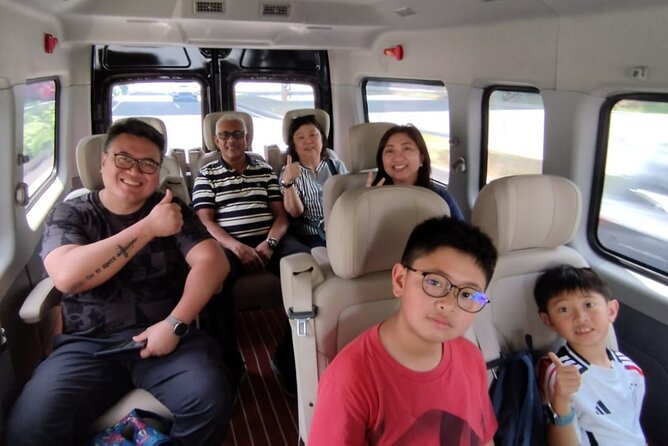
The private car is especially useful because the stops are spread across different parts of Shenzhen. You spend less energy working out local transfers and more time seeing the city. The tradeoff is that a private vehicle does not remove the need to follow the group’s timetable.
Crowds, timing, and the real pace of the day
The itinerary is ambitious. It combines seven stops, a border-crossing train journey, a meal, and city transfers in about nine hours. That makes it a good sampler, but not a slow exploration.
Crowds can affect the experience. New Year’s Day was particularly busy, yet Nelson was praised for handling the conditions professionally. You should still expect popular shopping areas and public attractions to feel crowded during holidays and peak periods.
The schedule rewards flexibility. At each stop, you may need to decide quickly what matters most: photographs at Gangxia, exhibits at the museum, shopping at Huaqiangbei, snacks at Dongmen, or architecture in the old towns. I would keep purchases modest and avoid carrying a long shopping list unless you are comfortable giving up time elsewhere.
The option to stay behind in Shenzhen is another useful feature. If you have your own onward plans, you can choose not to return with the group. The tour still begins in Hong Kong and includes the planned return train for those who need it.
Who should book this Shenzhen tour
I would recommend it to a first-time Shenzhen visitor who wants a broad introduction without organizing every detail. It suits people who enjoy contrasts: new subway design beside old streets, contemporary art beside Hakka traditions, and technology markets beside traditional food and architecture.
It is also a practical choice if you are based in Hong Kong and have only one free day. The direct rail connection, local car, lunch, and guide support take much of the planning work off your hands.
I would hesitate if your priority is serious shopping. One hour at Huaqiangbei and one hour at Dongmen may leave you wanting more. Art specialists may also prefer more time at either the contemporary art museum or Dafen rather than moving on to several other stops.
Should you book it?
Book this tour if you want to sample many sides of Shenzhen in one organized day and value the included train, private car, guide, and lunch. Guide Nelson’s careful communication and full-day support add reassurance, especially when timing matters.
Skip it if you prefer to choose one or two neighborhoods and explore slowly. The best reason to book is the variety. The main cost is the limited time at each place. For a first look at Shenzhen from Hong Kong, that tradeoff is reasonable, especially if you want modern city sights and older Chinese culture in the same day.
FAQ
Where does the tour start?
The tour starts at West Kowloon Station in Jordan, Hong Kong, at 8:30 am.
How long does the Shenzhen day trip last?
The activity lasts approximately nine hours and ends back at the original meeting point.
Is the high-speed train included?
Yes. The tour price includes the return high-speed train between Hong Kong and Shenzhen.
Is lunch included?
Yes. A traditional Chinese lunch is included in the tour price.
What transportation is used in Shenzhen?
A private car with a driver is used for transportation between the sightseeing stops in Shenzhen.
Can I stay in Shenzhen instead of returning to Hong Kong?
Yes. You can choose to stay behind in Shenzhen if you do not want to return with the group.
What is the cancellation policy?
You can cancel at least 24 hours before the local start time for a full refund. Cancellations or changes made less than 24 hours before the start time are not accepted for a refund. If poor weather or an insufficient number of participants cancels the activity, you are offered another date or experience, or a full refund.
New on the timetable around China
- 2 Days Tour of Xian & Beijing via Train: Terracotta Warriors & Great Wall★ 5.0 · 6 reviews
- Bullet Train Private Tour: Beijing Tiananmen Square, Forbidden City & Great Wall★ 5.0 · 3 reviews
- 4-Hour Private Shanghai Modern Impression Tour with Tower and Maglev Train Ride★ 4.5 · 2 reviews
- Private Tour:Zhujiajiao Water Town, Shanghai Tower & Maglev Train★ 5.0 · 2 reviews
- Luoyang & Shaolin Temple Day Trip from Xian by High-speed Train★ 5.0 · 6 reviews
- Day Tour to Hong Kong from Guangzhou by Round-way Bullet Train★ 5.0 · 6 reviews
- Jade Dragon Snow Mountain Glacier Cableway with Scenic Train Tour★ 5.0 · 9 reviews
- 13 Day Classic Tibet Tour on Flight and Soft Sleeper Train★ 5.0 · 2 reviews
Other High-Speed and Bullet Trains worth a seat
Mt Fuji & Hakone Cruise, Drum Show Bullet Train 1 Day from Tokyo
Read our review →
Tokyo Mt Fuji 5th St & Hakone Cruise Bus Tour w/Bullet Train
Read our review →
Rome to Pompeii Guided Tour with Wine & Lunch by High Speed Train
Read our review →
Venice Day Trip from Rome by High-Speed Train with Happy Hour
Read our review →

“Taj Mahal” Tour from Delhi by India’s Fastest Train (Gatiman Express)
Read our review →
Rome to Florence: High-Speed Train Day Trip with Guided City Tour
Read our review →Lists this ride appears on