

Review · NAPLES
Pompeii & Herculaneum Guided Tour – High Speed Train from Rome
Pompeii and Herculaneum tell the same disaster in very different ways. Pompeii gives you broad streets, theaters, baths, shops, and grand houses. Herculaneum is smaller, more intimate, and often better preserved. Seeing both in one day, with an archaeologist guide, gives you far more context than wandering alone with a map.
I like two things right away: the included high-speed train from Rome removes the headache of planning connections, and the private minibus transfer from Naples saves time at both ends. Guides such as Michele, Alfredo, Raphael, and Gennaro have been praised for explaining daily life as well as excavation work.
The trade-off is the pace. This is an 11-hour-30-minute day with a lot of walking over uneven ancient roads. You will see the key sections, but Pompeii is too large for any short visit to cover every street and building.
Key points to know before booking
- The train starts at Rome Termini: You board independently, with tickets sent one day before departure.
- The Naples meeting point is simple: Meet the guide and driver at Starhotels Terminus, across from Naples Central Station.
- Both archaeological sites are included: Pompeii Express and Herculaneum entry tickets are covered, with skip-the-line access.
- The guide makes the difference: Licensed archaeologists explain homes, politics, religion, geology, and ordinary Roman life.
- Expect a full day on your feet: Pompeii has little shade, and both sites have rough, uneven surfaces.
- The Maximall stop is practical: Use the 50-minute break for lunch, air conditioning, restrooms, and the included discount card.
Why seeing Pompeii and Herculaneum together works
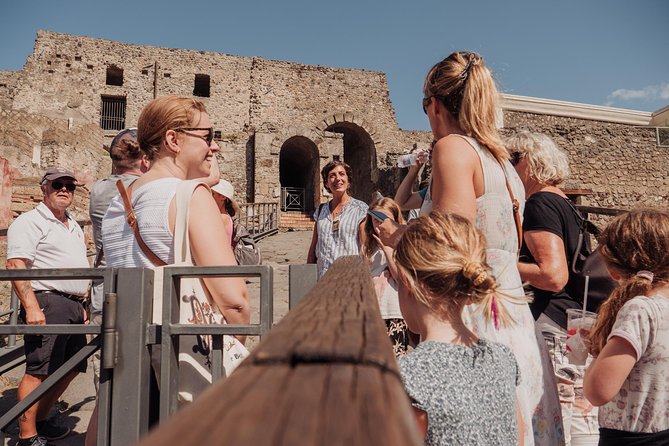
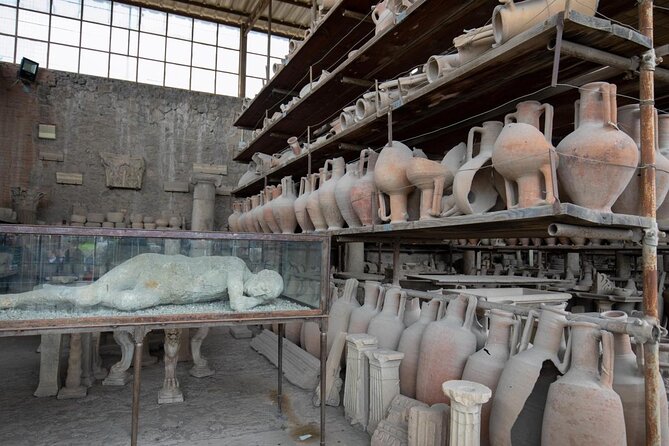
Pompeii is the larger site and gives you the scale of a Roman city. You walk along Via dell’Abbondanza, pass public baths and theaters, and enter houses that reveal how people lived, entertained themselves, and displayed wealth.
Herculaneum offers a different experience. The town is smaller, and many details remain remarkably clear, including mosaics, frescoes, timber, and household features. A good guide will not simply repeat Pompeii in miniature. Alfredo, for example, has been praised for showing how the two sites offer different views of life before the eruption.
I especially like the order used here. Pompeii comes first, followed by a break and then Herculaneum. Pompeii gives you the city’s size and public life. Herculaneum then feels more personal, with closer attention to houses, courtyards, rooms, and preserved decoration.
You should keep your expectations realistic. Even with a full guided visit, you cannot see all of Pompeii and Herculaneum in one day. The purpose is to understand the most important sections, not to inspect every open doorway.
More High-Speed Trains in Italy
- Rome to Pompeii Guided Tour with Wine & Lunch by High Speed Train
★ 5.0 · 1,379 reviews - Rome: Pompeii Tour with Wine and Lunch by High Speed Train
★ 4.8 · 485 reviews - Venice Day Trip from Rome by High-Speed Train with Happy Hour
★ 4.5 · 445 reviews
From Rome Termini to Naples without a complicated connection
Your day begins at Rome Termini Station. You are responsible for boarding the train yourself, and the high-speed tickets arrive one day before the tour. The guide does not meet you in Rome, so read the ticket details carefully and allow enough time to find your platform.
The train ride takes about an hour according to the scheduled itinerary. One useful point: Naples has more than one station name shown on some rail services. Check your ticket and remain on board until the correct Naples stop. A previous passenger specifically noted the need to wait for the second Naples stop, so do not rush off at the first announcement.
Once you arrive at Naples Central Station, walk across Piazza Giuseppe Garibaldi to Starhotels Terminus at number 91. This is a much easier meeting point than searching for a guide inside a large station. There you join the Askos Tours guide and driver.
The minibus transfer is one of the tour’s strongest practical features. Naples traffic and local train connections can eat up a surprising amount of time. Here, the driver handles the road journey to Pompeii and Herculaneum while you focus on the sites.
Do not bring a large suitcase unless you have arranged storage. Not every minibus has a luggage compartment, and the operator recommends using a station luggage deposit or another storage facility.
Entering Pompeii through Porta Marina
The guided visit enters Pompeii through Porta Marina, one of the city’s important gateways. This gives the guide a natural place to explain the city’s layout and the eruption of 79 AD before the group moves into the streets.
Pompeii is not a single monument. It is a large Roman town, and its appeal comes from seeing how many parts of ordinary life remain visible in one place. You will walk on ancient roads, look into homes, pass commercial spaces, and see public buildings that make the city feel more like a community than a museum display.
Via dell’Abbondanza and the House of Menander
Via dell’Abbondanza is one of Pompeii’s main streets. Walking here helps you understand the city’s size and movement. The road surface can be tiring, but it also gives you a real sense of passing through an ancient urban center rather than viewing isolated ruins.
The House of Menander is among the stops that show the private side of Pompeii. Your guide can connect the architecture, decoration, and rooms to the lives of the people who lived there. This is where a trained archaeologist adds value, explaining not just what you are looking at but how scholars interpret it.
Same tracks, a different carriage:
- From Milan: Lake Como Cruise, St. Moritz & Bernina Red Train
★ 4.6 · 5,648 reviews - From Milan: Bernina Train and St. Moritz Day Trip
★ 4.5 · 4,495 reviews - Bernina Red Train, Swiss Alps & St Moritz From Milan
★ 5.0 · 2,954 reviews - Swiss Alps Bernina Red Train and St.Moritz Tour from Milan
★ 4.5 · 2,369 reviews
Forum granaries and the Stabian Baths
The granaries near the Forum help explain how food and objects were stored after the eruption. They also connect Pompeii’s public center with the practical systems that supported city life.
The Stabian Baths shift the focus to leisure and public routine. Roman baths were social spaces as well as places to wash. The guide can point out how the complex worked and why baths mattered so much in Roman towns.
The Lupanar and House of the Faun
The Lupanar is one of Pompeii’s best-known stops. It is also a place where a guide is useful because the building can easily be reduced to a quick, sensational visit. The better approach is to place it within the wider setting of Roman commerce and social life.
The House of the Faun shows a different side of Pompeii: scale, status, and domestic display. Its name comes from the famous faun statue, and the house helps you see how wealthy families used space and decoration to make an impression.
Pompeii’s two theaters
The Odeon, or small theater, and the Teatro Grande, or Great Theatre, show that entertainment was a central part of city life. Their different sizes and uses give you a quick lesson in how Roman performances served different audiences.
These stops also break up the walking. You are not looking at one long row of houses. You move through homes, public buildings, streets, and performance spaces, which helps the visit feel varied.
The Maximall Pompeii break: useful, but not ancient
The 50-minute stop at Maximall Pompeii is the least historic part of the day, but it has a practical purpose. Pompeii offers little shade, and a break indoors can be welcome after several hours on rough roads.
You receive a branded welcome kit and a discount card for special offers in the stores. You can use the time for lunch, drinks, restrooms, and air conditioning. One important detail: meals and drinks are not included, so budget for your own food.
Some people may prefer more archaeological time instead of a shopping-center stop. Others will appreciate the pause, especially with children or after a warm morning outdoors. I see it as a sensible reset, though not a highlight for anyone seeking an entirely historical day.
Herculaneum’s smaller scale and better-preserved interiors
After the break, the minibus continues to the Archaeological Park of Herculaneum. The guided visit is scheduled for about two hours, and the site’s smaller footprint makes that time feel productive.
Herculaneum was buried under different volcanic material than Pompeii. The result is a site where parts of wooden structures, decorative surfaces, and household interiors remain unusually clear. You may find the level of preservation more striking here, even though Pompeii is the larger and more famous city.
House of the Wooden Partition and House of the Skeleton
The House of the Wooden Partition gives you a close look at domestic architecture and craftsmanship. Timber surviving from the ancient town is a useful reminder that Roman buildings were not made only of stone.
The House of the Skeleton adds a more serious note. The guide can help you understand what the remains reveal about the final moments of the eruption without turning the visit into a simple disaster story.
Central Thermae and the House of the Relief of Telephus
The Central Thermae continues the baths theme from Pompeii, but the comparison is useful. Seeing baths at both sites lets you notice how similar Roman public habits could be expressed in different buildings.
The House of the Relief of Telephus brings you back to decorated private life. This is the kind of stop where the guide’s interpretation matters most, since the value lies in connecting art, room use, family status, and Roman taste.
Samnitic House and the fine courtyard
The Samnitic House is an older and more traditional domestic building. The House of the Fine Courtyard then shows how an interior space could be arranged around a central open area.
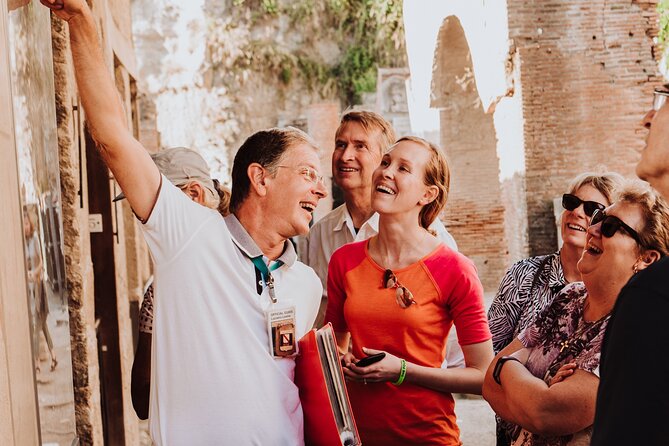
These houses are not famous only because of their names. Together, they help you compare different periods and styles within the town. Ask questions as you go, since guides such as Raphael have been praised for explaining how people used their homes rather than simply naming each room.
Grand Portal and the Black Salon
The House of the Grand Portal and the House of the Black Salon provide further examples of Herculaneum’s architecture and decoration. The visit is compact, so your guide will choose the route and keep the group moving.
That efficiency is helpful, but it can also feel quick if you want long photo stops. One of the more balanced guides, Alfredo, has been praised for matching the pace to the group’s endurance while leaving room for questions. Your exact guide will vary, but the general structure depends on staying with the group.
The guide and headset can make or break the day
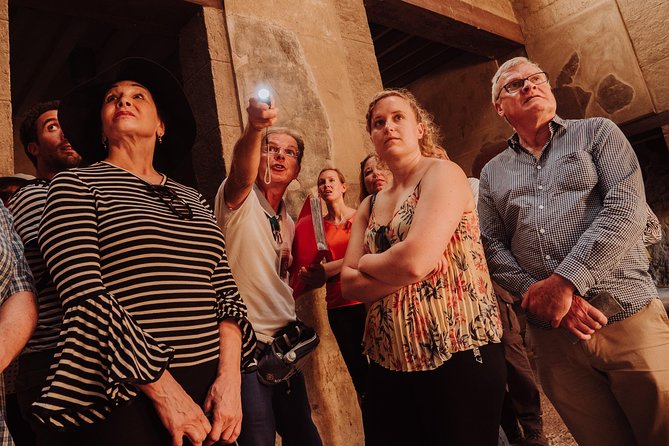
This experience is built around a licensed archaeologist, not just a driver leading you between ruins. Guides named in past outings include Michele, Raphael, Alfredo, Roberta, Bruno, Diego Michelle, Gennaro, and Carmine.
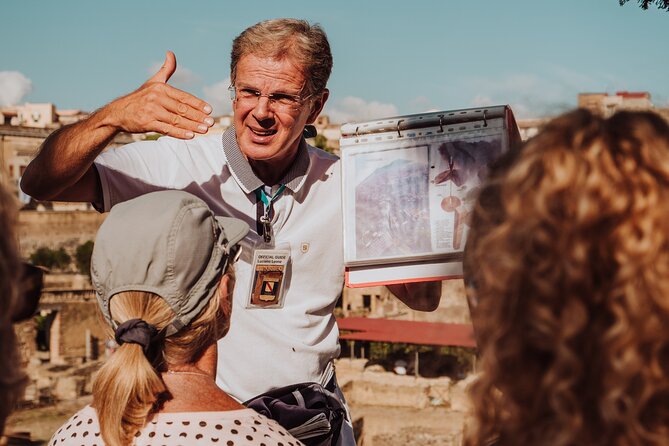
Their strongest role is bringing together several kinds of information. You learn about buildings, excavation, geology, public life, religion, and the people who lived in these towns. Michele and Raphael have been singled out for making ancient daily life easy to picture, while Alfredo has been praised for answering questions and separating the two sites clearly.
Headsets are included, which should help you hear the guide while walking. They are useful in crowded areas, but they are not perfect. One person found that the sound cut out when the guide moved too far ahead, and another found the bus intercom difficult to hear. Stay close to the guide and speak up promptly if the audio drops.
Group size is capped at 20 people. That is smaller than a large coach tour, though Pompeii can still feel crowded, especially around famous buildings. One visitor wished for fewer people during the Pompeii section. If quiet, unhurried photography is your main goal, an independent visit may suit you better.
Is the $204.38 price good value?
At $204.38 per person, this is not a cheap day trip. The price includes round-trip high-speed rail from Rome, a Naples minibus transfer, entry to both archaeological sites, an archaeologist guide, headsets, and the welcome kit with the Maximall discount card.
The rail and transfer package is the main value. Planning two separate sites from Rome would mean arranging trains, local transport, entrance tickets, and guides yourself. The tour also protects you from wasting time in ticket lines and searching for the correct meeting points.
The price is harder to justify if you want a slow, exhaustive Pompeii visit. The ancient city is too large for a highlights tour to show everything, and the early return to Naples can leave some spare time before the train back to Rome. One outing returned to the station well before a 6 p.m. departure, which helped avoid a missed train but reduced site time.
I would pay this price for convenience and expert interpretation, especially on a first visit. I would not choose it if you have already spent several days in Pompeii, want to work at your own pace, or dislike fixed schedules.
Physical demands and useful planning advice
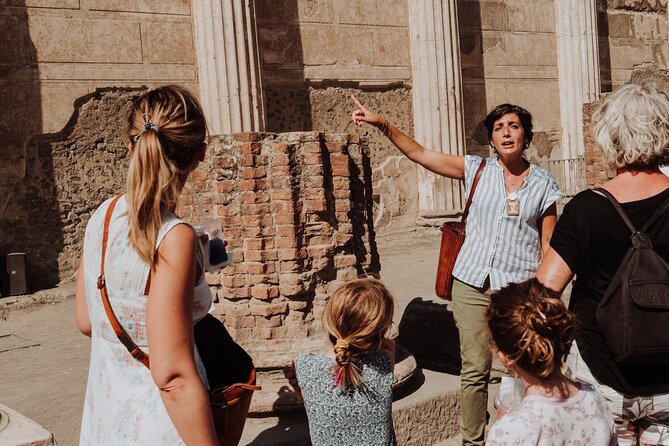
Wear shoes that can handle uneven ancient roads. Both sites require substantial walking, and Pompeii has very little shade. The day is described as strenuous for people with leg or knee problems, and anyone with mobility issues should think carefully before booking both sites together.
Bring a valid passport or other accepted ID. Keep water with you, and plan to buy your own food and drinks during the Maximall stop because they are not included.
The tour is offered in English and is intended for a maximum of 20 people. Most people can participate, but it is not recommended for visitors with visual impairments unless accompanied by a dedicated personal assistant.
Cancellation is free if you cancel at least 24 hours before the local start time. Changes or cancellations inside that window are not accepted for a refund.
Should you book this Pompeii and Herculaneum day trip?
Book it if you are staying in Rome, want to see both volcanic sites in one day, and value a trained guide more than free time. The high-speed train, Naples pickup, private transfer, included tickets, and archaeological explanation remove much of the day’s friction.
I would especially recommend it for first-time visitors, families who need a clear plan, and anyone interested in Roman history but unsure how to read a large ruin site. The guide can turn streets, houses, baths, and theaters into a connected picture of city life.
Think twice if you have knee problems, need shade and long breaks, or want to explore every corner of Pompeii. For most able walkers, though, this is a strong way to reach two major sites from Rome without spending the day juggling transport.
FAQ
Does the tour include the train from Rome?
Yes. Round-trip high-speed train tickets between Rome Termini and Naples are included. You board independently in Rome, and the tickets are sent one day before the tour.
Where do I meet the guide in Naples?
Meet at Starhotels Terminus, Piazza Giuseppe Garibaldi 91, across from Naples Central Station. The guide and Askos Tours driver meet the group there.
Does the guide meet me at Rome Termini?
No. You travel independently from Rome Termini and join the group after arriving in Naples.
Are Pompeii and Herculaneum entrance tickets included?
Yes. The tour includes Pompeii Express entry and Herculaneum entry tickets. The stated adult ticket prices are 20 euros for Pompeii and 16 euros for Herculaneum.
How long is the whole experience?
The full day lasts approximately 11 hours and 30 minutes, including the train journey from Rome, transfers, guided visits, the Maximall break, and the return train.
Is lunch included?
No. Meals and drinks are not included. The 50-minute Maximall Pompeii stop gives you time to buy food and drinks.
Can I bring a suitcase on the minibus?
Large luggage is not recommended. Not every minibus has a luggage compartment, so use a luggage deposit at the station or another storage facility during the excursion.
Is the tour suitable for people with mobility issues?
The tour involves extensive walking on uneven ancient roads and can be strenuous. People with leg or knee issues should reconsider doing both sites in one day.
What happens if I need to cancel?
You can receive a full refund if you cancel at least 24 hours before the local start time. Cancellations or changes made less than 24 hours before the start are not accepted.
New on the timetable around Italy
- Venice Tour by High-Speed train from Florence★ 5.0 · 6 reviews
- Private Full Day Tour from Milan to Venice with local tour guide and fast train★ 4.5 · 3 reviews
- Verona Private City Tour including Arena and Funicular for Kids and Families★ 5.0 · 6 reviews
- Venice Beginner’s Kayak Tour: train & visit the Medieval Arsenal★ 5.0 · 5 reviews
- Etna Wine Tasting and Train Tour★ 4.0 · 8 reviews
- Florence from Rome by High Speed Train at your pace★ 4.5 · 11 reviews
- Venice Day Trip from Rome: Private Tour by High Speed Train★ 4.0 · 58 reviews
- Private Tour of Rome from Florence in fast train★ 5.0 · 2 reviews
Other High-Speed Trains in Italy worth a seat

Rome to Pompeii Guided Tour with Wine & Lunch by High Speed Train
Read our review →
Venice Day Trip from Rome by High-Speed Train with Happy Hour
Read our review →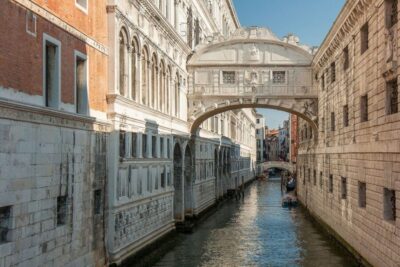

Rome to Florence: High-Speed Train Day Trip with Guided City Tour
Read our review →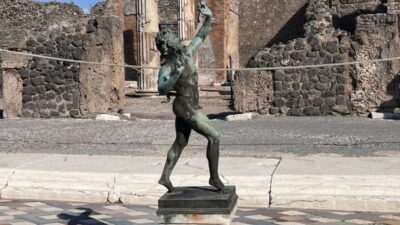
Pompeii and Naples Day Trip by High-Speed Train
Read our review →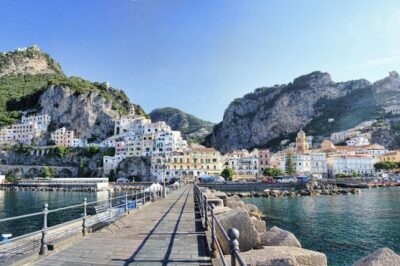
Amalfi Coast Day Trip from Rome by High-Speed Train
Read our review →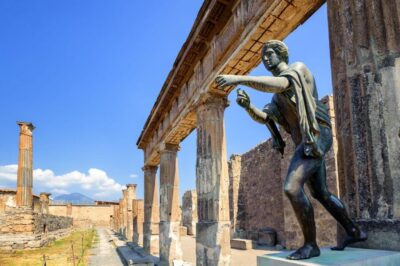

Florence & Tuscany Day Tour by High-Speed Train
Read our review →Lists this ride appears on