
Review · ROME
From Rome: Pompeii and Herculaneum by High-Speed Train
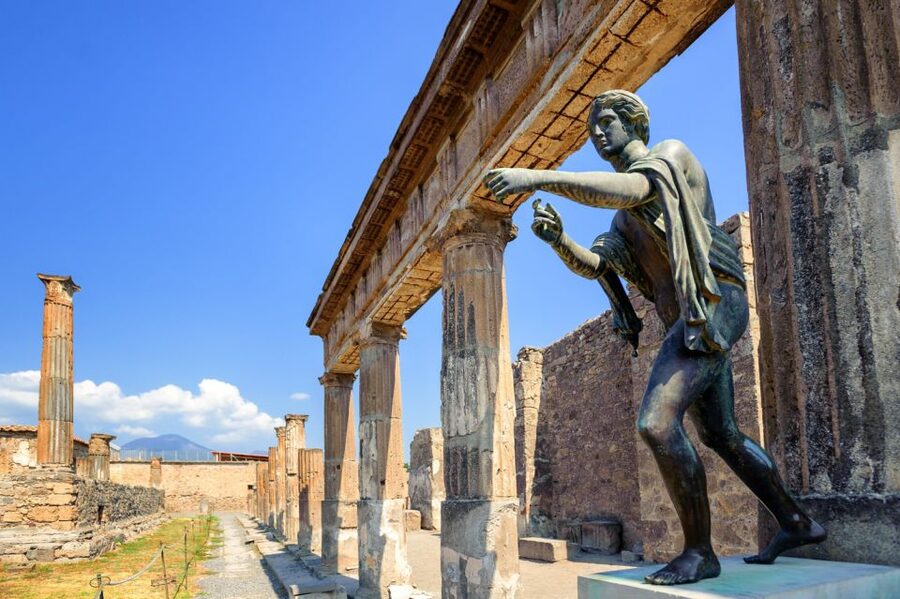
Pompeii and Herculaneum tell two very different stories about the eruption of Mount Vesuvius. Pompeii feels like a whole Roman town, with streets, shops, public buildings, and victims preserved in plaster. Herculaneum is smaller but more intimate, with remarkably preserved houses and skeletons still gathered near the ancient beach.
I like the 70-minute high-speed train from Rome and the fact that an archaeologist leads you through both sites. Guides such as Michele, Raphael, Diego, Giulia, and Jasmine have been praised for making the ruins easy to understand without turning the day into a dry lecture. The main drawback is time: Pompeii gets two hours with a short free period, and a 30-minute lunch stop can feel rushed.
Key points to know before booking
- Two volcano-buried cities in one day: Compare Pompeii’s broad streets and public life with Herculaneum’s better-preserved homes.
- Fast Rome to Naples train: The journey takes about 70 minutes each way, far quicker than traveling by bus.
- Archaeologist guides: Guides including Michele, Raphael, Diego, and Giulia bring archaeological context to the buildings and human remains.
- Important walking requirement: Plan on about one mile at Pompeii and half a mile at Herculaneum, often over uneven ancient paving.
- Lunch is not included: You get free time in Pompeii, but 30 minutes may not leave much room for a relaxed meal.
- Good value for a long day: The price includes trains, site admissions, minibus transfers, headsets, and guided visits at both archaeological parks.
Why visit both Pompeii and Herculaneum?
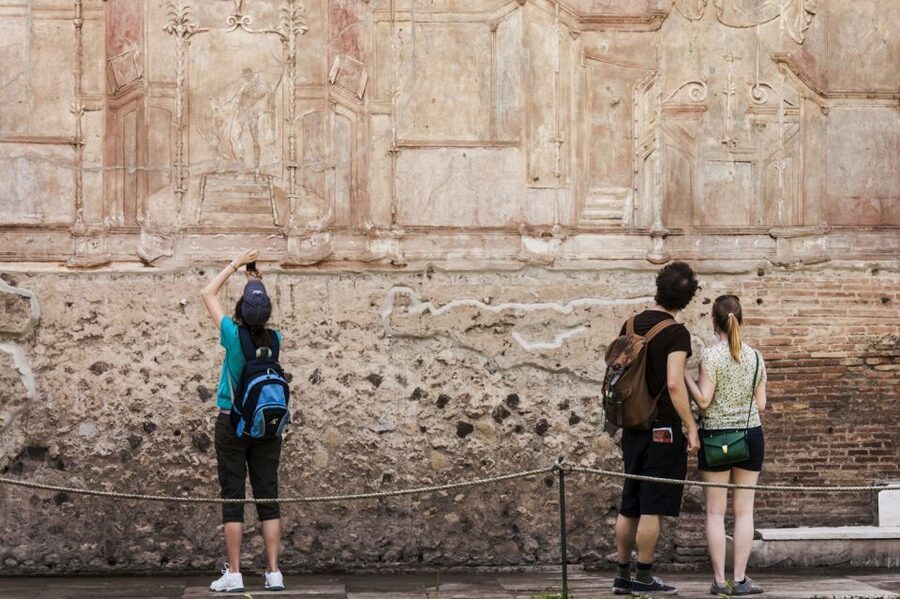
If you visit only Pompeii, you see the scale of the disaster. If you add Herculaneum, you understand its variety.
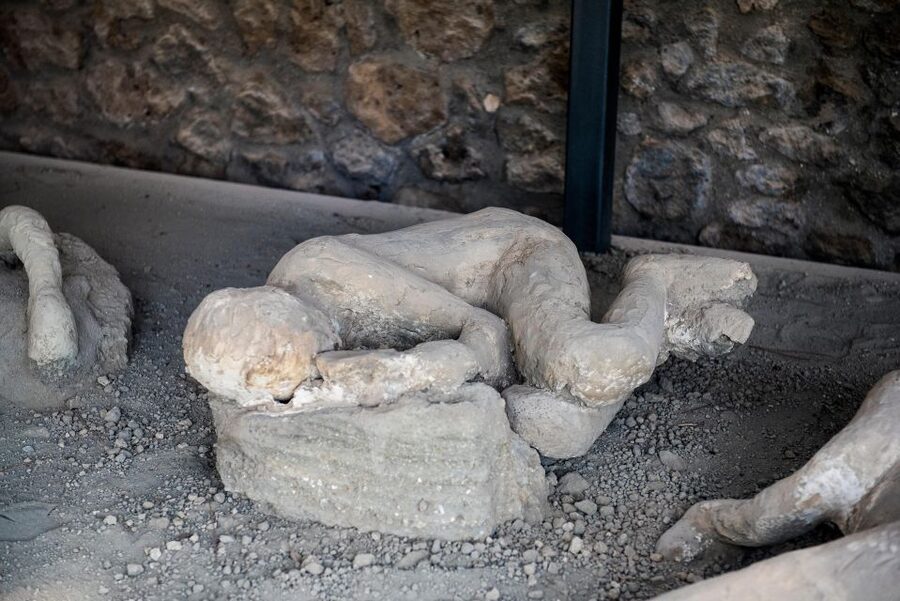
Pompeii spreads across a large area. Its streets, forum, shops, homes, brothel, and public buildings show how a Roman city worked day to day. The plaster casts of people and animals bring a painful human side to the ruins. You are not simply looking at broken walls. You are seeing the final moments of a city caught by volcanic ash and searing heat.
Herculaneum offers a different experience. It is smaller and easier to grasp in two hours, but its buildings often retain more detail. The House of Neptune and Amphitrite is one of the key stops, and the ancient beach area contains preserved skeletons. This makes Herculaneum less about the size of a Roman city and more about the private lives of the people who lived there.
I value the pairing because the sites answer different questions. Pompeii shows urban planning and public life. Herculaneum gives you a closer look at houses, decoration, and personal spaces. Seeing both in one day also helps you understand that the eruption did not affect every place in exactly the same way.
More High-Speed Trains in Italy
- Rome to Pompeii Guided Tour with Wine & Lunch by High Speed Train
★ 5.0 · 1,379 reviews - Rome: Pompeii Tour with Wine and Lunch by High Speed Train
★ 4.8 · 485 reviews - Venice Day Trip from Rome by High-Speed Train with Happy Hour
★ 4.5 · 445 reviews
Roma Termini to Naples in 70 minutes
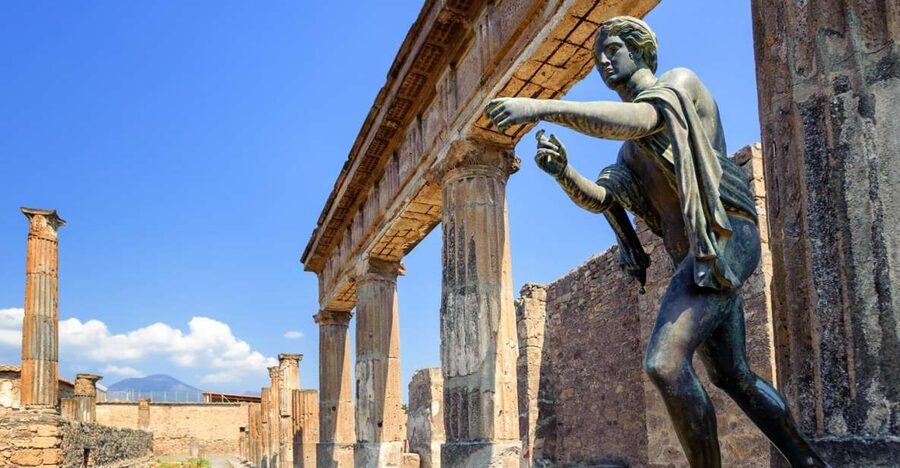
Your day begins at Roma Termini. You travel independently on the high-speed train using the pre-booked tickets supplied for the tour. The ride to Naples takes about 70 minutes, and the trains are a major reason this excursion works as a day trip from Rome.
Arrive early at Termini. The station is large and can be confusing, especially if you need to find the right platform, check the train number, or allow time for a bathroom stop and breakfast. Your practical task is simple: get on the correct train and arrive at Naples Central Station.
At Naples, meet the guide in front of the entrance to the Starhotels Terminus, opposite the station. Look for the guide holding an Askos Tours sign. One useful tip is to watch carefully for the meeting sign, since a larger sign would make the guide easier to spot in the crowd.
The Naples meeting point keeps the tour efficient. You do not spend the morning crossing the city or waiting for a hotel pickup. Instead, you move directly to the shared van or minibus for the drive to Pompeii.
The minibus transfer through the Naples area
The ride from Naples to Pompeii takes about 30 minutes. It is not the scenic centerpiece of the day, but it saves you from arranging a local train, finding the archaeological entrance, and managing another set of tickets.
The shared minibus also keeps the group together. Drivers such as Pasquale have been singled out for handling Naples traffic calmly and professionally, which matters in a city where road conditions can feel lively from the passenger seat. The transport is comfortable, though traffic can affect the rhythm of the day.
The schedule includes another minibus transfer from Pompeii to Herculaneum, then a final 30-minute ride back to Naples Central Station. At the end, you board the high-speed train back to Roma Termini. The advertised total is about 8.5 hours, but this is still a full day once you add station time, walking, and transfers.
Pompeii: streets, victims, and Roman daily life
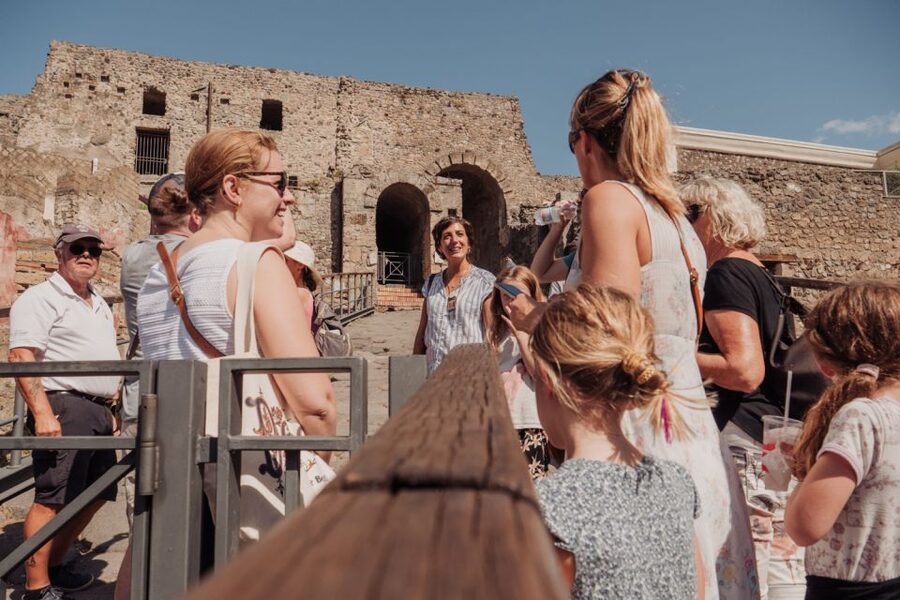
Pompeii is the larger and more demanding of the two archaeological sites. Your guided visit lasts about two hours, followed by roughly 30 minutes of free time.
The guide focuses on the main buildings, including newly opened houses, the forum, the brothel, and the plaster casts. The exact route can vary, but the aim is to give you a useful picture of the city rather than march you past a long list of walls with no explanation.
The plaster casts are among Pompeii’s most affecting sights. Archaeologists created the casts by filling cavities left in the hardened ash where bodies had decomposed. The result preserves the shape of people and animals at the moment of death. It is difficult material, and the guide’s explanation helps place it in historical and human context.
The forum gives you a sense of Pompeii’s civic center. The streets show how people moved through the city, while the houses and shops suggest how business and domestic life fit together. A guide with archaeological training can explain what is known, what is still debated, and how archaeologists interpret the remains.
This is where guides such as Michele, Michael, Raphael, Diego, and Giulia add real value. Their strongest contribution is not simply naming a building. It is explaining what the structure reveals about Roman life, the eruption, and the ongoing work of archaeology.
The site requires about one mile of walking. Ancient paving stones can be uneven, and the surface may be tiring in hot, wet, or crowded conditions. Wear sturdy shoes, not sandals, flip-flops, or high heels. The operator also does not allow large bags or luggage.
More High-Speed Trains in Rome:
- From Rome: Day Trip to Venice by High-Speed Train
★ 4.6 · 352 reviews - Rome to Florence: High-Speed Train Day Trip with Guided City Tour
★ 4.0 · 235 reviews - From Rome: Pompeii and Naples Day Trip by High-Speed Train
★ 4.7 · 234 reviews - Amalfi Coast Day Trip from Rome by High-Speed Train
★ 4.5 · 162 reviews
The lunch stop needs careful planning
After the Pompeii tour, you get free time for lunch or shopping. The planned free period is about 30 minutes, so you should treat it as a quick break rather than a long restaurant meal.
This is one of the tour’s weaker points. Places to eat near the entrance can become crowded, and finding a table, ordering, eating, and returning to the group within half an hour may be difficult. One practical solution is to carry a small, permitted snack and use the free time for a fast meal rather than waiting for a slow service.
The tour price does not include food. You should also bring water, especially in warm weather, since much of the day takes place outdoors on stone streets with limited shade. The schedule is carefully timed to make both sites possible, but that leaves little room for an extended lunch.
Herculaneum: smaller, closer, and better preserved
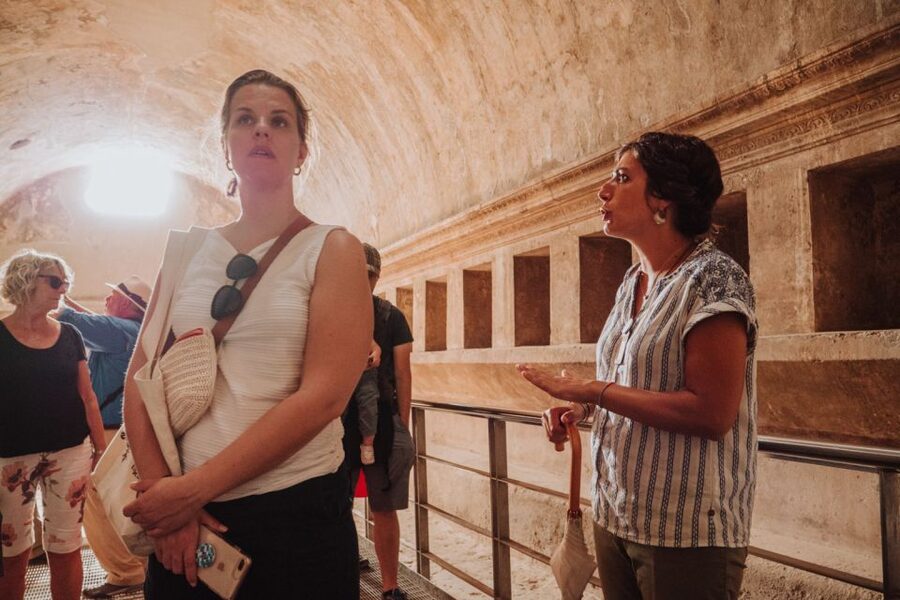
The second guided visit lasts about two hours. Herculaneum is more compact than Pompeii, so the time feels more manageable, but you still need to keep moving with the group.
The House of Neptune and Amphitrite is a key stop. Its preserved decoration gives you a closer look at the domestic world of a Roman town. Herculaneum often feels less like an immense urban map and more like a series of homes and streets where you can study building details at close range.
The ancient beach is another powerful stop. Hundreds of skeletons are preserved there, a stark reminder that people gathered near the water while trying to escape the eruption. The setting connects the archaeological remains with the human panic of the disaster.
You will walk about half a mile at Herculaneum. That is shorter than Pompeii, but the ancient surfaces remain uneven. The site is not recommended for people with limited mobility and is not suitable for wheelchair users.
The contrast between the two sites is the strongest reason to keep both on the same itinerary. Pompeii gives you breadth. Herculaneum gives you detail. Together, they offer a fuller picture than either visit alone.
What the archaeologist guide adds

A self-guided visit can show you impressive ruins, but it may leave you unsure about what you are seeing. This tour includes a live English-speaking guide with an archaeological background at both sites, plus headsets for all participants.
The headsets are useful because you can hear explanations while standing near a building rather than crowding around the guide. The small-group format also makes it easier to ask a question or stay close to the route.
The strongest guides combine facts with a sense of proportion. Michele has been praised for explaining everyday life as well as archaeological finds. Raphael is described as entertaining and good at pacing the group. Diego has been noted for showing the best areas within the limited time, while Giulia and Jasmine have been appreciated for clear, friendly explanations.
No guide can turn a tightly timed schedule into a leisurely archaeological study. If you want hours inside one building or plenty of time for personal photography, this tour may feel brisk. If you want a strong introduction to both sites without spending days arranging transport, the guide is a major advantage.
Is the $222.77 price fair?
The price is $222.77 per person. That is not a cheap sightseeing day, but it covers several costly and time-saving parts of the trip:
- Round-trip high-speed train tickets between Rome and Naples
- Pompeii Express admission
- Herculaneum admission, listed at 16 euros per person
- Minibus transport between Naples, Pompeii, and Herculaneum
- Archaeologist-led tours at both sites
- Headsets
The value depends on how much you value time and simplicity. You could try to arrange the trains, local transport, admissions, and two site visits yourself, but the connections would require careful planning. The included transport also avoids the stress of finding your way from Naples to two separate archaeological parks.
The price is easier to justify if you have only one day available from Rome. It is less attractive if you already have a longer stay in Campania and can visit Pompeii and Herculaneum on separate days using public transport.
The tour does not include lunch, hotel pickup, or hotel drop-off. You begin and end at Roma Termini, so you need to reach the station on your own. For many people, that is a reasonable trade-off because the train connection is direct and fast.
Weather, clothing, and the walking effort
The tour runs rain or shine. Bring a raincoat if rain is possible, since the archaeological sites are largely open-air. Warm weather can also make the stone streets tiring, so comfortable shoes and water matter more than stylish clothing.
Do not arrive in sandals, flip-flops, or high heels. Large bags and luggage are not allowed, and you should bring a passport or ID card. A small day bag is more practical than anything bulky.
The walking distance is moderate on paper, but uneven paving, heat, crowds, and repeated standing can make the day demanding. I would not choose this outing for anyone with limited mobility, and the operator specifically excludes wheelchair users.
The tour also asks you to manage several transitions: Rome station, Naples meeting point, minibus, Pompeii, lunch, Herculaneum, minibus, Naples station, and the return train. Good organization helps, but you still need to pay attention to meeting times.
Who should book this day trip?
I would recommend it to you if you want both sites, have only one free day, and prefer a guide to explain what you are seeing. It is especially useful if you care about archaeology and Roman daily life, not just taking photographs of famous ruins.
It also suits first-time visitors who do not want to organize regional transport. The high-speed train removes much of the distance problem, while the minibus handles the awkward connection between the two archaeological parks.
I would think twice if you dislike early starts, brisk sightseeing, or long days on your feet. You may also prefer separate visits if lunch matters to you or if you want unhurried time inside Pompeii.
For photography, choose your priorities in advance. The schedule gives you time for pictures, but not endless pauses. Guides such as Diego and Raphael are praised for finding a good balance between explanation, pacing, and photo stops, but the whole group still has to stay on schedule.
Should you book this Pompeii and Herculaneum tour?
Book it if your goal is to see the two Campania sites in one well-organized day from Rome. The high-speed train is the key practical advantage, and the archaeologist guide gives the ruins meaning that signs and audio guides may not provide.
Skip it if you want a slow archaeological visit, a long lunch, or a flexible day shaped around your own pace. For everyone else, the combination of Pompeii’s broad Roman streets, Herculaneum’s preserved homes, the plaster casts, and the efficient rail connection makes the $222.77 fare reasonable for a one-day excursion.
FAQ
How long does the tour last?
The activity lasts about 8.5 hours. The schedule includes the high-speed train between Rome and Naples, minibus transfers, two hours at Pompeii, free time, and two hours at Herculaneum.
Where does the tour start?
It starts at Roma Termini station. You use the provided high-speed train tickets to travel independently to Naples Central Station.
Where do I meet the guide in Naples?
Meet the guide in front of the Starhotels Terminus entrance, opposite Naples Central Station. Look for the guide holding an Askos Tours sign.
Is lunch included?
No. Meals are not included. You receive about 30 minutes of free time at Pompeii for lunch or shopping.
How much walking is involved?
The tour requires about one mile of walking at Pompeii and about half a mile at Herculaneum. The ancient paving can be uneven.
Is the tour suitable for wheelchair users?
No. The activity is not suitable for wheelchair users or people with limited mobility.
What should I bring?
Bring a passport or ID card, comfortable walking shoes, and a raincoat if rain is possible. Sandals, flip-flops, high heels, luggage, and large bags are not allowed.
New on the timetable around Rome
- Florence from Rome by High Speed Train at your pace★ 4.5 · 11 reviews
- Venice Day Trip from Rome: Private Tour by High Speed Train★ 4.0 · 58 reviews
- Private Tour of Rome from Florence in fast train★ 5.0 · 2 reviews
- Naples Day Trip with High-Speed Train & Naples Underground★ 3.5 · 3 reviews
- Pompeii Guided Tour with Train Included from Rome★ 4.5 · 40 reviews
- Florence & Uffizi Ticket by High speed Train: Day Trip from Rome★ 4.0 · 2 reviews
- Pompeii Express Day Trip: High-Speed Train from Rome★ 4.5 · 31 reviews
- Florence Day Trip by High-Speed Train From Rome★ 4.0 · 6 reviews
Other High-Speed Trains in Italy worth a seat

Rome to Pompeii Guided Tour with Wine & Lunch by High Speed Train
Read our review →
Venice Day Trip from Rome by High-Speed Train with Happy Hour
Read our review →

Rome to Florence: High-Speed Train Day Trip with Guided City Tour
Read our review →
Pompeii and Naples Day Trip by High-Speed Train
Read our review →
Amalfi Coast Day Trip from Rome by High-Speed Train
Read our review →
Florence & Tuscany Day Tour by High-Speed Train
Read our review →
Pompeii & Herculaneum Guided Tour – High Speed Train from Rome
Read our review →Lists this ride appears on