
Review · SEOUL
Gyeongju UNESCO Sites Tour by KTX train; The Museum Without walls
Gyeongju is Korea’s ancient capital, and this tour gives you a fast way to reach its best-known Silla sites from Seoul. You’ll move from royal tombs and an old astronomical tower to Buddhist sculpture, palace gardens, and the remarkable displays at Gyeongju National Museum.
I like two things right away: the private format, which keeps the day flexible and personal, and the careful train handling. A local representative takes you to the station, helps you board, and your Gyeongju guide meets you at the other end. The drawback is simple: this is a long day, and nearly every major stop is outdoors or involves walking, so rain can change the mood quickly.
Key points at a glance
- KTX makes Gyeongju possible as a day trip: Round-trip economy train tickets and private vehicle transfers are included.
- Six major Silla-era stops: You visit Cheonmachong Tomb, the national museum, Cheomseongdae, Donggung Palace and Wolji Pond, Bulguksa Temple, and Seokguram.
- Private guiding keeps the history connected: Your English-speaking guide explains how tombs, temples, royal buildings, and art fit together.
- The museum is a major strength: It gives you context for the objects and sites you see outside.
- The day begins early: Pickup is scheduled for 7:00 am, with about eight to nine hours in total.
- Plan your return from Seoul: Hotel pickup is included, but hotel drop-off is not.
Why Gyeongju works as a day trip from Seoul
Seoul is modern, fast, and enormous. Gyeongju offers a very different Korea, shaped by the Silla kingdom, which ruled much of the peninsula for centuries. The city is often called a museum without walls because historic remains are scattered through parks, streets, hills, and temple grounds rather than packed into one old quarter.
That makes a guide useful. Without background, a rounded grassy mound may look like a simple hill, and a field of stones may seem decorative. With an explanation of royal burials, Buddhist beliefs, astronomy, and court life, the sites begin to connect.
The KTX is the practical reason this outing works. You avoid organizing separate train tickets, station transfers, taxis, and entrance fees. The tour uses a private car for Seoul transfers and local sightseeing, while the train covers the long stretch between the two cities.
At $470 per person, this is not a budget day out. The price makes more sense for people who value convenience, a private group, an English-speaking guide, and a tightly arranged schedule. If you are comfortable planning Korean trains and local buses yourself, you could likely spend less independently. You would also need to manage every connection and decide how to fit six substantial stops into one day.
More High-Speed Trains in Seoul:
- Mt Fuji & Hakone Cruise, Drum Show Bullet Train 1 Day from Tokyo
★ 4.0 · 7,413 reviews - Tokyo Mt Fuji 5th St & Hakone Cruise Bus Tour w/Bullet Train
★ 4.4 · 5,024 reviews - Rome to Pompeii Guided Tour with Wine & Lunch by High Speed Train
★ 5.0 · 1,379 reviews
The early start and KTX handoff
The day begins with a 7:00 am pickup in Seoul areas. A private vehicle takes you toward the station, and the included KTX ticket is in economy class. The transfer process is one of the tour’s useful details: a local representative may escort you through the station and help you reach your seats, while your Gyeongju guide meets you after arrival.
That separation can work well. You do not need to search for your guide in Seoul or wonder how to reach the first attraction after stepping off the train. Guides named in the tour’s feedback include Jay, John, and Dylan, while Andrew is praised for handling the early pickup and train boarding. Your assigned guide may differ, but the operating pattern is clear.
The train ride also gives you a quiet break before the sightseeing begins. Still, do not think of this as a leisurely late-start excursion. With the morning pickup, the train journey, six visits, and the return to Seoul, you should expect a full day of movement.
Cheonmachong Tomb and Silla burial customs
The first major stop is Cheonmachong Tomb, located among more than 20 large and small Silla-era burial mounds. These rounded earthen tombs are linked to kings and court officials, and they give Gyeongju its distinctive appearance.
Cheonmachong is especially useful because you can enter an excavated tomb. That changes the site from an outdoor mound into a place where you can better understand how royal burials were built and why grave goods mattered. The name is associated with a flying horse image found among the burial objects.
Allow about an hour here. The walking is not demanding in the same way as a mountain hike, but you will spend time outdoors. This opening stop also establishes the main theme of the day: Silla power was expressed through burial rituals, religious art, architecture, and careful links between the royal court and the natural world.
Gyeongju National Museum puts the pieces together
For me, the museum is one of the most important stops because it supplies the details that open-air sites cannot. The archaeological hall presents Silla objects, including ceremonial items, ornaments, and pieces connected to royal life. You get a clearer sense of the skill and wealth behind the tombs you have just seen.
This is also where the tour’s historical explanation can pay off most. A mound alone tells you that someone important was buried there. Museum displays show the objects, symbols, and craftsmanship associated with that world.
One hour is enough for a focused visit, but it is not enough to examine every gallery closely. If you love museums and ancient art, you may wish the schedule allowed more time here. The tradeoff is that this tour aims to cover Gyeongju’s main sites in one day, not give you a slow museum study.
The museum is free to enter, while several other stops include admission. That helps the overall value, though the real benefit is not the saved entrance fee. It is the guide’s ability to link the museum’s objects to the tombs, temple, and palace remains outside.
More Museum Stops around Seoul:
- Brussels: Train World Museum Entrance Ticket
★ 4.7 · 524 reviews - London: Postal Museum Entry Ticket and Underground Rail Ride
★ 4.6 · 363 reviews - Brussels Train World Museum Entrance Ticket
★ 4.5 · 220 reviews - From Krakow: Zakopane Tour with Gubalowka Funicular & Museum
★ 4.5 · 80 reviews
Cheomseongdae, an observatory built in 634
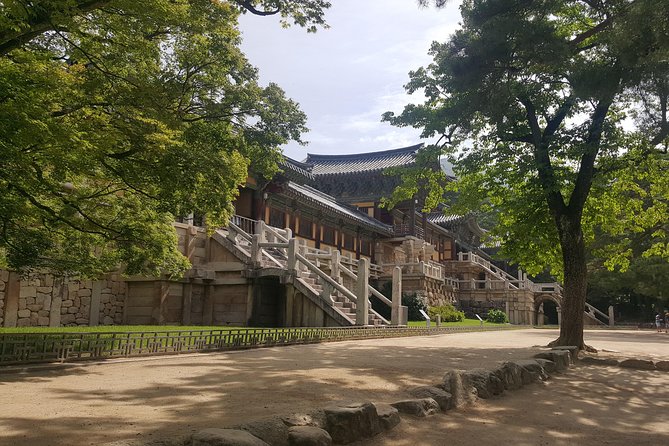
Cheomseongdae means Star Gazing Tower. Built during the reign of Queen Seondeok in 634, it is described as the oldest surviving observatory in the Far East. Its stone structure has 27 levels, arranged in a form that has drawn plenty of attention from historians and visitors.
You will not spend an hour climbing it, because you cannot enter the tower. The interest lies in seeing the structure in its setting and hearing how astronomy mattered to the Silla court. A ruler who tracked the heavens was not simply studying stars for curiosity. Calendars, farming, ceremonies, and royal authority were all tied to the sky.
This is a compact outdoor stop, and the guide’s explanation matters more than the object’s size. On its own, Cheomseongdae can be easy to pass quickly. In the sequence of this tour, it helps broaden the story beyond tombs and religion.
Donggung Palace and Wolji Pond after dark history
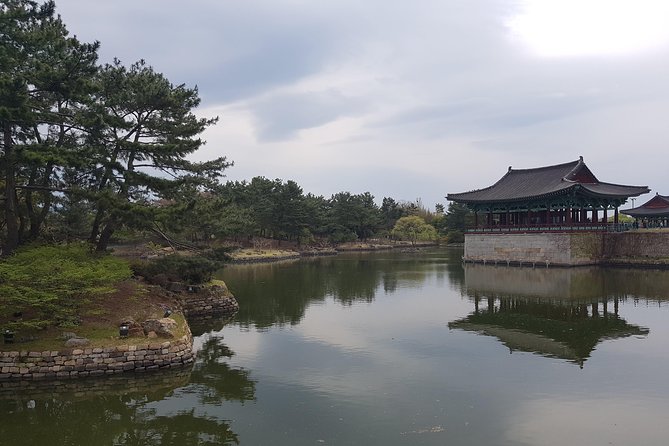
Donggung Palace and Wolji Pond, formerly known as Anapji Pond, show the pleasure and ceremony of the Silla royal court. The pond was created in 674 after the unification of the Korean Peninsula. Artificial hills, trees, flowers, birds, and animals were brought into the palace grounds to create an attractive royal setting.
The site is especially valuable because it gives you a sense of court life rather than only funerary or religious traditions. The water, gardens, and palace remains suggest how carefully the royal compound was planned.
Give yourself time to look beyond the surviving foundations. Much of the power of the place comes from imagining ceremonies, banquets, and official gatherings around the water. Since the tour visits several outdoor sites, your experience will depend on weather and daylight. Comfortable shoes and protection from rain are sensible choices.
Bulguksa Temple and Silla Buddhist design
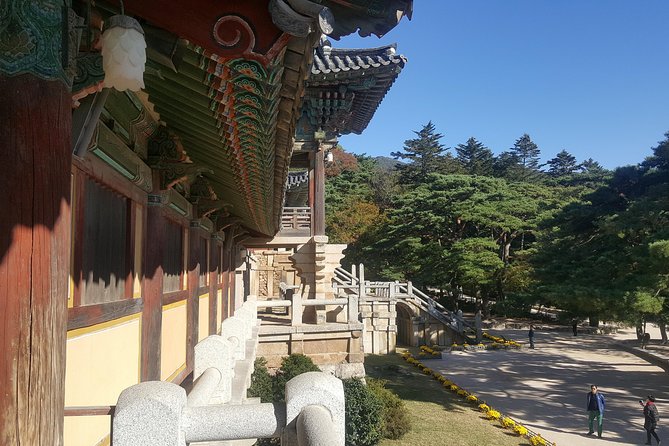
Bulguksa is Korea’s best-known Buddhist temple and one of the day’s major highlights. It is associated with important Silla relics, including the stone pagodas Dabotap and Seokgatap. The temple is not just a religious building to inspect quickly. Its stairs, courtyards, gates, and pagodas show how Silla builders gave physical form to Buddhist ideas.
This is a place where a guide can explain details you might otherwise miss. The two pagodas have different designs, and their contrast is part of the visual interest. Look carefully at the stonework and the way the temple buildings are arranged rather than rushing straight to a photo.
Bulguksa is also a reminder that Gyeongju’s Silla story is not only about kings and military power. Buddhism shaped art, architecture, politics, and daily life. The temple makes that connection visible.
Because the tour includes both Bulguksa and Seokguram, you get two different sides of Silla Buddhism. Bulguksa is a large temple complex with architecture and ritual spaces. Seokguram is a smaller mountain hermitage centered on sculpture.
Seokguram Grotto and the mountain finish
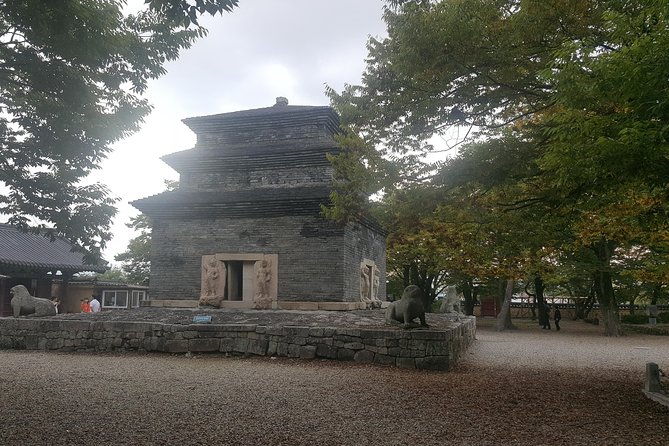
Seokguram Grotto is part of the Bulguksa temple complex and sits about 750 meters above sea level, overlooking the East Sea. Its central attraction is a Buddhist sculpture considered among the finest in the world.
The setting changes the pace of the day. After tombs, museum rooms, palace remains, and temple courtyards, you reach a higher, quieter site with a broad outlook. The grotto itself is the main reason to come, but the mountain position adds to the sense of separation from the city below.
As with several other stops, you should expect walking and outdoor exposure. Rain can be a real problem here and across the whole route. One person found heavy rain greatly reduced the enjoyment because so much of the day takes place outside. That is not a flaw unique to this operator, but it is a serious planning point for a fixed-date day trip.
What the guide adds to the experience
The best version of this tour depends on the guide’s ability to tell one connected story. Jay is described as meeting the group in Gyeongju and guiding the historic sites. John is praised for sharing stories about the city and its past, while Dylan is described as personable and informative.
The guide can also make lunch easier, though meals are not included. One guide took the group to a small local restaurant with generous portions. Treat that as a possible part of the day rather than a guaranteed restaurant arrangement, since the tour does not include meals.
English ability appears generally strong, but one person had difficulty with a guide’s accent despite his strong command of Korean history and culture. If clear spoken English is especially important to you, keep this possibility in mind. Private tours at least give you a chance to ask for repetition and steer the discussion toward the subjects you care about.
Who should book this Gyeongju tour
I would choose this tour if you have limited time in Korea and want Gyeongju’s main Silla sites without solving the transport puzzle yourself. It suits history fans, first-time visitors, and private groups who prefer a guide over a self-guided rush.
It is also a good fit if you want help with the Seoul station process. The early escort to the train and the meeting arrangement in Gyeongju remove much of the stress that can come with a long independent day trip.
I would hesitate if you dislike early starts, long travel days, or outdoor sightseeing in uncertain weather. Gyeongju deserves more than a rushed visit, and six stops in one day means each receives roughly an hour. The schedule is efficient, but it cannot offer the slow pace of an overnight stay.
The published score is 4.6 out of 5, with 91 percent recommending the experience. That matches the main strengths: strong organization, friendly guides, and a full view of Gyeongju’s ancient sites. The price is easiest to justify when divided among the private transport, KTX tickets, admissions, and personal guiding.
Practical details before you reserve
The tour lasts about eight to nine hours and begins at 7:00 am. Hotel pickup is offered in Seoul areas, but hotel drop-off is not included, so plan your evening return from the station or final drop-off point.
Admission fees to the tourist sites, the English-speaking local guide, private vehicle transfers, and round-trip economy KTX fare are included. Meals are not included.
The activity is private, so only your group participates. Group discounts are available, and confirmation is provided when you book. Free cancellation is available up to 24 hours before the start time. If the minimum number of participants is not reached and the operator cancels, you are offered another date or experience, or a full refund.
Should you book it?
Book this Gyeongju day trip if you want maximum coverage with minimum transport planning. The combination of KTX travel, a private vehicle, six significant sites, and an English-speaking guide gives you a practical introduction to Korea’s Silla capital.
Skip it in favor of an overnight stay if you want long museum hours, unhurried temple visits, or time to explore beyond the main sights. For a single day from Seoul, though, this is a well-shaped route. Just start early, bring walking shoes and rain protection, and remember that Gyeongju’s greatest appeal is outdoors.
FAQ
How long does the Gyeongju UNESCO Sites Tour take?
The tour lasts approximately eight to nine hours, including the Seoul to Gyeongju travel and return journey.
What time does the tour begin?
The scheduled start time is 7:00 am.
Is hotel pickup included?
Yes. Hotel pickup is offered in Seoul areas. Hotel drop-off service in Seoul is not included.
Is the KTX train fare included?
Yes. Round-trip KTX fare in economy class is included in the tour price.
Which sites are visited?
The route includes Cheonmachong Tomb, Gyeongju National Museum, Cheomseongdae Observatory, Donggung Palace and Wolji Pond, Bulguksa Temple, and Seokguram.
Are meals included?
No. Meals are not included in the tour price.
New on the timetable around Seoul
- Private Tour Rail Bike & Nami Island & (Petite France or Garden of Morning Calm)★ 4.5 · 13 reviews
- Special Private Tour Nami Island, Rail Bike, Petite France★ 5.0 · 42 reviews
- Scenic Escape: Nami Island, Garden of Morning Calm, and Rail Bike★ 3.0 · 2 reviews
- Alpaca World with Gangchon Rail Park One Day Tour★ 4.5 · 3 reviews
- Eobi+Nami+Hanbok Tour with Rail Bike or Strawberry Option★ 5.0 · 10 reviews
- Nami Island & Petite France & Italian Village & Gangchon Rail Bike One-Day Tour★ 4.5 · 52 reviews
- Eobi Ice Valley, Nami Island, Morning Calm and Rail Bike Seoul★ 5.0 · 9 reviews
- Nami Island Trip with Petite France & Italian Village and Gangchon Rail Bike★ 4.5 · 41 reviews
Other High-Speed and Bullet Trains worth a seat
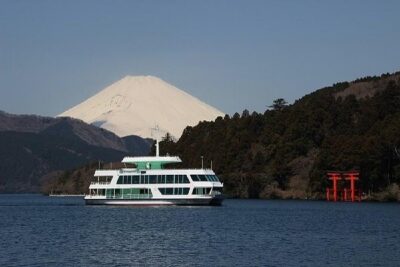
Mt Fuji & Hakone Cruise, Drum Show Bullet Train 1 Day from Tokyo
Read our review →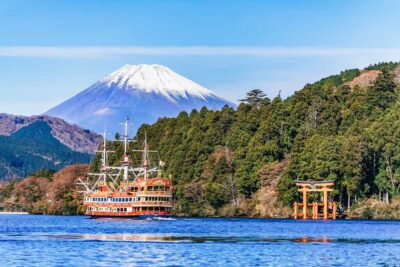
Tokyo Mt Fuji 5th St & Hakone Cruise Bus Tour w/Bullet Train
Read our review →
Rome to Pompeii Guided Tour with Wine & Lunch by High Speed Train
Read our review →
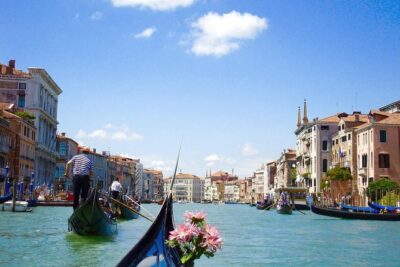
Venice Day Trip from Rome by High-Speed Train with Happy Hour
Read our review →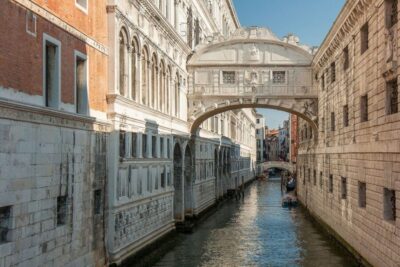

“Taj Mahal” Tour from Delhi by India’s Fastest Train (Gatiman Express)
Read our review →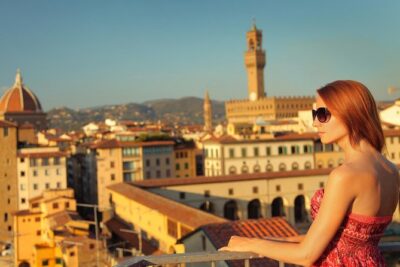
Rome to Florence: High-Speed Train Day Trip with Guided City Tour
Read our review →Lists this ride appears on