
Review · NEW ZEALAND
Queenstown to Dunedin Incl Taieri Gorge Train (One-Way)
The best part of this journey is the change in pace. You leave Queenstown by road, pass vineyards, gorges, farms, and old mining settlements, then switch to rail for a two-hour run through the Taieri Gorge. It is a fine way to cross Central Otago without spending the whole day behind the wheel.
I like the small group of no more than 16 people, which should make the guided stops easier and the Mercedes-Benz ride more comfortable. I also like the mix of places: the old suspension bridge at Ophir and the ghost town of St Bathans offer more character than a simple point-to-point transfer.
The main consideration is timing. Eight hours is a long travel day, and several stops are brief. You will see a lot, but this is not the trip for long walks or extended time in every town. The route also ends at Dunedin Railway Station, not at your accommodation.
Key points at a glance
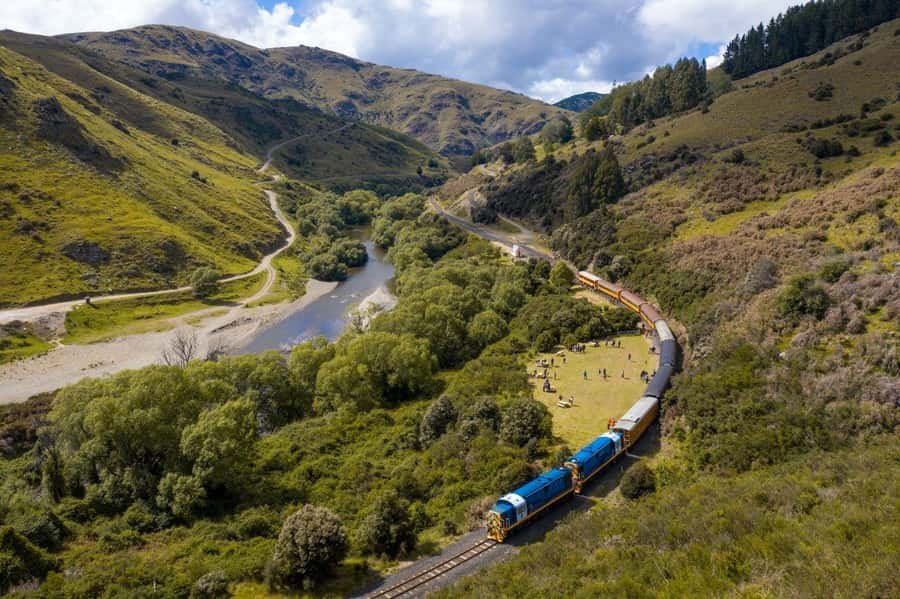
- A road-and-rail crossing: Travel by Mercedes-Benz from Queenstown to Pukerangi, then ride the Taieri Gorge Train into Dunedin.
- Central Otago gold-rush towns: Visit Clyde, Ophir, and St Bathans, with time for historic buildings and photographs.
- A short stop at Dunstan House: Buy morning tea at the restored 1898 hotel in Clyde.
- Blue Lake in St Bathans: See a striking body of water formed by gold mining, near one of the region’s best-preserved old settlements.
- A small-group setting: The vehicle carries up to 16 people, with hotel pickup from listed Queenstown locations.
- A useful one-way option: Finish at Dunedin Railway Station after a scenic transfer from Queenstown.
Why this Queenstown to Dunedin route works well
This experience is more than transport, but it is also more useful than a standard sightseeing loop. You are moving between two major South Island bases, and the route turns that travel day into a full outing.
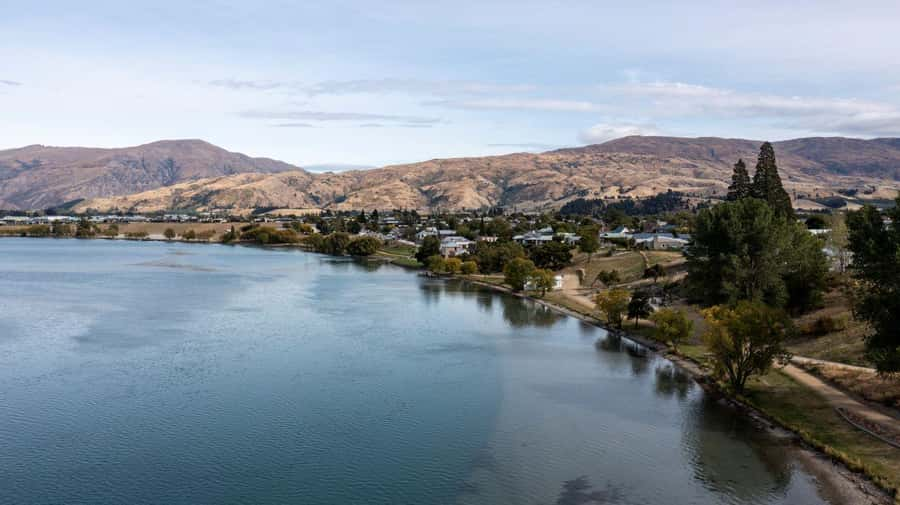
From Queenstown, the road heads east through the Gibbston wine region and the Kawarau Gorge. The scenery shifts quickly. Queenstown’s mountain-and-lake setting gives way to dry Central Otago country, broad river valleys, farms, old bridges, and places shaped by gold mining.
The road section ends at Pukerangi, a remote station in the high country. From there, you board the Taieri Gorge Train for the final leg to Dunedin. That change from road to rail is the clever part of the day. You get the flexibility of a guided vehicle for the smaller settlements, then the wide views and slower rhythm of a heritage train.
At $173 per person, the price is reasonable if you need to get from Queenstown to Dunedin and want more than a basic transfer. It includes hotel pickup, the guided road journey, the Mercedes-Benz vehicle, snacks and water, and the train ticket. You still pay for food at Dunstan House, so allow a little extra for morning tea.
More Scenic Railways in New Zealand:
- TranzAlpine Train, Arthur’s Pass and Castle Hill Day Trip
★ 5.0 · 426 reviews - Coastal Pacific Train Journey from Picton to Christchurch
★ 4.5 · 345 reviews - TranzAlpine Train Journey: Christchurch to Greymouth
★ 4.5 · 312 reviews
Leaving Queenstown through Gibbston and Kawarau Gorge
Pickup is offered from a long list of Queenstown hotels, hostels, resorts, and the Frankton Terminus. If your accommodation is not listed, choose the nearest available pickup point. If your lodging is not confirmed yet, The Station, Home of Adventure, is the temporary meeting option.
Once everyone is aboard, you receive a safety briefing and head east. The first part of the journey passes through Gibbston, known for its vineyards, before reaching the Kawarau Gorge. This is a strong opening because it gives you two sides of the region at once: cultivated wine country and rough, rocky gorge scenery.
You will mostly be viewing the countryside from the vehicle rather than stopping at every scenic point. That matters if you want a relaxed transfer, but less so if your goal is a full wine tour or long photo sessions. The road section is designed to keep moving toward Dunedin while adding selected stops along the way.
Lake Dunstan and Cromwell’s gold-rush setting
The route continues beside Lake Dunstan and through Cromwell. Lake Dunstan is a major visual change from the steep country around Queenstown. Its water catches the light as the road moves through a drier part of Central Otago, with farms and open hills around it.
Cromwell’s location at the meeting point of the Clutha and Kawarau Rivers helped shape its importance. Gold mining brought people into the district, and the town still provides a useful link between the region’s natural scenery and its working past.
This part is mainly a scenic drive and pass-by section, rather than a long walking stop. Bring your camera within easy reach. The road views are one of the reasons the trip works as a transfer, especially if you would otherwise spend this whole stretch focused on driving and navigation.
Morning tea at 1898 Dunstan House in Clyde
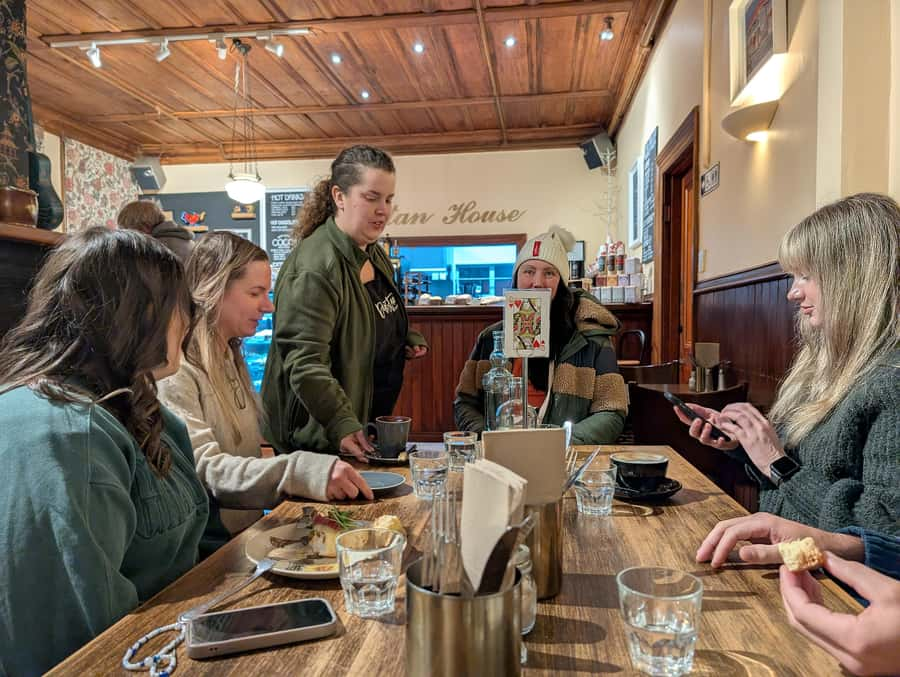
Clyde is the first proper break, with about 15 minutes set aside for coffee, tea, brunch, and sightseeing. The stop is at Dunstan House, a restored hotel dating from 1898.
The building’s appeal comes from its connection to the gold-rush era. It once served prospectors and other people crossing the district, and its old-fashioned interior gives you a quick sense of how travel worked here before modern highways and rail connections.
Food is available for purchase, but morning tea is not included in the tour price. Fifteen minutes is enough for a drink or small bite, but you should not expect a leisurely café meal. If you need a substantial breakfast, eat before pickup or carry something suitable for the road.
I like this stop because it is short but purposeful. You are not simply pulling over at a generic rest area. You are stepping into a building connected to the very history that shaped Central Otago.
More Train Journeys around New Zealand:
- Northern Explorer Train Journey from Wellington to Auckland
★ 4.0 · 513 reviews - Arthur’s Pass Discovery and TranzAlpine Train – Small Group Tour
★ 5.0 · 272 reviews - Arthur’s Pass: TranzAlpine Train and Castle Hill Day Tour
★ 4.8 · 270 reviews - Northern Explorer Train Journey from Auckland to Wellington
★ 4.0 · 204 reviews
Ophir and the old Manuherikia River bridge
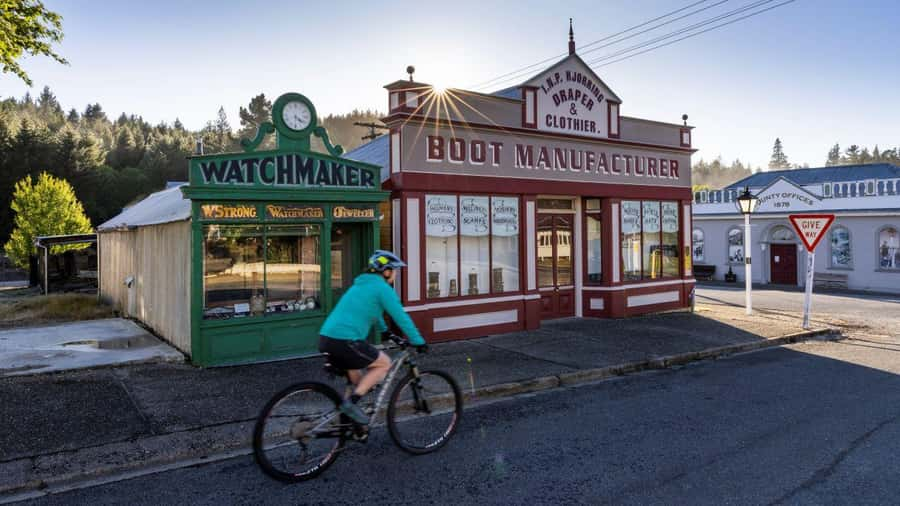
The next stop is Ophir, where you have about five minutes for photographs and a brief look around. The highlight is the 1880 suspension bridge crossing the Manuherikia River.
This is a quick stop, so think of it as a photo opportunity rather than a town visit. The bridge gives you a clear, physical link to 19th-century engineering, and the river setting adds a good contrast to the dry hills and open farmland around it.
Five minutes can feel tight if you are slow getting out of the vehicle or want several photos. Wear shoes you can move in easily, keep your camera ready, and listen closely for the departure time. The benefit of the short stop is that it adds another distinctive place without making the overall day much longer.
St Bathans, Blue Lake, and a vanished mining town
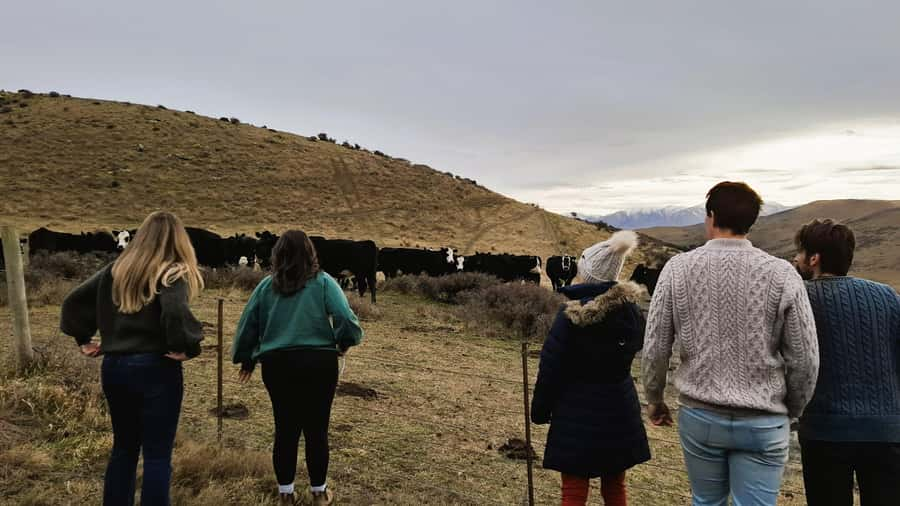
St Bathans receives the longest road stop, about 30 minutes. That extra time is well used. You can walk through the old settlement, see preserved buildings, and visit Blue Lake, a body of water created by mining.
St Bathans has an atmospheric quality that is hard to find in a modern town. Gold once drew people here, but the settlement now feels quiet and out of the way. The remaining buildings and old stories give you a stronger sense of Central Otago’s past than a roadside sign ever could.
Blue Lake is especially interesting because it was formed by mining rather than by an untouched natural process. Its presence shows how strongly gold extraction changed the ground and waterways. You get a scenic stop, but also a reminder that the region’s history was built on hard work and environmental change.
Thirty minutes gives you enough time for a short walk and photographs. It does not allow a long exploration of every corner, and the route includes walking on historic sites. Comfortable shoes are a must. If you prefer museums, long guided talks, or slow town visits, you may find this portion too brief. If you enjoy unusual places and a quick look at a former mining settlement, it is one of the day’s most memorable stops.
Boarding the Taieri Gorge Train at Pukerangi
At Pukerangi, the road journey ends. You receive another safety briefing before boarding the Taieri Gorge Train, and your road guide says goodbye.
This handover is worth understanding before you book. The road portion is fully guided, but the train section is a separate rail experience. You are not spending all eight hours with one guide, and the style changes from commentary and short walks to sitting back and watching the country pass.
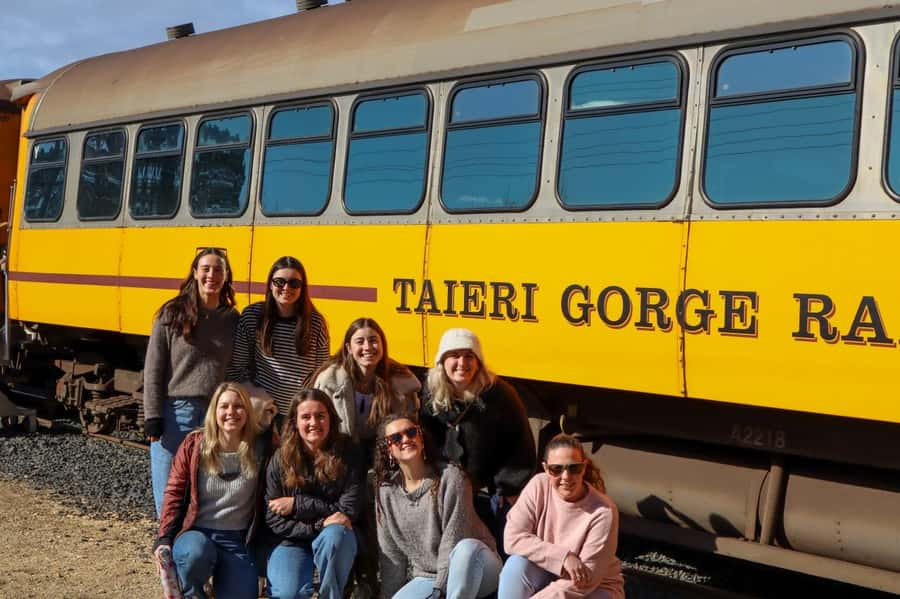
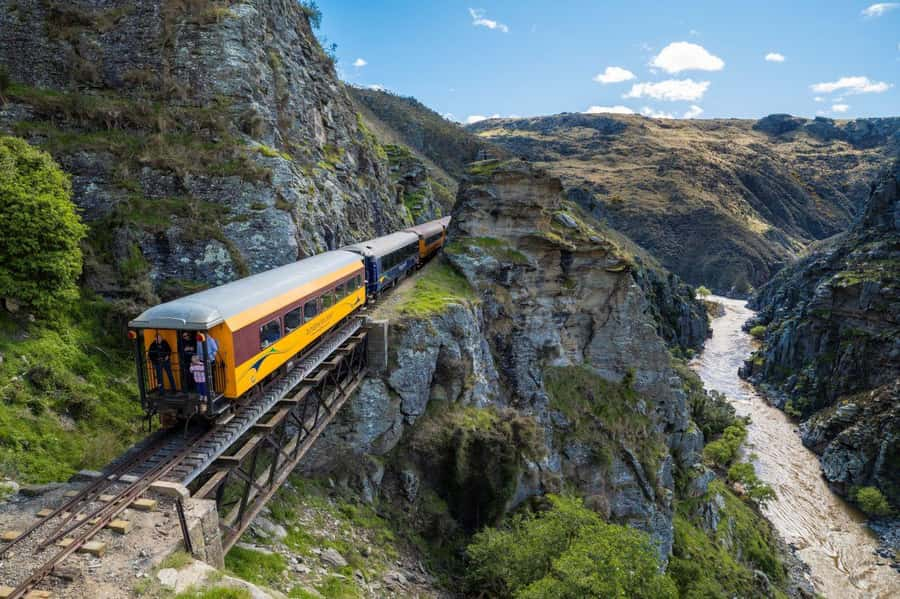
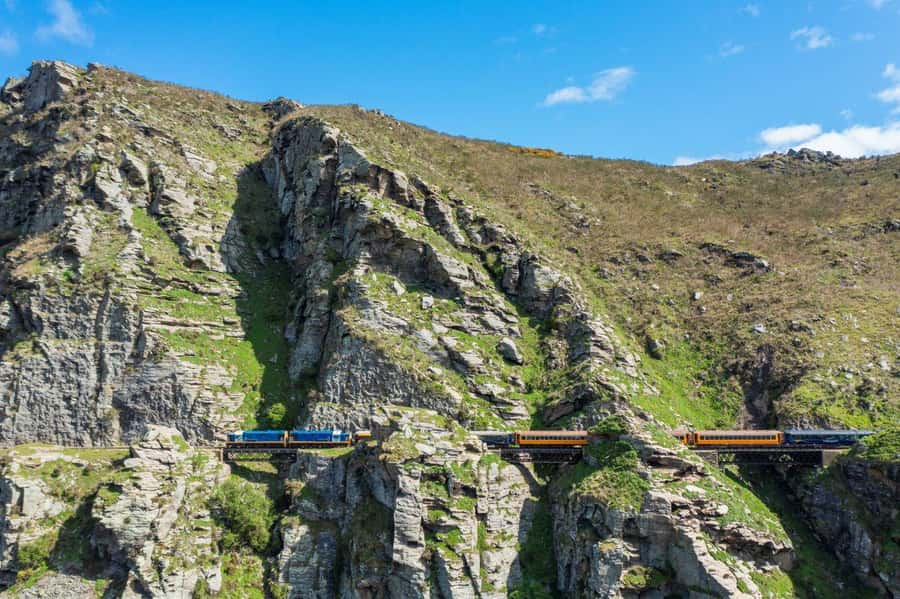
The train runs for about two hours toward Dunedin. It travels through the Taieri Gorge, with views of steep cliffs, river valleys, viaducts, and old tunnels. The railway gives you access to scenery that is difficult to appreciate from a normal road. It also lets you stop thinking about directions and simply watch the route unfold.
I find the rail section particularly valuable on a one-way journey. A normal transfer can make the middle of the South Island feel like dead time. Here, the train becomes the final attraction, and the arrival in Dunedin feels like the end of a proper day out rather than the end of a long drive.
Weather can change quickly in the high country, so bring layers even if Queenstown is warm when you leave. Sunscreen and water are also sensible. Water and snacks are supplied, but you may want additional food if you tend to eat between scheduled stops.
Arriving at Dunedin Railway Station
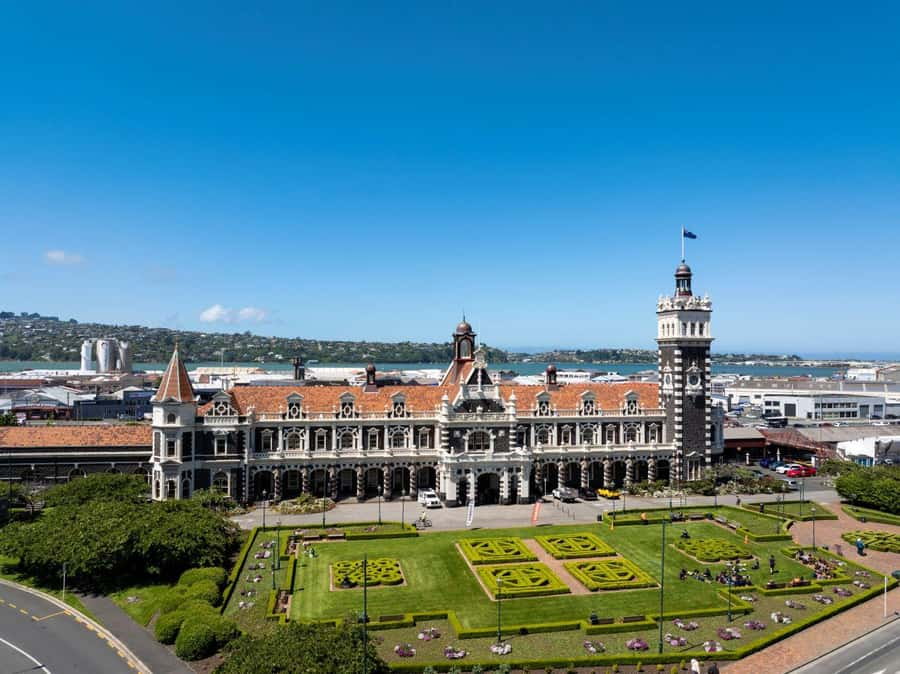
The trip ends at Dunedin Railway Station, one of the city’s most recognizable buildings. Its ornate Edwardian design makes the arrival point more interesting than a standard bus terminal.
From the station, you are on your own for the next stage of your visit. The included drop-off is at the railway station, not at a Dunedin hotel. Plan your onward transport and accommodation location before the day begins.
The arrival point also gives you an immediate introduction to Dunedin’s architectural character. The city is known for Scottish influence, historic buildings, and a strong cultural identity. Even if you are continuing straight to your hotel, the station is a fitting place to begin your time there.
Comfort, group size, and practical limits
A maximum of 16 people is a useful middle ground. You get more personal space than on a large coach, while still having enough people for a lively group atmosphere. The Mercedes-Benz vehicle is intended to make the road portion comfortable, especially during a day with several hours of driving.
The experience involves walking in Clyde, Ophir, and St Bathans, although the supplied details do not give a total walking distance. It is not suitable for wheelchair users. Comfortable clothing and shoes will make the short stops much easier.
Smoking is not allowed in the vehicle, and drinks are not permitted inside. Bring a camera, sunscreen, and water, and dress for changing weather. All passenger names are required when booking.
The tour operates in English. Guide names are not provided, so you should not book expecting a particular host. Pickup is included, but only from the listed Queenstown locations or an agreed nearby meeting point.
Who should book this one-way experience?
I would recommend it to you if you are moving from Queenstown to Dunedin and want to make the journey part of your holiday. It suits people who like scenery, old settlements, short walks, and a mix of guided road travel and rail.
It is also a good match if you do not want to rent a car. You can see several Central Otago places without managing the roads yourself, and the small group keeps the trip more personal than a large sightseeing coach.
I would think twice if you want a slow day with long visits at each stop. The schedule is fixed, Ophir is only a five-minute photo stop, and the Clyde break is short. You also need to be comfortable with an eight-hour day and some walking.
The free cancellation deadline is 24 hours before departure, and you can reserve now and pay later. Those terms help if your South Island plans are still shifting, but the main decision is simpler: do you want a scenic transfer with added history and rail, or do you only need the fastest route between the two cities?
Should you book the Queenstown to Dunedin journey?
Book it if you value the route as much as the destination. The combination of Gibbston, Kawarau Gorge, Lake Dunstan, Clyde, Ophir, St Bathans, and the Taieri Gorge Train gives you a broad look at Central Otago in one day.
The strongest reasons to choose it are the small-group vehicle, the unusual gold-rush stops, and the two-hour train ride into Dunedin. The main tradeoff is limited time at each roadside location and a full eight hours of travel.
For a straightforward transfer, it costs more than simply arranging transport. For a scenic, guided journey that includes the train ticket and hotel pickup, the $173 price offers solid value. I would choose it for a first visit to this part of New Zealand, especially when you want to see the valleys and farmland rather than rush from one city to the next.
FAQ
How long does the Queenstown to Dunedin experience take?
The experience lasts about eight hours, including the road journey, stops, and the Taieri Gorge Train ride.
Where does the tour begin?
Pickup is available from selected Queenstown hotels, hostels, resorts, and the Frankton Terminus. If your accommodation is not listed, choose the nearest available pickup point.
Where does the tour finish?
The experience finishes at Dunedin Railway Station.
How do I travel during the experience?
You travel by Mercedes-Benz vehicle from Queenstown to Pukerangi, then board the Taieri Gorge Train from Pukerangi to Dunedin.
Is the Taieri Gorge Train ticket included?
Yes. The train ticket from Pukerangi to Dunedin is included in the price.
Is food included?
Water and snacks are provided. Morning tea at Dunstan House is available for purchase but is not included.
How large is the group?
The experience is limited to a maximum of 16 people.
Is the tour suitable for wheelchair users?
No. The experience is not suitable for wheelchair users and includes walking at historic towns and sites.
What should I bring?
Bring comfortable shoes, a camera, sunscreen, water, and comfortable clothing. Because weather can change quickly, dress in layers or bring suitable extra clothing.
New on the timetable around New Zealand
- Ultimate self-drive rail car journey★ 5.0 · 5 reviews
- Queenstown to Dunedin with Taieri Gorge Train One-Way Tour★ 5.0 · 5 reviews
- 2 Day West Coast Glaciers and TranzAlpine Train: Queenstown to Christchurch★ 3.0 · 3 reviews
- Franz Josef to Christchurch Small-Group Tour W TranzAlpine Train★ 4.5 · 2 reviews
- Dunedin to Queenstown One Way Tour Including Taieri Gorge Train★ 5.0 · 6 reviews
- Captivating Railway Journey in Coromandel★ 4.5 · 36 reviews
- Arthur’s Pass with optional TranzAlpine Train (Small Group Tour)★ 5.0 · 13 reviews
- Kaikoura Whale Watch Day Tour from Christchurch including Coastal Pacific Train★ 5.0 · 6 reviews
Other Scenic Railways worth a seat
Lake Como Cruise, St. Moritz & Bernina Red Train
Read our review →
Self-Guided Kuranda Trip with Train and Skyrail
Read our review →
Bernina Red Train, Swiss Alps & St Moritz From Milan
Read our review →
Milan to St. Moritz: Scenic Bernina Train Tour with Guide
Read our review →
Bernina Train, Swiss Alps & St. Moritz Day Trip
Read our review →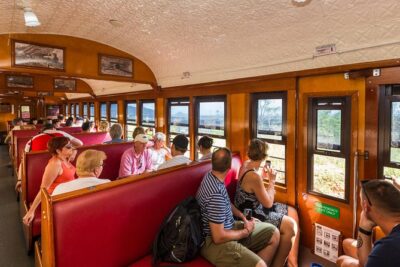
Lists this ride appears on