
Review · NEW ZEALAND
Queenstown to Dunedin with Taieri Gorge Train One-Way Tour
The best part of this Queenstown to Dunedin trip is that it turns a long transfer into a full day of Central Otago scenery and local history. You leave by Mercedes-Benz vehicle, follow old gold-mining routes through the interior, then switch to the Taieri Gorge Train for a dramatic final run into Dunedin.
I like the small maximum group of 15, which gives the road portion a more personal feel. I also like the mix of quick stops: Dunstan House for morning tea, an old suspension bridge near Ophir, and St Bathans with its strange Blue Lake.
The catch is the early 6:30 am start and the long 10-hour day. You also pay $179.97 per person, and lunch is not included. For a simple point-to-point transfer, that is a lot. For transport plus a guided Central Otago tour and train ticket, the price makes more sense.
Key points at a glance
- The trip changes vehicles at Pukerangi: Your guide takes you from Queenstown to the remote highlands, then you board the Taieri Gorge Train for the final two hours to Dunedin.
- St Bathans is the most unusual stop: You get 30 minutes to see a former gold-mining settlement and its Blue Lake, formed by mining.
- The road portion has real local character: Gibbston, Kawarau Gorge, Cromwell, Clyde, and Ophir connect the day to Central Otago’s gold rush past.
- You can bring luggage: The tour allows one large bag and one small bag per person, useful if Dunedin is your next base.
- The group stays small: The maximum is 15 people, and the road trip is guided rather than being a self-drive transfer.
- Plan for an early, active day: There is walking at the stops, and the tour is not recommended for people with severe mobility difficulties.
A transfer with a story to tell
Many Queenstown to Dunedin journeys are simply a matter of getting from one city to another. This one takes the long way for good reason. Central Otago has a dry, open character, with river valleys, rocky gorges, old settlements, and traces of the gold rush scattered along the route.
The day begins with hotel pickup in Queenstown at about 6:30 am. Pickup is available only from selected locations, so check that point before booking. You then travel east through the Gibbston wine region and the Kawarau Gorge, leaving Queenstown’s alpine setting behind.
The road journey is fully guided. Colin is one of the guides who has led this route, and his detailed knowledge of the countryside was a major strength of the experience. You can ask questions during the drive, which matters here because much of Central Otago’s appeal is tied to places that are easy to pass without understanding.
The vehicle is a Mercedes-Benz, and the maximum group size is 15. That does not make the day private, but it should feel more manageable than a large coach tour. You get a guide, transport, and several short stops before joining the train.
More Scenic Railways in New Zealand:
- TranzAlpine Train, Arthur’s Pass and Castle Hill Day Trip
★ 5.0 · 426 reviews - Coastal Pacific Train Journey from Picton to Christchurch
★ 4.5 · 345 reviews - TranzAlpine Train Journey: Christchurch to Greymouth
★ 4.5 · 312 reviews
Gibbston, Kawarau Gorge, and Lake Dunstan
The first section introduces two of the region’s strongest visual contrasts. Gibbston is known for vineyards, while Kawarau Gorge brings steep rock walls and a tighter, more rugged setting. You will be on the move here, so treat this stretch as a scenic introduction rather than a sightseeing stop with time to wander.
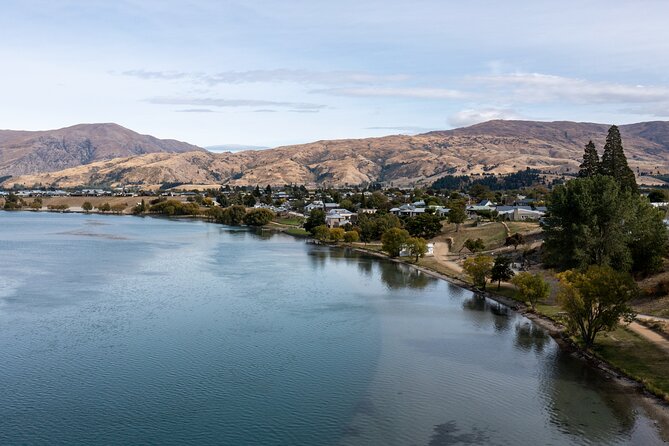
The route continues toward Lake Dunstan and Cromwell. Lake Dunstan’s water adds a broad, reflective element to the drive, while Cromwell brings the story back to gold mining and settlement. The town sits near the meeting point of the Clutha and Kawarau Rivers, an important detail for understanding why this area became a natural route through the interior.
I like this part because it gives you context before the smaller stops. The day is not just a series of photo breaks. You see how rivers, roads, and mountain passes shaped movement through Central Otago.
You should also keep your expectations sensible. The tour covers a great deal of ground, so views are often enjoyed from the vehicle. If you want long walks beside the lake or extended time in Cromwell, this is not designed for that.
Morning tea at Dunstan House in Clyde
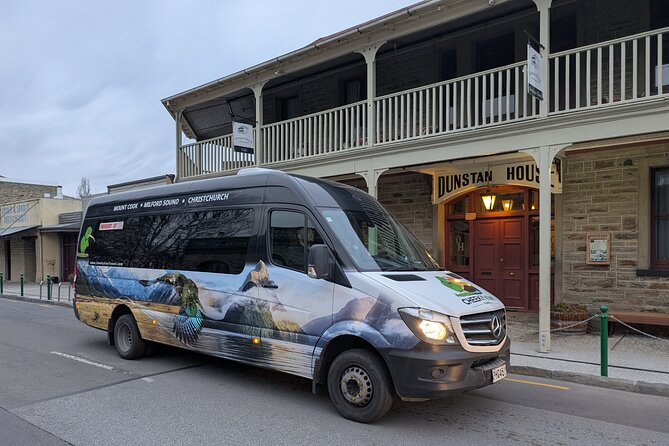
Clyde is one of the more appealing places on the route, and Dunstan House gives the morning a useful pause. The building dates from 1898 and was once a hotel for gold prospectors and other people moving through the district. It has been restored, with antique details and an old-world atmosphere.
The stop lasts about 15 minutes. Food and morning tea are available for purchase, but they are not included in the tour price. That short time is enough for a drink or snack, though you should not expect a full café visit or a leisurely look around Clyde.
This is one of the small details that adds value to the day. A modern vehicle can get you across Central Otago quickly, but a brief stop in an old hotel makes the route feel connected to the people who once crossed it for work, trade, and gold.
Bring water and consider carrying a snack of your own. Lunch is not included, and the listed stop is specifically a morning tea break, not a guaranteed meal stop.
Ophir Bridge and a five-minute photo stop
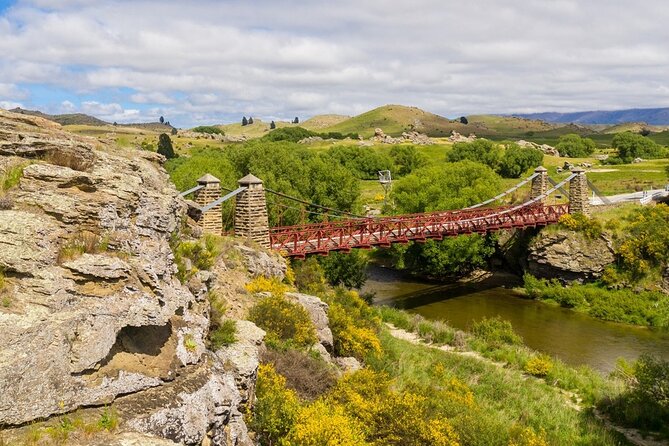
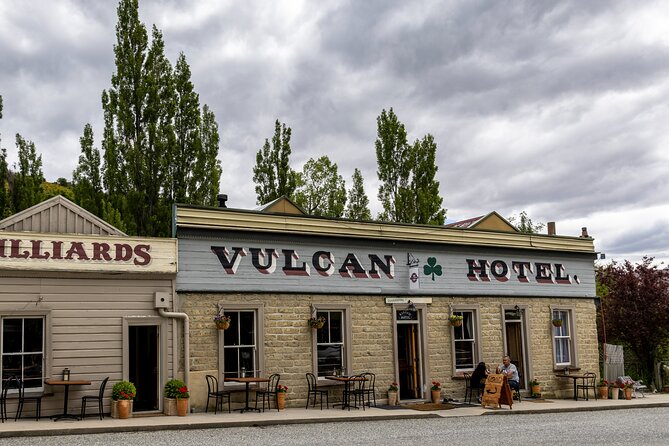
Near Ophir, the tour pauses at an 1880 suspension bridge over the Manuherikia River. The stop is only about five minutes, so this is primarily a photography break.
The bridge offers a quick look at 19th-century engineering and one of the older settlements in Central Otago. It is not a long visit, but it breaks up the drive and gives you a chance to step out, stretch, and see the river setting directly.
I would not book this tour for the bridge alone. Its value comes from the way these short stops work together. Dunstan House provides a historic building, Ophir provides a structure and river view, and St Bathans provides the most atmospheric settlement of the day.
Because the stop is brief, have your camera ready and listen for the guide’s instructions. The schedule needs to stay on track so you can reach Pukerangi in time for the train.
More Train Journeys around New Zealand:
- Northern Explorer Train Journey from Wellington to Auckland
★ 4.0 · 513 reviews - Arthur’s Pass Discovery and TranzAlpine Train – Small Group Tour
★ 5.0 · 272 reviews - Arthur’s Pass: TranzAlpine Train and Castle Hill Day Tour
★ 4.8 · 270 reviews - Northern Explorer Train Journey from Auckland to Wellington
★ 4.0 · 204 reviews
St Bathans and the Blue Lake
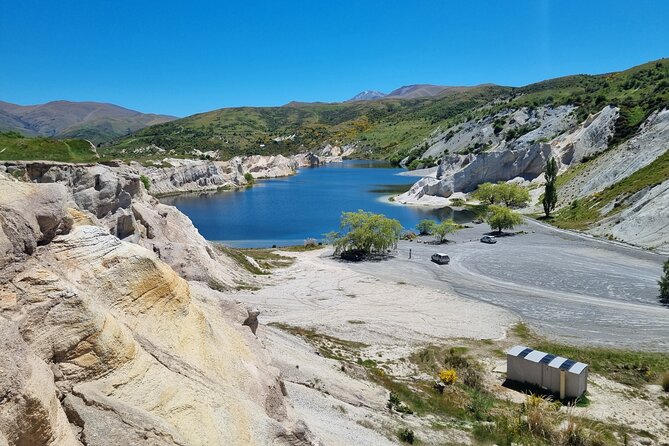
St Bathans is the most distinctive road stop. This former gold-mining settlement is now a quiet, atmospheric place with preserved buildings and a Blue Lake created by mining.
You get about 30 minutes here, the longest stop before the train. That gives you time to walk around, look at the old buildings, and see the lake. The name can sound cheerful, but the setting is described as haunting, which fits a place shaped by a vanished mining economy.
This stop is valuable because it shows the physical mark left by gold extraction. You are not just hearing about the gold rush in a museum or from a road sign. You can see how mining altered the ground and created the lake.
Thirty minutes is enough for a taste, not a full exploration. Wear shoes suitable for moderate walking, and do not assume every surface will be smooth. The tour requires a moderate level of physical fitness and is not recommended for people with severe mobility difficulties.
Boarding the Taieri Gorge Train at Pukerangi
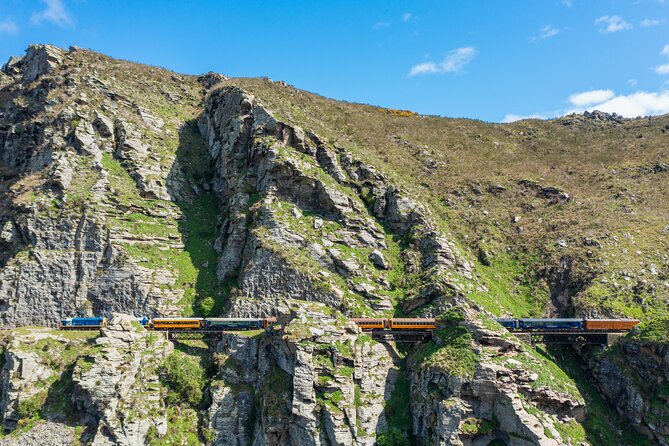
At Pukerangi, the road portion ends and the rail portion begins. You say goodbye to your guide and board the Taieri Gorge Train for the two-hour journey into Dunedin.
This change is central to the tour’s appeal. You are not riding the train from Queenstown, and you are not spending the entire day on the road. Instead, the guide handles the less accessible inland route, then the heritage railway takes over for the final scenic section.
Pukerangi is remote, so there is no obvious city-terminal feel to the handover. The tour schedule is built around this transfer, and you should be ready to board when instructed. The train ticket is included, which is important when judging the total price.
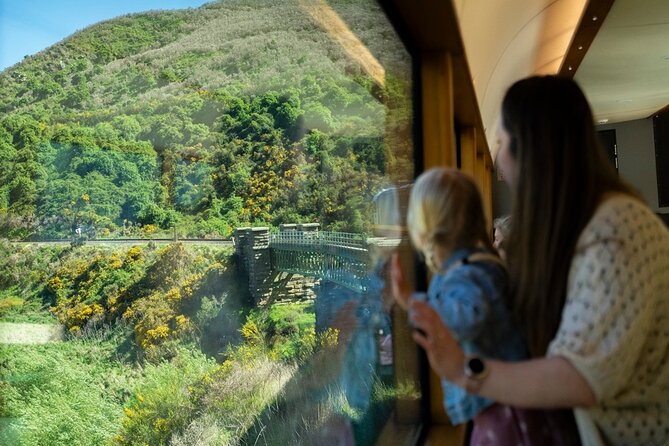
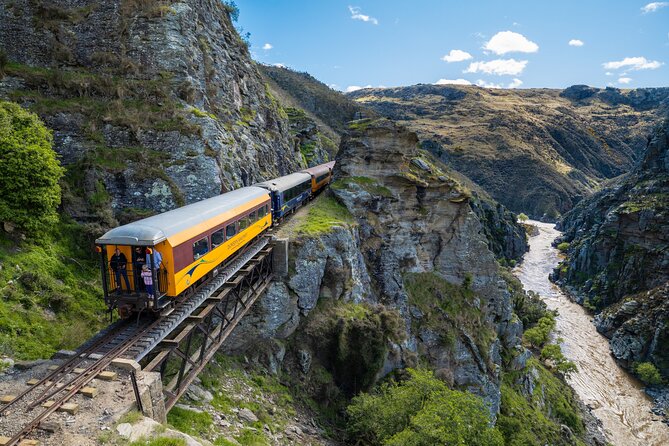
The train runs through the Taieri Gorge, with high cliffs, river valleys, viaducts, and hand-carved tunnels. The route follows an old rail corridor linked to the early development of Central Otago. The railway is not just a comfortable way to finish the trip. It is the main attraction of the second half.
Two hours through the Taieri Gorge
The train journey lasts about two hours and offers a different pace from the road. Instead of stopping every few minutes, you settle into a continuous view of the gorge and surrounding country.
Expect rugged rock walls, old tunnels, tall viaducts, and changing views along the river valleys. The train allows you to watch the scenery unfold without concentrating on the road. That makes the final stretch feel less like a transfer and more like a proper rail excursion.
The railway also connects the scenery to Central Otago’s working past. The route was built through difficult country, and the tunnels and bridges show the effort required to link the interior with Dunedin. You get a sense of the engineering challenge even during a short ride.
The train section is included in the tour price, but you should remember that it is only two hours. If your main goal is a lengthy heritage railway experience, check the timing carefully. The overall day is broad and varied, rather than focused only on the train.
Arriving at Dunedin Railway Station
The journey ends at Dunedin Railway Station, an ornate Edwardian building that is one of the city’s most recognizable landmarks. You step off the train in central Dunedin rather than being taken to a hotel.
That last detail matters. Hotel drop-off in Dunedin is not included, so you need to arrange your onward connection from the station. The tour is best for people who are comfortable finishing independently, especially if they already know where they are staying.
The arrival point is also useful for starting a Dunedin visit. The city is known for Scottish connections, cultural attractions, and distinctive architecture. This tour gives you a memorable entrance rather than leaving you at a roadside transfer point.
You can bring one large bag and one small bag per person. That makes the tour practical for moving between cities, but keep your luggage within those limits. The vehicle has space for the stated allowance, not an unlimited amount of baggage.
Is $179.97 a fair price?
At $179.97 per person, this is not the cheapest way to travel from Queenstown to Dunedin. But the comparison should not be with a basic bus or a direct transfer. The price includes hotel pickup from selected Queenstown locations, a guided road journey, the Mercedes-Benz vehicle, several sightseeing stops, luggage space, and the Taieri Gorge Train ticket.
The value is strongest if you want to see Central Otago and need to reach Dunedin on the same day. You avoid arranging separate transport, finding the old settlements yourself, and buying a train ticket independently.
The value is weaker if you only need fast transport or already plan to rent a car. A self-drive trip can give you more time in Cromwell, Clyde, or St Bathans, although it also puts navigation and driving responsibility on you.
Food costs extra. Morning tea at Dunstan House is available for purchase, and lunch is not included. Bring money for food and plan ahead so you are not relying on a short stop to cover the entire day.
Timing, comfort, and practical limits
The 6:30 am start is the biggest practical hurdle. You need to be ready early, and the day lasts around 10 hours. That is a long outing, but it is also the reason the tour works as a same-day Queenstown to Dunedin connection.
The road vehicle offers more comfort than a basic shuttle, and the small group limit helps. Still, you will spend substantial time sitting, first in the vehicle and later on the train. If you prefer slow travel with long stops, the schedule may feel tight.
Moderate walking is involved at the stops and around the train arrival. Children aged seven and under must use a child safety car seat. You can bring your own, or one can be provided for NZD $20 if requested at least 24 hours ahead.
The tour can be canceled if bad weather makes the trip unsuitable or if minimum numbers are not reached. In either case, you are offered another date or experience, or a full refund. For your own cancellation, you receive a full refund if you cancel at least 24 hours before the start time. Changes or cancellations inside that window are not accepted.
Who should book this Queenstown to Dunedin trip?
I would choose this tour if I wanted to travel between the two cities but did not want to lose a day to a plain transfer. It suits you if old settlements, railway engineering, gorges, and wide Central Otago views sound better than a direct ride.
It is especially useful for:
- People moving from Queenstown to Dunedin with one large and one small bag
- Visitors who want a guided introduction to Central Otago
- Rail fans who want the Taieri Gorge Train included
- Anyone who prefers not to drive through unfamiliar inland roads
- Small groups looking for a more personal alternative to a large coach
I would think twice if you need hotel drop-off in Dunedin, dislike early starts, have severe mobility limitations, or want a relaxed pace with long visits in each town. The day is well packed, and the stops are short by design.
Should you book it?
Book this experience if you want the journey itself to be part of your New Zealand trip. The strongest features are the well-informed road guidance, the unusual stop at St Bathans, and the final Taieri Gorge rail ride into Dunedin.
Skip it if your only goal is the cheapest or quickest connection. At $179.97, you are paying for scenery, interpretation, multiple stops, and a heritage train, not just a seat between cities. For the right kind of itinerary, that is a fair trade.
FAQ
What time does the tour start?
The tour starts at 6:30 am.
Is hotel pickup included in Queenstown?
Yes, hotel pickup is included from selected Queenstown locations.
Does the tour include hotel drop-off in Dunedin?
No. The journey ends at Dunedin Railway Station, and hotel drop-off is not included.
How long does the full experience take?
The experience lasts approximately 10 hours.
Is the Taieri Gorge Train ticket included?
Yes. The ticket from Pukerangi to Dunedin is included.
How long is the train journey?
The Taieri Gorge Train ride lasts about two hours.
Can I bring luggage?
Yes. The tour allows one large bag and one small bag per person.
Is lunch included?
No. Lunch is not included. Food is available for purchase during the morning tea stop at Dunstan House.
Is the tour suitable for young children?
Children aged seven and under must travel in a child safety car seat. You can provide your own, or one can be provided for NZD $20 with at least 24 hours notice.
New on the timetable around New Zealand
- Ultimate self-drive rail car journey★ 5.0 · 5 reviews
- 2 Day West Coast Glaciers and TranzAlpine Train: Queenstown to Christchurch★ 3.0 · 3 reviews
- Franz Josef to Christchurch Small-Group Tour W TranzAlpine Train★ 4.5 · 2 reviews
- Dunedin to Queenstown One Way Tour Including Taieri Gorge Train★ 5.0 · 6 reviews
- Captivating Railway Journey in Coromandel★ 4.5 · 36 reviews
- Arthur’s Pass with optional TranzAlpine Train (Small Group Tour)★ 5.0 · 13 reviews
- Kaikoura Whale Watch Day Tour from Christchurch including Coastal Pacific Train★ 5.0 · 6 reviews
- Taumarunui: Forgotten World Rail Cart Tour with Lunch★ 5.0 · 12 reviews
Other Scenic Railways worth a seat
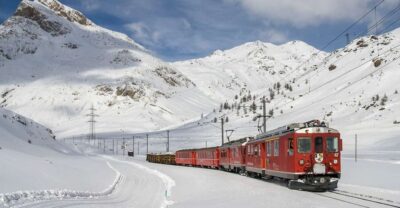
Lake Como Cruise, St. Moritz & Bernina Red Train
Read our review →
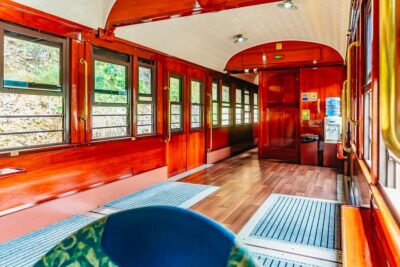
Self-Guided Kuranda Trip with Train and Skyrail
Read our review →
Bernina Red Train, Swiss Alps & St Moritz From Milan
Read our review →
Milan to St. Moritz: Scenic Bernina Train Tour with Guide
Read our review →
Bernina Train, Swiss Alps & St. Moritz Day Trip
Read our review →
Lists this ride appears on