
Review · NEW ZEALAND
Northern Explorer Train Journey from Wellington to Auckland
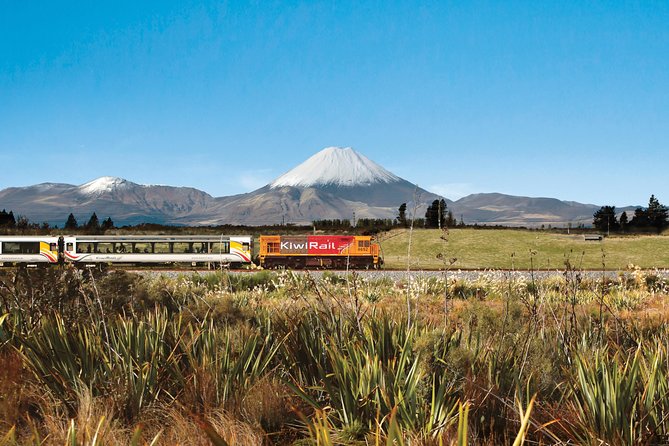
The Northern Explorer’s best moment comes high in the Central Plateau, where Tongariro, Ngauruhoe, and Ruapehu appear beyond lava fields, forests, and sometimes snow. This is not simply transport from Wellington to Auckland. It is a full day of changing scenery, with the train doing the driving while you watch New Zealand roll past.
I like the open-air viewing decks, which give you a much better feel for the viaducts, gorges, and mountain air than a sealed window. I also like the GPS-triggered commentary, comfortable seats, and café carriage. The catch is the length: 11 hours is a serious commitment, and the food selection and prices may not suit every budget.
Key points to know before you board
- Tongariro National Park is the highlight: Watch for the three volcanic peaks, old lava flows, beech forest, and snow-covered ground.
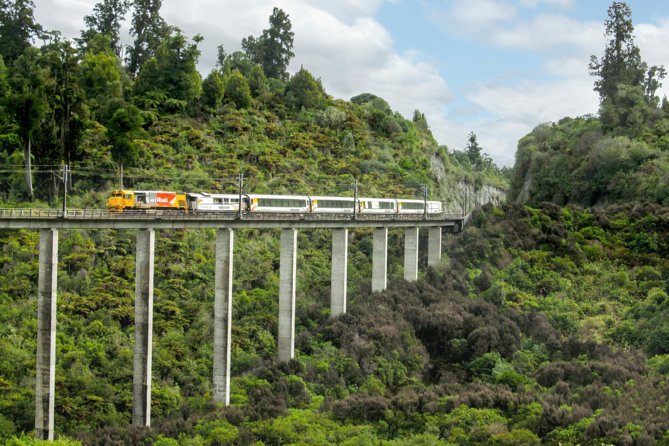
- The Raurimu Spiral is a clever railway feat: The train winds through steep country near National Park, crossing gorges and viaducts along the way.
- The open-air deck is worth using: It gives you clearer photographs and a stronger sense of the route, but it can be windy and the viewing area sits fairly low.
- You get practical comfort for a long day: Seats, toilets, a licensed café, large windows, and headphones with GPS commentary are all provided.
- Ask about the best side of the carriage: For the Wellington to Auckland direction, the A and B side was recommended for better viaduct views.
- Pack patience, and perhaps extra food: The train café sells snacks and light meals, but some onboard prices have drawn complaints.
Wellington Station and the 7:55 am departure
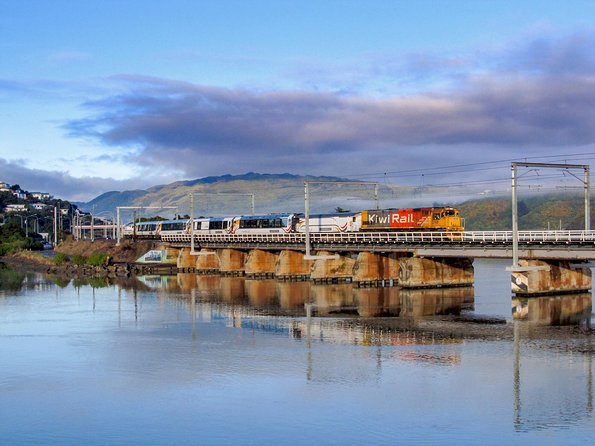
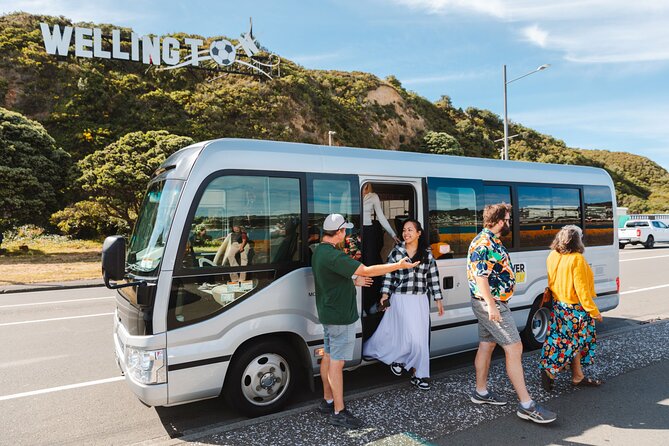
Your day begins at Wellington Station on Bunny Street. The scheduled departure is 7:55 am, and you should arrive at least 20 minutes early to check in, show your voucher, and receive your boarding pass.
That early start matters. This is a full-day crossing, not a short sightseeing ride, and a rushed beginning makes the first few hours less pleasant. Wellington Station is near public transport, so you can make your way there without hotel pickup. The fare includes the one-way rail journey, commentary, taxes, fees, and handling charges, but not food, drinks, or transport to and from the stations.
Once seated, settle in quickly and organize your day. Keep your phone, camera, water, reading material, and any food you bring close by. You will have plenty of time to relax, but the most dramatic views arrive in sections, so you will not want to spend the whole morning half-asleep.
The train uses specially designed seats with generous room to sit back. Large windows make the ordinary parts of the route easy to watch, while headphones at each seat connect you to the GPS-triggered commentary. The narration helps explain towns, engineering works, and natural features as you pass them, so you are not left guessing at every bend.
More Train Journeys around New Zealand:
- TranzAlpine Train, Arthur’s Pass and Castle Hill Day Trip
★ 5.0 · 426 reviews - Coastal Pacific Train Journey from Picton to Christchurch
★ 4.5 · 345 reviews - TranzAlpine Train Journey: Christchurch to Greymouth
★ 4.5 · 312 reviews
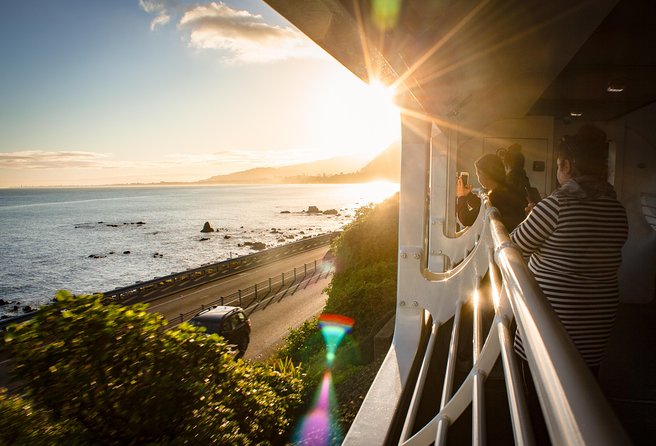
Along the Kapiti Coast and through green farmland
The opening stretch gives you a pleasant introduction to the North Island. The train passes the Kapiti Coast, rocky coastal sections, rolling farmland, and small country towns. This is not one continuous parade of famous sights. Much of the pleasure comes from watching the country change slowly outside your window.
You will see green fields, sheep country, and scattered settlements. The train offers a calm way to cover ground that can feel tiring by car, especially if you are not used to driving on the left or handling narrow roads. You can read, talk, look out the window, or simply let the gentle movement of the carriage carry you along.
I would not book this journey expecting every minute to be dramatic. Some stretches are quiet and rural. That is part of the point, but it also explains why some people find the ride too long. The scenery is strongest when the route reaches the coast, the Central Plateau, the mountain country, and the railway structures. Between those sections, you need to enjoy the rhythm of the train itself.
The audio commentary adds useful context without requiring a guide to walk through the carriage. It is self-guided, so you have freedom to listen when you want. A few passengers have had trouble with the headphones or audio equipment, so tell staff if yours is not working rather than missing the commentary for the whole day.
Tongariro National Park and the volcanic peaks
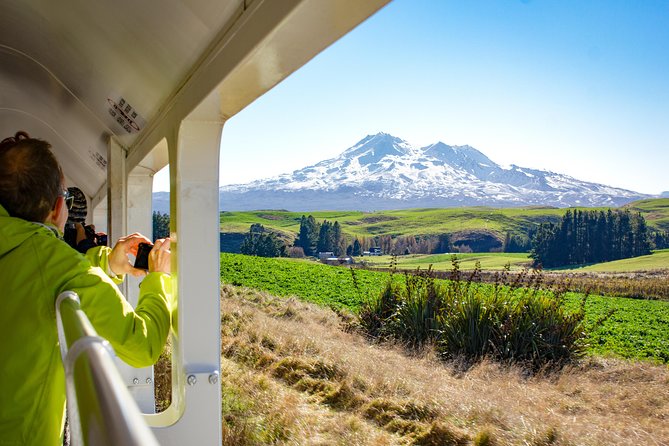
The central section is the reason most people choose the Northern Explorer. The train enters Tongariro National Park, a place shaped by volcanic activity, severe weather, and high elevation. The scenery can shift from dense beech forest to dark lava fields and snow-covered ground.
Watch for Tongariro, Ngauruhoe, and Ruapehu. Their appearance depends on cloud and weather, but when the peaks are clear, the view is memorable. Ruapehu is the tallest and often carries snow, while Ngauruhoe has the familiar steep volcanic form. Tongariro adds another strong profile to the group.
This is where the open-air viewing deck earns its place. Step outside for a clearer view of the railway line, bridges, rock cuts, and open country. The deck is excellent for photographs, but it is not a quiet outdoor lounge. Wind can be strong, and the viewing area is low enough that taller people may need to bend down to see comfortably through the openings.
Use the deck in short spells. Take your photographs, listen to the train crossing the open country, then return to your seat for warmth and comfort. The deck may be busy when the mountains or viaducts come into view, so having a camera ready saves time.
Weather shapes the experience more than any brochure can promise. Clear conditions may reveal the volcanic peaks in full. Cloud can hide them, especially around the high country. The operator requires good weather for the journey and may offer another date or a full refund if poor conditions lead to cancellation.
The Raurimu Spiral and the railway’s engineering drama
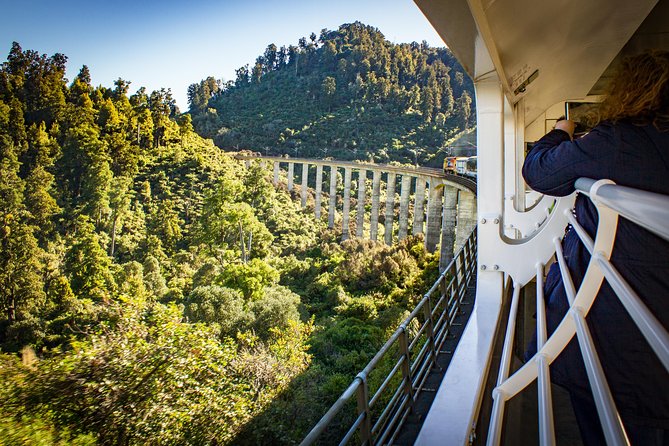
Near National Park, the route reaches the Raurimu Spiral, one of the journey’s most interesting pieces of engineering. The railway has to handle steep terrain, so the line curves and changes direction rather than charging straight through the mountains.
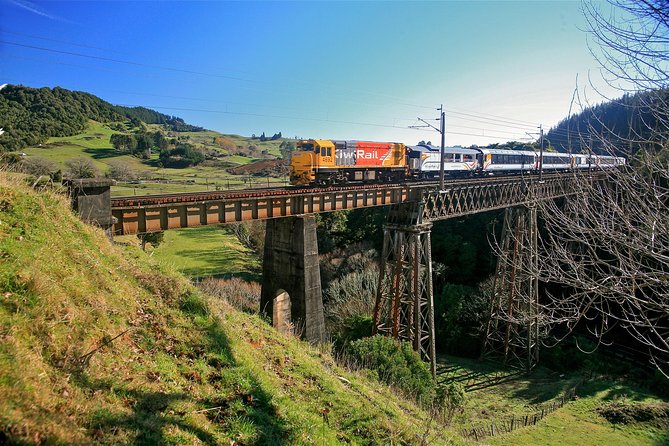
You experience the spiral as a series of bends, cuttings, bridges, and changing views rather than as one obvious attraction. The GPS commentary helps explain what is happening. The route also crosses river gorges and viaducts, giving the viewing deck another useful role.
Ask staff about seating before departure if seeing the viaducts is important to you. Advice for the Wellington to Auckland direction points to the A and B side of the train for the best views from some structures. Seating arrangements can affect what you see, and a quick question at the station is easier than trying to move once the carriage is full.
The train may travel through the most scenic areas without making long sightseeing stops. This is a moving tour, not a hop-on, hop-off trip. You cannot step out for a walk in the national park or pause at a viewpoint, so choose it for the passing views and the ease of the ride.
Same tracks, a different carriage:
- Arthur’s Pass Discovery and TranzAlpine Train – Small Group Tour
★ 5.0 · 272 reviews - Arthur’s Pass: TranzAlpine Train and Castle Hill Day Tour
★ 4.8 · 270 reviews - Northern Explorer Train Journey from Auckland to Wellington
★ 4.0 · 204 reviews - Arthur’s Pass and TranzAlpine Train Day Tour from Christchurch
★ 4.5 · 202 reviews
Waikato countryside and the long run north
After the Central Plateau, the route moves toward the Waikato. The broad change in scenery is part of the appeal: volcanic country gives way to farmland, river country, and a more settled rural view.
This section can feel less exciting than the mountains. Some passengers find the final hours, especially closer to Hamilton, repetitive. Others enjoy the slower pace and the chance to watch ordinary New Zealand life outside the window. I would bring a book or download something to listen to, even if you plan to spend much of the day looking out.
The train is a good choice if you dislike driving long distances. You avoid traffic, navigation, fuel stops, and the pressure of staying alert for an entire day. You can stretch your attention between the window, café, commentary, and conversation. That is real value for anyone who would otherwise spend the same day behind the wheel.
It is less attractive if your only goal is to reach Auckland quickly. A flight will normally save considerable time, though it will not show you the North Island between the two cities. The Northern Explorer trades speed for a slower, fuller crossing.
Café food, seats, toilets, and onboard comfort
All trains have a licensed café carriage selling snacks, drinks, and light meals. Alcohol is available to purchase, but it is not included. The same applies to all food and drinks.
The café is useful, especially on an 11-hour ride, and the train’s dining area has been praised for good service and reasonable choices. Still, do not assume it will replace a full restaurant meal. One complaint concerned a very expensive croissant, while another person found the food disappointing. I would pack some food and use the café to supplement it, unless you have a meal package clearly confirmed in your booking.
The seats are comfortable, with enough room to relax for long stretches. Toilets are available, including an accessible toilet that has been singled out as particularly good. Air conditioning has not always met every passenger’s expectations, so light layers are sensible. Conditions can also change when you move from the enclosed carriage to the open deck.
The staff are an important part of the day. Conductor Bruce received particular praise for attentive care, and staff have helped people sort out onward transport when the train arrived. The service is generally friendly and practical, but you should still take responsibility for checking your boarding details and destination arrangements.
Arrival in Auckland and one detail to confirm
The listed end point is Auckland Strand in the Parnell area, Auckland 1010. The scheduled journey takes about 11 hours, so arrival is expected in the evening.
Check your exact arrival instructions before departure. One account describes confusion about changing from the train to a bus for the Auckland connection, while another mentions uncertainty about where the train stopped near the city centre. The supplied details identify Auckland Strand, but booking arrangements can matter, especially if your final accommodation is elsewhere.
This is not hotel-to-hotel transport. You arrange your own way to Wellington Station and onward from Auckland Strand. That is simple enough for independent visitors, but allow time to orient yourself after a long day on board.
Is $157.47 good value?
At $157.47 per person, the Northern Explorer is not the cheapest way to get from Wellington to Auckland. The fare makes more sense when you value the journey itself rather than treating it as a basic transfer.
You are paying for a full day of scenery, a comfortable seat, onboard toilets, the café, open-air viewing areas, and GPS commentary. You also avoid the strain of driving across the island. For someone who wants to see Tongariro National Park without hiring a car or arranging a separate mountain trip, that package can be worthwhile.
The value weakens if you are short on time, dislike long rides, or mainly want to arrive in Auckland. The final Waikato section may feel slow, and onboard food can add to the cost. Pack snacks, ask about seating, and treat the train as a scenic outing. That approach gives the fare a clearer purpose.
The advertised booking limit is a maximum of 15 people, though the train itself may feel busy and you may sit opposite someone you do not know. That can be part of the social charm, but it is worth knowing if you expect a private, quiet carriage.
Who should book the Northern Explorer?
I would choose this for a relaxed North Island crossing, especially if you enjoy rail travel, photography, rural scenery, and railway engineering. It suits couples, independent visitors, older passengers, and anyone who would rather watch the road than drive it.
Families can use it too, but children must be accompanied by an adult. The long duration requires patience, and the limited number of stops means you cannot easily break up the day with a walk.
I would skip it if speed is your main concern or if you have only a short stay in New Zealand. I would also think twice if poor weather is forecast and the mountain views are your main reason for booking. The train still crosses interesting country in cloud, but Tongariro is most rewarding when the peaks are visible.
Should you book it?
Book the Northern Explorer if you want the North Island crossing to be part of your holiday, not just a way to get between two cities. The Kapiti Coast, Tongariro mountains, Raurimu Spiral, viaducts, and Waikato countryside create a varied day, while comfortable seats and onboard service keep the effort low.
Choose a flight if you value time above scenery. If you do book, arrive early, ask about the best carriage side, bring snacks, use the viewing deck in short bursts, and confirm exactly how you will continue from Auckland Strand. With those details sorted, this is a memorable and practical way to see the North Island at ground level.
FAQ
How long is the Wellington to Auckland train journey?
The journey takes approximately 11 hours.
What time does the train leave Wellington?
The scheduled departure time is 7:55 am from Wellington Station.
Where does the journey begin?
You board at Wellington Station on Bunny Street, Pipitea, Wellington 6011.
Where does the journey end?
The listed end point is Auckland Strand in Parnell, Auckland 1010.
Is food included in the ticket?
No. Food and drinks are available to purchase from the licensed café carriage. Alcohol is also available to buy but is not included.
Is there commentary during the journey?
Yes. GPS-triggered audio commentary is available through headphones at every seat.
Can I go outside during the journey?
Yes. The train has open-air viewing decks. They can be windy, and the viewing area is relatively low.
Can I cancel or change my booking?
No. The experience is non-refundable and cannot be changed for any reason. If poor weather causes the operator to cancel, you will be offered another date or a full refund.
New on the timetable around New Zealand
- Ultimate self-drive rail car journey★ 5.0 · 5 reviews
- Queenstown to Dunedin with Taieri Gorge Train One-Way Tour★ 5.0 · 5 reviews
- 2 Day West Coast Glaciers and TranzAlpine Train: Queenstown to Christchurch★ 3.0 · 3 reviews
- Franz Josef to Christchurch Small-Group Tour W TranzAlpine Train★ 4.5 · 2 reviews
- Dunedin to Queenstown One Way Tour Including Taieri Gorge Train★ 5.0 · 6 reviews
- Captivating Railway Journey in Coromandel★ 4.5 · 36 reviews
- Arthur’s Pass with optional TranzAlpine Train (Small Group Tour)★ 5.0 · 13 reviews
- Kaikoura Whale Watch Day Tour from Christchurch including Coastal Pacific Train★ 5.0 · 6 reviews
Other New Zealand Train Journeys worth a seat
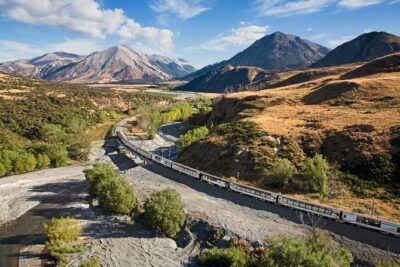
TranzAlpine Train, Arthur’s Pass and Castle Hill Day Trip
Read our review →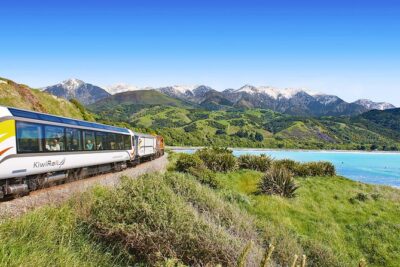
Coastal Pacific Train Journey from Picton to Christchurch
Read our review →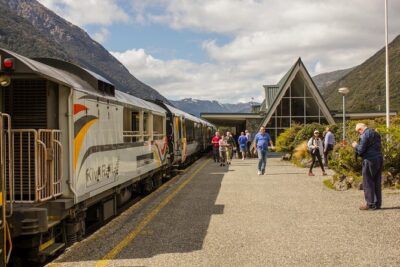
TranzAlpine Train Journey: Christchurch to Greymouth
Read our review →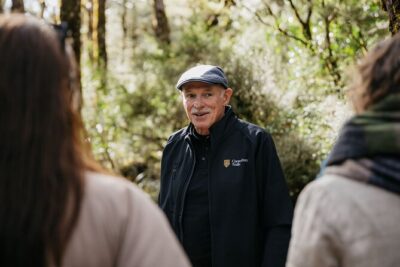
Arthur’s Pass Discovery and TranzAlpine Train – Small Group Tour
Read our review →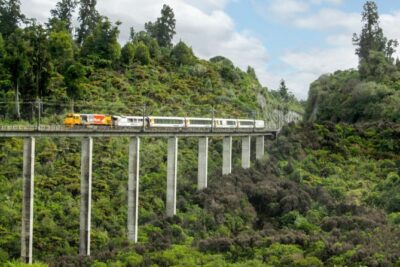
Northern Explorer Train Journey from Auckland to Wellington
Read our review →
Arthur’s Pass and TranzAlpine Train Day Tour from Christchurch
Read our review →
Lists this ride appears on