
Review · NEW ZEALAND
Dunedin: Scenic Railway Tour Through the Taieri Gorge
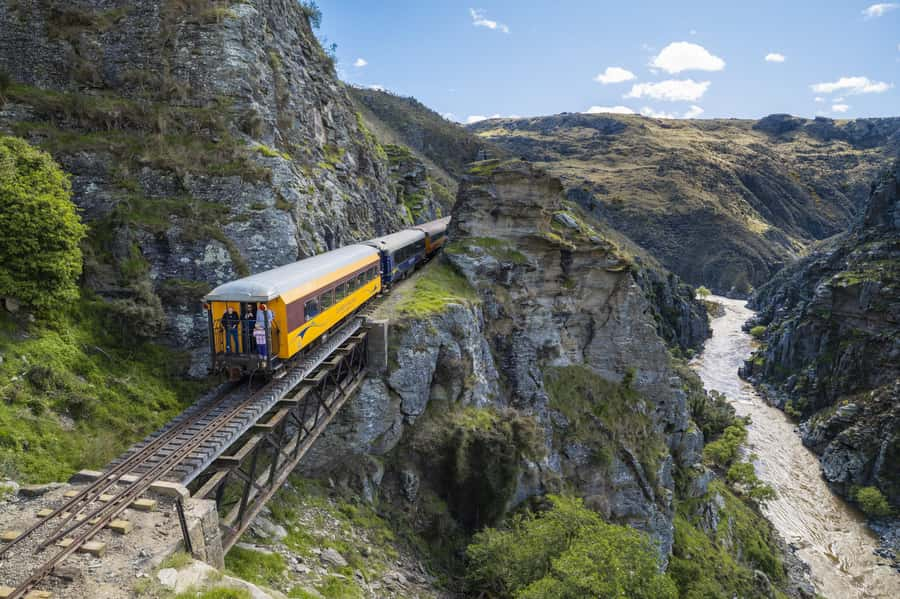
The best part of this five-hour railway journey is the steady change in scenery. You leave Dunedin behind, follow the Taieri River through a rugged gorge, pass hand-carved tunnels and century-old bridges, then reach Pukerangi, a quiet high-country outpost. I like the way the train lets you watch the country unfold without rushing from one photo stop to the next.
I also like the storytelling, especially when Dave McFarland is onboard, and the chance to buy fresh food and drinks from the Precinct café. The main drawback is limited space on the outside viewing platform. If you want open-sided rail photography, you may find the small platform crowded.
Key points to know before you go
- Century-old railway engineering: The route crosses historic viaducts, bridges, and hand-carved tunnels built by early pioneers.
- A full five-hour return trip: You have time to settle into the carriage and watch the scenery change from Dunedin to Pukerangi.
- Strong onboard storytelling: Guides explain early settlement, gold-rush history, local places, and the work behind the railway.
- A useful viewing platform: You can step outside for photographs, but access is limited and can become crowded.
- Precinct café onboard: Fresh local food and drinks are available to buy, though cash is wise because card service can fail in remote areas.
- Good value for rail fans and scenery lovers: At $95 per person, the trip combines transport, heritage, views, commentary, and five hours of entertainment.
Leaving Dunedin from its grand railway station
Your day begins at Dunedin Railway Station, 22 Anzac Avenue. The station itself is an appealing start, with the sort of old-world rail setting that suits this trip. Check-in begins one hour before departure and closes 15 minutes before the train leaves, so I would not cut it close.
The railway station is easy to reach, and parking is available there. You should check the current parking details before arriving, since the information provided does not specify the cost or exact parking arrangements.
Once aboard, you can settle into the classic carriages. The indoor seats give you shelter from the weather and a clear way to watch the route through the windows. This matters in Otago, where a warm, dry carriage can make a long scenic ride much more comfortable than spending the whole day outside.
The train is not simply a way to reach a destination. The return trip is the experience. You go out through the gorge, reach Pukerangi, and return to Dunedin on the same historic route. That makes the five-hour length feel purposeful rather than padded.
More Scenic Railways in New Zealand:
- TranzAlpine Train, Arthur’s Pass and Castle Hill Day Trip
★ 5.0 · 426 reviews - Coastal Pacific Train Journey from Picton to Christchurch
★ 4.5 · 345 reviews - TranzAlpine Train Journey: Christchurch to Greymouth
★ 4.5 · 312 reviews
The scenery changes after Dunedin
The first part of the journey takes you away from the urban setting and toward the Taieri Gorge. The most dramatic views come once you leave the Dunedin area, so do not judge the ride too early. Give the train time to reach the open country and river corridor.
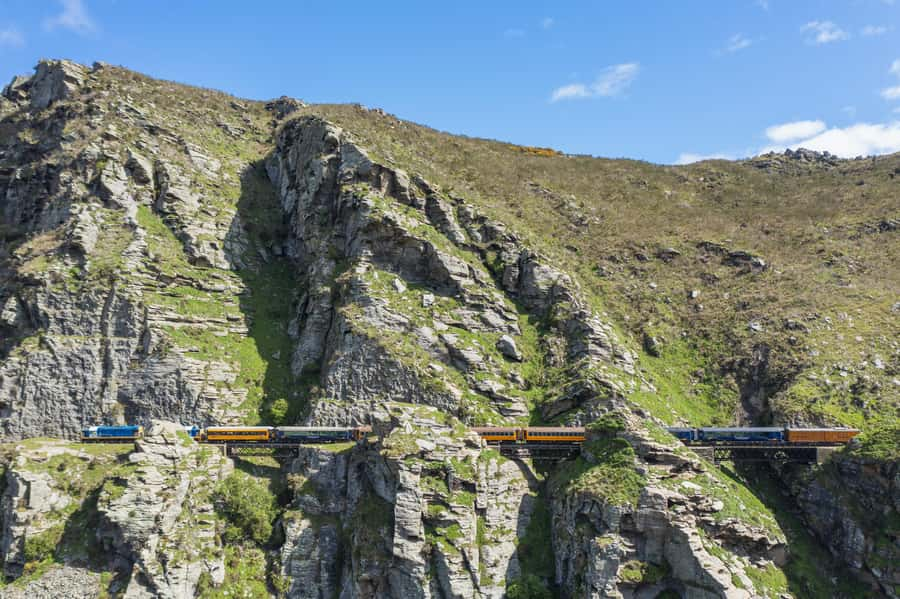
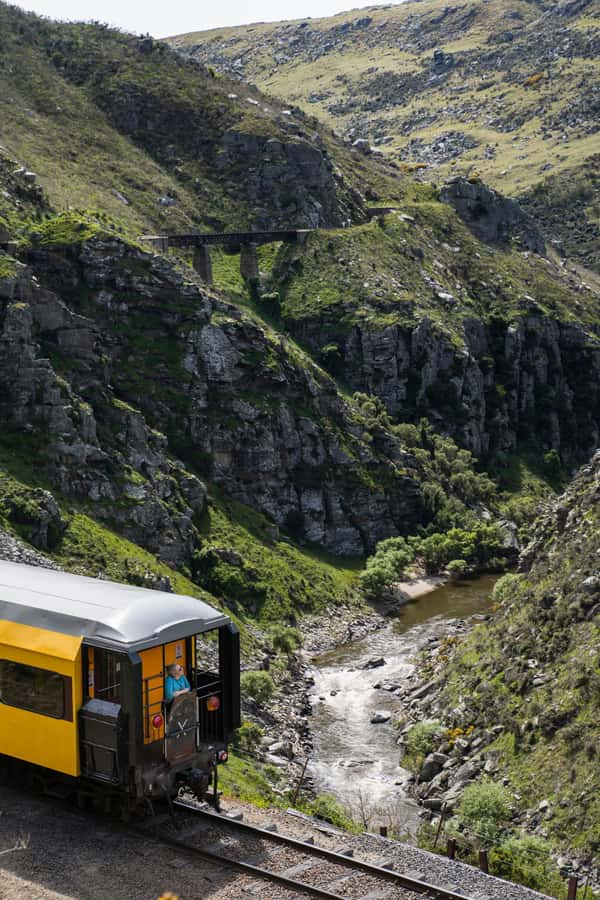
The route follows the Taieri River, bringing the main visual drama: steep rock faces, bridges, tunnels, and broad Otago views. The train moves slowly enough for you to take in the details, while the onboard narration gives the scenery a human story.
You will see the railway’s practical side as well as its beauty. Bridges and viaducts are not just photo backdrops here. They show how early railway builders pushed through difficult country using the tools and methods available more than a century ago.
The line’s engineering is one of the reasons this journey works so well for people who are not normally train enthusiasts. The guide connects a tunnel or bridge with the people who built it, the settlements it served, and the gold-rush era that helped shape the region. You are not left to guess why the railway takes such a twisting route.
Inside the Taieri Gorge
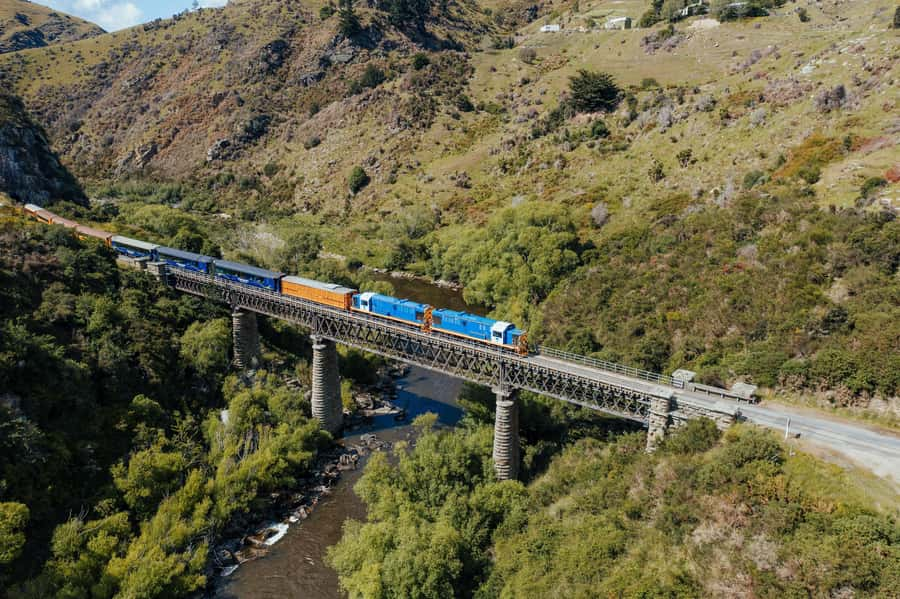
The Taieri Gorge is the heart of the trip. Here, the railway feels more remote and more dramatic. The train passes through hand-carved tunnels and over tall bridges as the river guides the route below.
Your onboard storyteller points out the people, places, and engineering feats tied to the line. Dave McFarland has earned particular praise for clear, engaging commentary, and his stories about early New Zealand life add substance to the views. You get more than dates and names. The narration helps you picture how difficult it was to build and use this railway.
The story includes early settlement and gold-rush history. That context gives the trip a useful sense of purpose. This was not a railway built only for sightseeing. It helped connect remote country and supported the movement of people and goods through an area that was hard to cross.
Keep your camera ready, but do not spend the entire ride staring at a screen. Some of the best moments come when the train rounds a bend and the gorge opens suddenly. The windows are good for general viewing, while the outside platform gives you a more direct feel for the speed, air, and scale of the route.
The viewing platform and photo strategy
The outside viewing platform is a valuable feature, especially when the train reaches a bridge, tunnel entrance, or broad view. You can step out for photographs and get a less obstructed angle than you will from a window.
The catch is capacity. The platform is small, and several passengers may want the same photo at once. Access can become congested, especially when the scenery is at its best. A full open-sided viewing carriage is not part of this experience, so you should set your expectations accordingly.
I would use the platform in short turns rather than try to stay there for the whole trip. Take a few photos, look carefully, then return to your seat and let someone else have a chance. You will still see plenty through the carriage windows.
Bring a phone or camera, but also bring a warm layer. Conditions on the platform can feel different from those inside the train. Flat shoes are a good idea because you may have opportunities to disembark at points of interest, and comfortable clothing suits the five-hour duration.
More Train Journeys around New Zealand:
- Northern Explorer Train Journey from Wellington to Auckland
★ 4.0 · 513 reviews - Arthur’s Pass Discovery and TranzAlpine Train – Small Group Tour
★ 5.0 · 272 reviews - Arthur’s Pass: TranzAlpine Train and Castle Hill Day Tour
★ 4.8 · 270 reviews - Northern Explorer Train Journey from Auckland to Wellington
★ 4.0 · 204 reviews
Reaching Pukerangi, the high-country endpoint
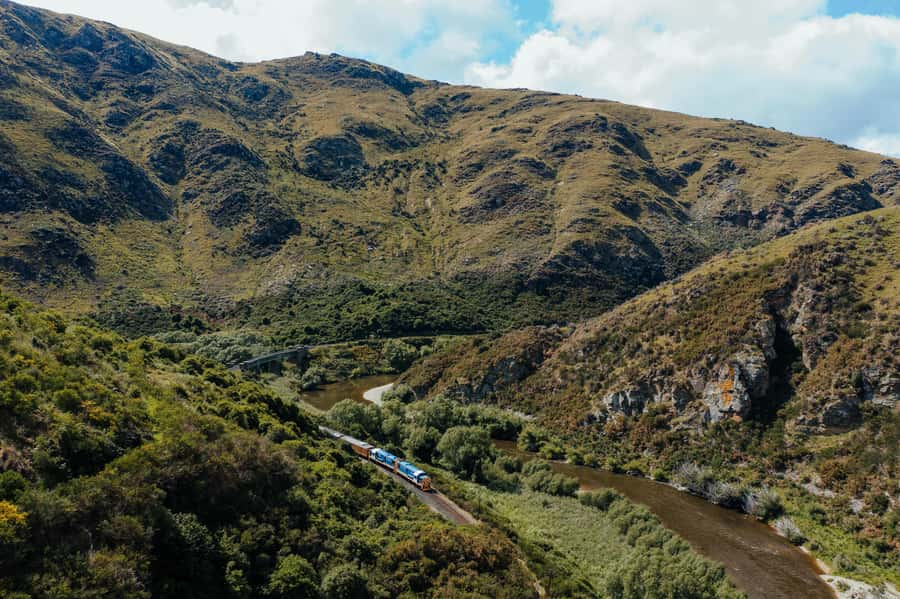
The train reaches Pukerangi, described as a peaceful high-country outpost. This is not presented as a large attraction-packed stop. Its appeal is the setting and the feeling of reaching a remote end point by rail.
For you, Pukerangi provides a natural turning point. The outward journey builds from Dunedin streets to river scenery, gorge walls, bridges, and high country. At the endpoint, you have seen the full character of the route before the train begins its return.
The precise timing and length of any stop can vary, so do not plan the trip around a long independent visit there. The important part is the complete railway route and the chance to experience the line from both directions.
The possibility of disembarking at various points of interest is useful, but the supplied details do not promise a specific stop at every departure. Listen for the onboard instructions and wear shoes that make short walks easy.
Stories that make the railway matter
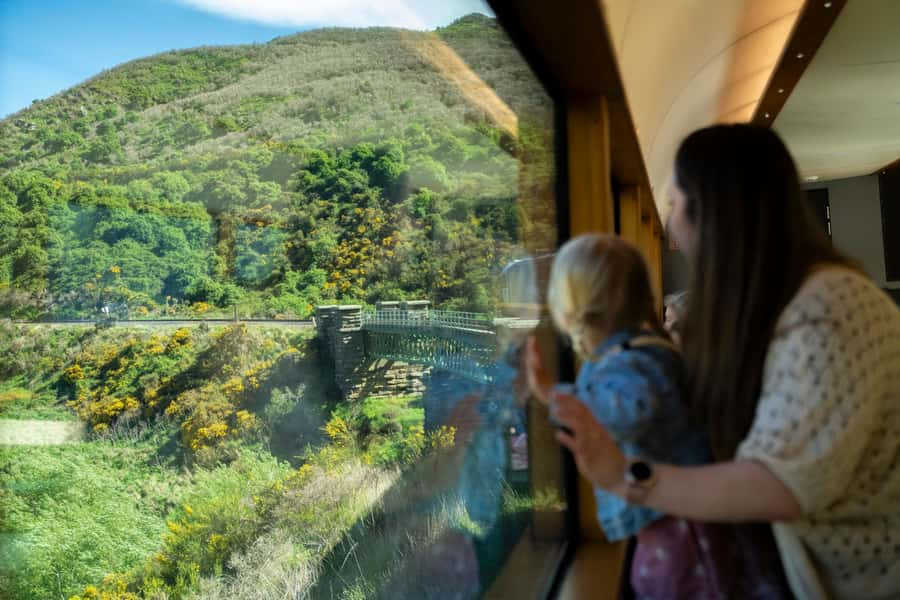
The commentary is one of the strongest reasons to choose this trip instead of simply looking for a scenic train ride. Views can be beautiful, but they are easier to remember when you understand what you are seeing.
The storyteller covers early settlement, gold-rush activity, local places, and railway construction. That mix keeps the narration tied to the route. You might be looking at a bridge one moment and hearing about the engineering challenge behind it the next.
The staff also help set the tone. The guard Austin is known for friendly conversation, while the storytelling gives the ride a clear thread from beginning to end. Commentary is delivered onboard, so you can listen from your seat rather than joining a separate walking tour.
The style may matter to you. If you prefer complete silence and uninterrupted photography, the narration will be an extra layer you may not need. For most people interested in Otago’s past, it adds real value, particularly during the longer stretches between major sights.
Food and drinks from the Precinct café
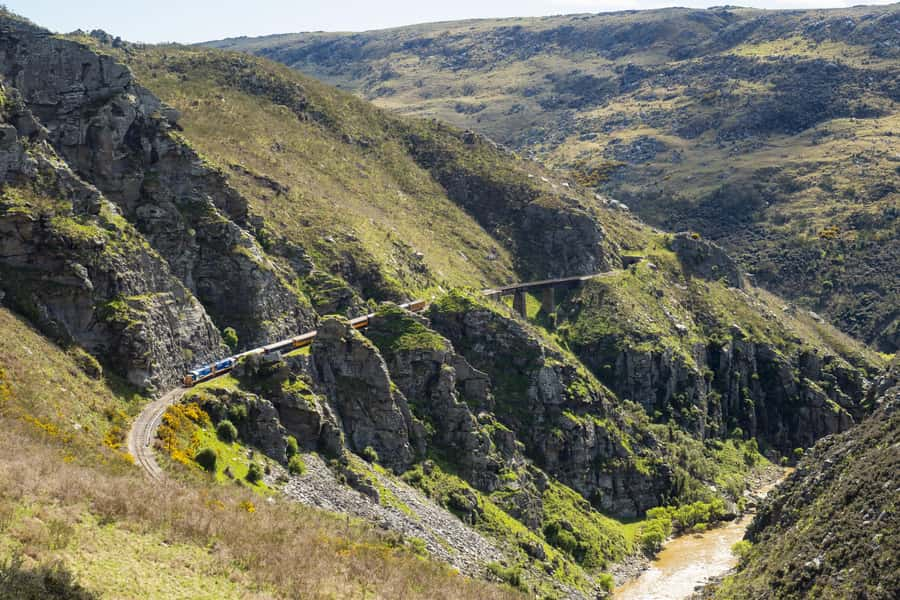
The onboard Precinct café sells fresh local food and drinks. This is convenient on a five-hour trip, since you do not need to carry every snack from Dunedin.
Food and drinks are not included in the $95 price, so plan for an extra purchase if you want to eat onboard. The café has been singled out for good food and drink quality, making it more than an afterthought.
Bring cash. Mobile service is limited on the remote sections, and card or EFTPOS payments may not work outside internet range. You may be able to settle your tab when you return to reception, but cash is the safer option.
If you have dietary needs, the supplied information does not list menu items or special-diet arrangements. You can bring your own food if you want certainty, while still treating the café as a handy option. There are toilets onboard, which is another small but important comfort during a five-hour ride.
Is $95 a fair price?
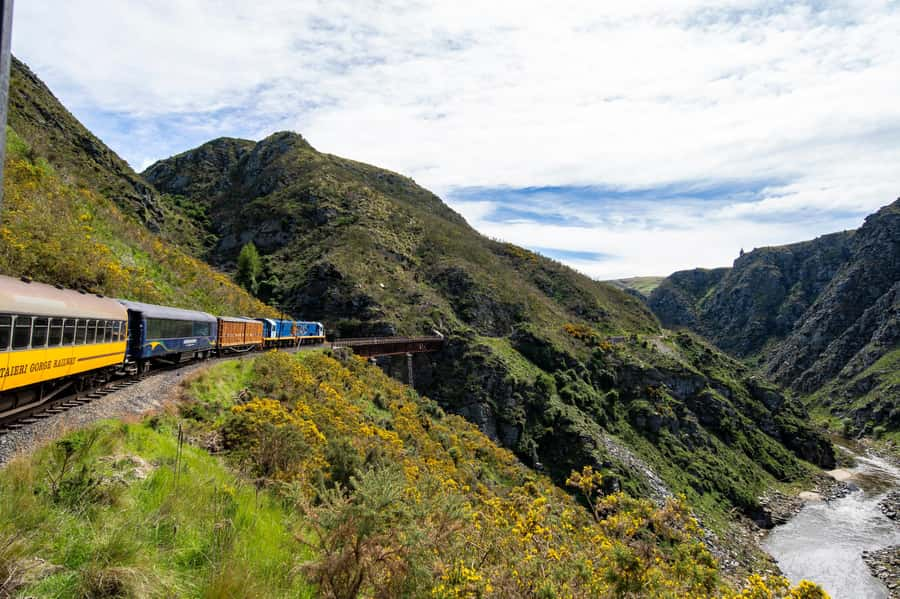
At $95 per person, this is not the cheapest way to spend a morning or afternoon in Dunedin. The price makes more sense when you count what is included: a five-hour return railway journey, historic carriages, the full Taieri Gorge route, onboard storytelling, access to a viewing platform, and the return to the railway station.
You are paying for access to scenery that is difficult to experience from a normal road trip. The railway reaches bridges, tunnels, and river sections that give the gorge its character, while the narration explains why the route exists.
The value is strongest if you enjoy a relaxed pace. This is not a quick attraction that you finish in an hour. You spend much of the day watching, listening, eating, and taking photographs from one moving viewpoint.
It is less compelling if your main goal is constant outdoor access or a large number of independent stops. The limited viewing platform is the clearest compromise. You get excellent windows and scenic access, but not an open-sided carriage with unlimited space for photography.
Practical details for a comfortable ride
Wear casual clothes and bring something warm. Even if Dunedin feels mild when you depart, the gorge and high country can feel cooler, especially when you step onto the viewing platform.
Arrive early. Check-in opens one hour before departure and ends 15 minutes before the train leaves. That gives you time to find the station, deal with parking, and board without a last-minute rush.
The train offers a wheelchair-accessible carriage and lift, but capacity is limited and the equipment must be requested in advance. You should email Dunedin Railways before booking or as soon as possible if you need this service.
The trip has limited mobile phone connection. Treat that as a benefit if you want a break from constant messages, but remember the practical side: card payments at the café may not work. Carry local cash.
Free cancellation is available up to 24 hours before departure, and you can reserve now and pay later. Those options are useful if your Dunedin plans depend on weather or a changing South Island schedule.
Who will enjoy this train ride most?
I would recommend this experience to anyone who likes scenery with a story attached. It suits rail enthusiasts, photographers who can work with window views, people interested in New Zealand engineering, and anyone who wants to see the Taieri Gorge without driving.
It also works well for families and older visitors who prefer a comfortable seated journey over a strenuous outdoor activity. The train gives you a full view of the route while the café and onboard toilets remove some of the usual half-day-trip inconveniences.
You should think twice if you need a highly active itinerary. The pace is deliberately slow, and the journey lasts five hours. The platform is small, and you may not get the exact photo position you want.
The trip is also a good choice when you want to make one substantial Dunedin excursion rather than stack several short activities into the same day. It gives you scenery, local history, food, and railway heritage in one outing.
Should you book the Taieri Gorge Railway?
Book it if you want a comfortable, story-led view of Otago’s gorge country. The combination of strong commentary, historic engineering, and dramatic scenery gives the trip more weight than a simple scenic ride.
I would be especially keen to book if Dave McFarland is scheduled as the storyteller, since his clear historical narration is a major part of the experience. Before paying, check the departure time, weather, accessibility needs, and café payment arrangements.
Skip it if open-air photography is your top priority or if five hours feels too long for a seated excursion. For everyone else, $95 is a reasonable price for a complete return journey through one of Dunedin’s most distinctive routes.
FAQ
Where does the Taieri Gorge Railway trip depart?
The train departs from Dunedin Railway Station at 22 Anzac Avenue, Dunedin 9016, New Zealand.
How long is the railway tour?
The return journey lasts five hours.
What destination does the train reach?
The train travels through Taieri Gorge to Pukerangi before returning to Dunedin.
What is included in the ticket?
The ticket includes the five-hour return scenic railway trip, access to the viewing platform, and onboard storytelling about the people, places, and engineering connected with the line.
Is food included in the ticket price?
No. Food and drinks are available for purchase from the onboard Precinct café.
Can I pay by card in the onboard café?
Card or EFTPOS payments may not always work because mobile phone and internet service is limited. Bring cash, or ask about settling your tab when you return to reception.
Is there an outdoor viewing area?
Yes. The train has a viewing platform for photographs, but space is limited.
What should I wear?
Wear comfortable casual clothing and bring something warm. Flat shoes are recommended because there may be opportunities to disembark at points of interest.
Is the train wheelchair accessible?
A wheelchair-accessible carriage and lift are available on request. Capacity is limited, so you need to email Dunedin Railways in advance.
How early should I arrive?
Check-in begins one hour before departure and ends 15 minutes before departure. Parking is available at Dunedin Railway Station, with current details available from the railway website.
New on the timetable around New Zealand
- Ultimate self-drive rail car journey★ 5.0 · 5 reviews
- Queenstown to Dunedin with Taieri Gorge Train One-Way Tour★ 5.0 · 5 reviews
- 2 Day West Coast Glaciers and TranzAlpine Train: Queenstown to Christchurch★ 3.0 · 3 reviews
- Franz Josef to Christchurch Small-Group Tour W TranzAlpine Train★ 4.5 · 2 reviews
- Dunedin to Queenstown One Way Tour Including Taieri Gorge Train★ 5.0 · 6 reviews
- Captivating Railway Journey in Coromandel★ 4.5 · 36 reviews
- Arthur’s Pass with optional TranzAlpine Train (Small Group Tour)★ 5.0 · 13 reviews
- Kaikoura Whale Watch Day Tour from Christchurch including Coastal Pacific Train★ 5.0 · 6 reviews
Other Scenic Railways worth a seat
Lake Como Cruise, St. Moritz & Bernina Red Train
Read our review →
Self-Guided Kuranda Trip with Train and Skyrail
Read our review →
Bernina Red Train, Swiss Alps & St Moritz From Milan
Read our review →
Milan to St. Moritz: Scenic Bernina Train Tour with Guide
Read our review →
Bernina Train, Swiss Alps & St. Moritz Day Trip
Read our review →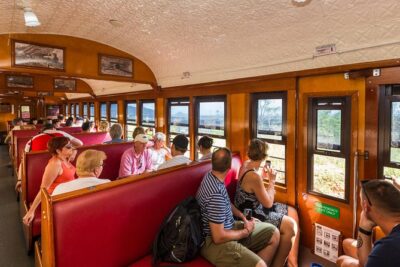
Lists this ride appears on