
Review · SOUTH KOREA
Jeonju City tour by KTX bullet Train from Seoul
Jeonju is where Korea’s old royal culture, Catholic history, traditional homes, and handmade paper come together in one very full day. This private trip makes the long run from Seoul practical by using the KTX, then puts you with an English-speaking guide who can explain why each site matters. Omokdae Pavilion gives you a fine view over the Hanok Village, while the Hanji workshop adds a hands-on stop beyond the usual sightseeing.
I like the personal format, especially if you want history explained rather than simply photographed. I also like that pickup, train tickets, and site admissions are handled for you. The main caution is the $470 price, plus the early start and no Seoul drop-off. Also confirm the final route before booking, since Geumsansa is mentioned in the tour overview but not in the detailed stop list.
Key points to know before you book
- KTX makes Jeonju possible in a single day: You avoid arranging separate train tickets and local connections.
- A private guide shapes the day around your group: You receive English commentary instead of following a large set itinerary.
- Omokdae connects scenery with history: The pavilion recalls Yi Seong-gye’s 1380 victory and looks over the tiled roofs of Hanok Village.
- Gyeonggijeon adds royal Joseon history: Its portrait hall, archives, and bamboo paths provide a quieter break from the village streets.
- Hanji is more than a souvenir: You make Korean traditional paper and see how it is treated as both a useful material and an art form.
- Check the final inclusions carefully: Central Seoul pickup is included, but meals and Seoul drop-off are not.
Why the KTX makes this long day work
The tour begins at about 7:00 a.m. in Seoul and lasts roughly nine to ten hours. That is a serious day out, but the high-speed train is the sensible way to reach Jeonju without spending the entire morning on the road.
Your round-trip economy KTX fare is included. That matters because the train is one of the tour’s main practical benefits, not a minor add-on. You do not have to work out the rail booking, coordinate a station transfer, or worry about buying the wrong ticket.
The tour includes pickup from the Seoul area, described as central Seoul. Ask for the exact pickup zone when you book, since central Seoul is not a single hotel district. The return arrangement needs equal attention: Seoul drop-off is not included, so you should plan for the end of the day or budget for your own transfer.
The train ride itself is transportation, not a guided sightseeing segment. Your real touring begins after arrival in Jeonju. With only one day, the schedule favors major highlights over slow wandering, long meals, or unplanned shopping.
More High-Speed Trains in South Korea:
- Busan city tour from Seoul by KTX bullet train
★ 5.0 · 39 reviews - Gyeongju UNESCO Sites Tour by KTX train; The Museum Without walls
★ 4.5 · 11 reviews - Busan day trip including Gamcheon culture village from Seoul by KTX train
★ 5.0 · 3 reviews
Starting with the Chronicle of Jeonju Hanok Village
The first Jeonju stop is the Chronicle of Jeonju Hanok Village, described as a local historical museum. This is a useful opening because Hanok Village can otherwise seem like a pleasant collection of tiled roofs and narrow lanes without much context.
Here you begin to understand how the district developed and why traditional Korean homes remain important to Jeonju’s identity. I like the choice of a small historical introduction before the more scenic stops. It gives your guide a base for explaining what you see later.
The visit is part of a larger Hanok Village segment listed at about five hours. That does not mean five hours inside the museum. It includes the surrounding sights, walking time, and historical stops in the village area.
Expect a fair amount of walking. The tour is private, so you can ask your guide to pause and explain details that catch your eye. If you prefer a quick photo stop, say so. If you enjoy historical explanation, this is where a guide such as BH, also called BeHappy, can make a real difference. The strongest praise connected to this experience focuses on BH’s vivid, passionate storytelling and his ability to make the past feel close rather than remote.
Omokdae Pavilion and the view over the tiled roofs
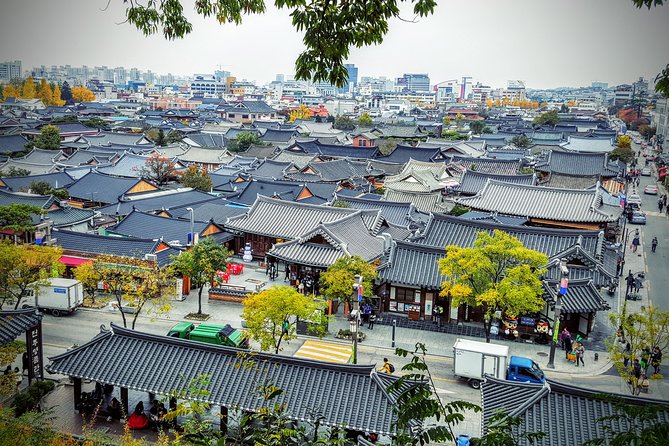
Omokdae Pavilion gives the day one of its best visual moments. From this elevated spot, you look across Jeonju Hanok Village, with its concentration of traditional roofs and compact streets.
The site also carries a story tied to Yi Seong-gye, the founder of the Joseon Dynasty. In 1380, after defeating Japanese invaders at Hwangsan in Namwon, he stopped here to celebrate on his return. That event links the viewpoint to the political and military story of medieval Korea.
This is exactly the sort of place where a personal guide earns his fee. Without context, Omokdae is mainly a pleasant lookout. With the story, the pavilion becomes part of the rise of the dynasty that shaped Korea for centuries.
The practical catch is that a viewpoint usually means an uphill walk or steps. The tour information does not provide a detailed mobility description, so ask the provider if you have difficulty with slopes or stairs. You should also expect this stop to be weather-sensitive. On a clear day, the rooflines will be the attraction. On a wet or hazy day, the historical explanation matters more than the view.
Jeondong Catholic Cathedral and Korea’s difficult religious past
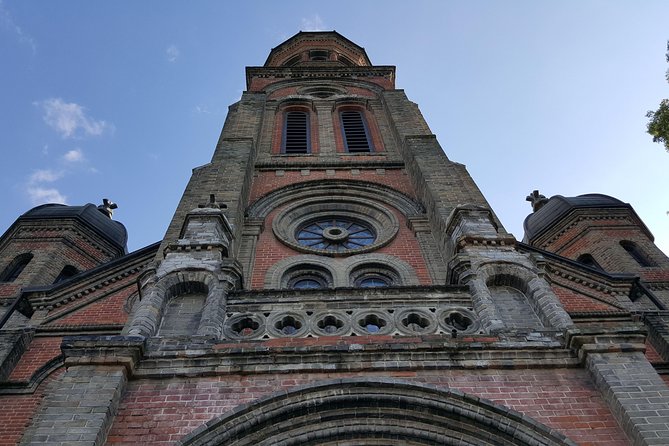
Jeondong Catholic Cathedral adds a very different layer to the day. The church is Historic Site No. 288 and was built to honor Catholic martyrs of the Joseon Dynasty on the site where they were killed.
That location gives the building more weight than its architecture alone. It points to a period when Roman Catholic belief was treated as a threat and followers faced persecution. The cathedral therefore helps you see Jeonju not only as a center of traditional culture, but also as a place shaped by conflict over belief and authority.
The schedule lists the cathedral within the Hanok Village portion and again as a separate ten-minute stop. Treat this as one planned visit that may be split into a main look and a brief final photo or explanation. The detailed schedule is not perfectly tidy here, so confirm how much time your guide expects to spend inside and around the church.
Admission is listed as free. That keeps the stop easy to fit into a packed day. Still, the time allowance may be short, so do not expect an extended architectural tour. You will get the most from it if you listen for the connection between the building, the martyrs, and Joseon-era religious restrictions.
More Train Journeys around South Korea:
- From Seoul: Nami Island, K-drama Garden & Rail Bike Day Tour
★ 4.6 · 724 reviews - Day Trip to Nami Island with Rail bike and The Garden of Morning Calm
★ 4.5 · 459 reviews - Nami+Alpaca+Garden of Morning Calm (+Rail Bike Option)
★ 5.0 · 300 reviews - Seoul: Alpaca, Nami, Morning Calm or Eobi (+Rail Bike)
★ 4.9 · 233 reviews
Gyeonggijeon Shrine, royal portraits, and bamboo paths
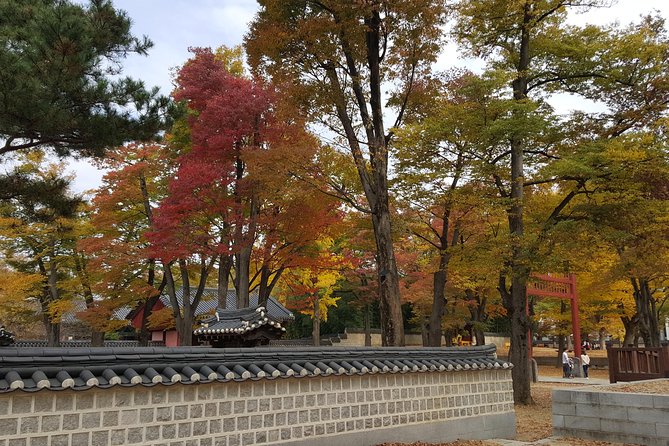
Gyeonggijeon Shrine was built in 1410 and holds a portrait of King Tae-jo, founder of the Joseon Dynasty. It also includes the Jogyeongmyo, Jeonju Sago historical archives, and a Taesil, or placenta chamber.
Those names can sound like a list of unfamiliar terms, but your guide should help you sort them out. The key idea is that this is a place tied to royal memory, official records, and the rituals surrounding the Joseon court. It gives you a more formal and ceremonial counterpoint to the homes and shops of Hanok Village.
The visit is scheduled for about one hour, with admission included. That is enough time for a focused walk through the grounds, though not for a slow study of every feature. The broad paths and bamboo-lined sections make this one of the calmer parts of the day.
The bamboo trail is especially welcome after the busier village streets. You can take photographs, walk beneath the tall greenery, and see why the grounds are often used for historical film and television scenes. The site is preserved and atmospheric without requiring a long lecture at every turn.
I would listen closely here rather than rush from one photo point to the next. The royal portrait and archive references are the parts most easily missed if you treat Gyeonggijeon as just another old building.
Making Korean paper at the Hanji Museum
The Hanji Museum stop gives you something to do with your hands. Hanji is Korea’s traditional paper, and the visit includes a paper-making experience.
That practical element breaks up the history-heavy schedule. You are not only looking at objects behind glass or listening to dates. You get a basic sense of how traditional paper is made and why it has remained useful for calligraphy, oriental painting, crafts, wallpaper, and other household purposes.
Jeonju Jeontong Hanjiwon functions as both a shop and a workshop. You can see Hanji in many colors and forms, from paper intended for writing and painting to decorative and practical products. The material itself is treated as an art object, not merely as a disposable sheet.
The tour allows about one hour, and admission is included. The visit may appeal most to families, craft fans, and anyone who wants a souvenir with a direct connection to Korean culture. It is also a good place to ask your guide about the difference between paper made for art, writing, decoration, and household use.
Do not expect the Hanji activity to turn the tour into a full craft course. It is one stop in a packed day. Its value is that it gives you a clear, memorable introduction to an important Korean tradition and lets you leave with more than photographs.
The missing Geumsansa question
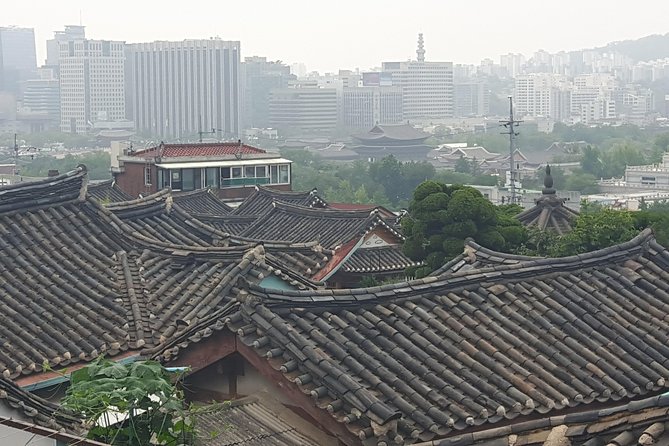
The tour overview names Geumsansa, a Buddhist temple associated with sacred relics, among the highlights. The detailed schedule, however, lists the Chronicle of Jeonju Hanok Village, Omokdae, Jeondong Catholic Cathedral, Gyeonggijeon Shrine, and the Hanji Museum, but does not give Geumsansa a time slot.
That is not a small detail. Geumsansa would add a Buddhist setting and change the balance of the day, while the listed stops already fill most of the schedule. I would ask Tagytravelkorea directly if Geumsansa is included on your departure date, substituted for another stop, or mentioned in error.
This is also a good reason to request the final timing before paying. The private format gives the provider some flexibility, but the KTX schedule and return to Seoul limit how much can be added.
Is $470 good value for a private Jeonju day?
At $470 per person, this is an expensive day trip. The price needs to be judged against what it removes from your planning, not against the cost of visiting one Jeonju site.
Included are central Seoul hotel pickup, a qualified local English-speaking guide, round-trip KTX economy fare, and admission fees to the tourist sites. The tour is private, so your group does not share the guide with strangers. That combination can be worthwhile if you place a high value on explanation, convenience, and a flexible pace within a fixed route.
The price is harder to justify if you are comfortable booking trains yourself, using local transport, and exploring Hanok Village independently. Jeonju has enough sights for independent visitors, and you would have more control over meals, shopping, and the length of each stop.
Food and drinks are not included. Seoul drop-off is also excluded, which adds a final planning task after a long day. Group discounts are available, so the per-person value may improve if you are traveling with several people.
Who will get the most from this tour?
I would choose this tour if you have limited time in Korea and want Jeonju without spending a night away from Seoul. It also suits you if you prefer a guide to explain Joseon history, Catholic persecution, royal sites, and traditional paper rather than reading brief signs on your own.
The private setup works well for families or small groups with shared interests. You can ask questions, spend longer at a favorite site, and avoid the pace of a large coach group, within the limits of the train timetable.
I would hesitate if you dislike early starts, dislike structured days, or want long stretches of free time. Nine to ten hours is a lot for a city visit, and the schedule packs several distinct places into one outing.
The experience has a 5.0 rating from two submitted reviews, so the sample is very small. The clearest strength is the guide’s vivid explanation, particularly the contribution associated with BH, BeHappy. Book for the storytelling and practical transport, not simply because the tour includes a long list of stops.
Should you book the Jeonju KTX day trip?
Book it if you want a private, guided introduction to Jeonju and value having the KTX, pickup, admissions, and English commentary arranged together. You will see royal history, traditional architecture, religious heritage, bamboo paths, and Hanji craft in one ambitious day.
Before confirming, ask three things: Is Geumsansa really included, exactly where does Seoul pickup apply, and how will you return after the tour since drop-off is not included? If those answers suit your plans, the high price may be fair for the convenience and personal guiding.
If you are a confident independent visitor, spend that money on your own train tickets and a slower Jeonju visit instead. But if you want the old city explained clearly and need to fit it into a Seoul stay, this is a strong, efficient option.
FAQ
How long does the Jeonju tour last?
The tour lasts approximately nine to ten hours.
What time does the tour start?
The scheduled start time is 7:00 a.m.
Is transportation from Seoul included?
Yes. The tour includes hotel pickup from the Seoul area and round-trip KTX economy fare.
Is Seoul drop-off included?
No. Drop-off service in Seoul is not included.
Is the tour private?
Yes. Only your group participates in the private activity.
Is an English-speaking guide included?
Yes. A qualified local English-speaking guide is included.
Are meals and drinks included?
No. Food and drinks are not included in the price.
Are admission fees included?
Yes. The tour includes admission fees to the tourist sites. The detailed schedule specifically lists admission as included for Gyeonggijeon Shrine and the Hanji Museum, while Jeondong Catholic Cathedral is free.
Can I cancel for a full refund?
Yes, if you cancel at least 24 hours before the experience start time. Cancellations made less than 24 hours in advance are not refundable, and the experience may be changed or refunded if its minimum number of participants is not met.
New on the timetable around South Korea
- Private Tour Rail Bike & Nami Island & (Petite France or Garden of Morning Calm)★ 4.5 · 13 reviews
- Special Private Tour Nami Island, Rail Bike, Petite France★ 5.0 · 42 reviews
- Gyeongju UNESCO Sites Tour by KTX train; The Museum Without walls★ 4.5 · 11 reviews
- Scenic Escape: Nami Island, Garden of Morning Calm, and Rail Bike★ 3.0 · 2 reviews
- Alpaca World with Gangchon Rail Park One Day Tour★ 4.5 · 3 reviews
- Eobi+Nami+Hanbok Tour with Rail Bike or Strawberry Option★ 5.0 · 10 reviews
- Nami Island & Petite France & Italian Village & Gangchon Rail Bike One-Day Tour★ 4.5 · 52 reviews
- Eobi Ice Valley, Nami Island, Morning Calm and Rail Bike Seoul★ 5.0 · 9 reviews
Other High-Speed and Bullet Trains worth a seat
Mt Fuji & Hakone Cruise, Drum Show Bullet Train 1 Day from Tokyo
Read our review →
Tokyo Mt Fuji 5th St & Hakone Cruise Bus Tour w/Bullet Train
Read our review →
Rome to Pompeii Guided Tour with Wine & Lunch by High Speed Train
Read our review →
Venice Day Trip from Rome by High-Speed Train with Happy Hour
Read our review →

“Taj Mahal” Tour from Delhi by India’s Fastest Train (Gatiman Express)
Read our review →
Rome to Florence: High-Speed Train Day Trip with Guided City Tour
Read our review →Lists this ride appears on