
Review · USA
Rockies to the Red Rocks Train – Moab to Denver – SilverLeaf Plus
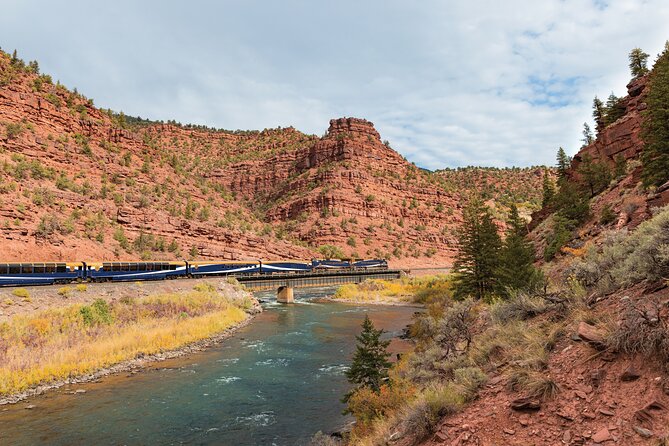
Rocky Mountaineer’s Moab to Denver route is built around one simple idea: let the train show you scenery that is hard to enjoy from a car. You roll out of Moab through red-rock country, follow the Colorado River into the Rockies, spend a night in Glenwood Springs, then cross mountain passes and the Continental Divide before reaching Denver.
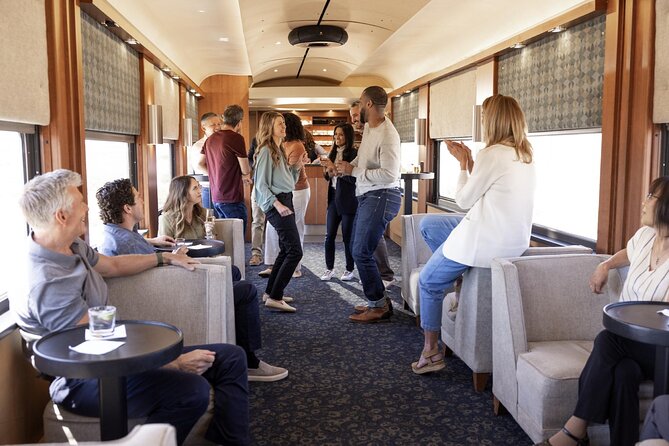
I like the slow pace and wide windows, which give you time to watch canyons, mesas, rivers, and snowy peaks unfold. I also like the SilverLeaf Plus lounge car, especially for its extra seating, small outdoor viewing area, premium drinks, and signature cocktails. The main drawback is the price, $2,327 per person, and the fact that this is a train sightseeing experience rather than a stop-and-explore tour.
The crew makes a real difference. Hosts such as Tristan, Jessica, Lacey, Olivia, Nephi, and Crystal have been singled out for warm service, useful commentary, and careful attention to special needs. One practical warning: you pass through Arches National Park, Ruby Canyon, Cisco, and other notable places, but the train does not stop there.
Key points to know before booking
- Two full days on a moving train: You leave Moab at about 2:00 p.m., sleep in Glenwood Springs, and arrive at Denver Union Station on the second day.
- The best views come from the windows: The route includes Arches country, Ruby Canyon, Glenwood Canyon, Gore Canyon, Winter Park, and the Continental Divide.
- SilverLeaf Plus means more than a nicer seat: You get access to a lounge car, a small outdoor viewing area, premium alcoholic drinks, and signature cocktails.
- Meals are part of the experience: Dinner on day one, breakfast and lunch on day two, snacks, and complimentary beverages are included.
- You do not handle your bags at the overnight stop: Luggage transfers to and from the Glenwood Springs hotel are included.
- This is a scenic rail journey, not a national park tour: You see many famous places from the train, but the route provides no sightseeing stops along the way.
Why the Moab to Denver route works so well
The route links two very different parts of the American West. Moab gives you red sandstone, desert air, and high plateaus. By the time you reach Denver, the scenery has shifted to steep mountain walls, river rapids, pine-covered slopes, and high-country views.
That change is the point. A road trip can cover the same broad region, but you must watch traffic, search for parking, and keep your eyes on the road. Here, you can sit with a meal, listen to the onboard Host, and keep looking outside.
The train leaves Moab in the afternoon, so the first part of the journey has a warm desert glow. You receive locally inspired dinner, snacks, and drinks as the route heads east. The service is attentive without making the trip feel stiff or formal. Several passengers praised the food and the crew by name, and the strongest pattern is clear: the people working onboard are a major part of the value.
Still, you should set your expectations correctly. This is not a hop-on, hop-off train. The towns and canyons listed along the way are viewed from the rail line. If you want to hike to an arch, walk through a ghost town, or raft the Colorado River, you need to add those activities before or after the train journey.
More Train Journeys around the USA:
- Key West Conch Tour Train
★ 4.5 · 792 reviews - Skunk Train: Pudding Creek Express from Fort Bragg
★ 4.0 · 260 reviews - Skunk Train: Wolf Tree Turn from Willits
★ 4.5 · 258 reviews
Day one: Moab, Arches country, and Ruby Canyon
Your journey begins at the Rocky Mountaineer Moab Guest Centre at 59 South Main Street. The stated start time is 2:00 p.m., though your final documents provide the exact meeting details.
Moab is a strong starting point. It is known as the gateway to Utah’s five major national parks, including Arches and Canyonlands, and it has the feel of a town built around outdoor adventure. I would plan extra time here before boarding. The train gives you a fine view of the region, but it does not replace time inside Arches National Park.
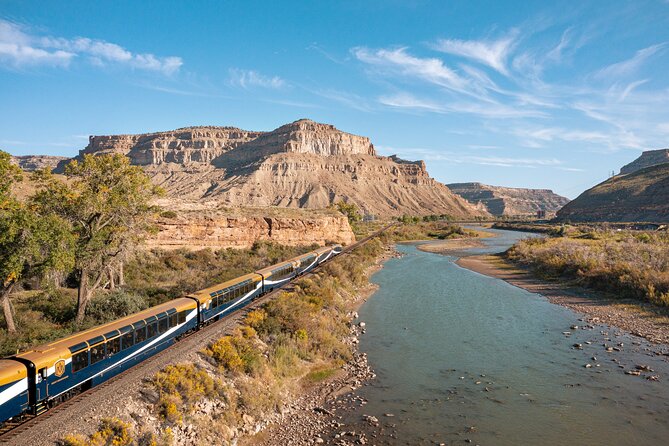
Soon after leaving Moab, the train passes through red-rock formations near Arches. You may see the La Sal Mountains in the distance, the second-highest mountain range in Utah. The national park contains more than 2,000 natural arches, including Landscape Arch, whose opening reaches 306 feet.
This is a scenic introduction, but it comes with a limit. The train passes the area without stopping, so you will not reach the park’s viewpoints or trails from the train. If Arches is a major reason for your trip, spend at least a night or two in Moab first.
The route then reaches Thompson Springs, a small settlement with links to the railroad and an archaeological site in Thompson Canyon. The Thompson Wash Rock Art District contains petroglyphs and pictographs associated with early Native American communities. You may glimpse the area from the train, but you will not visit the rock art site.
Cisco offers another quick look at the changing fortunes of the West. Once a watering stop for steam locomotives, it declined after the rise of Interstate 70 and the end of steam rail service. Its ghost-town appearance also made it a film location for Thelma and Louise. Again, the train passes through rather than stopping, so think of Cisco as a piece of scenery and railroad history, not a planned excursion.
Ruby Canyon is one of the first major visual payoffs. Red sandstone walls line about 25 miles of the Colorado River, and much of this stretch is difficult to reach by road. The canyon walls carry the painted words Utah and Colorado, marking the state line.
This is where the train’s format feels especially useful. You can see the river corridor without driving a rough route or navigating a raft. Keep your camera ready, but also watch the canyon itself. The best moments may be short, especially as the train curves through the red rock.
The journey continues through Fruita and Grand Junction. Fruita is known for dinosaur fossils and for the unusual story of Mike the Headless Chicken, remembered each May with a festival. Grand Junction sits where the Gunnison River meets the Colorado River and is a major fruit-growing center on Colorado’s western side.
Palisade brings peach orchards, vineyards, and the sharp cliffs of Mancos Shale. Mount Garfield rises above town at the high point of the Book Cliffs, which stretch roughly 200 miles across Utah and Colorado. Later, you pass New Castle, where the Colorado River supports fishing, rafting, and kayaking.
None of these places is a stop, but the changing scenery gives the first day a good rhythm. Desert cliffs gradually give way to river valleys and higher mountain walls. Dinner, drinks, and the Host’s commentary help you stay engaged during the longer stretches.
Glenwood Springs: one night between desert and mountain
You arrive in Glenwood Springs in the evening and spend the night at a moderate, clean, comfortable hotel with basic amenities. The exact property is assigned a few days before departure and appears on your boarding pass.
Glenwood Springs is a useful overnight point, not just a place to sleep. The town is known for its hot springs, and you may be able to walk from the hotel or use the included motorcoach transfer. Ask about timing as soon as you arrive, since the next morning’s departure schedule is important.
The overnight stay breaks up what would otherwise be a very long rail day. You can put away your small bag, stretch your legs, and enjoy the town before continuing. The tradeoff is that you do not have a full day in Glenwood Springs. This is a midpoint stop, not a spa vacation.
Your checked luggage is transferred to and from the hotel, which removes one of the common annoyances of a two-day journey. You can bring up to two pieces of luggage per person, with a combined limit of 60 pounds and no single bag over 50 pounds. Keep essentials, medication, and anything needed overnight in a small carry-on.
Day two: Glenwood Canyon, Gore Canyon, and Winter Park
Day two starts with a two-course hot breakfast using locally sourced ingredients. The train then enters Glenwood Canyon, widely regarded as one of the most scenic natural features in the upper Colorado region.
The canyon feels different from the red rock around Moab. Walls rise closer to the train, the river becomes a constant companion, and the route begins to feel more enclosed and mountainous. This is a good morning for the lounge car, where you can move around without giving up the view.
Gore Canyon is the dramatic centerpiece of the second day. Its cliffs rise more than 1,000 feet above the Colorado River, and sections of the river contain difficult Class 4 and Class 5 rapids. Names such as Fisherman’s Nightmare and Applesauce give you a sense of the water’s reputation.
The train does not stop here, but its slow passage gives you a useful view of the river corridor. You may also see rafters below. The onboard Hosts add context about the terrain, wildlife, rail line, and river, which helps turn a series of impressive views into a coherent story.
Byers Canyon follows, with more steep walls and possible wildlife sightings. Most of the second day stays close to the Colorado River, so the trip has a pleasing thread: river, rock, rail, and mountain.
Winter Park offers another shift. The resort town became an important ski center after the Winter Park Express began carrying skiers from Denver in 1940. The area receives about 300 inches of snow each year and has 3,000 acres of ski terrain.
As you leave Winter Park, the train enters the Moffat Tunnel. The tunnel cuts 6.2 miles through the mountains and carries the train beneath the Continental Divide. This is one of the route’s major engineering moments, although it is also a stretch when you will not have much to see outside.
After the tunnel, the scenery opens toward Gross Reservoir and Boulder. You may see the reservoir dam and the city of Boulder in the distance. Boulder sits where the Rockies meet the Plains, and the Flatirons form its most recognizable mountain profile.
The final rail highlight is the Big 10 Curve, a set of tight 10-degree curves that adds mileage while keeping the rail grade near 2 percent. It is a small detail with a useful lesson: mountain railways often solve steep terrain through patient engineering rather than sheer force.
Same tracks, a different carriage:
- Key West Conch Train Tour
★ 4.5 · 234 reviews - Fairbanks: Gold Dredge 8 Historic Train Tour
★ 4.7 · 219 reviews - Wild West Day Trip to Virginia City from Tahoe with Train Ride
★ 4.0 · 142 reviews - All-Day Guided Zipline Tour with Train Ride and Lunch in Durango
★ 5.0 · 133 reviews
SilverLeaf Plus: what the upgrade gives you
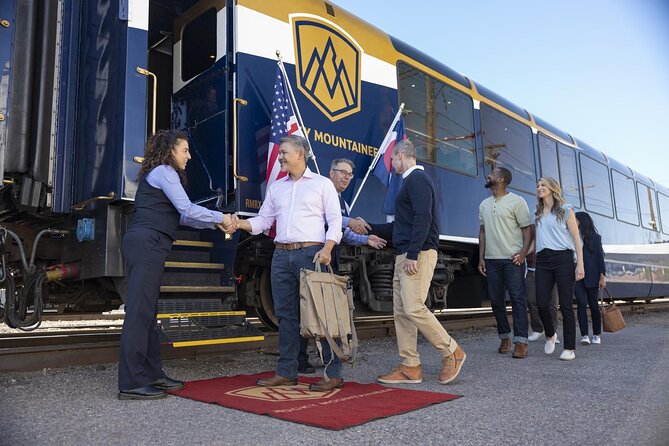
SilverLeaf Plus is worth considering if you care about comfort and room to move. The main extra is access to an exclusive lounge car with additional seating and a small outdoor viewing area.
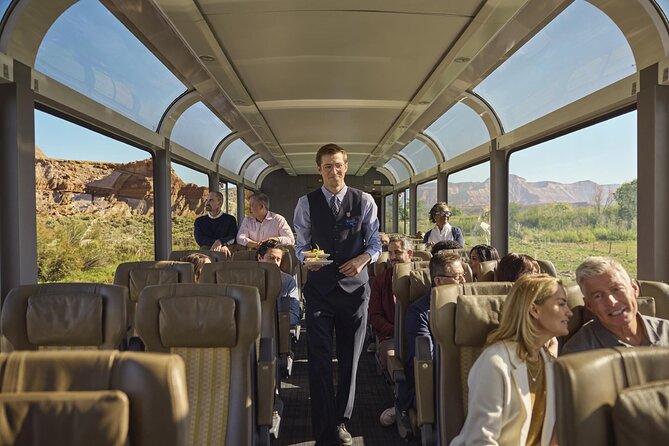
The regular coach already provides large windows, comfortable seats, air conditioning, and good legroom. One passenger found the lounge car’s seats more comfortable and spent most of the journey there except during meals. That is a helpful clue: the upgrade is not essential for seeing the route, but it gives you another place to sit when you want a change from your assigned seat.
Premium alcoholic drinks and signature cocktails are included at this service level. Food is served at your seat, and complimentary drinks are available onboard. The culinary program is a strong part of the trip, though expectations should stay realistic. One account praised the flavor and quality but noted that food was not always served hot.
You also receive restroom access, onboard Hosts, gratuities, and luggage handling. The group size is limited to a maximum of 15 people according to the tour details, although the train carriage itself may include more passengers depending on the operating setup.
Price, comfort, and who gets good value
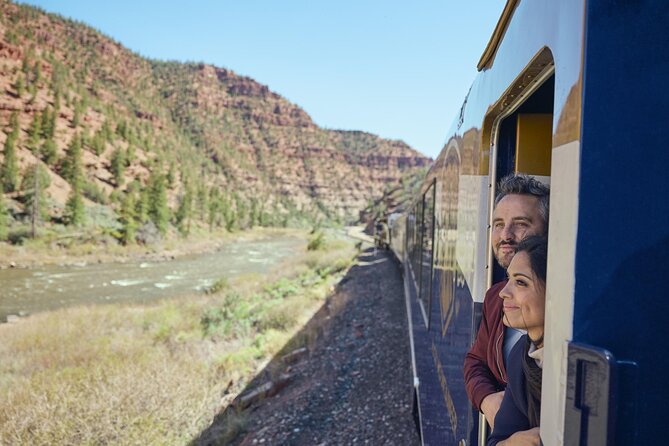
At $2,327 per person, this is a costly two-day experience. The price includes three meals, snacks and drinks onboard, the Glenwood Springs hotel, motorcoach transfers connected with the train, gratuities, luggage transfers, and the SilverLeaf Plus features.
The value depends on what you are buying. You are not paying only for transportation from Moab to Denver. You are paying for a scenic route, food service, an overnight stay, staff attention, and the chance to watch the Rockies without driving.
I think the price makes the most sense for a special occasion, a rail enthusiast, a honeymoon, a birthday, or anyone who dislikes long road trips but wants to see this corridor. It is less attractive if your main goal is to visit national parks on foot. A rental car and separate hotel plan will give you more freedom to stop, hike, and choose your own pace.
The train is comfortable for most people, and service animals are allowed. Most people can participate, but tell the operator about mobility needs before departure. One birthday trip included a passenger using a scooter, and the crew made a point of helping her stay comfortable.
The practical details that matter most
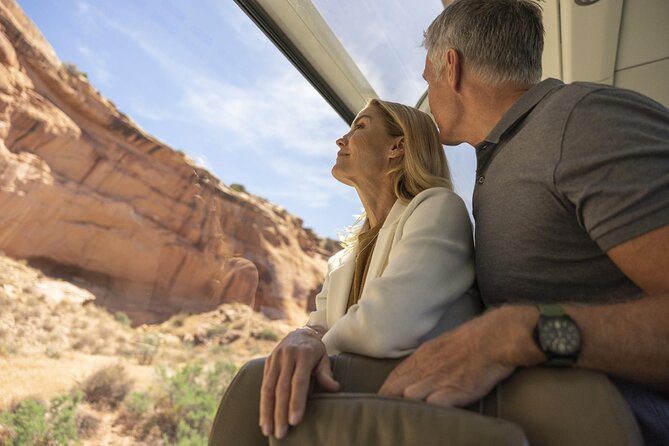
Your journey ends at Denver Union Station at 1701 Wynkoop Street. From there, Denver’s Lower Downtown district is close by, with food, music, public art, and the River North Art District, known locally as RiNo. A motorcoach transfer passes through RiNo after the train portion, but the rail journey itself does not stop for a neighborhood visit.
WiFi is not included onboard, so download anything you need before departure. The train has restrooms, but you should still keep medication, valuables, and overnight essentials with you rather than placing them in checked luggage.
The experience requires good weather. If poor weather forces a cancellation, you are offered another date or a full refund. Otherwise, the booking is non-refundable and cannot be changed, so confirm your dates carefully before paying.
Should you book the Moab to Denver train?
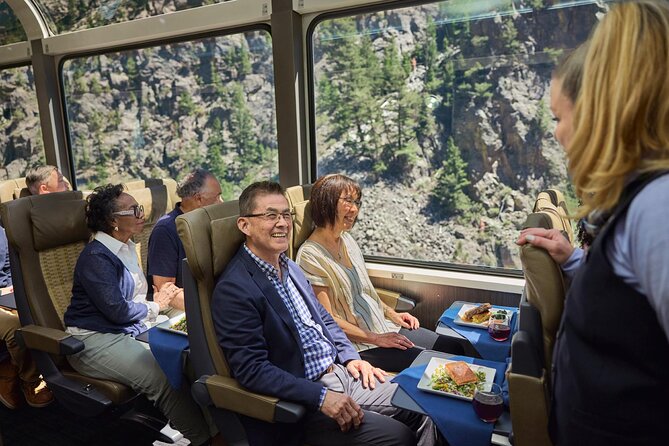
Book it if you want the journey itself to be the main event. The route gives you red-rock country, river canyons, mountain walls, the Moffat Tunnel, and the Continental Divide without asking you to drive. The food, luggage service, and friendly Hosts make the long hours easy, and SilverLeaf Plus gives you a better place to relax.
Skip it if you need frequent stops, hiking time, or a lower-cost way to get from Utah to Colorado. You will see Arches, Cisco, Ruby Canyon, and many towns from the windows, but you will not tour them on foot.
For the best fit, spend time in Moab before the train, treat Glenwood Springs as a pleasant overnight break, and plan Denver afterward. If the scenery matters more to you than checking off destinations, this is one of the more comfortable ways to cross the American West.
FAQ
How long is the Moab to Denver Rocky Mountaineer journey?
The trip lasts about two days. You depart Moab in the afternoon, stay overnight in Glenwood Springs, and arrive in Denver on the second day.
Where does the journey begin?
The starting point is the Rocky Mountaineer Moab Guest Centre at 59 South Main Street, Suite 3, Moab, Utah. The stated start time is 2:00 p.m.
Where does the train journey end?
The trip ends at Denver Union Station, 1701 Wynkoop Street, Denver, Colorado.
Is a hotel night included?
Yes. One night of accommodation in Glenwood Springs is included. The hotel is described as moderate, clean, and comfortable, and the property is assigned a few days before departure.
Are meals included?
Yes. Dinner, snacks, and complimentary beverages are included on day one. Day two includes a two-course hot breakfast and lunch.
What does SilverLeaf Plus include?
SilverLeaf Plus includes access to a lounge car with extra space and a small outdoor viewing area. It also includes premium alcoholic beverages and signature cocktails.
Can I visit Arches National Park or Ruby Canyon during the journey?
No. The train passes through or near these places but does not stop there. Plan separate time in Moab if you want to visit Arches National Park.
What is the luggage allowance?
You may check up to two pieces of luggage per person. The combined weight limit is 60 pounds per person, with no single piece weighing more than 50 pounds. Luggage transfers to and from the Glenwood Springs hotel are included.
New on the timetable around the USA
- Virginia City Day Tour From Lake Tahoe with Train Ride★ 4.8 · 19 reviews
- Ventura: Rail Bike Guided Tour with Farm Stand Stop★ 4.1 · 18 reviews
- Winnipesaukee Scenic Railroad★ 4.5 · 7 reviews
- Laughton Glacier Hike and White Pass Rail Adventure★ 5.0 · 12 reviews
- Snoqualmie Fall & Railway Museum 3-Hours (Private Tour)★ 5.0 · 4 reviews
- Grand Canyon Excursion from Sedona with First Class Train Ride★ 4.5 · 47 reviews
- Train Ride Adventure through Mother Natures Giant Redwoods Park★ 4.5 · 9 reviews
- Verde Canyon Rail Day Adventure from Scottsdale or Phoenix★ 5.0 · 4 reviews
Other USA Train Journeys worth a seat
Skunk Train: Pudding Creek Express from Fort Bragg
Read our review →
Wild West Day Trip to Virginia City from Tahoe with Train Ride
Read our review →
All-Day Guided Zipline Tour with Train Ride and Lunch in Durango
Read our review →
Chattanooga: Derailed Trolley Tour and Train Ride
Read our review →
Derailed Adventure – Chattanooga Trolley & Train Combo Tour
Read our review →Lists this ride appears on