
Review · CAIRO
Cairo: Luxor East and West Banks Guided Tour& Overnight Sitting Train Round Trip
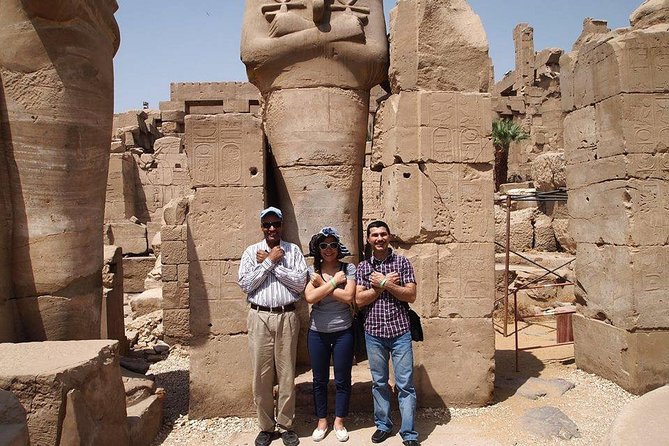
Luxor is a long way from Cairo, but this three-day rail tour gives you a practical way to see Egypt’s greatest ancient sites without arranging hotels, transfers, or local transport yourself. You leave Cairo at night, arrive in Luxor in the morning, spend the day on both banks of the Nile, then take the overnight train back.
I like the small maximum group of 15 and the private air-conditioned vehicle used for the sightseeing day. I also like the chance to visit both the Valley of the Kings and Karnak in one carefully planned day. The main drawback is simple: a first-class seated train for about nine hours each way is not the same as a sleeper, so this trip demands stamina.
Key points to know before booking
- First-class seated train: You travel overnight in a VIP first-class seat, not a sleeping berth. A sleeper upgrade costs $150 per person round trip.
- One packed Luxor day: The route covers the Valley of the Kings, Hatshepsut’s Temple, the Colossi of Memnon, Karnak, and Luxor Temple.
- Named local service: Guides such as Hany Yassen and driver Mohammed have been praised for clear historical explanations and helpful attention.
- Entrance fees are extra: Pay sightseeing admissions locally in Egyptian pounds. An international student card gives 50 percent off entrance fees.
- Small-group format: The tour accepts up to 15 people, with hotel pickup and transport by air-conditioned vehicle.
- Early return to Cairo: The train arrives at about 5 AM, and pickup to your hotel is not included at that point unless arranged for an extra fee.
The real tradeoff: a full Luxor day after a seated train
The smart idea here is to use the train as your overnight transport, saving a hotel night and getting you to Luxor in the morning. You then have one long day for the major monuments before returning to Cairo that night.
That efficiency comes with a cost. The ride takes roughly nine hours in each direction, and the standard option is a seated train. First class should make the journey more comfortable than a basic carriage, but you should not expect a bed or a full night’s sleep.
This works best for you if ancient Egypt is a priority and your time in Cairo is limited. It is less suitable if you need proper rest, prefer slow travel, or want time for Luxor’s markets, riverside walks, and smaller sites.
More Sleeper Trains in Egypt
- Egypt on Budget – 8 Days ( Cairo , Aswan , Nile Cruise – Luxor ) Sleeper Train
★ 4.5 · 121 reviews - 6- Days Aswan , Abu Simbel , Cruise , Luxor & Round Sleeper Train
★ 5.0 · 25 reviews - Cairo : Luxor East and West Banks Tour & Overnight SLEEPER Train Rounded trip
★ 4.5 · 21 reviews
Leaving Cairo after hotel pickup
Your trip begins with pickup from a hotel in Cairo or Giza. A transfer takes you to the Cairo train station, where you board the overnight first-class train to Luxor.
The pickup is useful because it removes one of the more awkward parts of Cairo travel: getting to the station at the right time with luggage and finding the correct departure point. The transfer and station arrangements are included, along with the train ticket.
The train ride is listed at about nine hours. You should plan for a long night, even with first-class seating. Bring your camera, but also bring anything that helps you rest in an upright seat. The operator may sometimes change the sitting train to a VIP bus at no extra cost, so confirm the transport arrangement before departure if the train experience matters to you.
A sleeper train upgrade is available for $150 per person round trip. That adds a significant amount to the base price, but it may be worth considering if sleeping properly is important to you.
Meeting your Luxor guide at the station
The train reaches Luxor in the morning. You meet your licensed guide at the station, then transfer by private air-conditioned vehicle to the West Bank.
This arrangement is one of the tour’s strongest practical features. You do not need to work out a taxi, negotiate a local ride, or find a guide after arriving tired from Cairo. Someone is there to move you directly into the sightseeing part of the day.
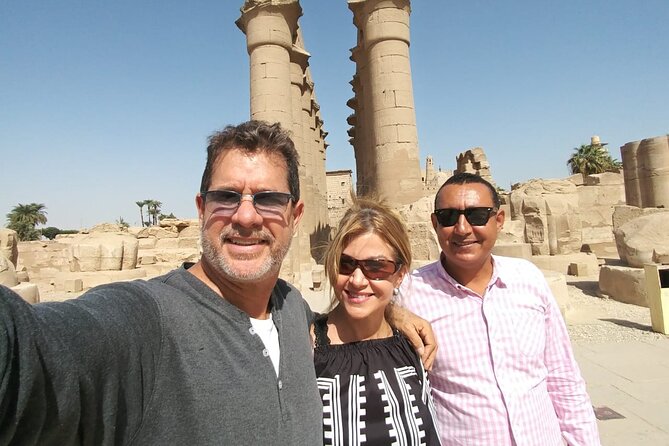
The guide’s role matters here. The ancient sites are large and full of names, rulers, gods, and symbols. A good explanation turns a wall covered in carved figures into a readable story. Hany Yassen is one guide associated with the tour, and he has been praised for strong historical knowledge and clear explanations. Mohammed, a driver connected with the same service, has also received praise for helpful and careful support during the day.
Guide language options are available, though the booking information does not specify every language. If you need a particular language, request it before you travel.
Valley of the Kings: tombs, heat, and extra fees
The first major stop is the Valley of the Kings, where rulers including Thutmose I, Thutmose III, Tutankhamun, Ramesses VI, Merenptah, and Amenhotep II were buried.
You have about two hours here. That is enough for a useful visit, but not enough to explore every tomb at a leisurely pace. Entrance fees are not included, and the cost must be paid locally in Egyptian pounds. Bring your international student card if you have one, since it provides a 50 percent discount on sightseeing admissions in Egypt.
The valley can be demanding. You may walk between tombs, and conditions can be hot. The value of having a guide is clear because your time is limited. Your guide can help explain which tombs are included, what to look for inside, and why the burial site was chosen.
Tutankhamun’s tomb is named in the route, but individual tomb access and entrance arrangements can vary. Do not assume every tomb is covered by the basic admission. Ask your guide what is included before paying.
More Sleeper Trains in Cairo:
- Cairo : Luxor East and West Banks Tour by Overnight Sitting Train Rounded trip
★ 5.0 · 20 reviews - Kings of Ancient Egypt : 6 Days Cairo and Luxor Guided Tours & Overnight Train
★ 5.0 · 7 reviews - Egypt 8 D: Cairo, Aswan,Abu Simbel, cruise, Luxor & Sleeper Train
★ 4.5 · 7 reviews - Cairo : 3-Days Cairo and Luxor Guided Tours by Overnight Train
★ 5.0 · 6 reviews
Hatshepsut’s Temple and the West Bank story
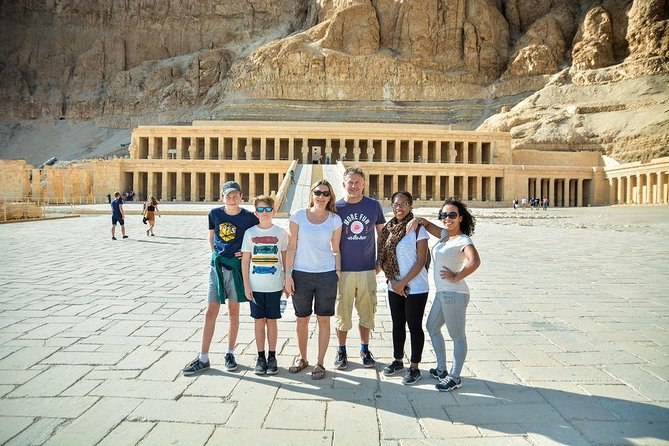
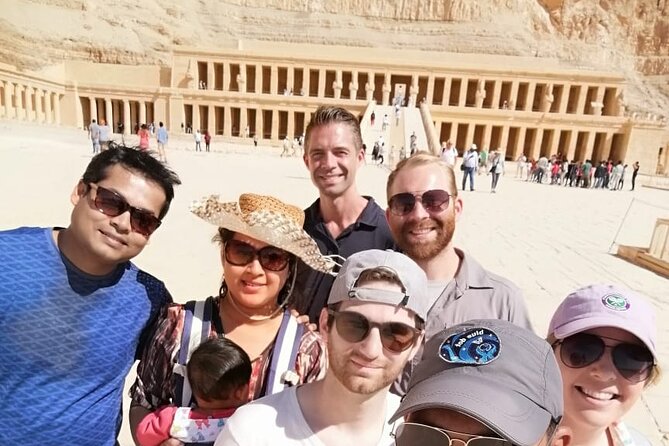
The next stop is the Temple of Queen Hatshepsut at Deir el Bahari, with about an hour and a half set aside for the visit.
Hatshepsut was Egypt’s only female ruler, and her temple offers a change of pace after the underground tombs. Its terraces and broad setting make it easy to understand royal display on a grand scale. Your guide can explain Hatshepsut’s rise to power and the way ancient Egyptian rulers presented themselves through architecture.
Admission is extra here as well. Since the tour covers several paid sites in one day, keep enough Egyptian pounds available. Card payment is not promised in the tour details, so local cash is the safer plan.
The scheduled time is generous enough for photographs and a proper explanation, but this remains a fast-moving day. You will need to stay aware of meeting times so the group can continue.
A short stop at the Colossi of Memnon
The Colossi of Memnon is a shorter visit, planned for about 40 minutes. These huge seated statues once guarded the entrance to the mortuary temple of Amenhotep III.
There is no admission fee listed for this stop, which makes it an easy addition to the route. It also gives you a brief pause between the larger West Bank sites and the move across to the East Bank.
Do not expect a long museum-style visit here. The stop is mainly about seeing the statues, hearing the story of Amenhotep III, and taking photographs. The short timing is sensible, especially on a day already filled with major temples and tombs.
Karnak: the day’s biggest ancient site
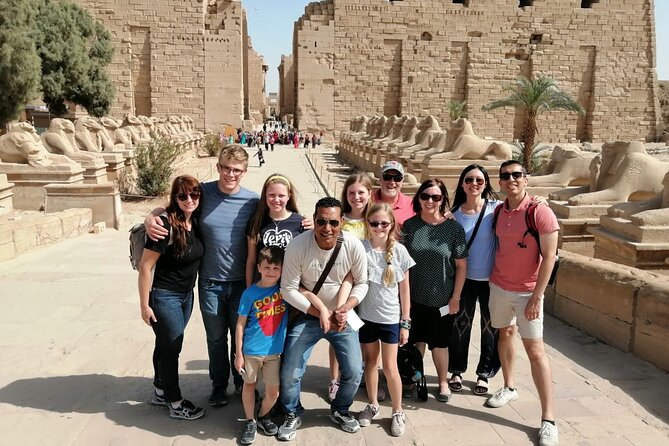
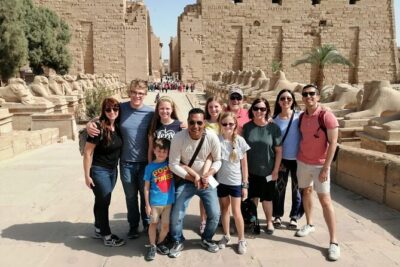
After the West Bank, you cross to the East Bank for Karnak Temple. The planned visit lasts about two hours, and you will need that time. Karnak is not one single building but a huge religious complex developed by many rulers over many centuries.
The site was first dedicated to Amun-Ra, his wife Mut, and their son Khonsu. Later kings added gateways, courtyards, columns, halls, and shrines. The result is a vast group of temples with more than 20 major religious structures.
The Hypostyle Hall is the star for many visitors. Its forest of giant columns gives you a direct sense of the scale of Egyptian temple building. The columns are shaped like papyrus plants, and the carved surfaces carry prayers, royal scenes, and religious symbols.
Karnak is also where a guide can make the biggest difference. Without context, it can feel like a huge field of stone. With a good explanation, you begin to see how processional routes, sacred spaces, and royal additions fit together.
Admission is not included. The two-hour schedule gives you a solid introduction, but not every corner of the complex. If you want to study inscriptions slowly or photograph every major structure, you will want a longer Luxor stay.
Luxor Temple after the crowds and heat
The final major sightseeing stop is Luxor Temple, with about an hour and a half planned for the visit.
This temple gives you a different experience from Karnak. The site is more compact, so you can follow its main spaces without covering such a wide area. The evening timing can also make it a fitting final stop, though the exact arrival time may depend on the day’s pace and transport.
Luxor Temple was linked to the religious world of Karnak, and your guide can help connect the two sites. After a day of tombs, statues, columns, and royal stories, this final temple brings the East Bank portion of the visit to a close.
Admission is extra. By this point, you may be tired, so the guide’s pacing matters. The schedule allows enough time to see the main areas, but this is not an unhurried sunset visit with hours to spare.
Returning to Cairo after a very long day
At the end of the Luxor program, you are taken to the station for the overnight seated train back to Cairo. The return ride is listed at about nine hours.
This is the part of the tour to consider carefully. You will have spent the day walking through major archaeological sites, then board another long overnight journey. Some people will value the savings in time and hotel costs. Others will find the combination exhausting.
The base price is $333 per person. That includes Cairo and Luxor station transfers, round-trip first-class VIP seated train tickets, the air-conditioned vehicles, the guide, service charges, taxes, landing fees, and parking fees. It does not include entrance tickets to the attractions.
For the right kind of itinerary, that is reasonable value. You are paying for a coordinated long-distance trip, local transport, a guide, and access to a full day of Luxor sightseeing. Still, add the entrance fees and consider the sleeper upgrade if you need comfort. The total cost can rise beyond the advertised price.
The train arrives at Cairo station at about 5 AM. A key detail is that hotel pickup is not included after this arrival. You can request it for an extra fee. Arrange this ahead of time if you do not want to sort out transport while tired and carrying bags.
What the small-group format changes
The maximum group size is 15 people. That is small enough for a guide to speak to the group without shouting across a large crowd, but it is not a private tour.
You get a private air-conditioned vehicle for the tours, which should make the day easier than arranging separate rides between the West and East Banks. Group travel also keeps the cost lower than hiring a fully private Cairo to Luxor package.
The strongest personal service comes from the guide and driver. Hany Yassen has received particular praise for explaining the sites clearly, while Mohammed has been praised for going beyond basic driving duties. The operator can provide guides in different languages, so ask for your preferred option at booking.
The tour may include stops for coffee, food, or purchases, depending on the day and guide. If you prefer to spend every spare minute at the monuments, make your priorities clear. If you need coffee after the overnight train, a short break may be welcome.
Who should book this Cairo to Luxor tour?
I would choose this tour if you have limited time in Egypt and want the main Luxor highlights without planning the rail tickets, station transfers, vehicle, and guide separately.
It suits you particularly well if:
- You are staying in Cairo or Giza and want a fast Luxor visit.
- You care more about seeing the major monuments than sleeping in a hotel in Luxor.
- You prefer having a guide explain the sites.
- You are comfortable with long train rides and a packed sightseeing day.
- You want a group price rather than a fully private arrangement.
I would think twice if you need a proper bed, dislike overnight transport, or want to explore Luxor at a slow pace. A longer stay in Luxor would give you more breathing room, but this option is built for coverage and convenience.
Free cancellation is available if you cancel at least 24 hours before the local start time. Cancellations within 24 hours are not refunded, and late changes are not accepted.
Should you book it?
Book this tour if your priority is the biggest ancient-Egypt sights in the shortest practical time. The route is strong, the transport is organized, and the small group plus local guide can save you a great deal of planning.
Before paying, confirm three things: the exact train arrangement, the language of your guide, and the expected entrance fees. If you are a student, carry your international student card. If sleep matters to you, price the $150 sleeper upgrade.
The tour is not luxurious in the usual sense. It is an efficient, demanding Cairo to Luxor run. For an energetic visitor with only a few days, it offers a solid way to see the Valley of the Kings, Karnak, and Luxor Temple in one serious day.
FAQ
How long does the tour last?
The experience lasts about three days. You leave Cairo on the first night, spend the second day sightseeing in Luxor, return to Cairo overnight, and arrive at about 5 AM on the third day.
Is hotel pickup included?
Pickup is included from hotels in Cairo or Giza at the start. Drop-off is provided at your Cairo or Giza hotel after the initial pickup arrangements, but pickup from Cairo train station after the return is not included unless requested for an extra cost.
Is the train a sleeper train?
No. The standard option is a first-class VIP seated train in both directions. A sleeper train upgrade is available for $150 extra per person round trip.
Are attraction entrance fees included?
No. Entrance fees are paid separately at the sightseeing sites in Egyptian pounds. An international student card gives a 50 percent discount on entrance fees in Egypt.
Which sites are visited in Luxor?
The route includes the Valley of the Kings, the Temple of Hatshepsut at Deir el Bahari, the Colossi of Memnon, Karnak Temple, and Luxor Temple.
What type of vehicle is used in Luxor?
Sightseeing transfers in Luxor use a private air-conditioned vehicle. Pickup and drop-off at the Cairo and Luxor train stations are also included.
How many people can join the tour?
The tour has a maximum of 15 travelers.
Can the train be changed to a bus?
In special cases, the sitting train may be changed to a VIP bus at no extra cost. The tour information also states that the train can be changed to a bus without an additional charge.
New on the timetable around Cairo
- 2-Day Private Tours to Luxor and Dendera from Cairo by Sleeper Train★ 5.0 · 3 reviews
- Package 7-Days 6-Nights Cairo Pyramids, Nile Cruise&Alexandria by Sleeper Train★ 5.0 · 2 reviews
- Luxor Day Tour by Sleeper Train★ 5.0 · 3 reviews
- Full day Luxor tour from Cairo by a sleeper train★ 5.0 · 5 reviews
- 10 Day Around Egypt to Cairo ,Giza ,White desert ,Nile Cruise With Train & Hotel★ 5.0 · 5 reviews
- Kings of Ancient Egypt : 6 Days Cairo and Luxor Guided Tours & Overnight Train★ 5.0 · 7 reviews
- Cheap Egypt holiday 11 Days Cairo-Luxor-Aswan-Abu Simbel by sleeping train★ 5.0 · 4 reviews
- Cairo and Nile Cruise Tours to Luxor and Aswan by Sleeping Train★ 5.0 · 4 reviews
Other Sleeper Trains in Egypt worth a seat
Egypt on Budget – 8 Days ( Cairo , Aswan , Nile Cruise – Luxor ) Sleeper Train
Read our review →
6- Days Aswan , Abu Simbel , Cruise , Luxor & Round Sleeper Train
Read our review →
Cairo : Luxor East and West Banks Tour & Overnight SLEEPER Train Rounded trip
Read our review →
Egypt 8 D: Cairo, Aswan,Abu Simbel, cruise, Luxor & Sleeper Train
Read our review →
Kings of Ancient Egypt : 6 Days Cairo and Luxor Guided Tours & Overnight Train
Read our review →
Cairo : 3-Days Cairo and Luxor Guided Tours by Overnight Train
Read our review →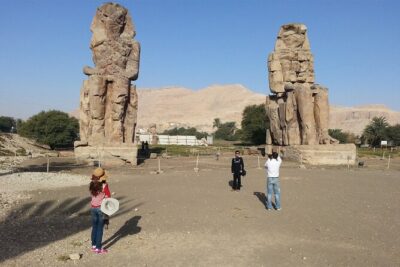
Full day Luxor tour from Cairo by a sleeper train
Read our review →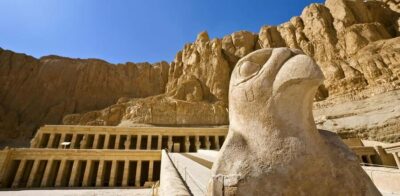
Cairo–Luxor Sleeper Train Experience: 2 Days or 1-Day Return
Read our review →Lists this ride appears on