
Review · AZERBAIJAN
Baku City Sights Guided Night Walking Tour with Funicular
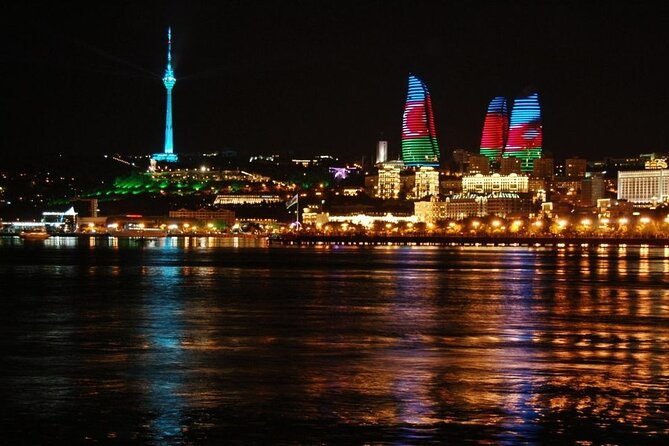
Baku makes a strong first impression after dark. The Flame Towers flicker above the city, trees and fountains glow, and the waterfront takes on a polished, theatrical look. This 2.5-hour evening walk links old streets, grand buildings, the boulevard, and Highland Park without asking you to plan the route yourself.
I like the small maximum group of 10, which should make it easier to hear the guide and keep the walk moving. I also like the funicular ride, since it saves the uphill climb and gives you a quick change of scene from the waterfront to the city’s best night views.
The main thing to consider is pace. With more than 20 named stops and only about two and a half hours, most visits are brief photo and explanation stops rather than full sightseeing sessions. You will see a lot, but you will not have time to enter the museums or linger at every monument.
Key points at a glance
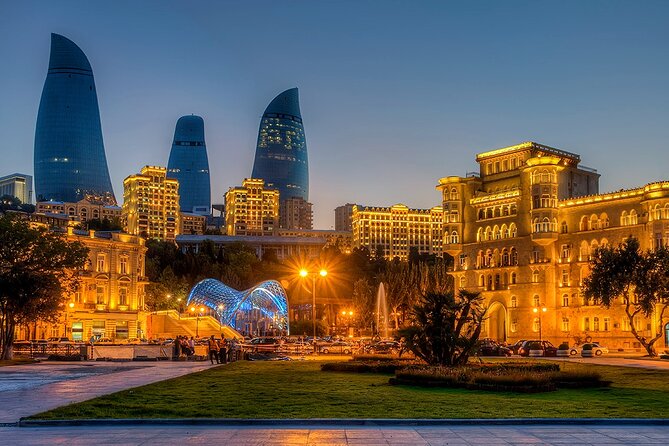
- Flame Towers after dark: See Baku’s famous illuminated skyline from several useful viewpoints.
- Funicular to Highland Park: The ticket is included, and the ride avoids a steep walk uphill.
- A broad city introduction: Cover parks, palaces, squares, the boulevard, Mini Venice, memorials, and major modern buildings in one evening.
- Miri may guide the walk: Miri is identified as one English-speaking guide for this experience and is described as informative and engaging.
- Small-group format: The group is limited to 10 people, a useful size for a walking tour through busy central areas.
- Good value at $15.99: The price includes the guide and funicular ticket, with bottled water available on request.
Why Baku is best seen after sunset
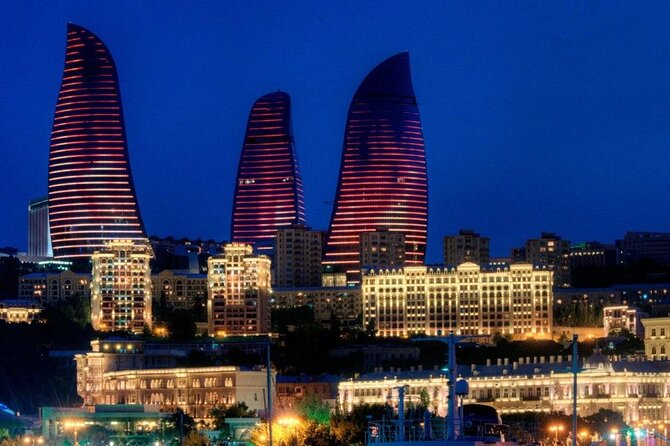
This tour is built around Baku’s night personality. During the day, you notice stone walls, ornate facades, traffic, and the broad Caspian waterfront. At night, lighting becomes part of the sightseeing. The Flame Towers provide the headline view, but the smaller touches matter too: lit trees, fountains, statues, and pale stone buildings that look different under spotlights.
You begin at Icherisheher Metro Station at 7 p.m. That is a sensible meeting point. It is easy to identify, close to the Old City, and connected to Baku’s public transport network. The opening talk also gives you some context about the city’s transport system before the walking begins.
The tour’s strongest feature is its range. In one evening, you move from historic Baku to oil-era architecture, from a waterfront promenade to national memorials, and then up to a high viewpoint. If you have only a short stay in Baku, this lets you get your bearings quickly.
The trade-off is that this is a sampler. You should not book it expecting museum visits, long architectural lectures, or extended time at each stop. Think of it as a guided first look, with enough information to help you decide what deserves a return visit.
More Funicular Rides in the world:
- Como-Brunate Jeep Sightseeing Tour & Funicular Rail SKIP THE LINE
★ 4.5 · 6 reviews - Krakow: Zakopane, Funicular, Cheese, and Highland Day Trip
★ 4.7 · 1,489 reviews - Interlaken: Funicular Ticket to Harder Kulm
★ 4.7 · 1,469 reviews
From Icherisheher Metro Station to Philarmonia Garden
The first proper stop is Philarmonia Garden, a leafy pocket beside the Old City. The guide explains how the garden developed, why it has more than one name, and the stories linked with the area. That makes this more than a quick walk through a park.
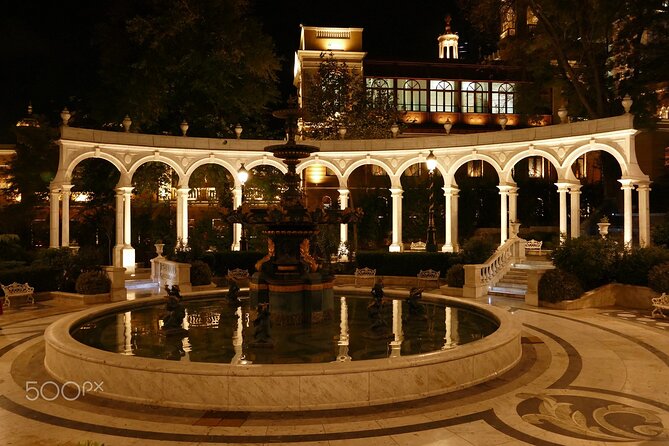
The garden is especially effective at night, when the surrounding stone buildings and paths are lit. You get a softer introduction to Baku before the route reaches the large roads and open waterfront.
The stop is listed at about five minutes, so you should expect a short explanation and a few photographs rather than a long pause. Wear shoes that are comfortable for walking on city streets and park paths. The tour is not a strenuous hike, but the route keeps moving.
Nearby, you pass the National Art Museum of Azerbaijan and buildings connected with the city administration. The route also points out the Executive Office of the President and the Baku City Executive Power. These stops give you a look at how grand public buildings shape central Baku, even if you do not go inside.
Squares, palaces, and Baku’s oil story
The Clock Tower is one of the lighter moments on the route. It is a photo stop with a pleasant evening atmosphere and, according to the tour details, live piano melodies nearby. That small musical touch helps break up the succession of facades and monuments.
At Azneft Square, the subject changes to oil. Baku’s growth is closely tied to petroleum, and the square helps explain that connection. You also see part of the Formula 1 route and the Four Seasons Hotel, whose grand facade adds a modern luxury note to the old-city setting.
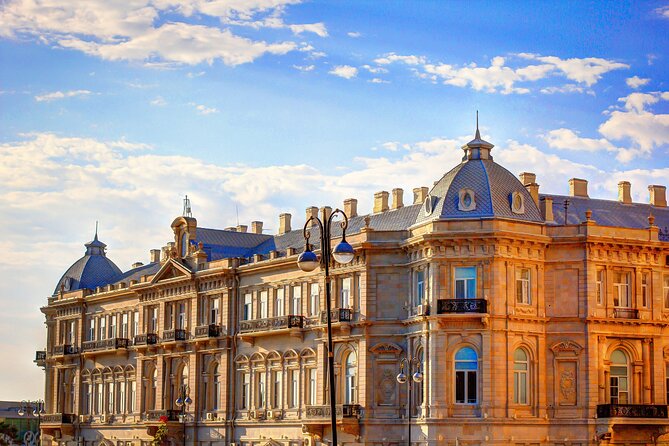
The route then passes several important buildings, including Ismailiyya Palace, the former Taghiyev School for Girls, and the Institute of Manuscripts of Azerbaijan. These are useful exterior stops because they show different sides of Baku’s past: wealthy patrons, education, literature, and public culture.
The former Taghiyev School for Girls is particularly interesting. It later became the Institute of Manuscripts, so the building links the early push for girls’ education with Azerbaijan’s literary collections. You will not be touring the interior on this walk, but the guide’s short explanation gives the facade a reason to matter.
Ismailiyya Palace provides another strong exterior view. Its ornate design reflects the wealth and ambition of an earlier Baku. At the Nizami Museum of Azerbaijani Literature, the route turns toward Azerbaijan’s literary identity before ending later near Nizami Street.
Baku Boulevard, Mini Venice, and the Carpet Museum
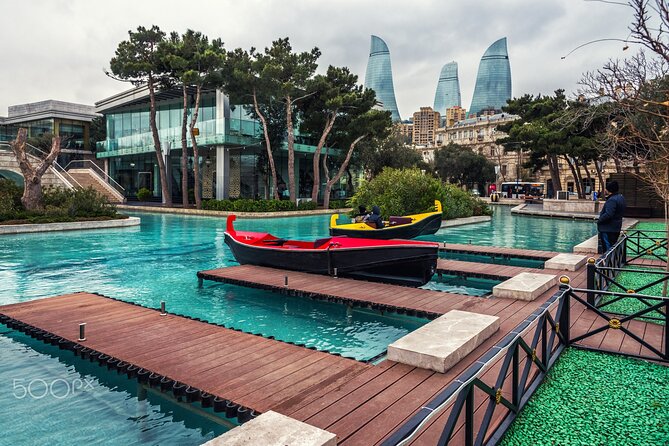
Baku Boulevard is one of the evening’s most enjoyable sections. The promenade runs beside the Caspian Sea, with broad views, open air, and plenty of room to pause for photographs. The guide explains how the waterfront changed over time and points out good places for city and bay views.
You should expect around 10 minutes here, enough to take in the atmosphere but not enough for a slow waterfront stroll. If you want a longer walk along the promenade, save time for another evening.
Mini Venice is a curious stop. Its canals and small bridges imitate the look of Venice, giving the boulevard a playful attraction that is quite different from Baku’s grand stone buildings. The guide explains how it was created and why the Italian theme was chosen.
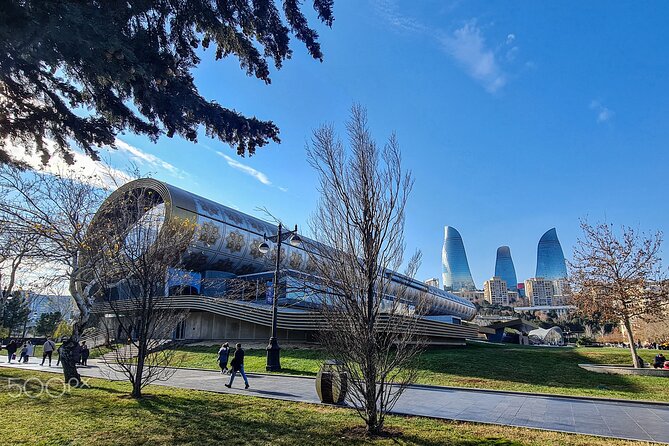
Next comes the Azerbaijan National Carpet Museum, shaped like a rolled carpet. It is one of the city’s most recognizable modern buildings, and the exterior works especially well at night. Nearby, you also pass the International Mugam Centre and Deniz Mall.
The Mugam Centre introduces a key part of Azerbaijani music. Mugam is a traditional vocal and instrumental form with a major place in the country’s culture. Deniz Mall then brings you back to present-day Baku, with a modern commercial building beside the cultural institutions.
These waterfront stops are not full admissions. The tour includes outdoor viewing only, so you should plan a separate museum visit if carpets, manuscripts, or music are priorities for you.
Same tracks, a different carriage:
- Mt Fuji & Hakone Cruise, Drum Show Bullet Train 1 Day from Tokyo
★ 4.0 · 7,413 reviews - Montserrat & Cogwheel Train, Gourmet Wine Tasting & Tapas/Lunch
★ 5.0 · 6,290 reviews - From Milan: Lake Como Cruise, St. Moritz & Bernina Red Train
★ 4.6 · 5,648 reviews - Tokyo Mt Fuji 5th St & Hakone Cruise Bus Tour w/Bullet Train
★ 4.4 · 5,024 reviews
The funicular ride to Highland Park
The included funicular ticket is the practical centerpiece of the experience. Instead of walking uphill from the waterfront, you ride the short funicular to Highland Park. It is a welcome break after the city walk, and the change in height gives you a new view of Baku.
At the top, the route reaches Highland Park, where the terraces look across the Bay of Baku. This is the place for wide night photographs. You can see the city spread out below, with the Flame Towers dominating the skyline.
The schedule allows about 10 minutes for the funicular and roughly 10 minutes at Highland Park. That is enough for views and photographs, though the timing may feel tight if the group is large or the stop is busy. The group limit of 10 should help keep boarding and regrouping manageable.
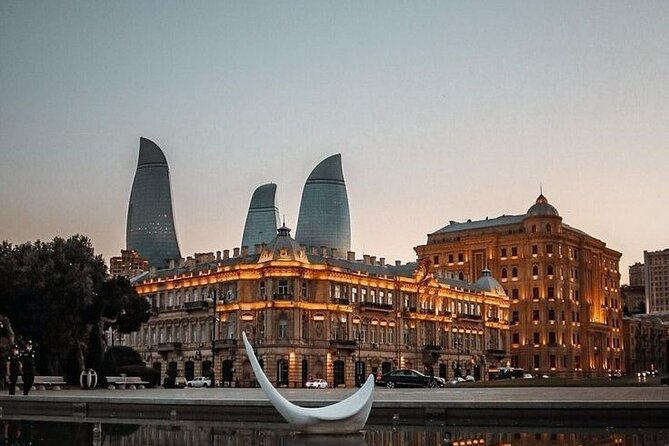
The Flame Towers are the visual highlight. Their three forms represent residential, office, and hotel use, and their illuminated screens give Baku much of its modern nighttime identity. The towers look different from the waterfront than from Highland Park, so the route gives you more than one chance to photograph them.
Martyrs’ Lane and the Eternal Fire Monument
The mood changes at the Alley of Martyrs. This memorial area honors people who died in struggles connected with Azerbaijan’s independence, including the events of January 20, 1990, and the Garabagh War. It is a place for quiet reflection, not just another scenic stop.
You also see the Alley of Martyrs Mosque and the Baku Turkish Cemetery. The guide connects these places with Azerbaijan’s relationship with Turkey and with the country’s difficult path toward independence. The mosque also offers a chance to hear about religious tolerance in Azerbaijan.
The Eternal Fire Monument is dedicated to the victims of Black January. Here, the tour asks you to slow down and treat the setting with respect. The short stop may not allow a full account of the events, but it gives you a clear sense of why the memorial matters.
This section is valuable because it prevents the tour from becoming only a display of lights and polished architecture. Baku’s modern image sits beside serious national memory, and the route makes that contrast visible.
Returning through central Baku
After Highland Park and the memorial area, you return toward Icherisheher Metro Station on foot. The return walk is described as a leisurely 10 to 15 minutes, though the full timing shown for the return section allows longer. Expect to finish near the original meeting point, with the route passing through more central sights.
The later stops include Bulaq Spring, known for zodiac-themed sculptures. It is a small detail, but it gives you something different from the grand public buildings and memorials. The route also passes Azerbaijan State University of Economics and the Monument of Independence.
The Monument of Independence marks Azerbaijan’s sovereignty and national identity. Nearby, you see the former Taghiyev School for Girls and the Institute of Manuscripts again in the wider sequence of central sights. The final area includes the Nizami Museum of Azerbaijani Literature and Nizami Street.
Nizami Street is a natural ending point. Shops and cafes give the tour a more social, everyday finish after the solemn memorials and formal government buildings. It is also a useful place to continue your evening, though this activity officially returns to the meeting point at Icherisheher.
What $15.99 gets you
At $15.99 per person, this is a strong value if you want orientation rather than private guiding. The price includes the walking guide and the funicular ticket, which is the only listed admission. A half-liter bottle of still water is available on request.
The value comes from the route design. You are not paying for entry to several attractions, but you are getting a guided connection between places that would be scattered across the city if you visited them alone. The funicular ticket also removes one small extra cost and one uphill section.
The price is less compelling if you already know central Baku well or prefer to explore slowly. You could see many of the outdoor sights independently, and the short stop times mean you are paying mainly for the route, explanations, and company.
The group size makes the price more attractive. With no more than 10 people, the guide can usually keep the walk together and answer some questions. Miri is one guide named for this experience, and English is used by the group. The atmosphere may include people from several countries, which can make the walk feel social rather than formal.
Who should book this evening walk?
I would choose this tour for a first night in Baku, especially if you have limited time. It gives you the main visual markers: the Flame Towers, Highland Park, the boulevard, the Carpet Museum, Mini Venice, and the Old City area.
It also suits you if you want a guide to explain Azerbaijan’s oil era, independence memorials, architecture, and cultural traditions in one outing. The route includes enough variety to show that Baku is not simply an old walled city or a modern oil capital.
You should think twice if you want long visits inside museums or if you dislike a fixed pace. The schedule is full, and several stops last only five minutes. Families and most people with ordinary walking ability can participate, and service animals are allowed, but the tour still involves a substantial amount of walking and an uphill city route, even though the funicular handles the main climb.
Confirmation is provided when you book, and free cancellation is available up to 24 hours before the 7 p.m. start. Changes or cancellations inside that window are not accepted for a refund. Since the experience requires good weather, poor conditions may lead to another date or a full refund.
Should you book it?
Book it if you want a compact, affordable introduction to Baku at night. The strongest reasons are the illuminated Flame Towers, the included funicular, Highland Park views, and a route that covers both attractive public spaces and serious memorial sites.
Skip it if your priority is entering the Carpet Museum, Art Museum, or Manuscripts Institute, since those are exterior stops here. For most first-time visitors, though, the tour offers a useful first evening and leaves you with a clear list of places to revisit at your own pace.
FAQ
Where does the Baku night walking tour start?
The tour starts at Icherisheher Metro Station in Baku, Azerbaijan.
What time does the tour begin?
The scheduled start time is 7:00 p.m.
How long does the experience last?
The tour lasts approximately 2 hours and 30 minutes.
Is the funicular ride included?
Yes. A funicular ticket for access to Highland Park is included.
What is the maximum group size?
The activity accepts a maximum of 10 people.
Does the tour include museum admission?
No. The listed stops at the National Art Museum, Carpet Museum, Institute of Manuscripts, and other cultural buildings are sightseeing stops without admission tickets.
Is bottled water included?
A 0.5-liter bottle of still water is available on request.
Where does the tour end?
The activity ends back at the meeting point, with the route returning to the Icherisheher area on foot.
What happens if the weather is poor?
Because the experience requires good weather, it may be canceled. You will then be offered a different date or a full refund.
New on the timetable around the world
- Zermatt Village & Gornergrat Railway Tour | From Bern★ 5.0 · 2 reviews
- York Day Rail Tour from London including Hop-on Hop-off tour★ 5.0 · 3 reviews
- Zagreb: Plitvice With Secured Tickets, Boat And Train Ride★ 4.6 · 15 reviews
- With the steam train through Transylvania- 8 Day★ 5.0 · 2 reviews
- Winter Tour Viking Village, Nærøyfjord Cruise & Flåm Railway★ 4.6 · 26 reviews
- Virginia City Day Tour From Lake Tahoe with Train Ride★ 4.8 · 19 reviews
- USHUAIA | Tierra del Fuego National Park & Optional Train★ 4.6 · 11 reviews
- Ventura: Rail Bike Guided Tour with Farm Stand Stop★ 4.1 · 18 reviews
Other Funicular Rides worth a seat

Castle Entry Ticket with Optional Funicular Ride
Read our review →
Lists this ride appears on