
Review · AUSTRALIA
Blue Mountains: Zig Zag Railway Heritage Train Ride
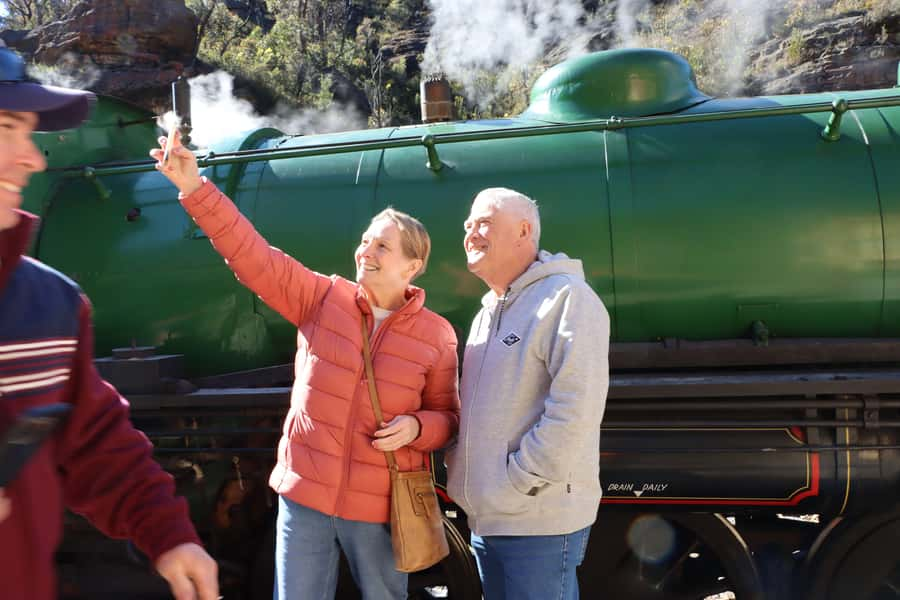
The best part of the Zig Zag Railway is the chance to watch an old locomotive work for its journey. At each terminus, the engine runs around the train and repositions itself, giving you a close look at the machinery and a good photo opportunity. You are not simply sitting on a train while scenery slips past. The railway operation is part of the show.
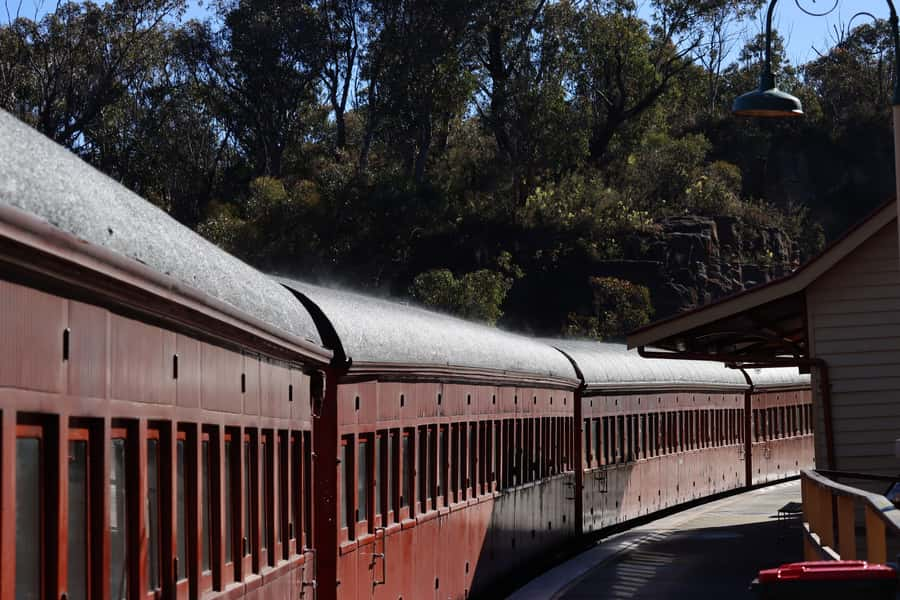
I like the choice of route lengths, since you can fit a shorter ride into a busy Blue Mountains day or allow up to 90 minutes for a fuller outing. I also like the mix of sandstone cliffs, forest, and broad valley views, which gives the ride more character than a simple heritage train loop.
The main consideration is access. Some routes require stairs at Zig Zag station, and the train has no toilet on board. Services can also change because of track work or maintenance, so check the operating day and route before you set out.
Key Points Before You Book
- Watch the locomotive run-around: The engine repositions at each terminus, making the mechanics of the railway part of your visit.
- Choose a 45 to 90-minute option: Different route choices let you match the ride to your schedule.
- See classic Blue Mountains scenery: Expect sandstone cliffs, forest, and wide valley views from the train and station viewing areas.
- Use the station facilities: Toilets are available at all stations, with a café and souvenir shop available during your visit.
- Allow time for photos: Terminus stops and walkable viewing areas give you more than one chance to take pictures.
- Check access before booking: Wheelchair access is limited, and some Zig Zag station routes use stairs only.
Why the Zig Zag Railway Feels Different From a Scenic Train Ride
A modern sightseeing train usually asks you to sit back and watch the view. The Zig Zag Railway adds another layer: you get to see how the railway works.
The line was originally built in the 1860s and has been restored and maintained by volunteers. That history matters because the experience is tied to the railway itself. The track, station stops, locomotive movements, and old-fashioned carriages are not just decoration. They show how an earlier generation handled steep mountain terrain with the tools available at the time.
I find the run-around especially useful for understanding the operation. At a terminus, the locomotive cannot simply continue forward. The engine is repositioned so it can haul the train in the opposite direction. You can watch this process rather than treating it as an invisible technical detail.
That makes the ride appealing to two kinds of visitors. Train enthusiasts will have something mechanical to study, while casual visitors can enjoy the scenery and the slower pace. You do not need a detailed interest in railway engineering to follow what is happening. The movement is easy to watch, and the setting gives you plenty to photograph.
More Train Journeys around Australia:
- From Cairns: Self-Guided Kuranda Trip with Train and Skyrail
★ 4.6 · 3,392 reviews - Puffing Billy Railway: Heritage Steam Train Journey
★ 4.6 · 1,195 reviews - Kuranda Scenic Railway Day Trip from Cairns
★ 4.5 · 1,075 reviews
Clarence to Bottom Points: The Main Ride
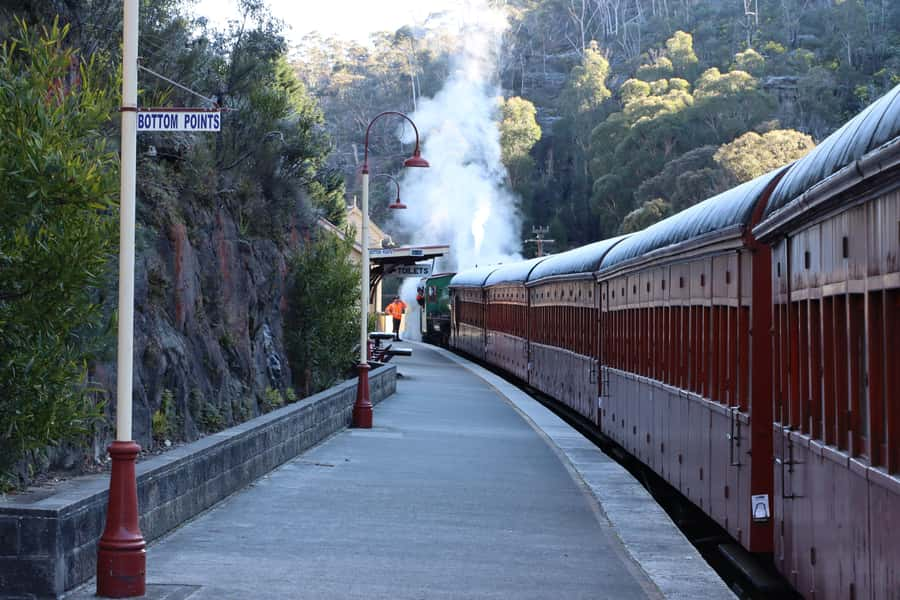
One route option is a round trip from Clarence to Bottom Points and back. This is the clearest choice if you want a defined train outing rather than a short visit focused mainly on the station.
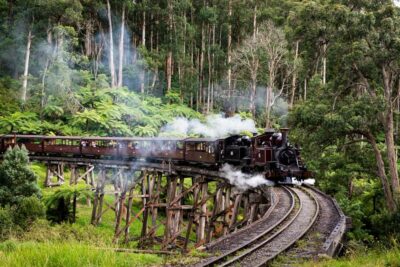
As the train moves through the Blue Mountains, you can expect views of sandstone cliffs, forest, and sweeping valleys. The scenery changes in scale. In one moment you are looking closely at the railway and the cuttings around it. In the next, the view opens toward the wider mountain country.
The train ride is not designed as a high-speed trip. Its value comes from the old locomotive, the route, and the chance to take in the surroundings at a measured pace. I would choose this option if you want the full heritage railway feeling and have enough time to enjoy the stops.
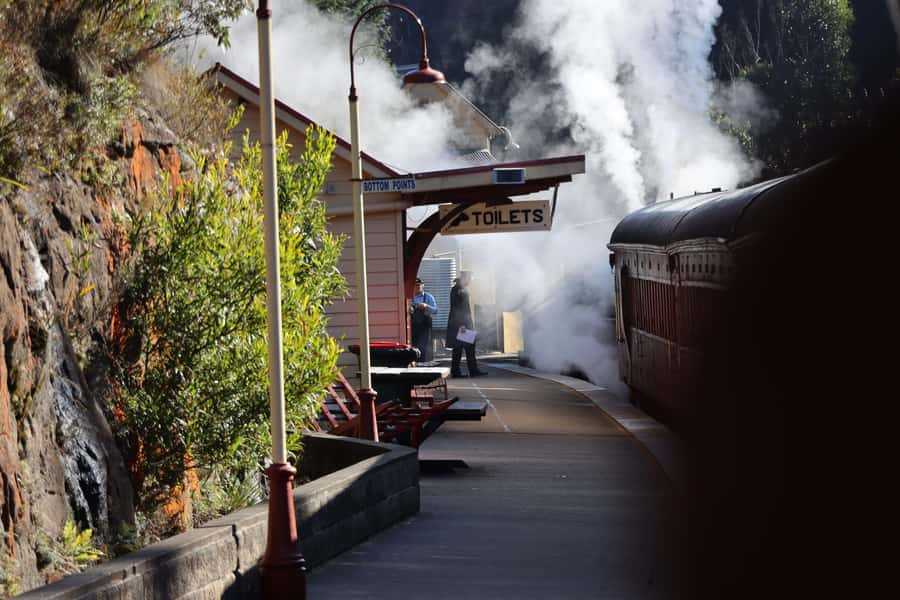
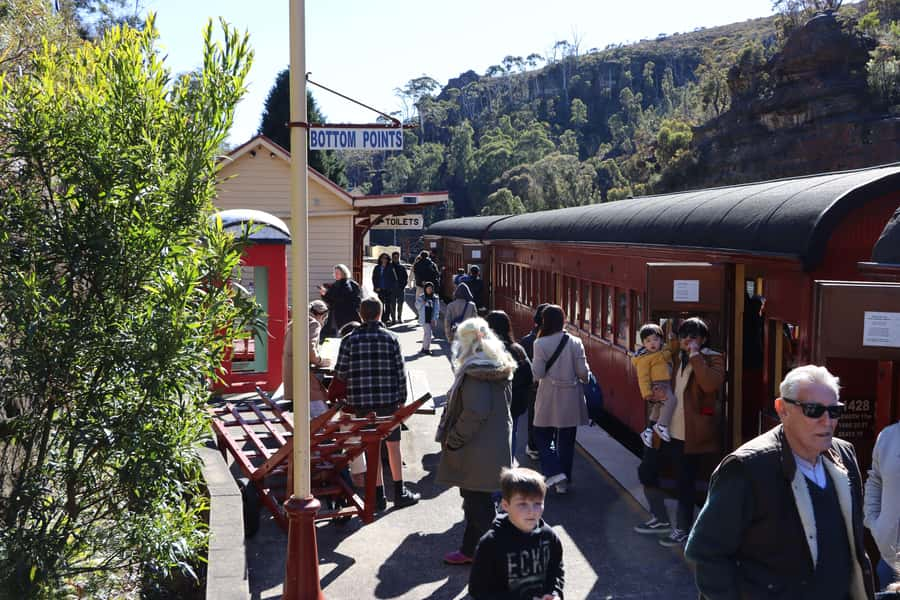
At Bottom Points, the locomotive runs around the train. This is one of the important parts of the outing, so keep your camera ready and expect a pause in the movement. You can use the time to watch the engine, look around the terminus, and take photos rather than seeing the stop as dead time.
The round trip also gives you a second view of parts of the route. Mountains can look different when seen from the opposite direction, and the return leg gives you another chance to photograph details you may have missed.
Top Points and the Locomotive Run-Around
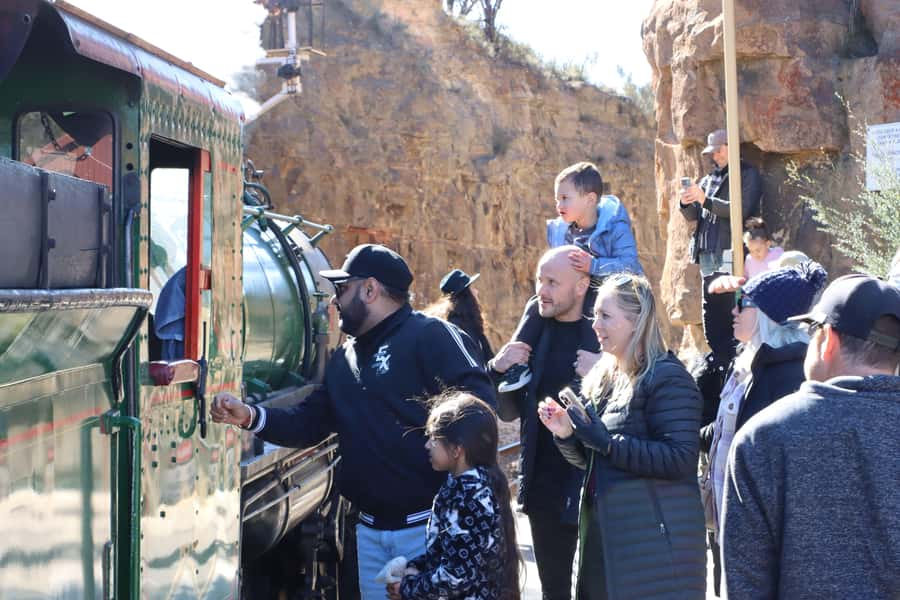
Some route choices include a stop at Top Points for a locomotive run-around. This stop is useful for visitors who want to see the railway’s working side up close.
The name suggests a high point on the line, but the important feature here is the station operation. The locomotive must be moved into position for the next part of the trip, and you can watch the process from the station area. You may also find walkable viewing places for photographs and a chance to stretch your legs.
I would treat Top Points as part of the attraction, not simply a place to wait. The stop gives you time to notice the engineering of the railway and the setting around the station. If you enjoy old machines, this may be one of the most memorable moments of the ride.
The exact route available can depend on the day and on maintenance work. That is worth checking before you book, especially if Top Points or a particular terminus is the main reason you want to go.
Blue Mountains Views From the Carriage and Stations
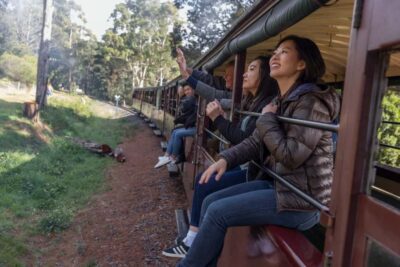
The ride offers a good balance between close-up railway details and broad mountain scenery. You can look for exposed sandstone, thick forest, and valleys opening beyond the track. The views are attractive, but the train itself remains the main focus.
Station viewing areas add value because you are not limited to photographs taken through a carriage window. At stops, you can walk to a suitable position, frame the locomotive, and take pictures of the track and surrounding mountains. This is also helpful if you want a short break from sitting.
I would not book this experience only for a guaranteed list of famous viewpoints. The information provided focuses on general mountain scenery rather than named lookouts or specific landmarks. Instead, choose it for the combination of heritage machinery, mountain rail travel, and station-based photo stops.
The scenery may also work well for different age groups. Children can watch the engine and moving parts, older family members can enjoy the historic railway, and photographers can use the station pauses. One recent booking brought an 88-year-old father who had never experienced the railway before, showing how the outing can work for a family with mixed interests, provided everyone can manage the access arrangements.
Same tracks, a different carriage:
- From Melbourne: Puffing Billy Steam Train & Wildlife Tour
★ 4.7 · 640 reviews - From Melbourne: Puffing Billy Train & Penguin Wildlife Tour
★ 4.8 · 605 reviews - Grand Kuranda including Skyrail and Kuranda Scenic Railway
★ 4.5 · 598 reviews - Skip the Line Kuranda Scenic Railway Gold Class and Skyrail Rainforest Cableway
★ 4.5 · 574 reviews
Café, Souvenir Shop, and Time Around the Stations
The station facilities make this more than a ride that starts and ends at the carriage door. You can use the café during your visit and browse the souvenir shop for a railway-themed reminder of the outing.
These facilities matter most if you arrive early, have a wait between route options, or want to make a relaxed afternoon of the visit. The café also gives you somewhere to pause after the train ride. Since the experience can last from 45 to 90 minutes, the station areas help you fill out the visit without needing to rush away immediately.
Toilets are available at all stations, but there are none on the train. I would use the facilities before boarding, especially if you are travelling with children or choosing the longer option. This is a small point, but it can make the ride more comfortable.
The station areas also offer additional photo opportunities. You can photograph the locomotive from different angles, take pictures of the old railway setting, and use the surrounding scenery as a backdrop. The best photo moments may come during the stops rather than while the train is moving.
What the Volunteer Restoration Adds
The railway was first built in the 1860s and is now restored and maintained by volunteers. That gives the experience a strong local and practical character.
You are seeing a working heritage line rather than only a static collection of old equipment. The people involved keep the track and railway operation going, so your ticket helps support an ongoing preservation effort. I like that connection because it gives the ride a clear purpose beyond entertainment.
The history and engineering information also help explain why the line matters. Mountain railways require careful planning, and the Zig Zag route shows how engineers handled difficult terrain. Even if you do not remember every technical detail, you can better understand the effort involved in building and maintaining a railway through the mountains.
The tone is likely to feel more personal than a large commercial attraction. The staff are English-speaking, and the operation is run by a friendly group of railway enthusiasts. That does not guarantee a long guided talk on every departure, but you can expect the heritage and engineering side of the line to be part of the experience.
How Much Time Should You Allow?
The advertised ride lasts 45 to 90 minutes, depending on the route you choose. That makes it easy to fit into a wider Blue Mountains day, but you should not plan your schedule too tightly.
Allow extra time for boarding, station facilities, photographs, and the locomotive run-arounds. If you arrive only moments before departure and leave the instant the train returns, you will miss much of what makes this railway special.
A shorter option suits you if you want a quick heritage experience or are combining the railway with other mountain stops. A longer route works better if you want to watch the locomotive in action, explore the stations, and take your time with the views.
The railway may not operate every service or route on every day. Track work and maintenance can affect the schedule, so confirm availability before travelling. This is especially important if you are building a full-day plan around a particular route.
Price and Overall Value at $26
At $26 per person, the ride offers fair value if you enjoy heritage transport, mountain scenery, or local history. You are paying for more than a one-way trip. The price includes the heritage train ride, access to station facilities, photo opportunities, locomotive run-arounds, and historical and engineering insights.
The value is strongest when you use the whole visit. Watch the engine at the termini, take photos from the station areas, visit the café or shop, and allow enough time to understand how the railway operates. If you treat it as a quick 45-minute ride with no interest in the locomotive, the price may feel less compelling.
The cost also supports a volunteer-maintained railway. For me, that adds weight to the ticket because the experience helps keep a piece of railway heritage in use rather than leaving it as a display object.
The overall rating is 4.6 from seven verified bookings, and the most consistent praise centers on the enjoyable trip, friendly staff, professional operation, and strong appeal for train lovers. One booking described it as a good afternoon activity, while another family outing became a special first experience for an 88-year-old visitor. Those details suggest the ride works best when you approach it as a relaxed shared outing, not a rushed attraction.
Who Should Book This Train Ride?
I would recommend the Zig Zag Railway to:
- Anyone who enjoys steam or heritage locomotives
- Families looking for a manageable afternoon activity
- Visitors interested in railway history and engineering
- Photographers who want trains, stations, and mountain scenery
- Older visitors who enjoy a slower-paced historic experience
- People who want a short Blue Mountains activity with flexible route lengths
You should think carefully before booking if you need step-free access. The activity is not suitable for wheelchair users, and some routes have stairs-only access at Zig Zag station. There are no toilets on board, so plan around the station facilities.
The experience may also disappoint you if you expect a long guided tour with constant commentary or a fast-moving list of famous viewpoints. Its appeal is quieter and more hands-on: the engine, the track, the stops, the views, and the people keeping the railway operating.
Should You Book the Zig Zag Railway?
Book it if you like old trains, working machinery, and mountain scenery, or if you want an easy shared activity for a family afternoon. The locomotive run-arounds give the ride a real point of interest, and the station café, shop, toilets, and viewing areas make the visit more useful than a simple train loop.
I would especially choose it if you have time to take the longer route and watch the engine at Top Points or Bottom Points. Check the route, maintenance notices, and access conditions first. If those fit your plans, $26 is a reasonable price for a living piece of Blue Mountains railway history.
FAQ
How long does the Zig Zag Railway ride last?
The experience lasts approximately 45 to 90 minutes, depending on the route option and availability.
How much does the heritage train ride cost?
The price is $26 per person.
Where is the Zig Zag Railway located?
The railway is in New South Wales, Australia, in the Blue Mountains.
What scenery can I see from the train?
You can see sandstone cliffs, forest, and sweeping valleys during the journey.
Does the locomotive run around the train?
Yes. The locomotive runs around the train at each terminus so it can reposition for the next part of the journey.
Can I choose between different routes?
Yes. Multiple route options are available, including a round trip from Clarence to Bottom Points and back, with a stop at Top Points on some services.
Are toilets available during the visit?
Toilets are available at all stations, but there are no toilets on board the train.
Is the railway wheelchair accessible?
Wheelchair access is limited, and some routes have stairs-only access at Zig Zag station. The activity is not suitable for wheelchair users.
Are food and souvenirs available?
Yes. Station facilities include a café and a souvenir shop.
Can the railway route change?
Yes. Some services or routes may not operate on certain days because of track work or maintenance.
New on the timetable around Australia
- Rottnest Island Oliver Hill Train & Tunnel Tour★ 4.5 · 24 reviews
- Kuranda, Scenic Rail, Skyrail and Hartley’s Crocodile Adventures★ 4.0 · 20 reviews
- Hartley Crocodile Park with Kuranda, Skyrail Cableway and Train★ 5.0 · 6 reviews
- Kuranda Scenic Railway Day Trip from Port Douglas★ 4.5 · 61 reviews
- Melbourne Puffing Billy Train and Penguin Parade Day Tour Escape★ 3.0 · 4 reviews
- Rottnest Island Historical Train and Tunnel Tour from Hillarys Boat Harbour★ 4.0 · 20 reviews
- Kuranda Scenic Railway Day Trip from Palm Cove★ 4.0 · 48 reviews
- The Q Train – Q Class Social Dining★ 4.5 · 21 reviews
Other Australia Train Journeys worth a seat
Self-Guided Kuranda Trip with Train and Skyrail
Read our review →
Puffing Billy Railway: Heritage Steam Train Journey
Read our review →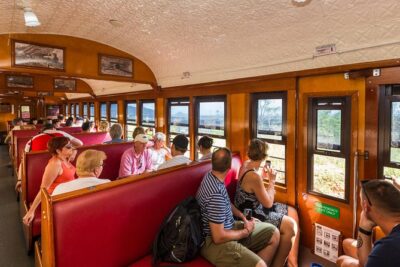
Grand Kuranda including Skyrail and Kuranda Scenic Railway
Read our review →
Skip the Line Kuranda Scenic Railway Gold Class and Skyrail Rainforest Cableway
Read our review →
Lists this ride appears on