
Review · CROATIA
Zagreb: Group walking tour of Zagreb (funicular included)
Zagreb’s most memorable moment may be the daily cannon blast from Lotrščak Tower at noon. This 150-minute walk gets you there on time, then leads you through the medieval upper town, past the cathedral, Dolac Market, Stone Gate, and St. Mark’s Church. You get a useful first look at both old and modern Zagreb without spending half a day on your feet.
I like the small group limit of 15 people, which gives you a better chance to hear the guide and ask questions. I also like the route itself: it moves from leafy Zrinjevac to the cathedral and market, then uphill through Gradec before finishing on Ban Jelačić Square. The main drawback is important: the funicular is currently being renovated and is closed, with work expected to finish in March 2026, so the promised ride is not available at present.
Key points to know before booking
- The noon cannon is the tour’s best bit of theater: You arrive at Lotrščak Tower in time for the daily blast.
- The route covers both historic halves of Zagreb: You see Kaptol and Gradec, then finish in the modern city center.
- The group is capped at 15 people: That is small enough for a more personal walking tour.
- Guide Ines gets special praise: Her humor, patience, warmth, and clear explanations are repeatedly highlighted.
- The funicular ticket is normally included: At present, the funicular is closed for renovation, expected to reopen in March 2026.
- The price is $23 per person: For two and a half hours with a licensed local guide, that is a fair introduction to Zagreb.
Starting under the trees at Zrinjevac
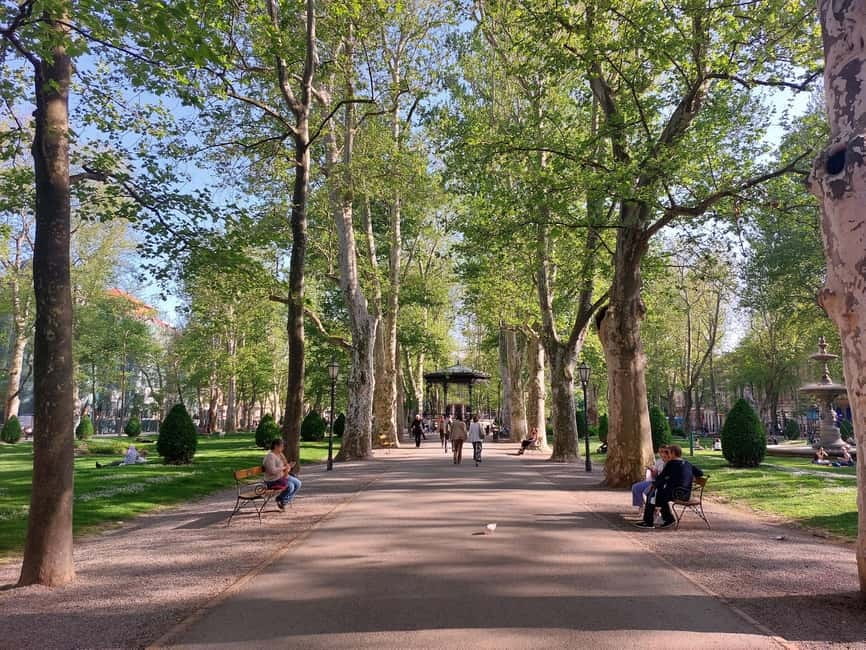
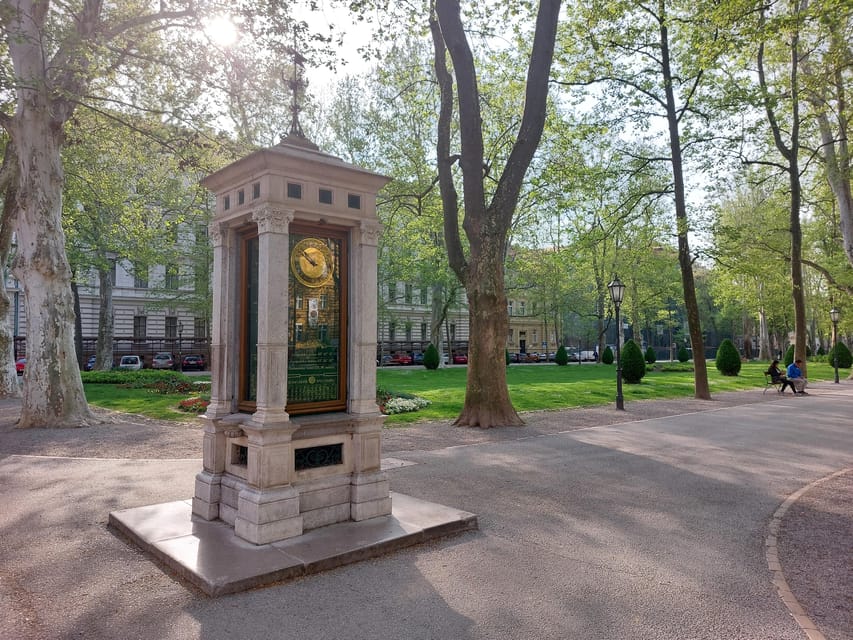
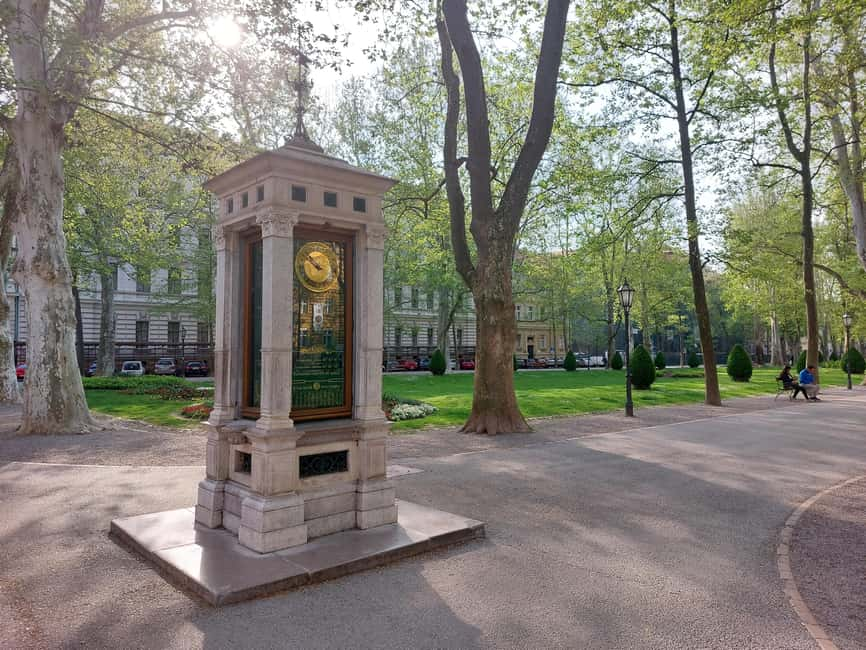
The tour begins beside the meteorological post in Zrinjevac Park, officially Nikola Šubić Zrinski Square. Look for the guide holding a Zagreb Stories sign. This central meeting point is easy to recognize, and the park gives the tour a calm beginning before you move into Zagreb’s denser streets.
Your guide starts with a short introduction and a few facts about the square. You then stop at the bronze model of Zagreb, called Zagreb Welcomes You. This small model helps you understand how the city is arranged, especially the relationship between the lower town, Kaptol, and the upper-town hill of Gradec.
That opening matters. Zagreb’s historic center is not a single old quarter laid out on one flat grid. It developed around two medieval settlements, and the rest of the walk makes more sense once you know that.
More Funicular Rides in the world:
- Como-Brunate Jeep Sightseeing Tour & Funicular Rail SKIP THE LINE
★ 4.5 · 6 reviews - Krakow: Zakopane, Funicular, Cheese, and Highland Day Trip
★ 4.7 · 1,489 reviews - Interlaken: Funicular Ticket to Harder Kulm
★ 4.7 · 1,469 reviews
The cathedral and the story of Kaptol
The next major stop is Zagreb Cathedral, where you hear about the founding of Zagreb and the church hill known as Kaptol. The cathedral is one of the city’s defining sights, so the 20-minute stop gives the guide time to explain its place in Zagreb rather than simply point at the facade.
The cathedral area also shows how closely religion and civic life were tied together in the old city. You can expect the guide to focus on the origins of Zagreb and the role of Kaptol in its early development.
The tour is built around stories rather than a rapid list of dates. That is useful if you are visiting Zagreb for the first time and want a framework for the city. If you prefer extended time inside churches or museums, though, this is not that kind of tour. The focus stays outdoors, with short stops and steady progress.
Dolac Market, where Zagreb feels most local
From the cathedral, the route continues to Dolac Market. This is one of the most useful stops for getting a sense of everyday Zagreb. The market adds color, movement, and local character to a walk that could otherwise lean heavily toward monuments.
You receive an introduction to the market and its place in city life. Ten minutes is enough to understand what you are seeing, but not enough for a long browse or a relaxed food stop. I suggest returning later if you want to shop, photograph the stalls, or eat something at your own pace.
This is one reason the tour works well early in your Zagreb visit. The guide gives you a basic map of the center, then points you toward places you may want to revisit without the group.
Tkalčićeva Street and the Bloody Bridge
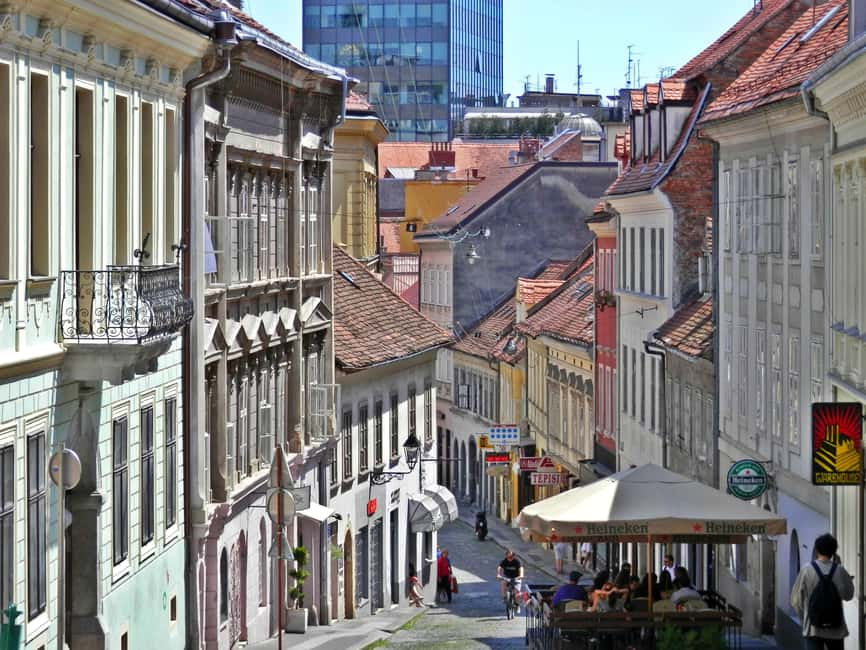
The route then moves along Tkalčićeva Street, one of Zagreb’s best-known streets for cafés, restaurants, and evening activity. Here, the guide explains what locals do for fun and shares local legends connected with the area.
The stop helps connect the old city with present-day Zagreb. You are not looking only at stone buildings and political institutions. You also get a sense of where people meet, eat, and spend time.
Next comes Krvavi Most, or Bloody Bridge Street. Its name gives the guide a natural opening for a story about conflict and the old divisions between Zagreb’s medieval settlements. It is a short stop, but these smaller details often make a walking tour stick in your memory better than another list of dates.
Same tracks, a different carriage:
- Mt Fuji & Hakone Cruise, Drum Show Bullet Train 1 Day from Tokyo
★ 4.0 · 7,413 reviews - Montserrat & Cogwheel Train, Gourmet Wine Tasting & Tapas/Lunch
★ 5.0 · 6,290 reviews - From Milan: Lake Como Cruise, St. Moritz & Bernina Red Train
★ 4.6 · 5,648 reviews - Tokyo Mt Fuji 5th St & Hakone Cruise Bus Tour w/Bullet Train
★ 4.4 · 5,024 reviews
Through Stone Gate and uphill to Gradec
The walk now climbs toward Gradec. The uphill section is part of the point, since the old upper town was built on higher ground. You pass through Stone Gate, one of Zagreb’s best-known medieval remains, and hear the story of the miracle associated with it.
Stone Gate is also home to a religious shrine, making this more than a simple passageway. The guide explains the story and its meaning, then points out Zagreb’s first pharmacy. That combination of faith, medicine, and daily life gives you a better feel for how the old town functioned.
The walk is not described as difficult, but you should expect some uphill pavement and steps as the route leaves the lower town. Comfortable shoes are a sensible choice. The steady pace should suit most people who are comfortable walking for two and a half hours, but this is not an ideal choice if hills are a serious problem for you.
St. Mark’s Church and Zagreb’s political center
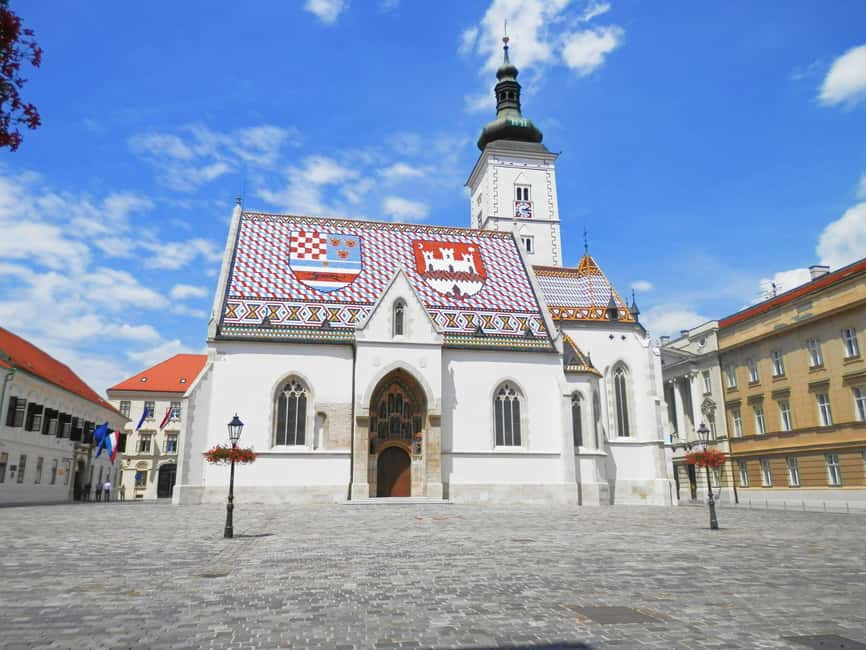
At the heart of Gradec, you stop at St. Mark’s Church. Its colorful roof is one of Zagreb’s most recognizable sights, and the 20-minute visit gives the guide time to explain the church and the square around it.
You also see the Parliament and Government buildings. This is one of the clearest places to understand Zagreb as Croatia’s capital, not just as an attractive old town. Medieval streets sit beside the country’s political institutions, and the guide connects the setting with the city’s past and present.
The church itself may have limited access depending on conditions, and the description of the tour centers on seeing it and hearing its story rather than promising a full interior visit. Plan on an exterior-focused stop unless your guide says otherwise.
Stories along Ćirilometodska Street
The walk continues down Ćirilometodska Street, where the guide links the street and its surroundings with stories about the alphabet, theater, witches, art, and marriage. This is a good example of the tour’s style. Instead of treating Zagreb as a row of formal landmarks, the route uses streets as prompts for stories about culture and local life.
You will not get an academic lecture on every subject named here. The value is the variety. A single street becomes a doorway into language, performance, superstition, art, and social customs. If you enjoy local anecdotes, this section should be one of the more enjoyable parts of the walk.
Baroque detail at St. Catherine’s Church
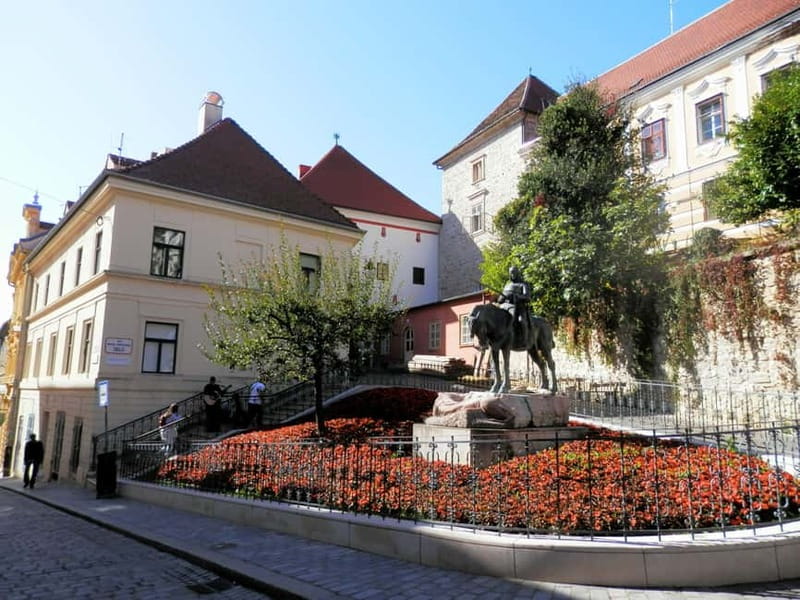
St. Catherine’s Church is a brief stop, with attention to its Baroque stucco work and painted ceiling. The five-minute visit is short, so do not expect a long interior tour or a detailed art-history lesson.
Still, the stop breaks up the route nicely. After several medieval streets and political landmarks, the church adds a more decorative style. The guide’s role here is to help you notice details you might otherwise pass without understanding.
The noon cannon at Lotrščak Tower
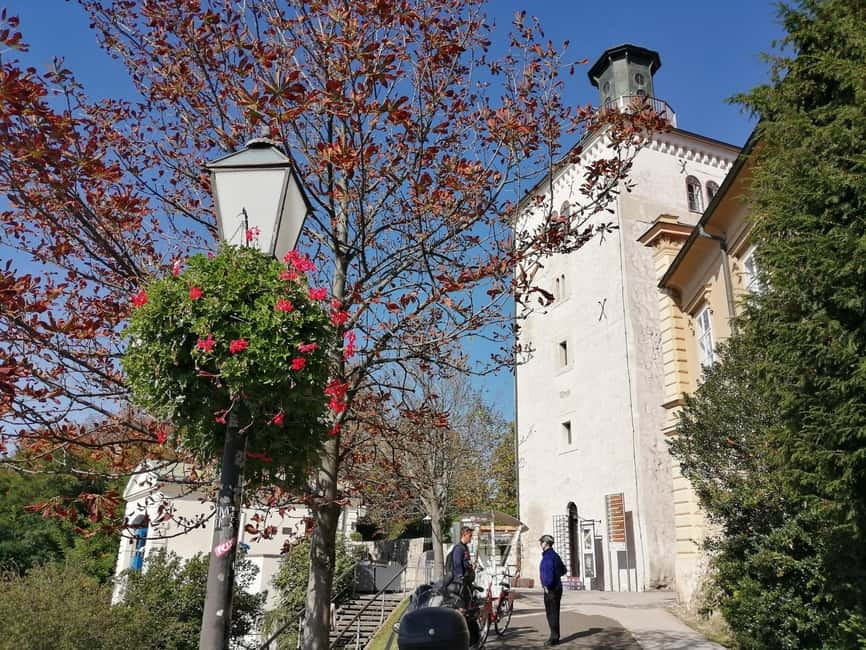
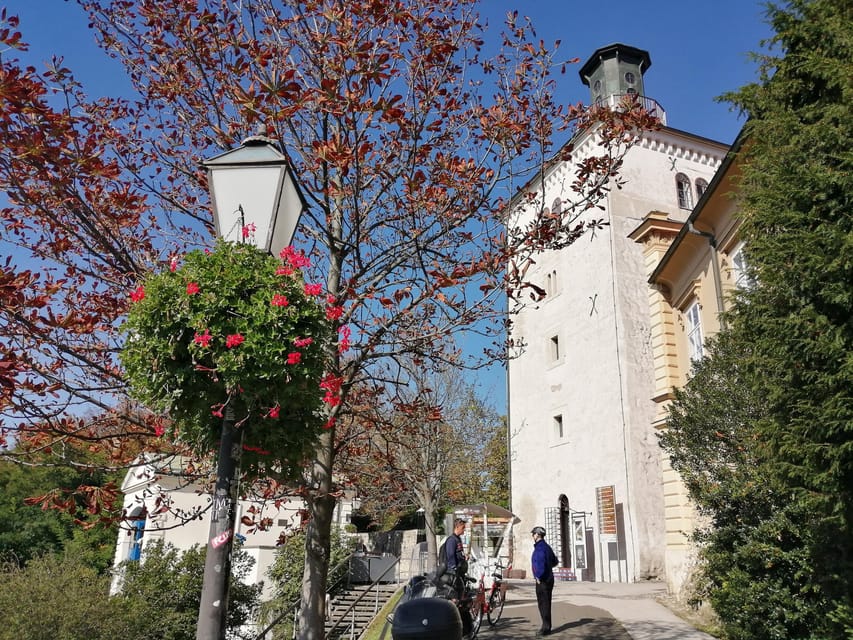
The walk’s most carefully timed moment comes at Lotrščak Tower. The tower formed part of Zagreb’s original defensive walls and has an origin story of its own. You arrive in time for the cannon fired at noon each day.
The cannon is loud, so keep that in mind if you are sensitive to sudden noise. The guide warns you before it happens, and the blast is over quickly. It is an old city tradition with just enough surprise to wake up anyone who has begun to fade after a morning of walking.
This timing also gives the tour a strong sense of shape. You begin with Zagreb’s layout, pass through its religious and civic center, and reach a dramatic historical reminder before heading back down toward the main square.
The funicular problem in 2026
Under normal conditions, the next stop is Zagreb’s funicular, billed as the shortest funicular ride in the world. The ticket is included in the tour price, and the ride would be a neat final link between the upper and lower town.
At present, however, the funicular is closed for renovation. The stated expected completion is March 2026. That means you should not book this tour expecting to ride it unless you have confirmed that service has resumed for your date.
This is the one feature that needs especially careful attention when comparing tours. The rest of the route still works as a walking experience, but the funicular cannot currently deliver the transport and novelty promised in the standard description. If the ride is your main reason for booking, check the operating status before paying.
Finishing at Ban Jelačić Square
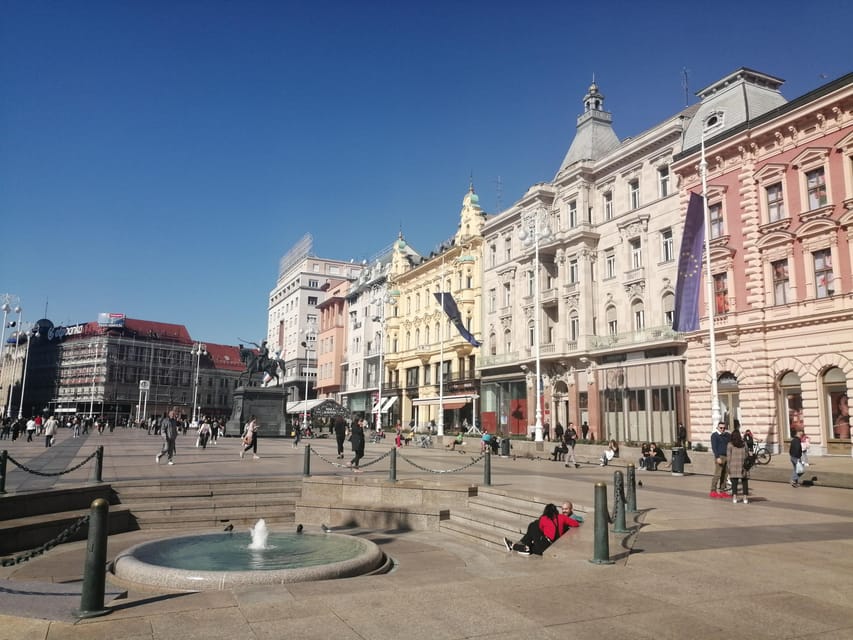
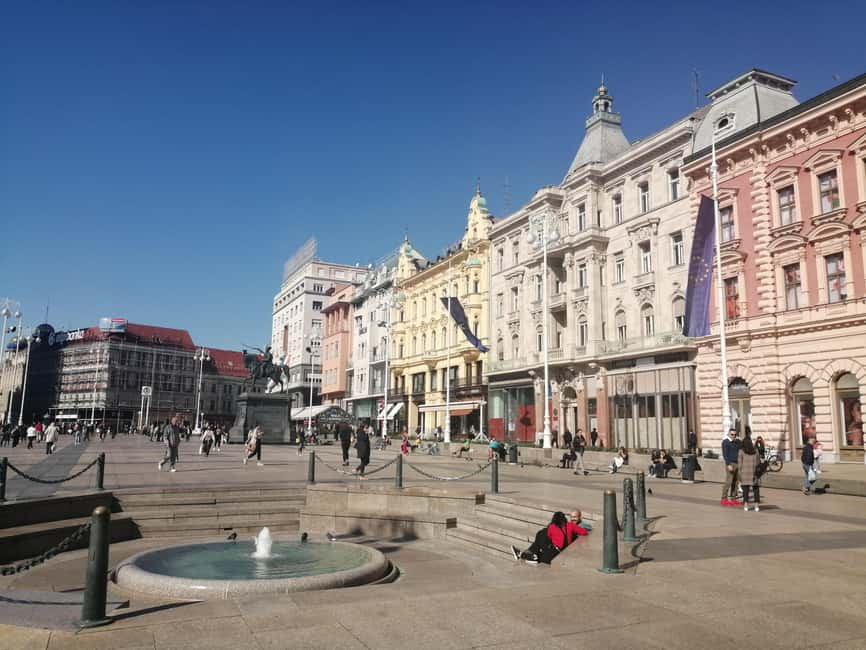
The tour ends at Ban Josip Jelačić Square, the center of modern Zagreb. This is a practical finish because you are left in a central part of the city, with the historic upper town behind you and plenty of options for the rest of the day.
Your guide can offer recommendations for what to do next. That is useful after a first orientation walk, since you can ask about places that caught your attention, areas to revisit, or how to spend the remaining hours in Zagreb.
The ending also makes the tour easy to pair with your own plans. You can continue exploring, find lunch, return to Dolac Market, or use the square as a base for navigating the center.
What the guiding is like
The strongest part of this experience is the guiding. The tour is conducted in English by a licensed local guide, and Zagreb Stories presents the walk as a personal introduction from someone who calls the city home.
Guide Ines receives especially warm praise for being friendly, patient, funny, and full of useful information. One particularly helpful quality is her ability to make the material enjoyable without losing the facts. The comments about her are consistent enough that I would consider her style a major reason to choose this tour.
Other feedback also points to an easygoing presentation suited to a broad range of ages and interests. You should still remember that guide assignments can vary. Ines may not lead every departure, but the experience is designed around a local English-speaking guide rather than an audio recording or a large coach group.
Is $23 good value?
At $23 per person, the tour offers 150 minutes with a licensed local guide, a planned route through the main historic sights, and the funicular ticket when the service is operating. That is a reasonable price for a first look at Zagreb, particularly if you value context and want someone else to connect the stops.
The value is strongest if you are new to the city. You cover the cathedral, market, Tkalčićeva Street, Stone Gate, St. Mark’s Church, St. Catherine’s Church, Lotrščak Tower, the funicular route, and Ban Jelačić Square in one organized walk.
The value is weaker if you have already spent several days exploring the center or prefer to move at your own pace. You will have limited time at each sight, and the tour does not appear to include extended museum visits or a meal. The closed funicular also reduces the experience slightly until renovation work is complete.
Free cancellation up to 24 hours before the start and a reserve-now, pay-later option make the booking less rigid. Still, the practical question is not only price. Check the start time, especially because the noon cannon is a central part of the route, and confirm the funicular’s status for your visit.
Who should book this Zagreb walk?
I would recommend it to a first-time visitor who wants a clear introduction to Zagreb’s old town, a manageable group, and a guide who adds local stories instead of reciting only dates. It also suits you if you want to see the main sights before deciding which ones deserve a longer return visit.
It is a good match for people who enjoy walking, churches, markets, political history, local legends, and small details such as the old pharmacy and Stone Gate shrine. The two-and-a-half-hour length is long enough to feel substantial without taking the whole day.
You may want a different plan if you have limited mobility on hills, want extensive indoor sightseeing, or mainly want the funicular ride. The route includes an uphill section, and the ride is unavailable during renovation.
Should you book Zagreb Stories?
Book this tour if you want an efficient first orientation to Zagreb with a local English-speaking guide, a group capped at 15, and a well-planned route through both Kaptol and Gradec. The noon cannon, Dolac Market, Stone Gate, and St. Mark’s Church give the walk plenty of variety, while guide Ines’s warm and humorous style is a strong reason to choose this provider when she is leading your departure.
I would book it early in a Zagreb stay, then use the final square and the guide’s suggestions to plan the rest of your visit. Just adjust your expectations about the funicular: until the renovation ends, this is a walking tour with a closed-ride feature, not a complete funicular experience.
FAQ
How long does the Zagreb walking tour last?
The tour lasts 150 minutes, or two and a half hours.
How much does the tour cost?
The listed price is $23 per person.
Where does the tour begin?
The meeting point is beside the meteorological post in Nikola Šubić Zrinski Square, also called Zrinjevac. The guide waits with a Zagreb Stories sign.
Where does the tour finish?
The tour finishes at Ban Josip Jelačić Square, the main square in central Zagreb.
Is the tour conducted in English?
Yes. The tour is led by a live, licensed English-speaking local guide.
How many people are in the group?
The group has no more than 15 people.
Is the funicular ticket included?
Yes, the funicular ticket is included in the tour price. However, the funicular is currently closed for renovation, with completion expected in March 2026.
Will the tour see the noon cannon fire?
Yes. The route is timed to reach Lotrščak Tower for the cannon fire at noon.
Can I cancel the booking?
You can cancel up to 24 hours in advance for a full refund. A reserve-now, pay-later option is also available.
New on the timetable around the world
- Zermatt Village & Gornergrat Railway Tour | From Bern★ 5.0 · 2 reviews
- York Day Rail Tour from London including Hop-on Hop-off tour★ 5.0 · 3 reviews
- Zagreb: Plitvice With Secured Tickets, Boat And Train Ride★ 4.6 · 15 reviews
- Winter Tour Viking Village, Nærøyfjord Cruise & Flåm Railway★ 4.6 · 26 reviews
- With the steam train through Transylvania- 8 Day★ 5.0 · 2 reviews
- Virginia City Day Tour From Lake Tahoe with Train Ride★ 4.8 · 19 reviews
- USHUAIA | Tierra del Fuego National Park & Optional Train★ 4.6 · 11 reviews
- Ventura: Rail Bike Guided Tour with Farm Stand Stop★ 4.1 · 18 reviews
Other Funicular Rides worth a seat

Castle Entry Ticket with Optional Funicular Ride
Read our review →
Lists this ride appears on