
Review · CHILE
Valparaiso: Street Art, Funiculars and Port City Tour
Valparaiso reveals itself best on foot, one steep lane, painted wall, and old funicular at a time. This two-hour tour links the port with Cerro Alegre and Cerro Concepción, giving you both the postcard views and the local stories behind the murals. The guide’s old photographs are especially useful: you can compare the city’s past with the streets in front of you.
I like the small-group format, which makes it easier to ask about Chilean politics, neighborhood life, artists, or lunch. I also like the route’s mix of funicular rides, port landmarks, galleries, and street art, rather than treating Valparaiso as one giant outdoor photo stop. The main drawback is pace. Two hours covers a lot, so the tour includes plenty of short stops and walking, but not much time for shopping, sitting over coffee, or studying every mural.
Key points to know before you go
- The meeting point is Muelle Prat, near the two cannons and the Tourist Information Office.
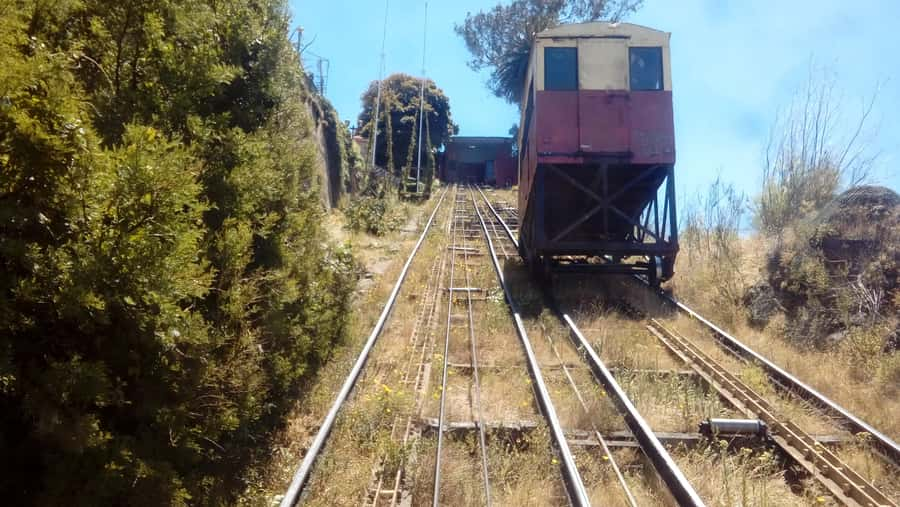
- El Peral funicular carries you toward Cerro Alegre, where the walking tour begins in earnest.
- Pasaje Gálvez receives the most street-art time, with about 30 minutes for murals and local stories.
- Old photographs add useful context, helping you see how Valparaiso has changed.
- A local alfajor is included, while other food, drinks, and restaurant visits cost extra.
- The route ends near Ascensor Reina Victoria, not back at the port, so listen carefully to the guide’s directions for returning.
Why this route works in Valparaiso
Valparaiso is not a city you understand by checking off a few monuments. Its character comes from the way the port, hills, stairways, old houses, public art, and mechanical lifts fit together. This tour gives you a useful orientation without asking you to spend half a day on a large bus.
You begin at Muelle Prat, a practical place to meet if you arrive from the port area. The guide waits near the two cannons, close to the Tourist Information Office. From there, you walk toward the city center and start with photographs showing earlier views of Valparaiso. I find this a smart opening because the city’s paint, buildings, and public spaces have changed over time. A photograph can make a plain-looking corner suddenly meaningful.
The route then moves from the flat port area toward the hills. That change matters. Valparaiso’s steep geography explains the funiculars, the staircases, the lookout points, and even the way neighborhoods developed. Instead of simply telling you that the city is hilly, the tour lets you feel the shift as you leave the waterfront and climb.
More Funicular Rides in the world:
- Como-Brunate Jeep Sightseeing Tour & Funicular Rail SKIP THE LINE
★ 4.5 · 6 reviews - Krakow: Zakopane, Funicular, Cheese, and Highland Day Trip
★ 4.7 · 1,489 reviews - Interlaken: Funicular Ticket to Harder Kulm
★ 4.7 · 1,469 reviews
Muelle Prat, the port, and Plaza Sotomayor
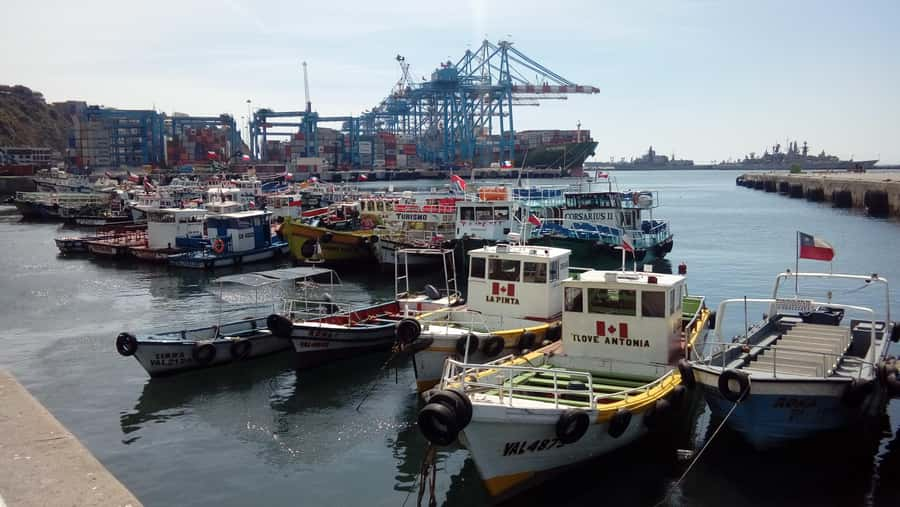
The first guided section covers the Port of Valparaiso for about 10 minutes. You get views across the bay and a sense of why this port shaped the city’s fortunes. The port is not just a scenic backdrop. It helps explain the mix of Chilean, British, German, Italian, and other influences you encounter in the hills.
At Plaza Sotomayor, the tour slows down for about 20 minutes. This is one of the better places to connect Valparaiso’s civic life with its maritime past. You see the monument, the Chilean Navy Headquarters, and the historic fire department building. The nearby financial street adds another piece of the city’s story, showing how commerce grew around the port.
I would pay attention here even if your main interest is murals. The street art makes more sense after you understand the city’s role as a port and trading center. The guide can also point out how older public buildings relate to the modern streets around them.
Riding El Peral into Cerro Alegre

The El Peral funicular is one of the tour’s most enjoyable practical features. Built in the early twentieth century, it carries you from the lower city toward the hills and gives you a quick panoramic view as you rise. The ride is short, but it saves you from tackling the full climb on foot and shows how Valparaiso solved its steep terrain before modern transport took over.
The tour includes entry tickets to the funiculars, so you do not need to sort out payment during the walk. Conditions can change, and the exact operation of these historic lifts is not explained in detail, but the route includes the El Peral system and a guided stop at Ascensor Concepcion.
You arrive near Paseo Yugoslavo in Cerro Alegre. This is a fine first lookout, with views over the hills, colorful houses, and the bay. I like that the tour does not rush straight into a wall of murals. You first get a clear sense of the city’s shape, then move into the narrow passages where Valparaiso’s art and daily life overlap.
Pasaje Bavestrello and the city’s mixed heritage
Pasaje Bavestrello offers a look at the Italian influence on this part of Valparaiso. The guide explains how residents shared community life in earlier days, giving the passage more meaning than a quick photo stop.
This is one of the tour’s quieter moments. You may find it more interesting if you enjoy buildings, migration stories, and neighborhood history as much as large murals. The city’s heritage is not presented as one neat national style. Italian, German, British, and Chilean traces appear side by side, often within a short walk.
The route also passes restaurants, cafes, galleries, souvenir shops, and small businesses. The tour does not include a full meal, and you should not expect time for a long gallery visit. Still, the guide can point out places worth returning to after the walk.
Same tracks, a different carriage:
- Mt Fuji & Hakone Cruise, Drum Show Bullet Train 1 Day from Tokyo
★ 4.0 · 7,413 reviews - Montserrat & Cogwheel Train, Gourmet Wine Tasting & Tapas/Lunch
★ 5.0 · 6,290 reviews - From Milan: Lake Como Cruise, St. Moritz & Bernina Red Train
★ 4.6 · 5,648 reviews - Tokyo Mt Fuji 5th St & Hakone Cruise Bus Tour w/Bullet Train
★ 4.4 · 5,024 reviews
Pasaje Gálvez, where the street art takes center stage
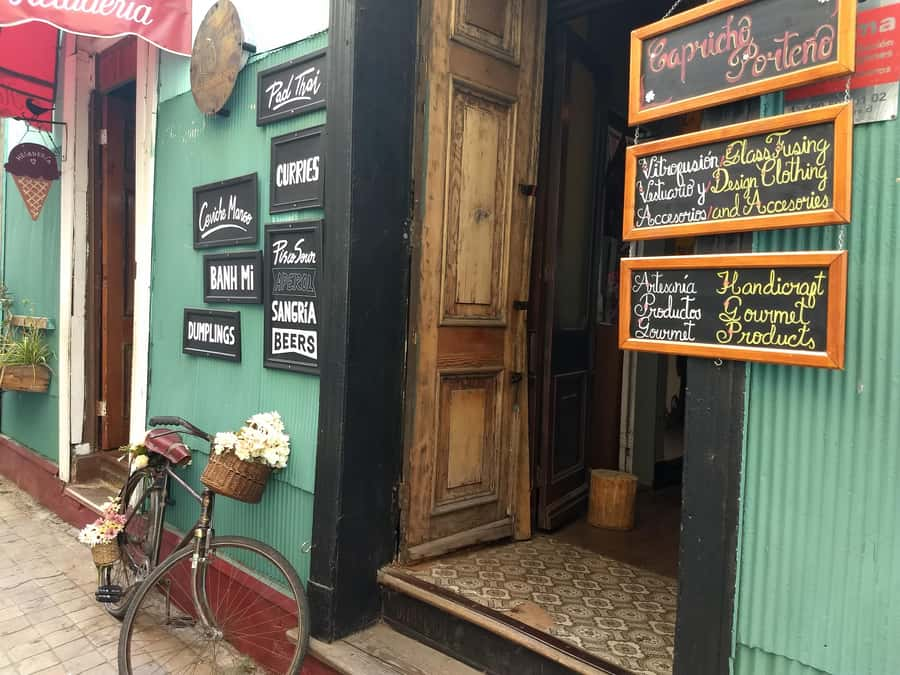
Pasaje Gálvez receives roughly 30 minutes, the longest single stop on the route. That gives you enough time to look at several murals instead of snapping one picture and moving on.
The useful part is the explanation. The guide discusses the artists, styles, and social ideas behind the work. In some cases, the guide may speak with local artists or introduce you to people connected with the neighborhood. That local contact is one reason this tour feels more personal than a basic mural walk.
Guides such as Alex and Grex are especially associated with artist connections and detailed explanations of the work. Other guides, including Benjamin, Maria, Romina, and Cristóbal, have led tours in different languages and styles. Your exact guide can vary, so book this for the route and format rather than expecting one particular person.
Street art in Valparaiso is not simply decoration. Some pieces comment on Chilean society, public life, or the city’s changing neighborhoods. The guide’s job is valuable here because a mural’s message can be hard to read from color and shape alone. You can ask questions and discuss how art fits into local identity.
Paseo Gervasoni and Ascensor Concepcion

Paseo Gervasoni is a brief stop, followed by a guided visit connected with Ascensor Concepcion. This section keeps you among the hilltop streets and lookout points, where painted walls sit beside older houses and small businesses.
The tour includes many short stops, so you should expect movement rather than a long lecture at each location. That works well for a first visit. You see a broad slice of the city, then can return later to whichever passage, gallery, or viewpoint caught your attention.
If you prefer a slow photography walk, this pace may feel quick. If you want a strong first look at Valparaiso and help finding the hard-to-see corners, the steady rhythm is useful.
Paseo Atkinson and the British connection
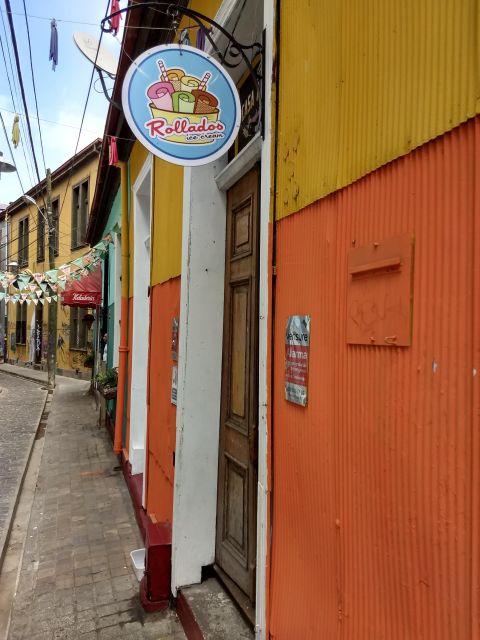
Paseo Atkinson brings another side of Valparaiso into view. Here, the focus turns to houses, gardens, and the city’s British heritage. You also pass the Deutsche Schule of Valparaiso, which reflects the important German presence in the city.
The route mentions Brighton Restaurant, known for its terrace and views toward the city and sea. You might want to note it as a possible later stop, but food and drinks are not included. The tour is too short for a proper meal break, and stopping to eat would mean giving up time elsewhere.
This part of the route helps keep the experience balanced. Without it, you might leave thinking Valparaiso is only murals and colorful stairs. The older homes, schools, churches, and restaurants show how the hills became established neighborhoods rather than a purpose-built art district.
The Piano Staircase and two historic churches
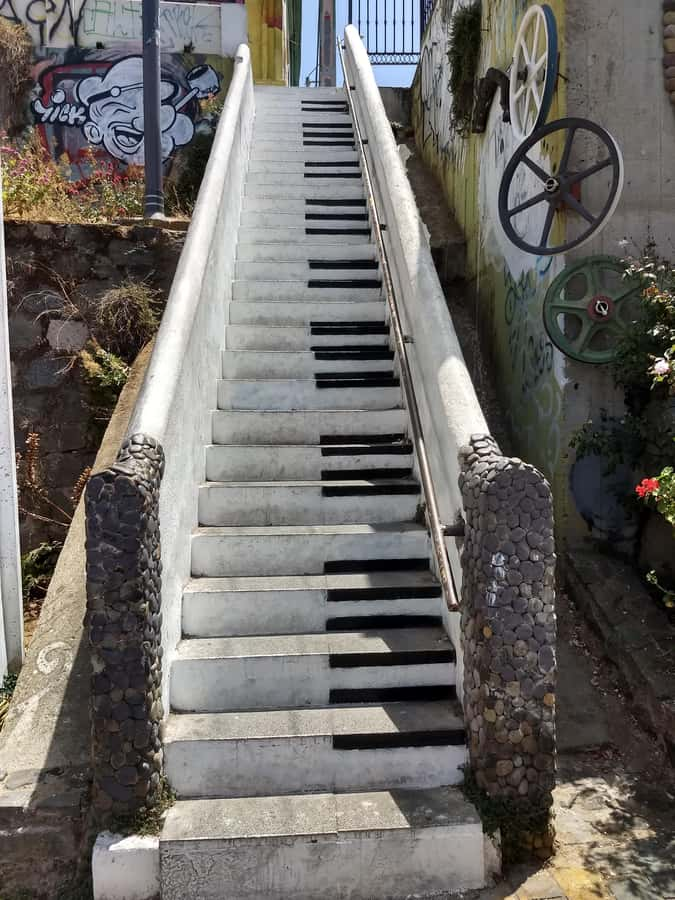
The Piano Staircase is one of the more playful sights on the walk. Its painted steps turn an ordinary climb into a recognizable local attraction. It is a quick stop, but it suits the tour’s theme: Valparaiso repeatedly turns public spaces into art.
Nearby, you see the Lutheran Church of the Holy Cross, dating from 1897, and the Anglican Saint Paul Cathedral. The guide explains how churches helped maintain community life on the hills. These buildings also add religious and architectural context to the city’s British and German connections.
The historic walls and construction techniques around Hotel Manoir Atkinson receive attention too. The guide discusses how large walls were built to cope with Valparaiso’s environmental conditions across the seasons. This is the sort of detail you might miss if you explored only by taking photographs.
Paseo Dimalow and the final mural
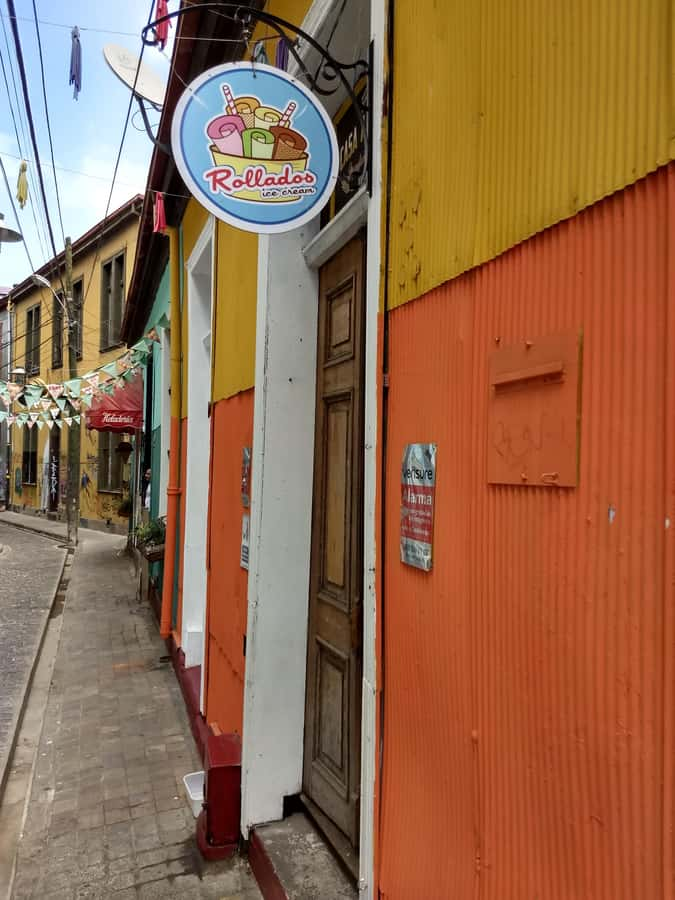
The walk continues down Paseo Dimalow in Cerro Alegre, with views across the hills and suggestions for nearby restaurants. This is a useful point to ask for lunch or dinner advice while the streets and options are still familiar.
The final section includes the mural titled We are not hippies, we are happies. You also pass colorful stairs associated with the song Latinoamérica by Calle 13. These are popular photo locations, but the guide adds context about how local public art became part of the city’s identity.
The tour finishes near Ascensor Reina Victoria. That is important to remember. You do not simply return to Muelle Prat as a group. Your guide explains how to get back and can suggest places to eat, but you should pay attention to the directions, especially if you are new to the hills.
What the guide adds
The strongest part of this experience is the human explanation. The route itself is attractive, but Valparaiso has enough steep streets and painted walls that you could easily wander without understanding what you are seeing.
Guides use old photographs, local stories, and background on specific artists to connect the present city with its earlier form. Alex is frequently mentioned by name in the available feedback, along with Grex, Benjamin, Maria, and Cristóbal. The overall pattern is clear: guides are expected to answer questions, adapt the pace, and suggest restaurants or galleries.
One practical detail deserves attention. A small number of people have had trouble contacting the guide when there was a delay at the meeting point. The booking information gives the meeting location, but it is wise to save all confirmation details and arrive at the two cannons with time to spare.
The tour is available in English, Chinese, French, and Portuguese. Private and small-group options are offered. If you care about conversation and flexibility, a small group is likely the better value than a large walking crowd.
Price, pace, and physical demands
At $41 per person, the tour is reasonably priced if you want a guided introduction rather than simply using the funiculars on your own. The price includes funicular entry and an alfajor, but not additional food or drinks.
The value comes from the route design and the guide’s local contacts. You cover the port, Plaza Sotomayor, two hill neighborhoods, several promenades, churches, galleries, and major mural areas in two hours. Recreating that route independently would be possible, but finding the same viewpoints and learning the meaning of the art would take more preparation.
This is not described as a strenuous hike, and one booking party specifically found it not physically demanding. Still, the route includes narrow streets, stairs, hills, and funicular access. People with mobility impairments, pregnant women, and people with altitude sickness are advised not to join. Anyone who dislikes uneven urban walking should consider a slower option.
The two-hour length works well for a port call, a first afternoon in Valparaiso, or a compact introduction before lunch. It is less suitable if you want time to browse every shop, linger in galleries, or sit on a terrace.
The alfajor and local shopping
The included alfajor is a small but welcome touch. This Chilean cookie is made by local people, and buying or tasting it supports a local business. It also gives the tour a bit of flavor beyond monuments and murals.
You pass places selling crafts, souvenirs, magnets, jewelry, and art. The guide can help you identify areas worth revisiting, but the tour is not a shopping excursion. I would mark down anything you like and return after the walk, when you can browse without holding up the group.
Should you book this Valparaiso tour?
Book it if you want a well-rounded first look at Valparaiso and care about the stories behind the street art. It is especially useful if you have only a few hours, are arriving through the port, or feel uncertain about finding your way through the steep hill neighborhoods.
I would also recommend it to people who want a social, local-feeling walk rather than a formal lecture. The old photographs, artist connections, funicular rides, and restaurant suggestions give the experience practical value beyond sightseeing.
Skip it if you want a slow art workshop, a long meal, or a fully accessible route. The pace is purposeful, the hills are real, and the finish is away from the starting point. For most visitors, though, $41 buys a smart orientation to Valparaiso, with enough art, history, views, and local flavor to help you explore the city more confidently afterward.
FAQ
Where does the tour begin?
It begins at Muelle Prat, near the two cannons and the Tourist Information Office.
Where does the tour finish?
The tour finishes near Ascensor Reina Victoria. The guide explains how to return to the starting area and can suggest places for lunch or dinner.
How long does the tour last?
The scheduled duration is two hours.
Is a funicular ride included?
Yes. Entry tickets to the funiculars are included. The route specifically includes the El Peral funicular and guided stops connected with Ascensor Concepcion.
Is food included?
A Chilean alfajor is included. Additional food and drinks are not included.
What languages are available?
Tours are available in English, Chinese, French, and Portuguese.
Can I cancel or pay later?
You can cancel up to 24 hours before the activity for a full refund. Reserve now and pay later is also available.
New on the timetable around the world
- Zermatt Village & Gornergrat Railway Tour | From Bern★ 5.0 · 2 reviews
- York Day Rail Tour from London including Hop-on Hop-off tour★ 5.0 · 3 reviews
- Zagreb: Plitvice With Secured Tickets, Boat And Train Ride★ 4.6 · 15 reviews
- With the steam train through Transylvania- 8 Day★ 5.0 · 2 reviews
- Winter Tour Viking Village, Nærøyfjord Cruise & Flåm Railway★ 4.6 · 26 reviews
- Virginia City Day Tour From Lake Tahoe with Train Ride★ 4.8 · 19 reviews
- USHUAIA | Tierra del Fuego National Park & Optional Train★ 4.6 · 11 reviews
- Ventura: Rail Bike Guided Tour with Farm Stand Stop★ 4.1 · 18 reviews
Other Funicular Rides worth a seat

Castle Entry Ticket with Optional Funicular Ride
Read our review →
Lists this ride appears on