
Review · UZBEKISTAN
Uzbekistan 3 Day Private Tour Tashkent-Bukhara-Samarkand Bullet Train
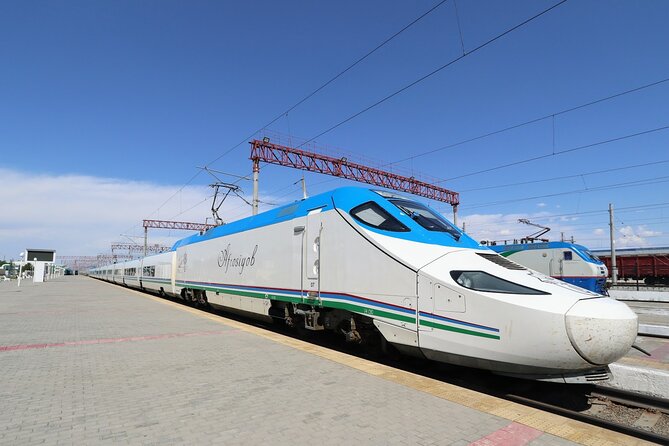
The best thing about this trip is the bullet-train route through Uzbekistan’s great Silk Road cities. In only three days, you move from Tashkent to Bukhara, then Samarkand, without spending long hours in a car. You get private guides, hotel rooms, monument tickets, station transfers, and breakfast in one package.
I like the efficient city-to-city plan, and I like having a different local guide in each place. Guides such as Muhlio, Malika, and Max have been praised for clear English, patience, and strong knowledge of their cities. The main drawback is the pace: Bukhara and Samarkand both deserve more time, and summer afternoons can be brutally hot for sightseeing.
Key points to know before booking
- Four-hour bullet train from Tashkent to Bukhara: The long first transfer is far more comfortable than a road journey, and the ticket is included.
- Bukhara’s major sights arrive in one packed afternoon: You see Poi Kalyan, the Ark, Bolo Hauz Mosque, the trading domes, and Lyab-i-Hauz.
- Samarkand gets the grand finale: Registan, Gur Emir, Shah-i-Zinda, Bibi Khanym Mosque, Siab Bazaar, and Ulugh Beg Observatory fill the final day.
- Private touring keeps the experience flexible: Only your own party joins the guided sightseeing, with a guide assigned in each city.
- The $500 price covers the costly pieces: Trains, two hotel nights, breakfasts, guides, local transport, entrance fees, and taxes are included.
- The schedule needs stamina: Early starts, train connections, walking, and hot weather make this better for active sightseers than slow-paced holidaymakers.
What this three-day Uzbekistan tour is really like
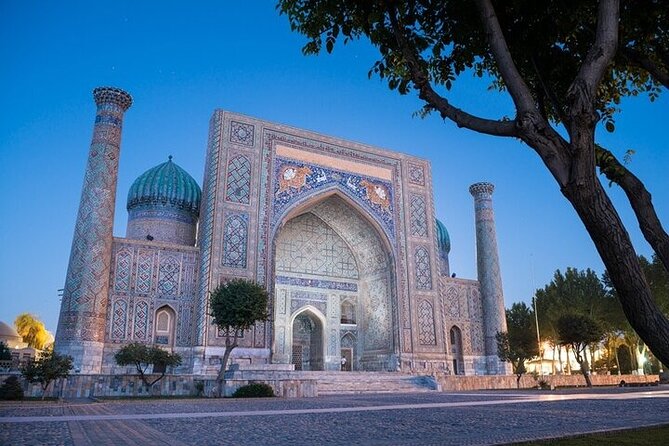
This is a compact introduction to Uzbekistan’s most famous historic cities. You are not simply visiting one city and taking a day trip. You are crossing the country by rail, sleeping in Bukhara and Samarkand, and seeing the monuments that give Uzbekistan its place on the old Silk Road.
The experience begins at 7:30 in the morning at Toshkent Railway Station, also called Tashkent North Station. Pickup can be arranged if needed, but the listed start point is the station itself. On the final evening, the tour returns you to the railway station, so you will need to arrange your own onward transfer to a hotel or airport.
The tour is private, which matters here. You can ask questions without competing with a large group, and the guide can usually adjust the pace within the limits of the train schedule. Expect a licensed guide in each city rather than one person accompanying you from Tashkent all the way through.
More High-Speed Trains in the world:
- Mt Fuji & Hakone Cruise, Drum Show Bullet Train 1 Day from Tokyo
★ 4.0 · 7,413 reviews - Tokyo Mt Fuji 5th St & Hakone Cruise Bus Tour w/Bullet Train
★ 4.4 · 5,024 reviews - Rome to Pompeii Guided Tour with Wine & Lunch by High Speed Train
★ 5.0 · 1,379 reviews
Day one: Tashkent to Bukhara by train
The first journey takes about four hours, subject to train availability. The high-speed train is one of the strongest parts of the plan. It saves you from a long road transfer and gives you a clear, comfortable connection between the capital and Bukhara.
Once you arrive, a driver meets you at Bukhara Railway Station. You are taken to your central hotel for check-in, then meet your Bukhara guide and begin sightseeing. The included hotels are described as well-rated central three-star or four-star properties, or boutique hotels. They are practical rather than luxurious, with two nights included in a twin or double room.
The schedule then moves quickly through Bukhara’s center.
Poi Kalyan and Bukhara’s Islamic center
Poi Kalyan is usually the visual high point of the first afternoon. Its famous minaret rises about 45.6 meters and dates to 1127, from the Kara-Khanid period. It survived the Mongol conquests, which gives the site an unusual sense of continuity.
You should allow about an hour here. Your guide can explain the mosque complex and the role of Bukhara as a center of Islamic learning and trade. This is also one of the places where the scale of the architecture is easier to appreciate from the open square than from a quick photograph.
The Ark of Bukhara
The Ark is not just a fortress wall. It was a royal town within the city, occupied by Bukhara’s rulers for more than a thousand years. The site has been reconstructed in parts, but its purpose is easy to grasp: government, court life, defense, and ceremony were all contained inside this raised compound.
The visit lasts about an hour. The Ark gives you useful political context before you continue to Bukhara’s mosques and trading areas. It also breaks up the day with a different type of architecture. You move from religious monuments to the seat of local power.
More Three-Day Rail Trips around the world:
- 3-Day Isle of Skye, ‘Hogwarts Express’ Train and Highlands Tour
★ 5.0 · 972 reviews - 3-Day Blarney Castle, Ring of Kerry, & Cliffs of Moher Rail tour
★ 4.5 · 211 reviews - Edinburgh: Isle of Skye & Optional Jacobite Train 3-Day Tour
★ 4.7 · 191 reviews - 3 Day Isle of Skye and Jacobite Steam Train Tour from Inverness
★ 5.0 · 161 reviews
Bolo Hauz Mosque and Maghak-i Attari
Bolo Hauz Mosque sits opposite the Ark. Its name refers to the pool beside it, and the mosque is known for its wooden columns and covered prayer area. The visit is shorter, about 30 minutes, but the setting helps you see how water, worship, and public space worked together in old Bukhara.
Maghak-i Attari Mosque is another brief stop, with striking brickwork and an unusually layered past. The site is associated with earlier Buddhist and Zoroastrian use before becoming a mosque. That succession is one reason Bukhara is more interesting than a simple list of Islamic monuments suggests.
Trading domes and Lyab-i-Hauz
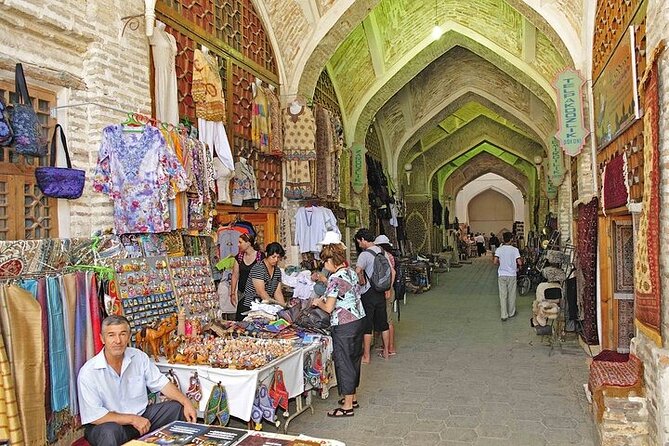
The trading domes are old covered market spaces, now lined with artisans’ workshops and souvenir stalls. You may find ceramics, textiles, carved goods, and other crafts, though the tour does not promise a particular shopping stop or purchase.
Lyab-i-Hauz is the longest Bukhara visit, at about two hours. The ensemble grew around a pool and remains one of the city’s main public squares. It is a good place to slow down after the day’s monuments, though on this schedule you will already have covered a lot of ground.
The weakness of day one is timing. You have just spent four hours on a train, checked in, and then begun a serious walking program. A previous departure drew criticism for putting Bukhara sightseeing in the hottest part of the afternoon. The operator indicated that summer schedules may be adjusted toward earlier starts, but you should still prepare for heat and ask about the exact timing before departure.
Day two: free time, optional countryside, and Samarkand
The second morning is intentionally lighter. You have free time in Bukhara, or you can request an optional four-hour excursion into the surrounding area. The countryside program listed includes the Emir’s Summer Palace, the Naqshbandi Mausoleum, and the Samani Mausoleum.
This choice depends on your energy. If day one felt rushed, use the morning to return to a favorite part of Bukhara, browse the old center, or rest. If you want more context, the optional outing gives you a wider view of the area and adds sites outside the main pedestrian core. Because the additional excursion is optional, confirm its cost and exact arrangements before committing.
In the afternoon, you transfer about 10 kilometers to the station in Kagan, then take the bullet train to Samarkand. The train journey takes about two hours, subject to availability. A driver meets you in Samarkand and takes you to your hotel.
This transfer is simple on paper, but it is one reason you should keep your luggage manageable. You will move from hotel to station, from train to vehicle, and into another hotel in a single day. The private format helps because your driver is handling the local connections, but the day is still a travel day rather than a full sightseeing day.
Day three: Samarkand’s imperial monuments
The final day is the most visually dramatic. It covers Samarkand’s central monuments, historic tombs, market, and observatory before returning you to Tashkent by train.
Registan Square
Begin with about two hours at Registan, the grand square framed by the Ulugh Beg, Sher-Dor, and Tilla-Kari madrasas. This is the place where the scale of Samarkand becomes clear. The buildings are richly decorated, but your guide can also explain the square as a center of education, public life, and Timurid power.
Give yourself time to look at the details rather than treating Registan as a quick photo stop. The complex is large enough to reward a slow circuit through its courtyards and facades.
Gur Emir Mausoleum
Gur Emir is the tomb of Timur, also known as Tamerlane, and dates from 1404 to 1405. The mausoleum is smaller than Registan but more intimate. Its importance comes from the person buried there and from the later influence of Timurid architecture.
The visit lasts about an hour. This is a good point to ask your Samarkand guide to connect Timur’s campaigns, court, and building projects. Guides assigned on past tours have included Max, whose clear English and friendly manner earned particular praise, though guide assignments can change.
Shah-i-Zinda
Shah-i-Zinda is a long ensemble of mausoleums on the southeastern mound of ancient Afrosiab. The complex includes 44 tombs in more than 20 mausoleums, creating one of the most distinctive architectural sequences in Samarkand.
The hour-long visit involves walking through the complex, so comfortable shoes matter. The narrow passage and repeated blue tilework create a different mood from the open expanse of Registan. It is one of the places where a good guide adds real value, explaining the people, dates, and religious meaning behind the individual tombs.
Bibi Khanym Mosque and Siab Bazaar
Bibi Khanym Mosque was built between 1399 and 1404 on Timur’s orders and named after his wife. It is one of Central Asia’s best-known monuments, with a scale that reflects the ambition of the Timurid court.
The scheduled visit is about 30 minutes, followed by another half hour at Siab Bazaar. The bazaar gives you a needed change of pace. You see local produce and handicrafts rather than only monumental architecture. It is also a useful place to understand how Samarkand functions as a living city, not just an open-air museum.
Ulugh Beg Observatory
The final major sight is the observatory associated with Ulugh Beg, Timur’s grandson. Only the foundations remain, but the site points to his work as an astronomer, scientist, and architect.
Allow about an hour. The observatory is especially worthwhile if you want more than royal monuments. It shows the intellectual side of Timurid Samarkand and rounds out the day’s focus on rulers, religion, trade, and science.
After sightseeing, you transfer to Samarkand Railway Station and take the bullet train back to Tashkent. The final train journey takes about two hours, again subject to availability. The tour ends back at the meeting point, not at your hotel or airport.
Why the private guides matter
The strongest human part of this tour is the local guiding. You can expect a guide in Bukhara and another in Samarkand, with each person focused on the city they know best. Past assignments have included Muhlio and Malika in Bukhara, and Max in Samarkand. Guides named Beck, Dilshod, Zinat, Farahat, and Shawkat have also been associated with successful departures.
The practical advantage is not just language. A good guide helps you understand why a minaret survived, how a mausoleum fits into Timurid history, and what you are seeing in a market or mosque. Several guides have been praised for strong English, warmth, and a willingness to adjust to personal needs.
You should still be clear about what you want. Tell the guide if you prefer more history, more time for photographs, less shopping, or a slower pace. The schedule is tight, so speaking up early gives the guide a better chance to help.
Drivers have also been praised for arriving on time. That matters when a missed station transfer can disrupt an entire day. The tour provides air-conditioned vehicles for local transport, though the train remains the main way between cities.
What $500 includes, and where extra costs appear
At $500 per person, the value is strongest if you would otherwise have to arrange several separate pieces. The package includes:
- Bullet train tickets from Tashkent to Bukhara, Bukhara to Samarkand, and Samarkand to Tashkent
- Two nights in a central three-star or four-star hotel, or a boutique property
- Two breakfasts
- Licensed guides in each city
- Local air-conditioned transport
- Monument entrance fees
- Taxes and other listed fees
- Twenty-four-hour customer service
That is a lot of coordination for a three-day trip. Train tickets can be the hardest part to arrange during busy periods, and the operator has managed tickets even for late bookings when availability was limited.
Budget for a few extras. Museum photo and video charges are paid in cash and usually run $1 to $2 per site. Tips for guides and drivers are not included. A single room costs an additional $40. You also pay for your own transfer to the railway station on the first morning if you are not using a designated pickup, and for your transfer from the station at the end.
One accommodation detail deserves attention. The standard arrangement is a twin or double room, but a twin request was once mishandled at check-in. If separate beds matter to you, confirm the room type in writing before departure and check it again when your final documents arrive.
Who should book this fast-paced rail tour?
I would choose this trip if you have only three days and want the main historic sights without planning every train, driver, hotel, and ticket yourself. It suits first-time visitors who value structure and prefer private guiding to a large group.
It also works well for history and architecture fans who want to compare Bukhara and Samarkand. The sequence gives you mosques, fortifications, bazaars, tombs, madrasas, and an observatory in a short time.
I would hesitate if you want long meals, relaxed mornings, or several hours at each site. Bukhara gets a particularly compressed first day, and Samarkand’s final schedule is full. Summer heat makes the pace harder, especially when sightseeing begins after a train journey.
Book at least with the understanding that train availability controls the program. Confirmation is issued within 48 hours of booking, subject to availability. The cancellation policy allows a full refund when you cancel at least three full days before the start time. Changes or cancellations inside that window are not refunded.
Should you book it?
Book this tour if time and convenience matter more than a leisurely pace. For $500, you receive the main transport, hotels, guides, tickets, breakfasts, and local transfers, while keeping the privacy of a tour for your own party.
Before paying, confirm the train times, pickup arrangements, room type, and summer sightseeing hours. If those details suit you, this is an efficient way to see Uzbekistan’s two great historic centers in three days. If you can stay longer, add extra nights in Bukhara or Samarkand. The tour gives you a strong first look, but the country rewards a slower second one.
FAQ
Where does the tour start?
The listed start point is Toshkent Railway Station, also called Tashkent North Station, at 7:30 in the morning. Pickup can be requested if it is more convenient.
Does the price include the train tickets?
Yes. The package includes bullet train tickets from Tashkent to Bukhara, Bukhara to Samarkand, and Samarkand to Tashkent. All train arrangements remain subject to availability.
Which hotels are included?
The package includes two nights in a central, well-rated three-star or four-star hotel, or a boutique hotel. The standard room arrangement is twin or double, and a single room supplement of $40 applies.
Are entrance fees included?
Entrance tickets to the listed monuments are included. Photo and video charges at museums are not included and usually cost $1 to $2 per site in cash.
Is the tour private?
Yes. Only your own party participates in the private activity. You receive a licensed guide in each city, along with local transport between stations, hotels, and sightseeing stops.
What is not included in the tour price?
Tips, museum photo and video charges, the $40 single-room supplement, and transfers to the railway station on the first morning and from the railway station at the end are not included.
New on the timetable around the world
- Zermatt Village & Gornergrat Railway Tour | From Bern★ 5.0 · 2 reviews
- York Day Rail Tour from London including Hop-on Hop-off tour★ 5.0 · 3 reviews
- Zagreb: Plitvice With Secured Tickets, Boat And Train Ride★ 4.6 · 15 reviews
- With the steam train through Transylvania- 8 Day★ 5.0 · 2 reviews
- Winter Tour Viking Village, Nærøyfjord Cruise & Flåm Railway★ 4.6 · 26 reviews
- Virginia City Day Tour From Lake Tahoe with Train Ride★ 4.8 · 19 reviews
- USHUAIA | Tierra del Fuego National Park & Optional Train★ 4.6 · 11 reviews
- Ventura: Rail Bike Guided Tour with Farm Stand Stop★ 4.1 · 18 reviews
Other High-Speed and Bullet Trains worth a seat
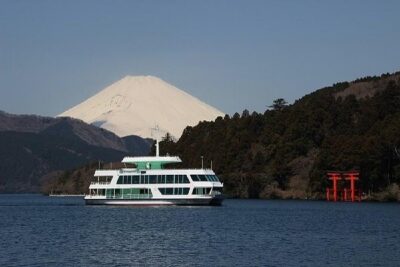
Mt Fuji & Hakone Cruise, Drum Show Bullet Train 1 Day from Tokyo
Read our review →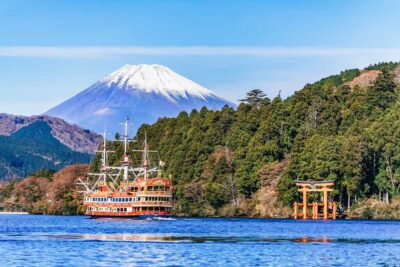
Tokyo Mt Fuji 5th St & Hakone Cruise Bus Tour w/Bullet Train
Read our review →
Rome to Pompeii Guided Tour with Wine & Lunch by High Speed Train
Read our review →
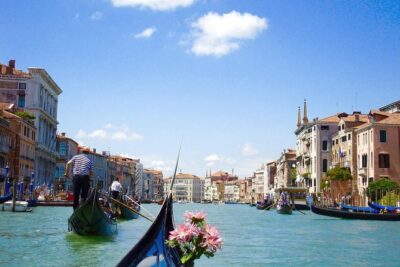
Venice Day Trip from Rome by High-Speed Train with Happy Hour
Read our review →

“Taj Mahal” Tour from Delhi by India’s Fastest Train (Gatiman Express)
Read our review →
Rome to Florence: High-Speed Train Day Trip with Guided City Tour
Read our review →Lists this ride appears on